
Nylanderia scintilla
- Sci. Name
- Nylanderia scintilla
- Tribe
- Lasiini
- Subfamily
- Formicinae
- Author
- LaPolla & Fisher, 2011
- Distribution
- Found in 4 countries
Introduction
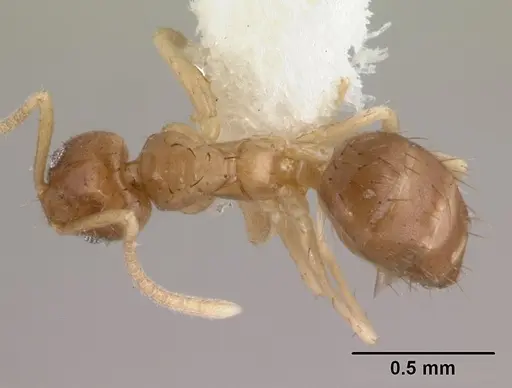
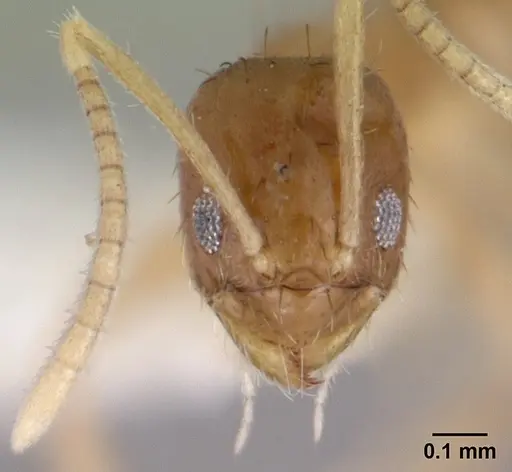
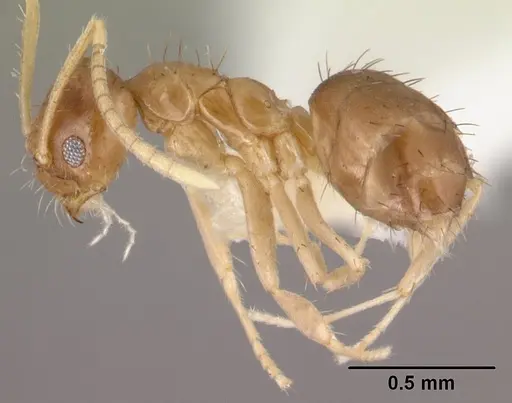
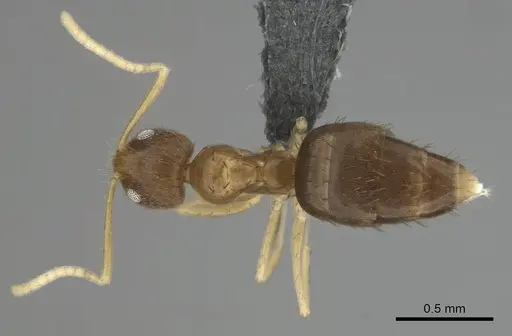
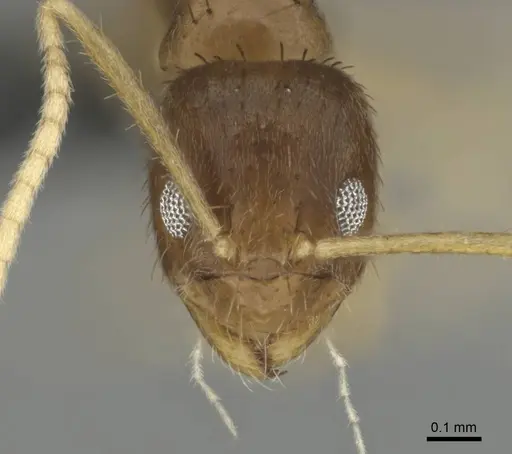
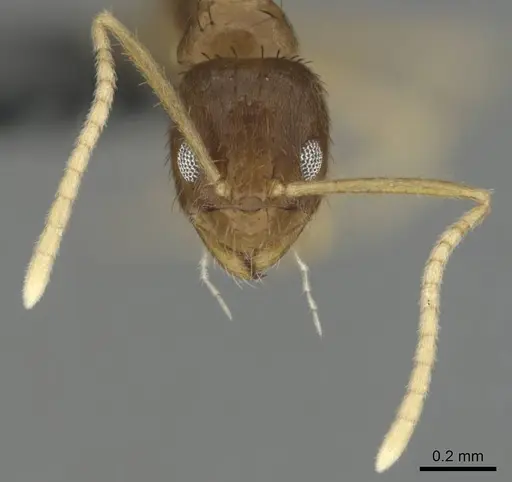
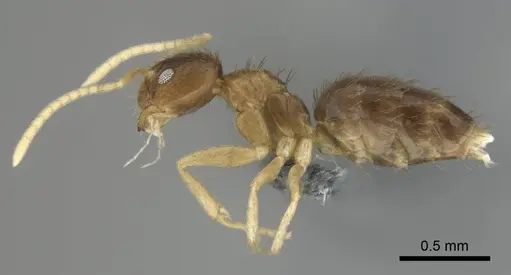
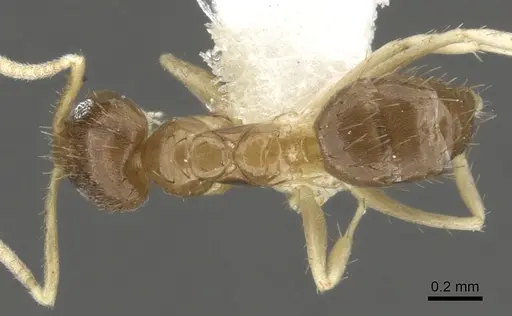
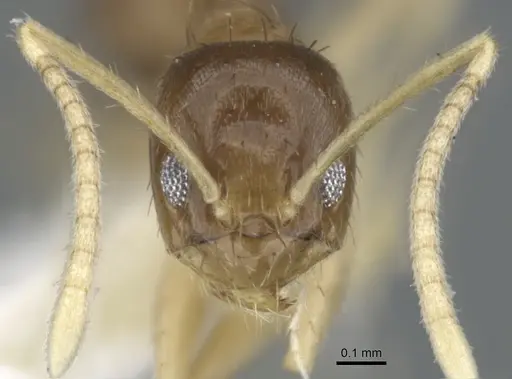
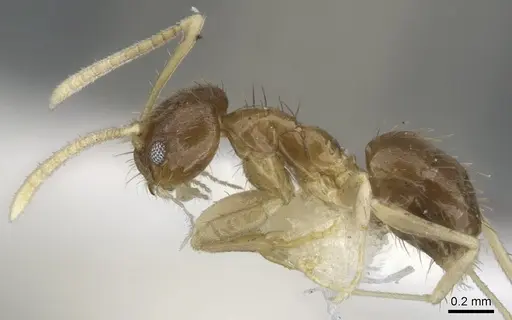
Nylanderia scintilla is a tiny ant from West Africa. Workers measure just 1.8-2.0 mm in total length . They are brownish-yellow with lighter antennae and legs, and have a smooth, shiny cuticle that gives them a sparkling appearance - the species name means 'spark' in Latin . The head is roughly square-shaped with angular corners, and the front part of the propodeum is short and angular . This species is closely related to Nylanderia boltoni and Nylanderia umbella, and can be distinguished by its uniformly colored leg bases (coxae), unlike the lighter middle and hind coxae of N. boltoni . This is one of the smallest ant species in the hobby. It is currently known only from Ivory Coast and Nigeria in West Africa . The queen caste has never been seen, so we know almost nothing about its colony structure or founding. It has been found in urban green spaces in the Abidjan district of Ivory Coast, suggesting it can adapt to disturbed habitats .
Quick Summary
- Difficulty: Unknown, Insufficient Data
- Origin & Habitat: West Africa (Ivory Coast, Nigeria), found in urban green spaces in the Abidjan district [2][1]
- Colony Type: Unknown, queen caste has never been documented [1]
- Size & Growth:
- Queen: Unknown, queen caste currently unknown [1]
- Worker: 1.8-2.0 mm total length [1]
- Colony: Unknown, no colony size data available
- Growth: Unknown, no development data available
- Development: Unknown, no direct measurements available (No development timeline data exists. Related Nylanderia species in the tropics typically take 4-8 weeks from egg to worker, but this is a rough estimate.)
- Antkeeping:
- Temperature: Likely 24-28°C based on West African origin, no direct data available
- Humidity: Keep the nest substrate consistently moist but not waterlogged, typical of tropical ground-nesting ants, no direct data available
- Diapause: Unknown, West African ants usually do not enter true diapause, but may slow down during cooler or drier periods
- Nesting: Likely nests in soil or rotting wood cavities, based on genus patterns, no direct observations available [1]
- Behavior: Behavior is unstudied. Based on genus patterns, Nylanderia species are small, active foragers that collect honeydew and hunt small prey. Their tiny size (under 2 mm) makes them excellent escape artists, fine mesh barriers are essential. They are unlikely to be aggressive and probably nest in soil or under stones. Any sting would be negligible to humans due to their size.
- Common Issues: no documented colony founding behavior, unknown if claustral or semi-claustral, queen caste unknown, cannot determine colony structure (single-queen vs. multiple-queen), no development timeline data makes timing predictions impossible, escape prevention is critical due to tiny 2 mm worker size, no information on temperature or humidity preferences, keepers must experiment carefully
Appearance and Identification
Nylanderia scintilla workers are among the smallest ants you'll keep, measuring just 1.8-2.0 mm in total length [1]. They are brownish-yellow with distinctly lighter antennae and legs, this contrast is helpful for identification [1]. The cuticle is smooth and shining, and the gaster has a dense layer of short hairs that gives it a silky look [1]. The head is roughly square with angular corners, and the antenna scapes extend past the back of the head by about the length of the first 2-3 funicular segments [1]. The key feature that separates this species from similar Nylanderia is that all leg bases (coxae) are the same color, in the close relative N. boltoni, the middle and hind coxae are lighter [1].
Distribution and Habitat
This species is currently known only from West Africa: Ivory Coast (collected at Palmeraie Lame) and Nigeria (Gambari) [1]. Surveys in the Abidjan district of Ivory Coast found them in urban green spaces, suggesting they can handle human-modified environments [2]. They were most common in certain park areas, with 12-14 occurrences at two sites [2]. Their natural nesting habitat, whether forest floor, savanna, or something else, is unknown.
What We Don't Know
There is very little known about this species. The queen caste has never been described, we have no information on queen size, color, or body shape [1]. The male caste is also unknown. As a result, we cannot tell whether colonies are single-queen (monogyne) or multiple-queen (polygyne), nor if they have ergatoid replacement queens. Colony founding behavior is a mystery: no one has observed whether queens found claustrally or semi-claustrally. There is no data on development times, temperature or humidity preferences, or diet. Keepers will need to document their own observations to fill these gaps.
Care Recommendations
No direct care data exists for this species, so recommendations are based on related Nylanderia and general principles for tiny tropical ants. Aim for a nest temperature of 24-28°C, matching their West African origin. Keep the nest substrate consistently moist but not waterlogged, think damp soil, not puddles. Use a test tube setup or a small nest with chambers sized for 2 mm ants. Because of their tiny size, escape-proofing must be excellent: standard test tube cotton may be too loose, consider fine mesh barriers. Feed sugar water or honey as a constant energy source, and offer very small protein sources like fruit flies or pieces of mealworm. Start with tiny prey and watch to see if they accept it.
Related Species Context
Nylanderia scintilla is closely related to Nylanderia boltoni and Nylanderia umbella, based on worker morphology [1]. The genus Nylanderia includes many small, ground-nesting species found in warm climates worldwide. Some Nylanderia have become invasive in places far from their native range, but N. scintilla's known distribution is limited to West Africa. Many Nylanderia are polygynous, but we cannot assume this for N. scintilla without direct observation. The genus belongs to the subfamily Formicinae, which also includes Camponotus and Lasius. Most Formicinae are non-aggressive and do not sting.
Frequently Asked Questions
How big do Nylanderia scintilla workers get?
Workers are tiny, measuring just 1.8-2.0 mm in total length [1]. This makes them one of the smallest ants kept in captivity.
What do Nylanderia scintilla eat?
Diet is unconfirmed, but based on related Nylanderia, they likely feed on honeydew from aphids and small insects. Offer sugar water or honey for energy, and tiny live prey like fruit flies or pinhead crickets. Start with very small items and see what they take.
What temperature do Nylanderia scintilla need?
No specific data exists. Because their native range is West Africa (Ivory Coast, Nigeria), aim for 24-28°C. Related tropical Nylanderia do well in this range.
Are Nylanderia scintilla aggressive?
Aggression is unstudied, but based on genus patterns, they are unlikely to be aggressive. Their tiny size means they pose minimal threat. They probably focus on foraging rather than defending territory.
How long does it take for Nylanderia scintilla to raise first workers?
The development timeline is completely unknown, no research has documented egg-to-worker times. Related Nylanderia in tropical conditions typically take 4-8 weeks, but this is only a rough estimate.
Can I keep multiple Nylanderia scintilla queens together?
We don't know the colony structure. The queen caste has never been documented, so we cannot tell if they are monogyne (single-queen) or polygyne (multiple-queen). Do not combine unrelated queens without observation data.
Are Nylanderia scintilla good for beginners?
This species cannot be recommended for beginners because almost nothing is known about its care. Every aspect of husbandry would need to be discovered through experimentation. They are best suited for advanced antkeepers who enjoy documenting new species.
Where is Nylanderia scintilla found?
Currently known only from West Africa: Ivory Coast and Nigeria [1]. Recent surveys also found them in urban green spaces in the Abidjan district of Ivory Coast [2].
Why is it called Nylanderia scintilla?
The species name 'scintilla' is Latin for 'spark' [1]. It refers to the ant's yellow color, shiny hairs, and small size, giving them a sparkling appearance.
How do I identify Nylanderia scintilla?
Workers are brownish-yellow (1.8-2.0 mm) with distinctly lighter antennae and legs [1]. The key feature is that all leg bases (coxae) are the same color, unlike the similar N. boltoni, which has lighter middle and hind coxae [1]. The head is roughly square with angular corners.
What is the queen size of Nylanderia scintilla?
The queen caste is currently unknown, it has never been described in scientific literature [1]. This is one of the major gaps in our knowledge of this species.
Report an Issue
The current care sheet is based fully on literature. See inconsistencies, or something that's incorrect? Please , it will be resolved after review from an admin. Contributing to the blogs tab also helps providing information, to make us be able to further improve the caresheets. Thank you for your support!
References

This caresheet is licensed under CC BY-SA 4.0 .
Community Blogs
Literature
Loading distribution map...Loading products...