
Ghostly Crazy Ant
Nylanderia phantasma
- Sci. Name
- Nylanderia phantasma
- Tribe
- Lasiini
- Subfamily
- Formicinae
- Author
- Trager, 1984
- Common Name
- Ghostly Crazy Ant
- Distribution
- Found in 1 countries
Introduction
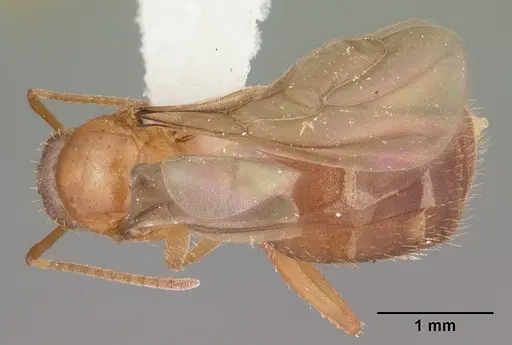
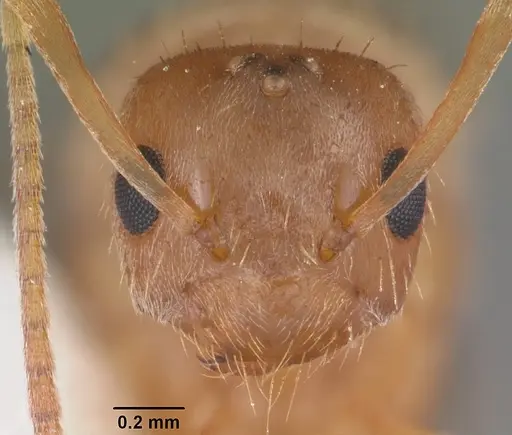
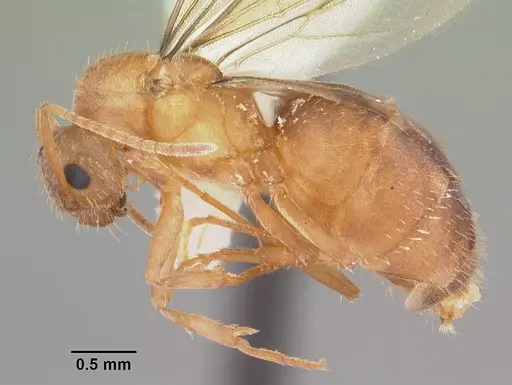
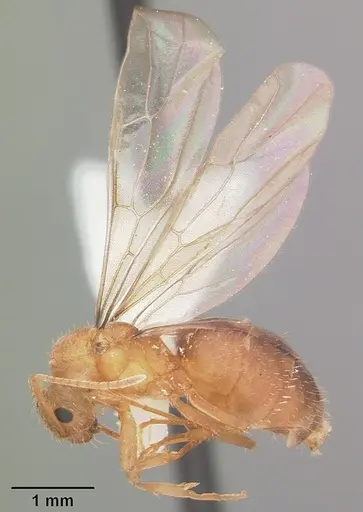
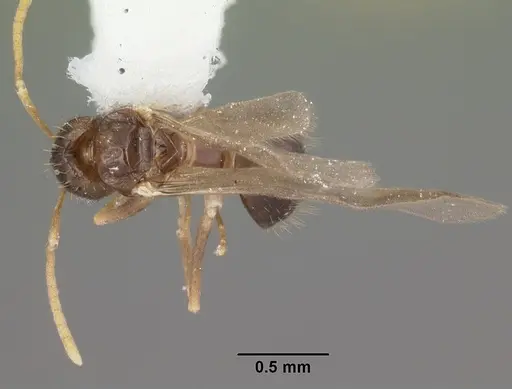
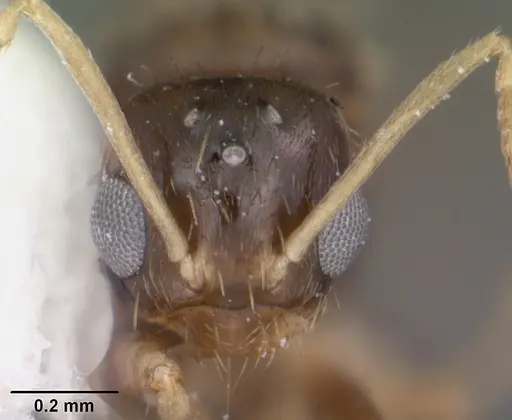
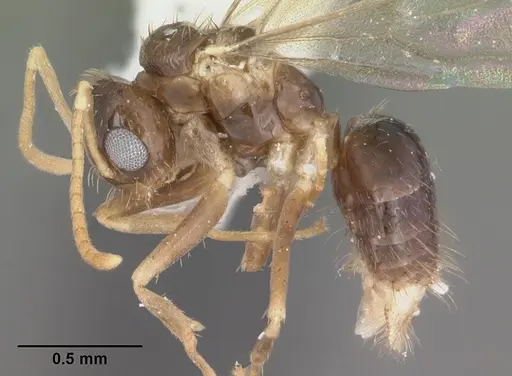
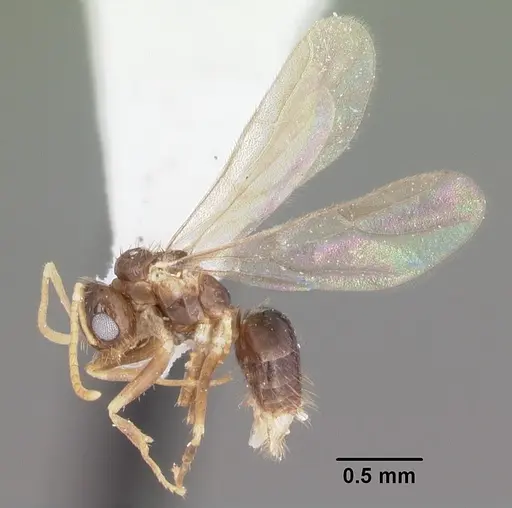
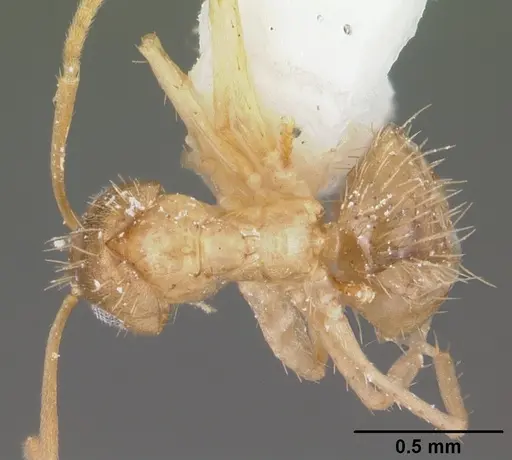
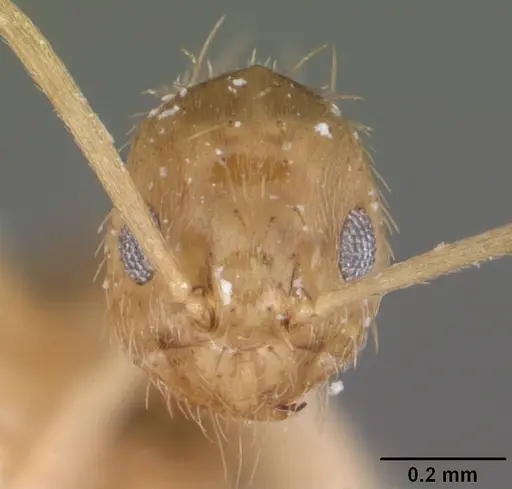
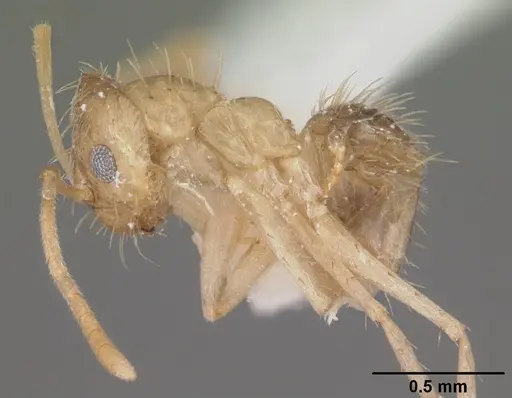
Nylanderia phantasma is a tiny, pale ant native to the southeastern United States. Workers measure just 1.71–2.34 mm and are described as perhaps the palest ant in the world, their entire body is uniformly pale yellow to whitish with pale, whitish pubescence, making them look almost ghostly . Queens are larger at 4.60–4.75 mm and share the pale coloration . This nocturnal species is most likely to be confused with the similar Nylanderia arenivaga, but you can tell them apart by its whitish (not brown) macrosetae and reddish mandibles . Originally thought to occur only in central Florida’s Lake Wales Ridge, populations have since been found in Alabama, Mississippi, and Georgia . They live in xeric scrubland dunes, probably remaining from semiarid areas that existed 3,000–15,000 years ago . Endemic to Florida scrub and dune habitats, they are classified as opportunists in ant community studies .
Quick Summary
- Difficulty: Easy
- Origin & Habitat: Southeastern United States, central Florida, Alabama, Mississippi, and Georgia. Inhabits xeric scrubland dunes with white sand areas [1][5][6].
- Colony Type: Monogyne? Unconfirmed. They build polydomous nests with numerous crater entrances, similar to Nylanderia arenivaga [1]. Workers are active foragers all year long [1].
- Size & Growth:
- Queen: 4.60–4.75 mm [1]
- Worker: 1.71–2.34 mm [1]
- Colony: Unknown, inferred from similar Nylanderia species, likely several hundred to low thousands of workers.
- Growth: Moderate, inferred from related Nylanderia species.
- Development: 6–10 weeks (estimated based on genus patterns) (Direct development data not available for this species. Related Nylanderia species typically develop in 6–10 weeks at warm temperatures.)
- Antkeeping:
- Temperature: Keep at 22–27°C, estimated from its warm, xeric dune habitat. Use a heating cable on one side to create a gradient the ants can choose from [1].
- Humidity: Low to moderate. These are dune-dwelling ants adapted to dry conditions. Keep the nest substrate relatively dry, with only a small moist area. Avoid overwatering [1][3].
- Diapause: No. Workers remain active year-round in the wild, so no true diapause is needed. You may reduce feeding slightly during winter if room temperatures drop [1].
- Nesting: Polydomous, they appreciate multiple connected chambers. A Y‑tong (AAC), plaster, or soil-based nest with several rooms works well. Avoid setups that hold too much moisture, as they prefer dry conditions [1].
- Behavior: Nocturnal and highly active. Workers forage all night and are constant explorers. They are not aggressive, rarely sting, and pose no threat to keepers. Their small size (under 2.5 mm) means they can escape through tiny gaps, make sure your setup is escape‑proof. They are opportunistic foragers and will accept a variety of foods [4].
- Common Issues: dry conditions are essential, too much moisture leads to mold and stress, polydomous nesting means they benefit from multiple connected chambers, not a single compact nest, nocturnal activity means they will be most active in the evening and night, don’t worry if they seem quiet during the day, they are very small, use fine screening or tight seals to prevent escapes, nuptial flights occur late winter to early spring, timing is specific to this species [1]
Housing and Nest Setup
Nylanderia phantasma does well in a variety of captive setups. Because they build polydomous nests with numerous crater entrances in the wild, they appreciate having multiple connected chambers instead of a single compact space [1]. A Y‑tong (AAC), plaster, or soil‑based nest with several rooms connected by tubing works well. These ants prefer dry conditions, so avoid setups that hold water. Many keepers have success starting them in a test tube with a cotton‑plug water reservoir, but they will use the space more fully given a multi‑chamber nest. Since they are nocturnal, placing the nest where it experiences natural light cycles helps maintain their normal activity rhythm.
Feeding and Diet
Like most Nylanderia species, these ants are opportunistic omnivores. They will readily accept sugar sources (honey water, sugar water) and protein (small insects like fruit flies, small mealworms, crickets). Studies show this species does not remove seeds, so they are not granivorous [7]. Feed them a few drops of sugar water twice a week and small insects once or twice weekly. Remove any uneaten prey after 24 hours to prevent mold. Because they are nocturnal foragers, offering food in the evening usually gives better results.
Temperature and Seasonal Care
These are warm‑climate ants from southeastern US dune habitats. Keep the nest area at 22–27°C for best activity and brood development. A heating cable placed on one end creates a gradient they can move through to find their preferred spot. Unlike many temperate ants, N. phantasma does not enter true diapause, workers stay active year‑round in the wild [1]. You may reduce feeding frequency during winter if your room temperature drops a lot. They are adapted to xeric (dry) conditions, so keep humidity low.
Colony Development
Nuptial flights happen late in winter and early spring, with reproductives produced in the fall [1]. This timing is different from many summer‑flying ants. The founding method is unconfirmed for this species, but typical Nylanderia queens are claustral, they seal themselves in a chamber and raise the first brood without foraging. First workers (nanitics) will be smaller than mature workers. Expect development from egg to worker in about 6–10 weeks based on related species (no direct data for N. phantasma). Colonies grow moderately and likely reach several hundred workers.
Behavior and Observation
This is a nocturnal species, so you'll see the most activity in the evening and night [1]. Workers forage actively all year, even in winter, unlike many ants that slow down. They are not aggressive, rarely sting, and are easy to handle because of their small size and mild temperament. In the wild they build characteristic polydomous nests with multiple crater‑style entrances. Watching their nighttime foraging is a treat, especially given their ghostly pale color. They move quickly and will explore any new area thoroughly.
Frequently Asked Questions
How long does it take for Nylanderia phantasma to produce first workers?
Expect 6–10 weeks from egg to first worker at 22–27°C. This is based on related Nylanderia species, as no development data exists for N. phantasma.
Do Nylanderia phantasma ants need hibernation?
No. These ants remain active year‑round in the wild. Workers do not enter diapause, though you may reduce feeding slightly in winter [1].
What do Nylanderia phantasma eat?
They are opportunistic omnivores. Provide sugar water or honey water as a constant carb source, and small insects (fruit flies, pinhead crickets, small mealworms) as protein 1–2 times per week.
Are Nylanderia phantasma good for beginners?
Yes. They are small, docile, and easy to care for. They tolerate a range of conditions and don't need hibernation. Their main needs are warmth, dry conditions, and regular feeding.
What temperature do Nylanderia phantasma need?
Keep them warm at 22–27°C. A heating cable on one side of the nest creates a gradient they can choose from. They are adapted to warm, xeric dune habitats [1].
How big do Nylanderia phantasma colonies get?
Colony size is not well documented, but based on related Nylanderia species, they likely reach several hundred to low thousands of workers.
When do Nylanderia phantasma have nuptial flights?
Late winter to early spring. Reproductives are produced in the fall and fly during late winter/early spring [1].
Can I keep multiple queens together?
This has not been documented for this species. Some Nylanderia species are polygynous, but it varies. It is generally safer to start with a single queen.
What makes Nylanderia phantasma special?
They are perhaps the palest ant in the world, uniformly pale yellow to whitish. They are also nocturnal and build polydomous nests with multiple crater entrances [1][2].
Report an Issue
The current care sheet is based fully on literature. See inconsistencies, or something that's incorrect? Please , it will be resolved after review from an admin. Contributing to the blogs tab also helps providing information, to make us be able to further improve the caresheets. Thank you for your support!
References

This caresheet is licensed under CC BY-SA 4.0 .
Community Blogs
Literature
Loading distribution map...Loading products...