
Nylanderia nuggeti
- Sci. Name
- Nylanderia nuggeti
- Tribe
- Lasiini
- Subfamily
- Formicinae
- Author
- Donisthorpe, 1941
- Distribution
- Found in 1 countries
Introduction
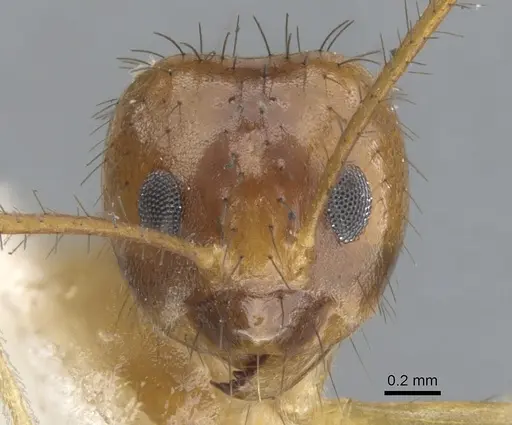
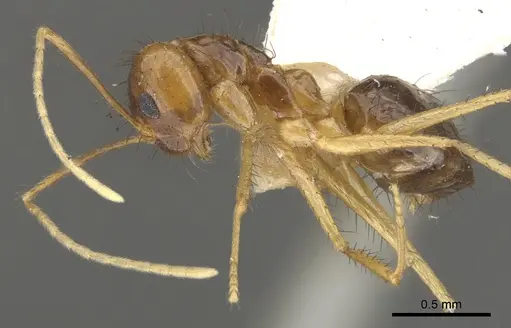
Nylanderia nuggeti is a small ant species native to New Guinea, first described by Donisthorpe in 1941. Size data for this species is unavailable from current research. It belongs to the Formicinae subfamily and is found in tropical rainforest canopies at elevations between 200-900 meters, with peak abundance around 900m . This species is part of the Nylanderia genus, which contains many adaptable species often found in disturbed habitats.
Quick Summary
- Difficulty: Medium
- Origin & Habitat: New Guinea (Papua New Guinea and Indonesian Papua), specifically in tropical rainforest canopies at elevations between 200-900 meters [1][2].
- Colony Type: Colony structure is unconfirmed. Based on typical Nylanderia patterns, colonies may have single or multiple queens, but more research is needed.
- Size & Growth:
- Queen: Size data unavailable
- Worker: Size data unavailable
- Colony: Up to several hundred workers
- Growth: Moderate
- Development: Estimated 4-6 weeks (Development is likely faster in warm conditions.)
- Antkeeping:
- Behavior: Workers are small and active, likely generalist feeders. As Formicine ants, they can spray formic acid, but size makes it a minor concern. Escape prevention is critical due to small size [2].
- Common Issues: escape prevention is critical due to their very small size, they can squeeze through tiny gaps., tropical humidity requirements mean mold can be an issue if ventilation is poor., wild-caught colonies may have parasites or diseases that can wipe out the colony., small colony size means they are sensitive to disturbance, avoid frequent nest inspections., temperature drops below 22°C may slow or stop brood development.
Natural History and Distribution
Nylanderia nuggeti is endemic to New Guinea, found in tropical rainforest canopies at elevations between 200-900 meters, with peak abundance at 900m [1][2]. Workers were described in 1941 from New Guinea [2].
Housing and Nest Setup
Since these ants are small and from humid canopies, use a Y-tong or plaster nest that holds moisture. Connect to an outworld for food. Ensure escape prevention due to small size [2].
Feeding and Diet
Nylanderia species are generalist feeders. Offer sugar water and protein like small insects [2].
Temperature and Seasonal Care
Keep warm at roughly 24-28°C, based on tropical habitat. No diapause needed [1][2].
Behavior and Handling
Workers are active and may spray formic acid. Escape prevention is critical [2].
Frequently Asked Questions
How long does it take for Nylanderia nuggeti to produce first workers?
Based on related tropical Nylanderia species, expect first workers approximately 4-6 weeks after the queen lays eggs, assuming optimal temperatures.
What do Nylanderia nuggeti ants eat?
They are generalist feeders. Offer sugar water or honey as a constant energy source, and provide protein every few days in the form of small insects [2].
What temperature do Nylanderia nuggeti ants need?
Keep them warm at roughly 24-28°C, based on their tropical habitat [1][2].
Are Nylanderia nuggeti good for beginners?
They are rated as medium difficulty. Their small size requires careful escape prevention, and they need specific tropical conditions.
How big do Nylanderia nuggeti colonies get?
Colonies likely reach up to several hundred workers.
Do Nylanderia nuggeti ants need hibernation?
No, as a tropical species, they do not require a winter diapause.
What is the best nest type for Nylanderia nuggeti?
A Y-tong nest or plaster formicarium works well, as they hold humidity effectively [2].
Why are my Nylanderia nuggeti ants dying?
Common causes include temperatures below 22°C, too dry or too wet conditions, escape through tiny gaps, mold from poor ventilation, or stress from frequent disturbances.
Can I keep multiple Nylanderia nuggeti queens together?
The colony structure is unconfirmed. Based on typical Nylanderia patterns, single-queen colonies are likely most stable, but combining queens is not recommended without evidence.
Report an Issue
The current care sheet is based fully on literature. See inconsistencies, or something that's incorrect? Please , it will be resolved after review from an admin. Contributing to the blogs tab also helps providing information, to make us be able to further improve the caresheets. Thank you for your support!
References

This caresheet is licensed under CC BY-SA 4.0 .
Community Blogs
CASENT0903124
View on AntWeb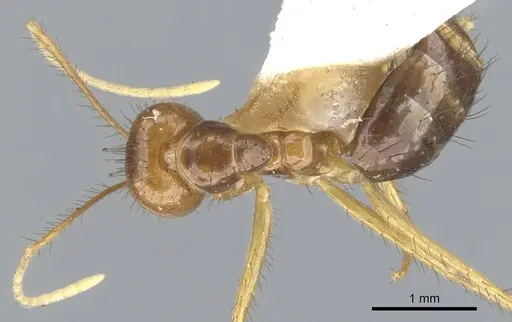
Literature
Loading distribution map...Loading products...