
Nylanderia luteafra
- Sci. Name
- Nylanderia luteafra
- Tribe
- Lasiini
- Subfamily
- Formicinae
- Author
- LaPolla & Fisher, 2011
- Distribution
- Found in 2 countries
Introduction
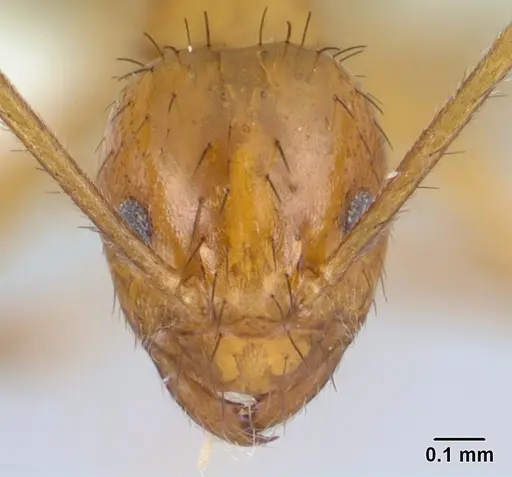
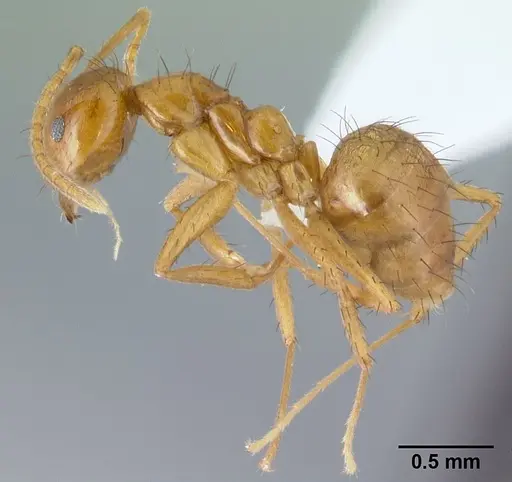
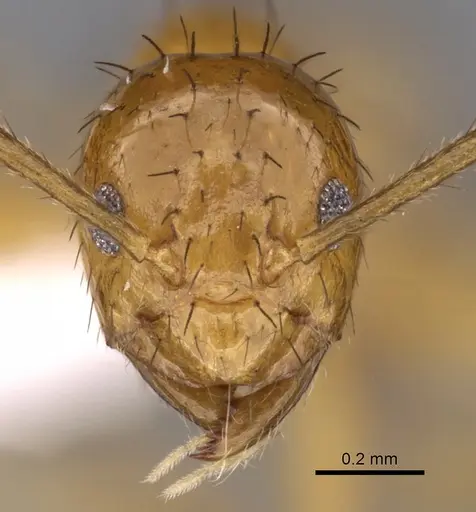
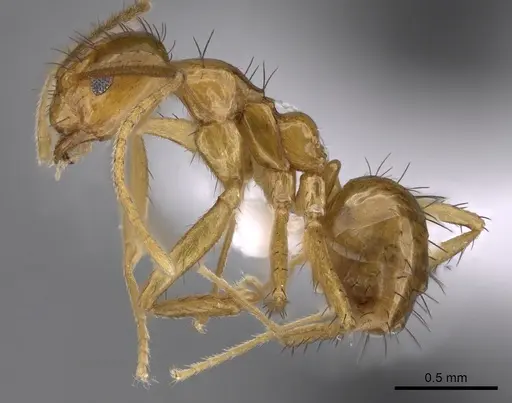
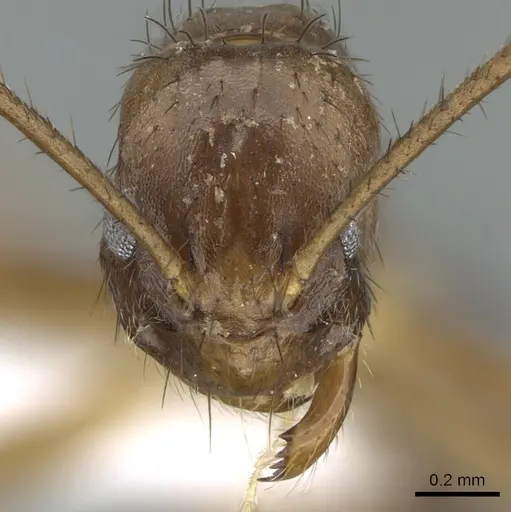
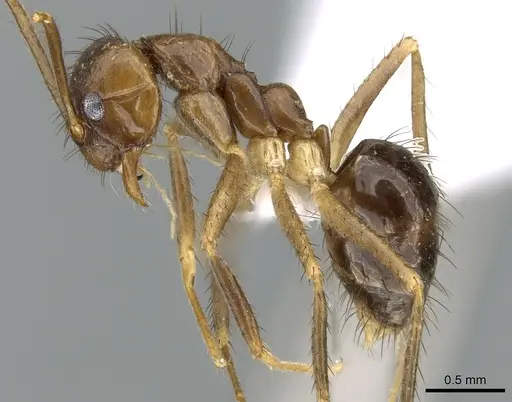
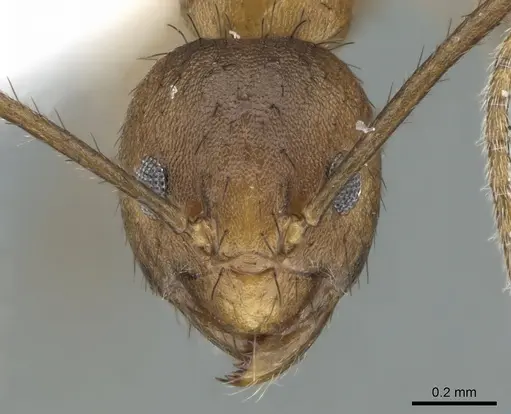
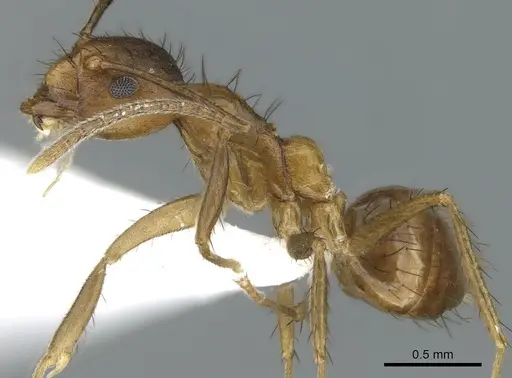
Nylanderia luteafra is a small yellow ant species described in 2011 from the coastal lowland rainforests of Gabon and Cameroon in Central Africa . Workers measure 2.3-2.8 mm in total length and have a distinctive appearance: their overall yellow to brownish-yellow body is covered with darker, erect hairs that contrast strongly with the pale cuticle . A key identifying feature is the noticeably domed propodeum . The scapes are long, extending past the back of the head by about the length of the first 3-3.5 funicular segments . The queen caste remains unknown, limiting captive breeding information .
Quick Summary
- Difficulty: Unknown, limited captive data available
- Origin & Habitat: Coastal lowland rainforest in Cameroon and Gabon (Central Africa) [1]
- Colony Type: Unconfirmed, queen caste has not been described, so colony structure is unknown [1]
- Size & Growth:
- Queen: Unknown, queen has not been described [1]
- Worker: 2.3-2.8 mm [1]
- Colony: Unknown, no colony size data available
- Growth: Unknown
- Development: Estimated several weeks to a few months based on typical Nylanderia patterns (Development timeline has not been studied for this species. The estimate is based on general patterns for small tropical ants.)
- Antkeeping:
- Temperature: Keep warm, roughly low-to-mid 20s°C, based on tropical origin [1]. Use a heating cable on one side to create a gradient if needed.
- Humidity: Keep nest substrate consistently moist but not waterlogged, as they come from humid rainforest habitats [1].
- Diapause: No, tropical species from coastal Central Africa do not require a diapause period [1].
- Nesting: In the wild, they nest in coastal lowland rainforest [1]. In captivity, use Y-tong (AAC) or plaster nests with good moisture retention.
- Behavior: Nylanderia luteafra is a small, active ant. Based on Formicinae patterns, they may raise their abdomen to release formic acid when threatened. Their tiny size means escape prevention is critical, use fine mesh barriers and seal any gaps.
- Common Issues: queen availability is extremely limited, this species was only described in 2011 and the queen caste remains undescribed, small size means escape prevention must be excellent, they can squeeze through tiny gaps, no captive breeding data exists, so colony establishment success is uncertain, humidity control is critical, dry conditions will stress colonies from rainforest habitats, limited information means keepers must experiment with care parameters
Appearance and Identification
Nylanderia luteafra workers are tiny ants measuring 2.3-2.8 mm in total length [1]. Their most striking feature is the yellow to brownish-yellow body covered with darker, erect hairs that create a strong contrast against the pale cuticle [1][2]. The propodeum is distinctly domed when viewed from the side, setting them apart from similar species [1]. The scapes extend past the back of the head by nearly the length of the first 3-3.5 antennal segments [1]. The cuticle has a shining appearance with fine rugulose texture on the head and mesonotum [1]. Queens have not yet been described for this species [1].
Natural Habitat and Distribution
This species is known only from the coastal lowland rainforests of Gabon and Cameroon in Central Africa [1]. Type specimens were collected in the Reserve de la Moukalaba-Dougoua in Gabon's Ogooue-Maritime province at around 110 meters elevation [1]. This is a tropical rainforest environment with high humidity year-round. The species was described in 2011,and there is limited data on its full distribution [1]. The name 'luteafra' comes from Latin words for yellow and Africa, referring to its coloration and origin [1][2].
Housing and Nesting
In their natural habitat, Nylanderia luteafra likely nests in rotting wood, leaf litter, or under stones on the forest floor [1]. For captive care, use Y-tong (AAC) or plaster nests with good moisture retention. Because they are tiny ants, ensure nest chambers are appropriately scaled. A small test tube setup can work for founding colonies, but monitor humidity carefully. Always use excellent escape prevention, these ants can squeeze through tiny gaps. A thin barrier of Fluon around the outworld rim helps prevent escapes.
Feeding and Diet
Based on general Nylanderia behavior, these ants are likely generalist foragers that collect honeydew and hunt small insects. In captivity, offer sugar water or honey as a constant energy source. For protein, provide small prey items like fruit flies or tiny crickets, sized appropriately for the ants. Feed protein sources 2-3 times per week, and keep sugar water available at all times. Remove uneaten prey after 24-48 hours to prevent mold.
Temperature and Humidity Requirements
Being from tropical coastal rainforest, Nylanderia luteafra requires warm and humid conditions. Aim for temperatures in the low-to-mid 20s°C, based on their natural habitat [1]. A heating cable on one side can create a gentle gradient. High humidity is essential, keep the nest substrate moist but not waterlogged [1]. Provide a water tube in the outworld to help maintain humidity through evaporation.
Challenges and Considerations
Nylanderia luteafra presents challenges for antkeepers. The queen caste is undescribed, so wild-queen collection is the only way to start a colony [1]. There is no captive breeding data, so care protocols are experimental. Their small size makes escape prevention critical. This species is best for experienced keepers who enjoy contributing to knowledge through experimentation.
Frequently Asked Questions
Is Nylanderia luteafra available for purchase?
No, this species is not commercially available. It was described in 2011 and the queen caste is undescribed, meaning no captive-bred colonies exist [1]. Wild collection in Gabon or Cameroon would be required, which presents practical and legal challenges.
How do I care for Nylanderia luteafra?
Since there is no captive breeding data, care is based on their natural habitat. Keep them warm (low-to-mid 20s°C) and humid, using Y-tong or plaster nests [1]. Feed sugar water and small insects. Ensure excellent escape prevention due to their tiny size. This is an experimental species, adjust care based on colony response.
What do Nylanderia luteafra ants eat?
Based on typical Nylanderia diet, they likely feed on honeydew and small insects. In captivity, offer sugar water or honey constantly, and supplement with small protein sources like fruit flies or pinhead crickets.
What is the colony size of Nylanderia luteafra?
Unknown, no colony size data has been published for this species [1].
Do Nylanderia luteafra queens have wings?
Unknown, the queen caste has not been described [1]. Without described queens, we cannot know if they are winged or have ergatoid queens.
Can I keep Nylanderia luteafra in a test tube?
Yes, a test tube setup can work for founding colonies, similar to other small Nylanderia species. Monitor humidity carefully as small water reservoirs dry out quickly. Transfer to a proper nest once the colony reaches 20-30 workers.
What temperature do Nylanderia luteafra ants need?
Keep them warm at low-to-mid 20s°C based on their tropical rainforest origin [1]. Use a heating cable to create a gradient if room temperature is below this range.
Do Nylanderia luteafra need hibernation?
No, being a tropical species from coastal Central Africa, they do not require a diapause period [1].
Are Nylanderia luteafra good for beginners?
No, this species is not recommended for beginners. It has no captive breeding data, the queen is undescribed, and care is experimental. This species is best for experienced keepers.
Report an Issue
The current care sheet is based fully on literature. See inconsistencies, or something that's incorrect? Please , it will be resolved after review from an admin. Contributing to the blogs tab also helps providing information, to make us be able to further improve the caresheets. Thank you for your support!
References

This caresheet is licensed under CC BY-SA 4.0 .
Community Blogs
CASENT0179584
View on AntWeb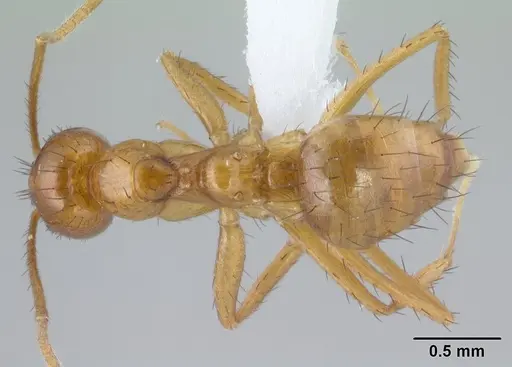
CASENT0317040
View on AntWeb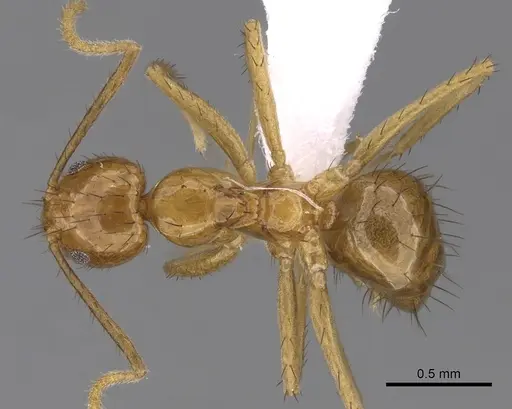
CASENT0797631
View on AntWeb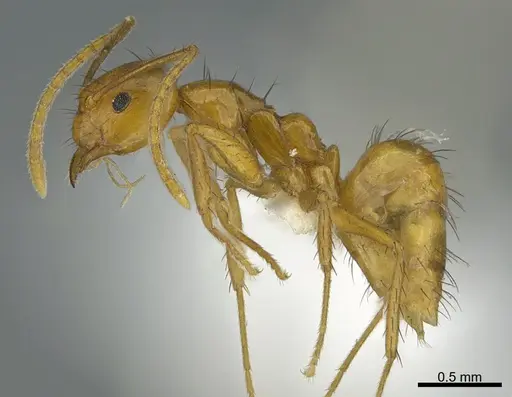
CASENT0906653
View on AntWeb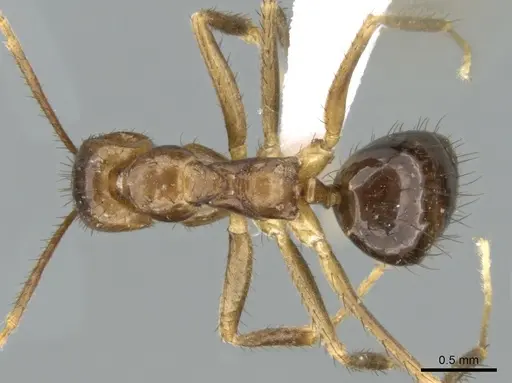
CASENT0906654
View on AntWeb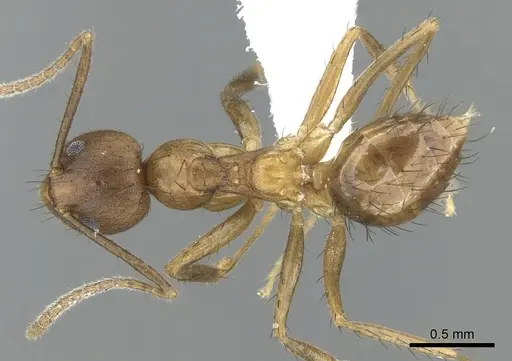
Literature
Loading distribution map...Loading products...