
Nylanderia glabrior
- Sci. Name
- Nylanderia glabrior
- Tribe
- Lasiini
- Subfamily
- Formicinae
- Author
- Forel, 1902
- Distribution
- Found in 5 countries
Introduction
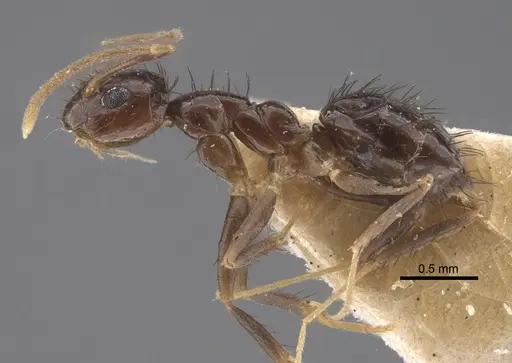
Nylanderia glabrior is a very shiny dark yellow-brown ant native to the Australasian region, including Australia, New Guinea, New Zealand, and the Solomon Islands. You can find it in Fiji on Viti Levu and Vanua Levu islands, where researchers collected it from sifted leaf litter samples . Direct body size measurements are unavailable. This species belongs to a distinct Australasian lineage that separates it from the group containing Nylanderia vaga and Nylanderia bourbonica . It represents one of five independent lineages of globetrotting ants in the genus Nylanderia, meaning it has successfully spread beyond its original home range through human activity . The species was first described in 1902 as a variety of Prenolepis braueri before being moved to its current classification .
Quick Summary
- Difficulty: Expert
- Origin & Habitat: Australasian region (Australia, New Guinea, New Zealand, Solomon Islands). In Fiji, it lives in sifted leaf litter [1].
- Colony Type: Unconfirmed. Most Nylanderia species are single-queen, but this is unverified for Nylanderia glabrior.
- Size & Growth:
- Queen: size data unavailable
- Worker: size data unavailable
- Colony: Unknown
- Growth: Unknown
- Development: Unknown (Development speed has not been studied for this species.)
- Antkeeping:
- Temperature: Unknown. Start around 22-26°C and observe colony activity.
- Humidity: Keep the nest substrate consistently moist but not waterlogged.
- Diapause: Unknown.
- Nesting: In nature, they nest in leaf litter and soil. Use a test tube or small plaster or 3D-printed nest with tight chambers.
- Behavior: Likely active and fast-moving like other Nylanderia species. Small size means high escape risk. Use fine mesh and tight barriers.
- Common Issues: escape through tiny gaps due to small worker size, colony collapse from temperature drops below 18°C, mold growth from overwatered nest substrate, difficulty identifying food sources if kept in dark chambers, unknown founding behavior may cause queen failure during initial setup
Appearance and Identification
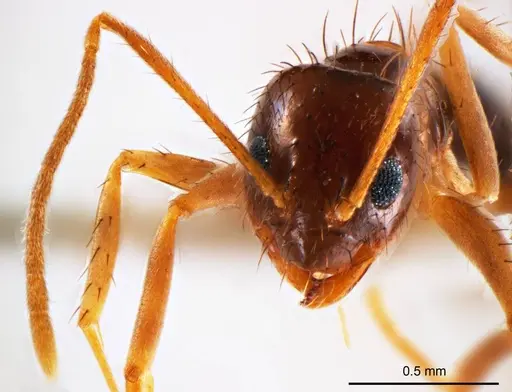
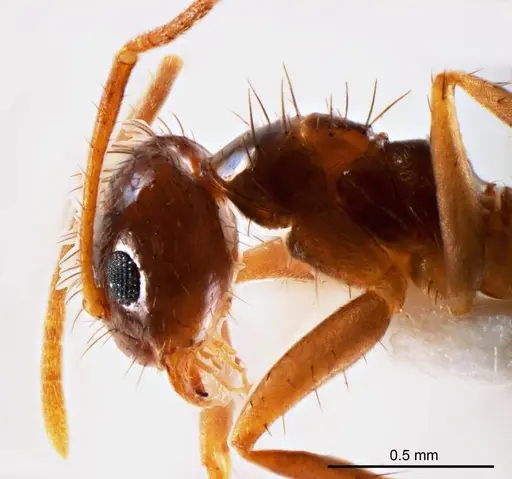
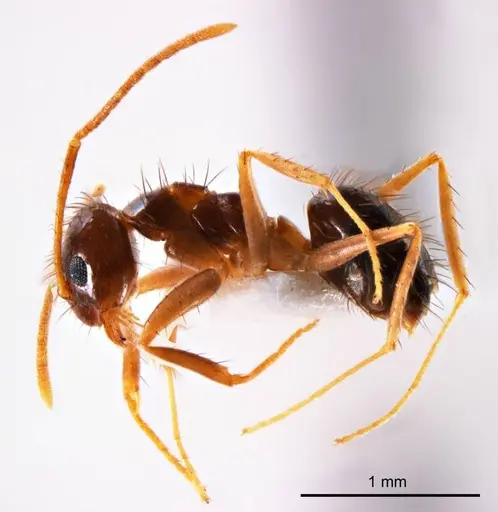
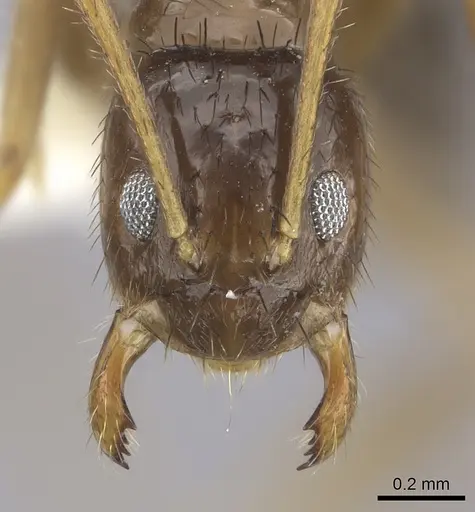
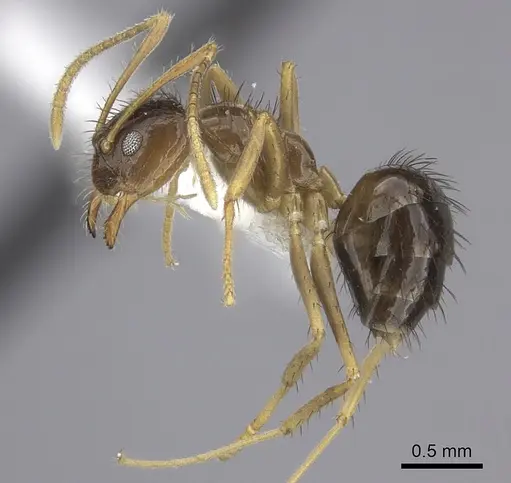
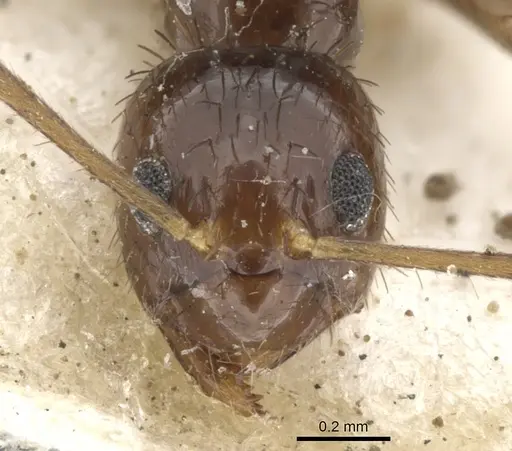
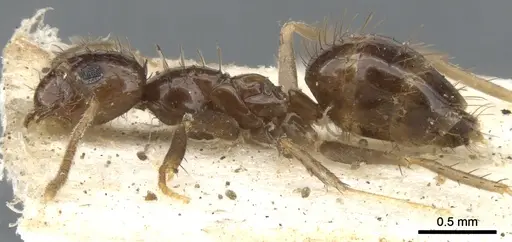
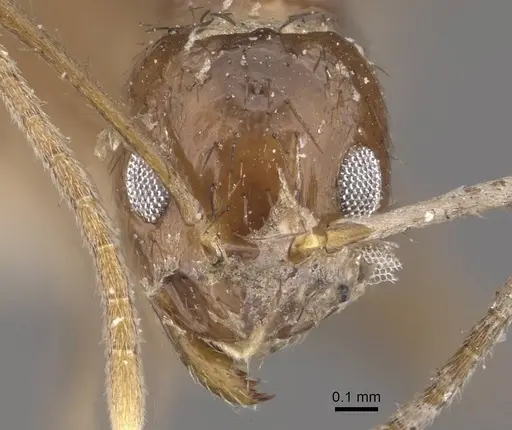
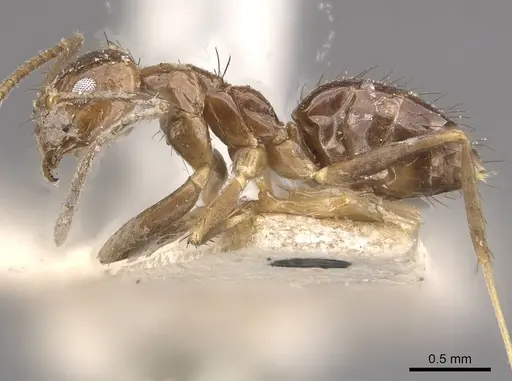
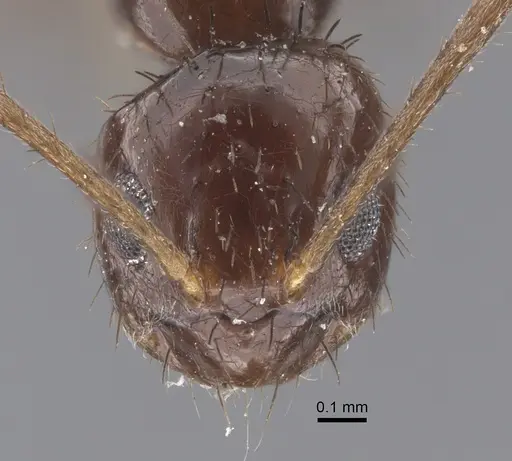
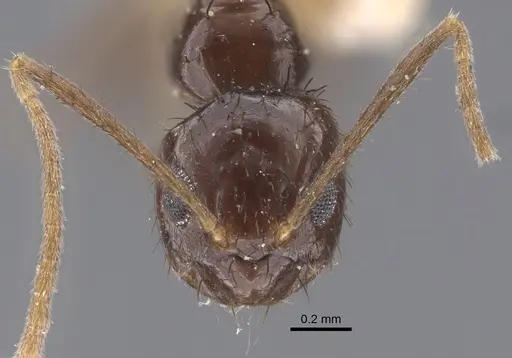
Nylanderia glabrior workers are very shiny dark yellow-brown ants. They have small eyes and a first gastral tergite (the first segment of the abdomen) that lacks hairs. This hairless first abdominal segment separates them from the similar Nylanderia vaga [1]. Larger eyes and darker color separate them from Nylanderia vitiensis [1]. Queens and males were described in the original 1902 publication [3]. Direct size measurements are unavailable.
Distribution and Range
This species is native to the Australasian region, with confirmed records from Australia, New Guinea, New Zealand, and the Solomon Islands. It has also been recorded from Fiji, specifically on Viti Levu and Vanua Levu islands where researchers collected it from sifted leaf litter [1]. This species is a globetrotter, meaning it has successfully spread beyond its native range through human commerce [2]. It belongs to a distinct Australasian lineage that separates it from the group containing Nylanderia vaga and Nylanderia bourbonica [4].
Taxonomic History
Nylanderia glabrior was originally named Nylanderia braueri var. glabrior by Forel in 1902 [3]. Later taxonomists moved it to the genus Paratrechina (as Nylanderia is a subgenus of Paratrechina) in 1925,and then to Nylanderia in 2010. Sarnat and Economo raised it to full species status in 2012 based on its unique morphology and distribution [3]. DNA barcoding confirms its genetic identity [5].
Housing and Nesting
They live in leaf litter and soil in the wild [1]. Start with a test tube setup for the queen. Transition to a small plaster or 3D-printed nest with narrow chambers as the colony grows. Keep the substrate damp but not soaked. Seal all gaps tightly to prevent escapes. Provide a humidity gradient if you notice the colony struggling with moisture levels.
Feeding and Diet
They are likely omnivorous like related species. Offer sugar water or diluted honey constantly for energy. Provide small protein sources like fruit flies or pinhead crickets 2-3 times weekly. Remove uneaten food after 24 hours to prevent mold. Active foragers will likely discover food quickly.
Temperature and Seasonal Care
Native to warm Australasian and Pacific regions. Keep them stable around 22-26°C. Avoid cold drafts. No confirmed diapause (seasonal rest period) requirement, but monitor for natural slowdowns. A heating cable on one side of the nest can create a temperature gradient if your room temperature falls below their needs.
Frequently Asked Questions
How long does it take for Nylanderia glabrior to produce first workers?
Unknown. Related species take 6-8 weeks at optimal warmth, but this is unverified for Nylanderia glabrior.
What do Nylanderia glabrior ants eat?
Omnivorous. Offer sugar water or honey constantly for energy, and small insects like fruit flies or pinhead crickets for protein.
Can I keep multiple Nylanderia glabrior queens together?
Unconfirmed. Assume single-queen structure. Do not combine unrelated queens.
What temperature do Nylanderia glabrior ants need?
Keep stable at 22-26°C. Avoid drops below 18°C.
Are Nylanderia glabrior ants good for beginners?
Limited data makes this tricky. Only keep if you have experience with small Formicinae.
How big do Nylanderia glabrior colonies get?
Unknown. Likely moderate based on litter-dwelling patterns.
Do Nylanderia glabrior need hibernation or diapause?
Unknown. Tropical and subtropical origin suggests none, but verify with your colony.
Why are my Nylanderia glabrior ants dying?
Check temperature, humidity, escape gaps, and food quality.
When should I move Nylanderia glabrior to a formicarium?
Move when you have 30-50 workers and the test tube gets crowded.
Report an Issue
The current care sheet is based fully on literature. See inconsistencies, or something that's incorrect? Please , it will be resolved after review from an admin. Contributing to the blogs tab also helps providing information, to make us be able to further improve the caresheets. Thank you for your support!
References

This caresheet is licensed under CC BY-SA 4.0 .
Community Blogs
ANTWEB1008684
View on AntWeb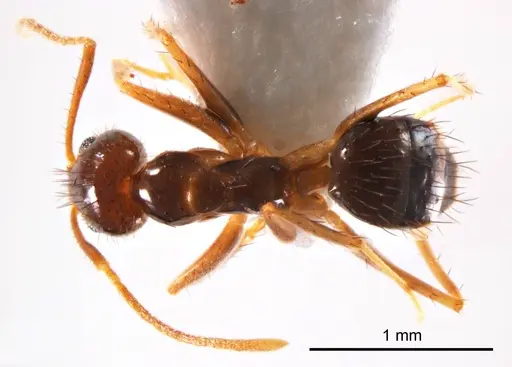
CASENT0219769
View on AntWeb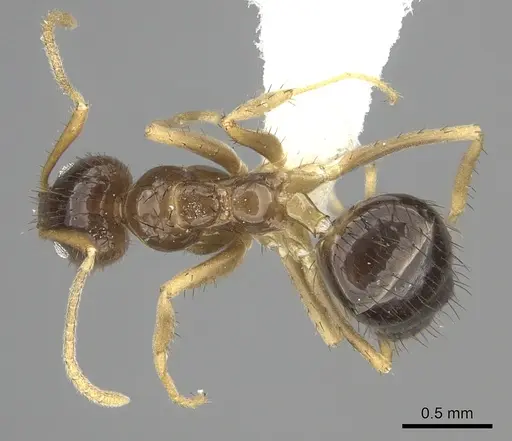
CASENT0903128
View on AntWeb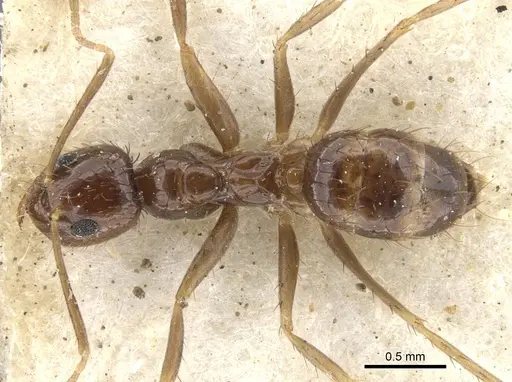
CASENT0911014
View on AntWeb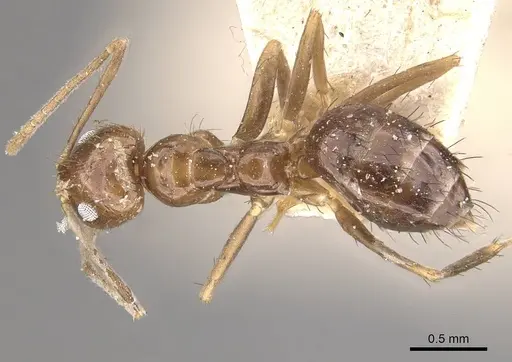
CASENT0917310
View on AntWeb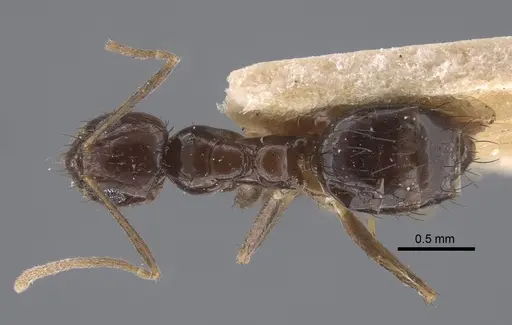
Literature
Loading distribution map...Loading products...