
Nylanderia birmana
- Sci. Name
- Nylanderia birmana
- Tribe
- Lasiini
- Subfamily
- Formicinae
- Author
- Forel, 1902
- Distribution
- Found in 4 countries
Introduction
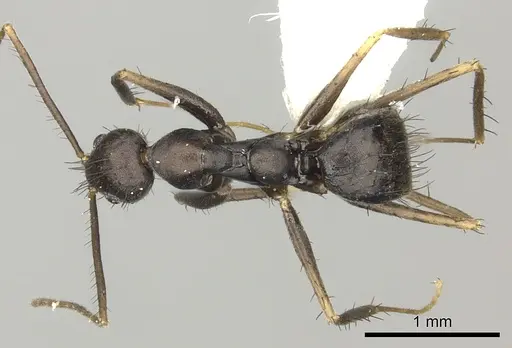
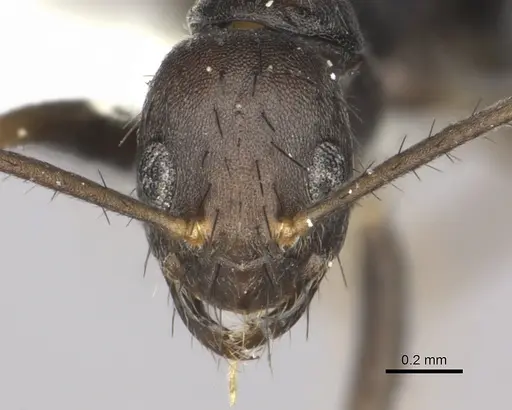
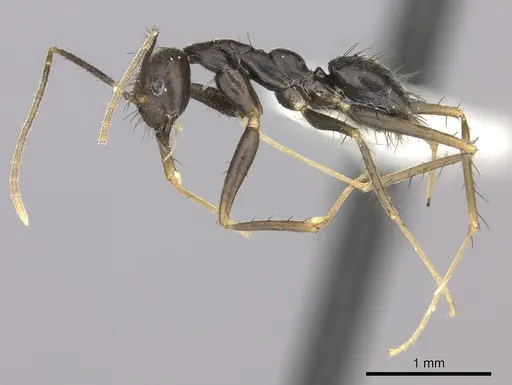
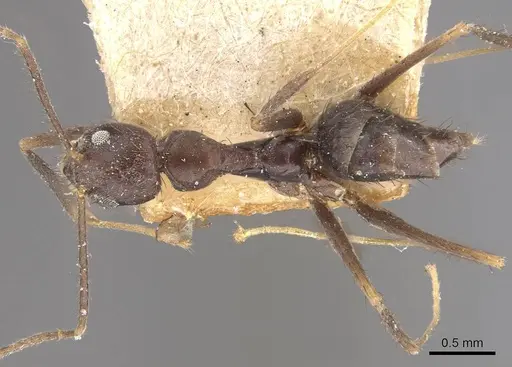
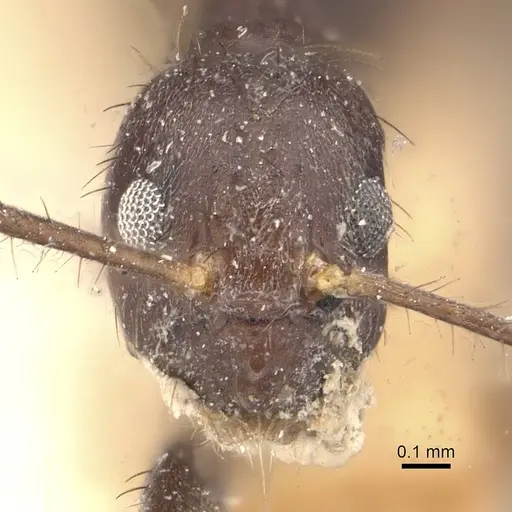
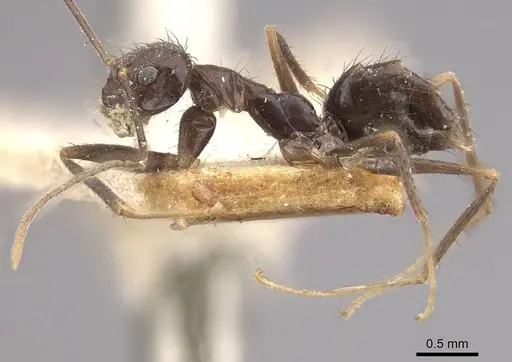
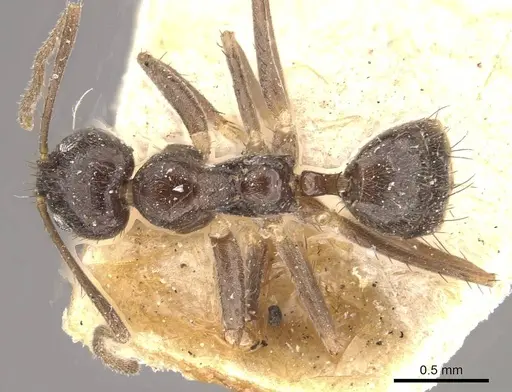
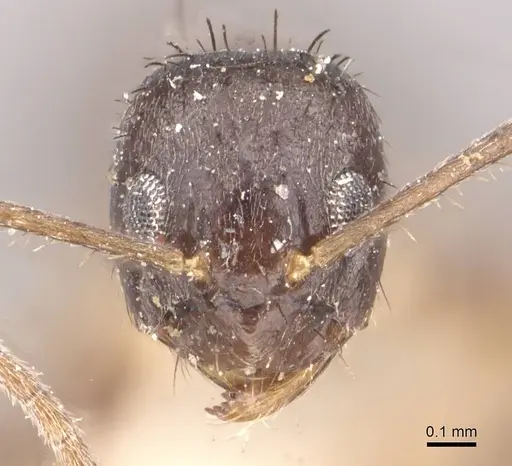
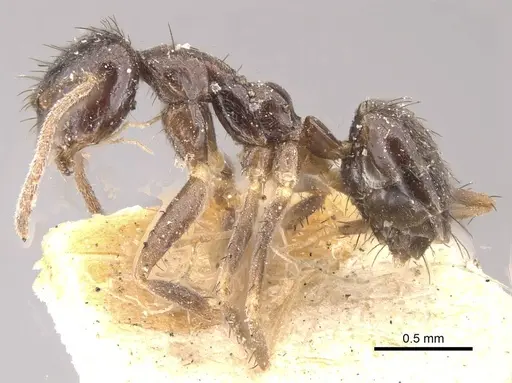
Nylanderia birmana is a small, dark ant with a distinctive microreticulate sculpture on the head and mesosoma . Full body length data is unavailable from current research; workers are small ants typical of the genus. This species is native to the Himalayan region, including India, Nepal, Myanmar, and southern China . In the wild, they are found under stones along roadsides and in subtropical, semi-evergreen forests . A key unusual feature is their restricted Himalayan distribution, making them infrequent in ant collections .
Quick Summary
- Difficulty: Medium
- Origin & Habitat: Himalayan region, found in India (Himachal Pradesh, Uttarakhand), Nepal, Myanmar, and southern China. They nest under stones in humid forests and have been collected on honey bait in subtropical, semi-evergreen forests [1][3]. In China, they occupy primary and secondary forests but are absent from rubber plantations [4].
- Colony Type: Unconfirmed
- Size & Growth:
- Queen: size data unavailable
- Worker: size data unavailable
- Colony: Unknown
- Growth: Unknown, likely moderate based on genus patterns
- Development: Unknown, estimated 6-10 weeks based on related Formicinae species at warm temperatures (No specific development data exists for this species. Estimates are inferred from typical genus patterns.)
- Antkeeping:
- Temperature: Temperature needs are unconfirmed, based on their subtropical habitat, start with 22-26°C and observe colony activity [1][3].
- Humidity: Keep nest substrate consistently moist but not waterlogged, reflecting their natural forest floor conditions [1].
- Diapause: Unknown for this species. Himalayan populations may experience cooler winters, so a cool period (10-15°C) for 2-3 months could be beneficial, but this is inferred [1][3].
- Nesting: Provide moist nests such as Y-tong, plaster, or test tube setups. They naturally nest under stones, so include damp substrate. Avoid acrylic nests, use hydration systems for moisture diffusion.
- Behavior: These ants are generalist foragers, as they visit honey bait in the wild [1]. Workers are small, so escape prevention is critical, use fine mesh and tight-fitting lids. Temperament is typically non-aggressive, but small ants can be feisty when threatened.
- Common Issues: escape prevention is critical due to tiny size, use fine mesh and tight-fitting lids, limited availability in the hobby since they are infrequent in collections [1], no established captive breeding protocols, wild-caught colonies may struggle, humidity control is important, too dry causes desiccation, too wet causes fungal problems, temperature sensitivity is unknown, start with moderate warmth and observe colony behavior
Natural History and Distribution
Nylanderia birmana is a Himalayan endemic species found across India, Nepal, Myanmar, and southern China [3]. In India, it is recorded from Himachal Pradesh and Uttarakhand, often under stones or collected on honey bait in subtropical forests [1][5]. In China, it occupies primary and secondary forests but avoids rubber plantations [4]. This preference for natural habitats suggests it is sensitive to environmental changes [1].
Identification and Appearance
Workers can be identified by their microreticulate sculpture on the head and mesosoma, which is more pronounced on the head [1][2]. The body is blackish brown to black, with brown antennae and legs. Queens have more dense pubescence, and males have reduced sculpture [1]. Under magnification, the reticulate pattern is the key feature for identification.
Housing and Nesting
In the wild, these ants nest under stones in humid environments [1]. For captivity, use moist nests like Y-tong or plaster with a hydration system. Ensure chambers are appropriately scaled for small ants. The outworld should have a sugar water station and protein offerings. Escape prevention is critical due to their tiny size, use fine mesh on ventilation and tight lids [1].
Feeding and Diet
They are generalist feeders and accept sugary substances like honey or sugar water [1]. Offer protein sources such as fruit flies or small mealworms twice weekly. Remove uneaten prey after 24-48 hours to prevent mold. Start with small offerings and adjust based on consumption.
Temperature and Seasonal Care
Temperature needs are unconfirmed, based on their subtropical habitat, keep around 22-26°C with a slight gradient [1][3]. For winter, if colony activity reduces, consider a cool period at 10-15°C for 2-3 months, but monitor behavior as diapause is not documented [1].
Colony Development and Growth
No specific development data exists for this species. Queens are larger than workers, but full size data is unavailable [1]. Based on related Formicinae, first workers may emerge in 6-10 weeks at warm temperatures. Colonies likely remain small to moderate in size, with moderate growth rates [1].
Frequently Asked Questions
How long does it take for Nylanderia birmana to produce first workers?
The exact timeline is unconfirmed, no specific data exists for this species. Based on related Formicinae, it might take 6-10 weeks at warm temperatures, but this is inferred [1].
What do Nylanderia birmana ants eat?
They are generalist feeders and accept sugar water or honey constantly, with protein sources like fruit flies twice weekly [1].
Are Nylanderia birmana good for beginners?
They are medium difficulty due to unconfirmed care needs and limited availability. Experienced keepers with small Formicinae may find them rewarding.
What temperature should I keep Nylanderia birmana at?
Start with 22-26°C based on their subtropical habitat, and create a slight gradient for self-regulation [1][3].
How big do Nylanderia birmana colonies get?
Colony size is unknown, no data exists on maximum worker counts.
Do Nylanderia birmana need hibernation?
Diapause requirements are unconfirmed. Himalayan populations may benefit from a cool period (10-15°C) for 2-3 months in winter, but this is inferred [1].
Can I keep multiple Nylanderia birmana queens together?
Colony structure is unconfirmed, combining unrelated queens is not recommended. House wild queens alone until workers emerge.
Why are my Nylanderia birmana escaping?
Their tiny size makes them expert escape artists. Use fine mesh on ventilation, ensure tight lids, and apply barriers like fluon.
Where can I get Nylanderia birmana?
This species is infrequent in collections due to its restricted Himalayan distribution [1]. You may need to connect with specialized dealers in India or Nepal.
Report an Issue
The current care sheet is based fully on literature. See inconsistencies, or something that's incorrect? Please , it will be resolved after review from an admin. Contributing to the blogs tab also helps providing information, to make us be able to further improve the caresheets. Thank you for your support!
References

This caresheet is licensed under CC BY-SA 4.0 .
Community Blogs
Literature
Loading distribution map...Loading products...