
Nylanderia austroccidua
- Sci. Name
- Nylanderia austroccidua
- Tribe
- Lasiini
- Subfamily
- Formicinae
- Author
- Trager, 1984
- Distribution
- Found in 4 countries
Introduction
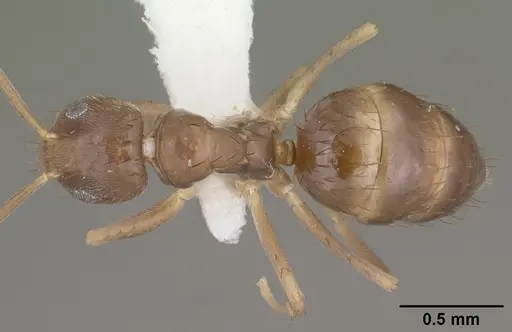
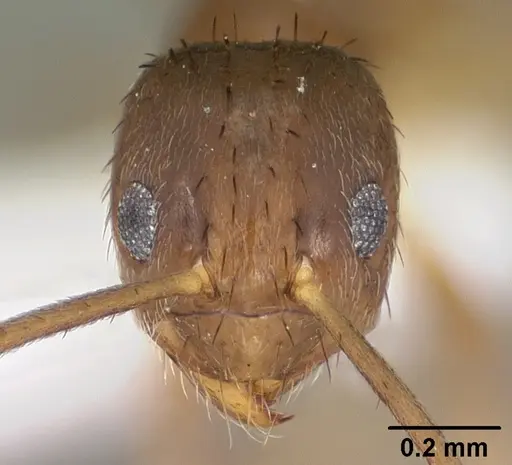
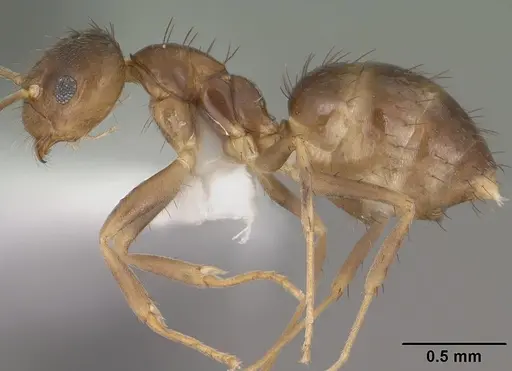
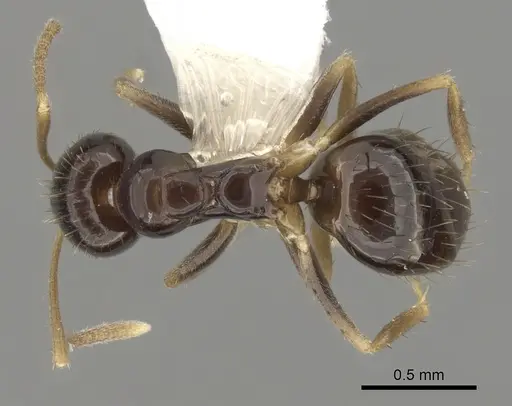
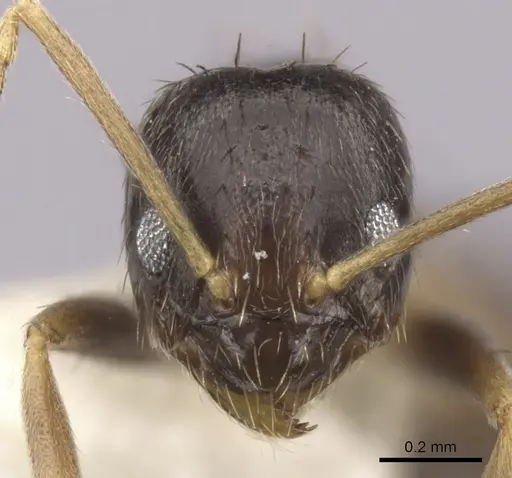
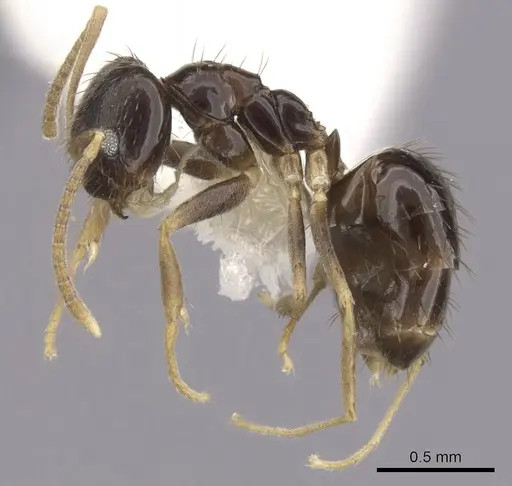
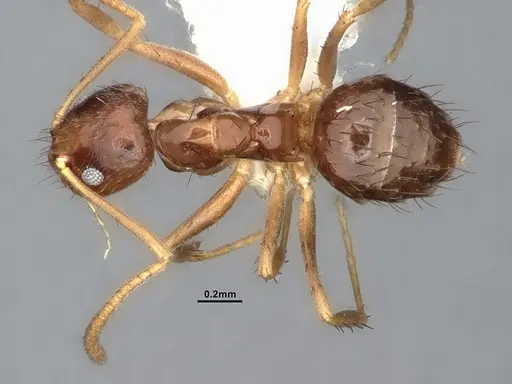
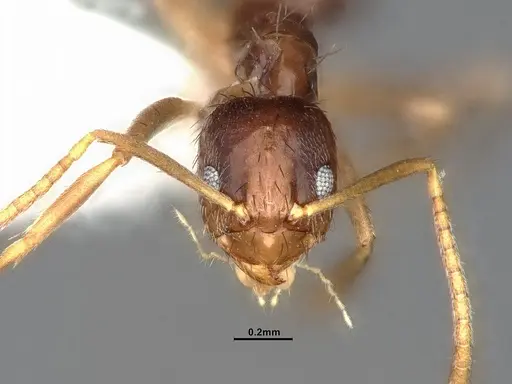
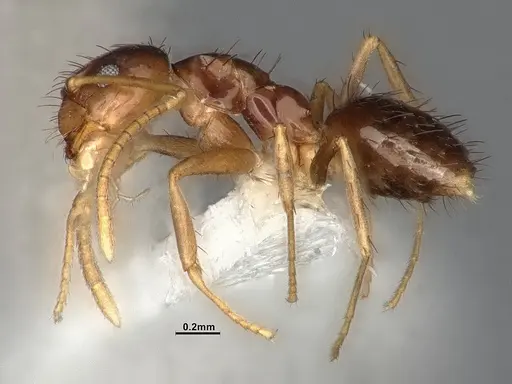
Nylanderia austroccidua is a small ant native to mountainous regions of the southwestern United States, Texas, Mexico, and down to Costa Rica . Workers measure 1.87-2.64 mm in total length and are brown with yellowish-brown legs, antennae, and joints . Queens are larger at 3.73-4.26 mm . They have a unique bluish iridescence on the head and mesosoma under magnification, which sets them apart from other Nearctic Nylanderia species . These ants nest under stones in moist forests dominated by oak, maple, and pine, and also inhabit cloud forests .
Quick Summary
- Difficulty: Easy
- Origin & Habitat: Mountains of southwestern United States, Texas, Mexico to Costa Rica. Found in moist, mountainous regions in forests dominated by oak, maple, and pine, as well as cloud forests in Costa Rica [1]. Nests frequently under stones in soil [1][3].
- Colony Type: Colony structure is unconfirmed. No specific data on queen number or social structure.
- Size & Growth:
- Queen: 3.73-4.26 mm [1]
- Worker: 1.87-2.64 mm [1]
- Colony: Unknown, no data on maximum colony size
- Growth: Moderate, inferred from related Nylanderia species
- Development: Estimated 6-10 weeks at room temperature, based on typical Nylanderia development patterns [3] (Development timeline has not been directly studied for this species. Estimates are inferred from genus-level data.)
- Antkeeping:
- Temperature: Keep at room temperature, around 20-24°C, based on their mountainous habitat [1].
- Humidity: Keep nest substrate consistently moist but not waterlogged, as they inhabit moist forests [1].
- Diapause: Yes, likely required for 2-3 months at cooler temperatures (10-15°C) during winter, inferred from temperate distribution [1].
- Nesting: Prefer compact, dark nests under stones, use test tubes for founding and Y-tong or soil nests for established colonies [1][3].
- Behavior: Workers are active foragers and relatively docile, escape risk is moderate due to small size [1].
- Common Issues: small size means escape prevention must be adequate, check for gaps in lids and barrier setups., humidity control is important, too dry and colonies will decline, too wet can cause mold issues., winter diapause appears necessary, keeping them active year-round may stress colonies., slow founding phase, queens need patience during the first few months., wild-caught colonies may have parasites or stress from relocation.
Nest Preferences and Housing
In the wild, Nylanderia austroccidua nests primarily under stones in soil, taking advantage of the cool, moist microclimate beneath rocks [1]. They prefer compact, dark spaces that maintain stable humidity. For captive care, test tubes work excellently for founding colonies, fill a test tube about one-third with water, plug with a cotton wick, and place the queen in the tube. The queen will seal herself into a chamber and remain there until her first workers emerge. For established colonies, Y-tong (AAC) nests or acrylic formicaria with compact chambers work well. If using a naturalistic setup, provide a layer of moist soil with flat stones or tiles on top to simulate their natural nesting conditions. Avoid tall, open spaces, these ants prefer tight, enclosed chambers that help maintain humidity.
Feeding and Diet
Nylanderia austroccidua is opportunistic and will accept a variety of foods. In nature, they forage for honeydew from aphids and scale insects, small insects, and nectar [1]. In captivity, offer sugar water or honey as a constant energy source, they will readily take these. For protein, provide small prey items such as fruit flies, pinhead crickets, mealworms, or other small insects. Feed protein sources 2-3 times per week, and keep sugar water available at all times. Remove uneaten prey after 24-48 hours to prevent mold.
Temperature and Seasonal Care
Nylanderia austroccidua comes from mountainous regions in the southwestern US and Mexico, where temperatures are moderate. Keep your colony at room temperature, ideally between 20-24°C [1]. They can tolerate slightly cooler conditions but should be kept away from direct heat sources and extreme temperatures. During the winter months, they likely require a diapause period. Reduce temperatures to around 10-15°C for 2-3 months during winter. This can be achieved by moving the colony to a cooler room or garage (if temperatures stay above freezing). Do not feed during diapause, but keep the nest substrate slightly moist. Resume normal feeding and temperatures when spring arrives.
Behavior and Colony Dynamics
Workers of Nylanderia austroccidua are active and quick-moving. They forage individually and will quickly discover and recruit nestmates to food sources through chemical trails. Colonies are relatively peaceful and not aggressive toward keepers, they may bite if threatened, but the bite is negligible due to their small size. The queen remains in the nest after founding and is attended by workers. Brood development occurs in the nest, with larvae and pupae developing in the chambers. Based on related species, expect the first workers (nanitics) to emerge smaller than mature workers. Colonies grow gradually over several months to years, depending on feeding and conditions. [1]
Field Identification and Collection Notes
In the field, Nylanderia austroccidua can be identified by several characteristics: their brown body with contrasting yellowish legs and antennae, the unique bluish iridescence visible under microscope, and their angular pronotum when viewed from the side [1]. They are often found nesting under stones in moist forest areas. If you find a colony, look for the queen, she will be significantly larger than workers. Handle gently during collection, as queens can be damaged easily. Note that this species has the most southern distribution of any native Nearctic Nylanderia, extending down to Costa Rica [1]. Always check local regulations before collecting ants.
Frequently Asked Questions
How long does it take for Nylanderia austroccidua to produce first workers?
The exact timeline is unknown, but based on typical Nylanderia development, it may take 6-10 weeks at room temperature [3].
What temperature is best for Nylanderia austroccidua?
Keep them at room temperature, ideally 20-24°C, based on their mountainous habitat [1].
Do Nylanderia austroccidua need hibernation?
Yes, they likely require a winter diapause. Reduce temperatures to 10-15°C for 2-3 months during winter, inferred from their temperate distribution [1].
Can I keep multiple Nylanderia austroccidua queens together?
Colony structure is unconfirmed for this species. Most Nylanderia are single-queen, but it is not recommended to combine queens without evidence [1].
What do Nylanderia austroccidua eat?
They are opportunistic feeders. Offer sugar water or honey constantly for energy, and protein sources like fruit flies, small crickets, or mealworms 2-3 times per week [1].
Are Nylanderia austroccidua good for beginners?
Based on their docile nature and adaptability, they are considered easy for beginners, but no specific studies on difficulty [3].
How big do Nylanderia austroccidua colonies get?
Maximum colony size is unknown, but related species reach several hundred workers [3].
Why is my Nylanderia austroccidua colony dying?
Common causes include: too dry conditions (keep substrate moist), improper temperatures (avoid extremes), stress from overhandling, or lack of protein in their diet. Ensure they have constant access to sugar water and regular protein. If in diapause, make sure temperatures are cool enough but not freezing.
When should I move my colony to a formicarium?
Wait until the colony has at least 20-30 workers before moving to a larger setup. Test tubes work well for founding colonies, you can transition once the colony outgrows the test tube or when you want to observe their tunneling behavior.
Report an Issue
The current care sheet is based fully on literature. See inconsistencies, or something that's incorrect? Please , it will be resolved after review from an admin. Contributing to the blogs tab also helps providing information, to make us be able to further improve the caresheets. Thank you for your support!
References

This caresheet is licensed under CC BY-SA 4.0 .
Community Blogs
Literature
Loading distribution map...Loading products...