
Notoncus ectatommoides
- Sci. Name
- Notoncus ectatommoides
- Tribe
- Melophorini
- Subfamily
- Formicinae
- Author
- Forel, 1892
- Distribution
- Found in 1 countries
Introduction
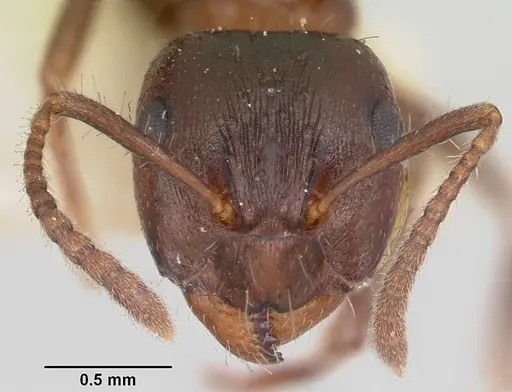
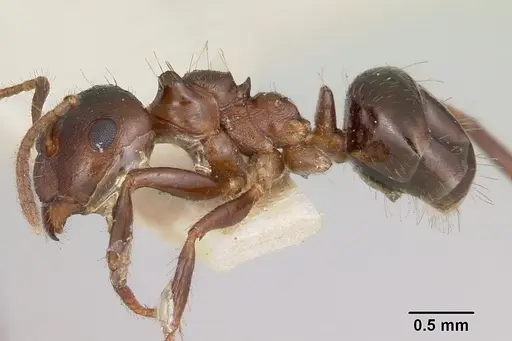
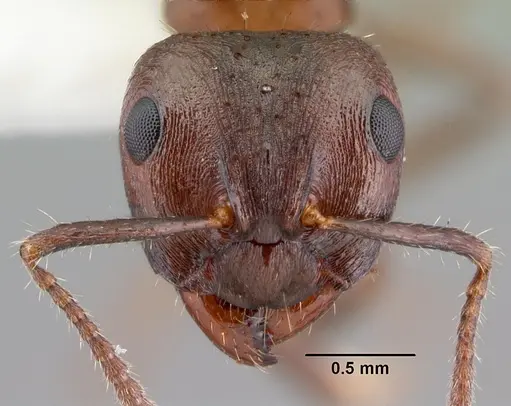
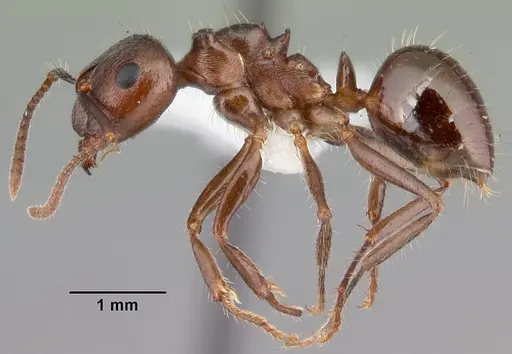
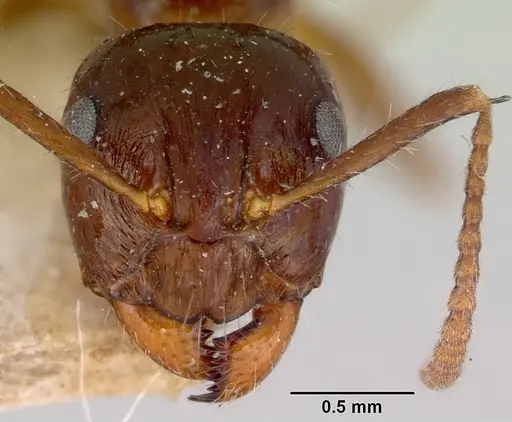
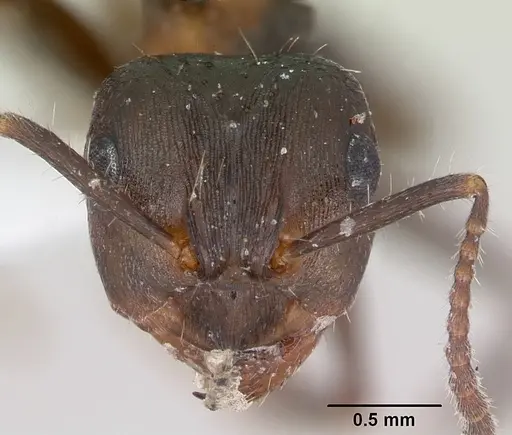
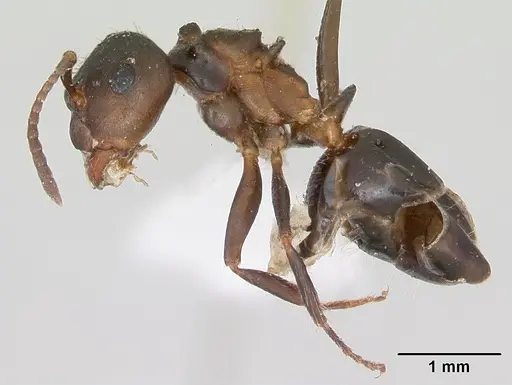
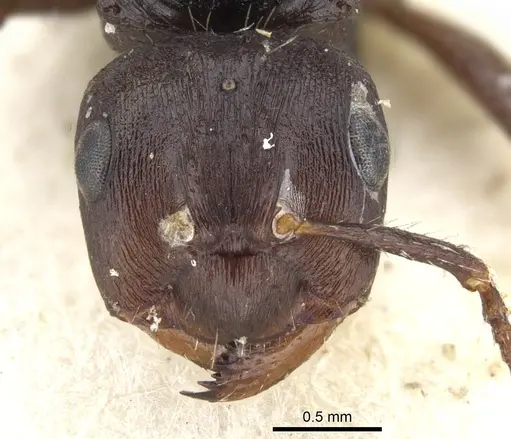
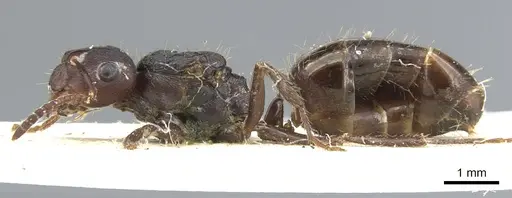
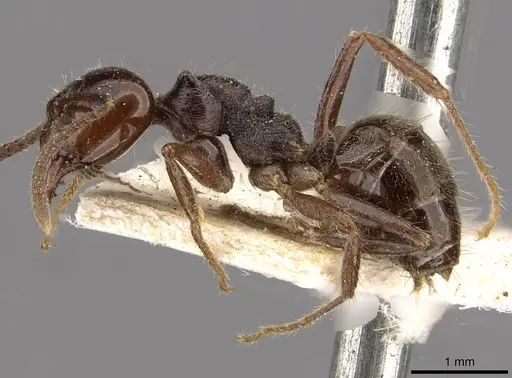
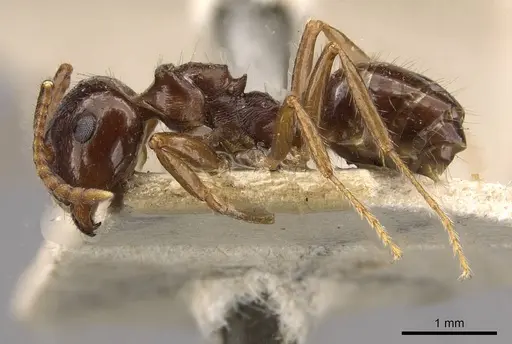
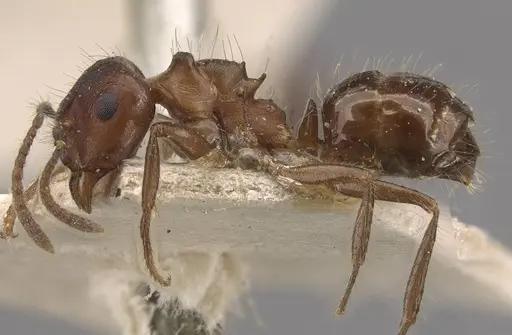
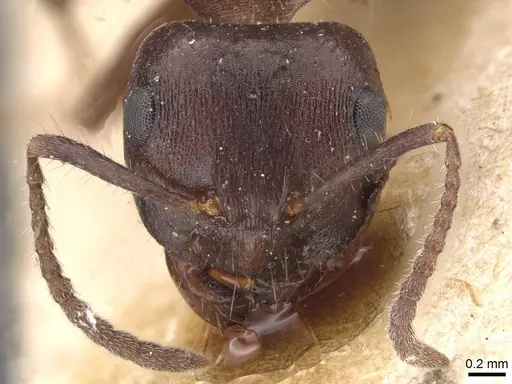
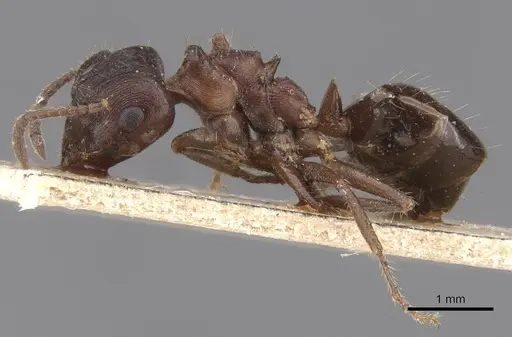
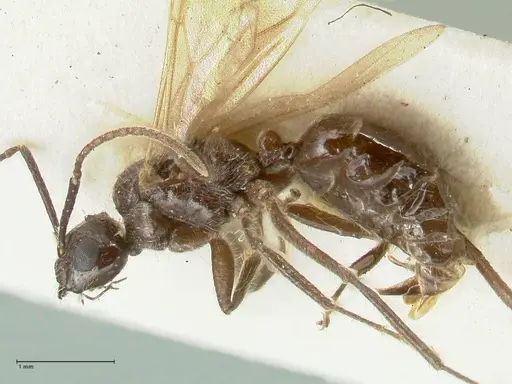
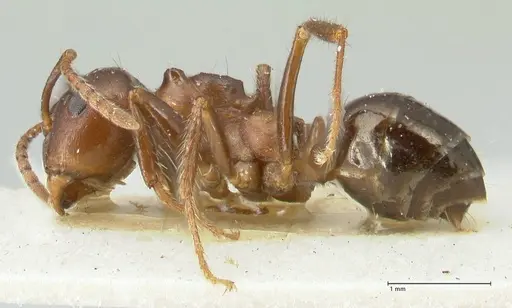
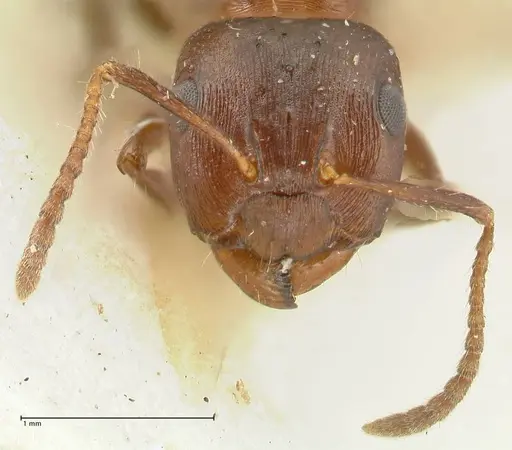
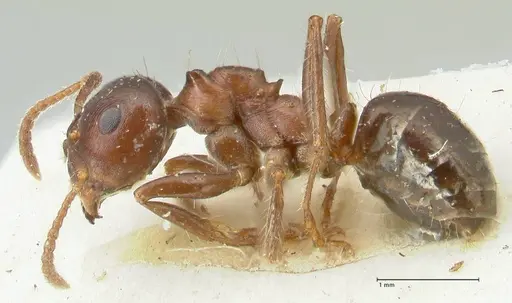
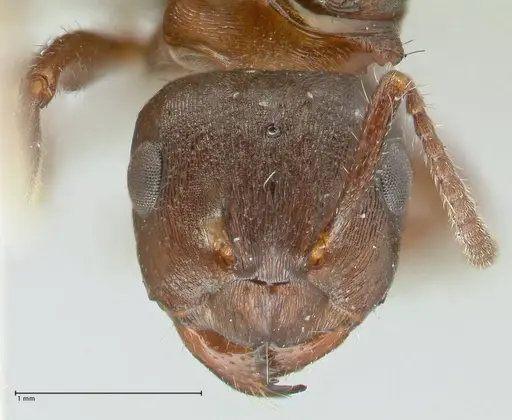
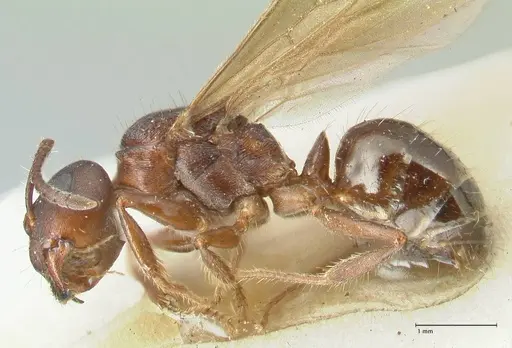
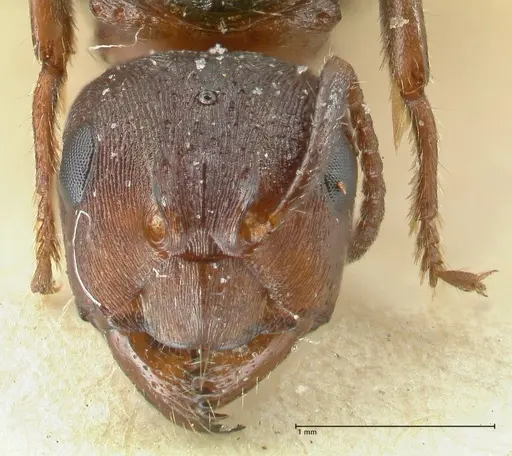
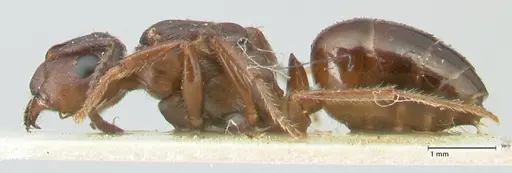
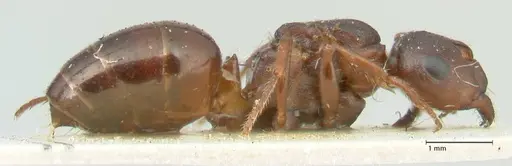
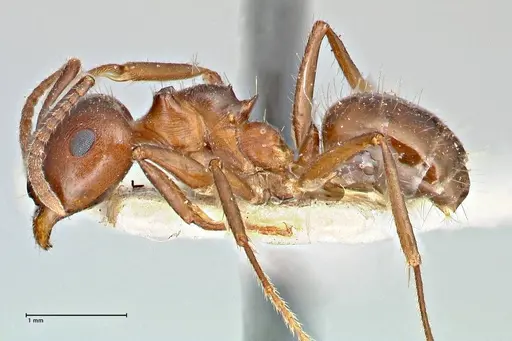
Notoncus ectatommoides is an Australian ant in the subfamily Formicinae. Body size is poorly known - only head width (~1.13 mm) has been recorded . The scutellum is a slender erect process that can be chisel‑shaped, Y‑shaped, or tooth‑like . This nocturnal species is found in sclerophyll forests across Australia including Tasmania, Queensland, Victoria, and New South Wales, and also occurs in urban green spaces . Nests are typically under logs or in soil . Their most unusual trait is the mating swarm: males form dense, tumbling balls around emerging females, with each ball holding together for 20-30 seconds before the female flies straight upward .
Quick Summary
- Difficulty: Medium
- Origin & Habitat: Australia, recorded in Tasmania, Queensland, Victoria, and New South Wales. Inhabits sclerophyll forest communities [3] and urban green spaces [4]. Nests under logs or in soil [2]. Also intercepted in New Zealand through human‑mediated dispersal [5].
- Colony Type: Unconfirmed, likely monogyne based on related Melophorini.
- Size & Growth:
- Queen: Size data unavailable.
- Worker: Size data unavailable, only head width (~1.13 mm) has been recorded, not total length [1].
- Colony: Unknown, no data available.
- Growth: Moderate, estimated.
- Development: Estimated 6-10 weeks at optimal temperature based on related Formicinae. (Development timeline is inferred, no species‑specific data available.)
- Antkeeping:
- Temperature: Temperate species, keep at 20-24 °C, with a cooler winter rest period. Provide a gentle thermal gradient if possible.
- Humidity: Moderate, keep the nest substrate slightly moist but not waterlogged. Their natural habitat experiences seasonal variation.
- Diapause: Likely required, Australian temperate distribution suggests a winter rest period. Provide 2-3 months at 10-15 °C.
- Nesting: Natural nests under logs or in soil [2][3]. In captivity use a soil‑based setup or a Y‑tong/plaster nest with moderate humidity chambers.
- Behavior: Nocturnal [6] and arboreal [7]. Workers are active mainly at night, often foraging in vegetation. Their mating swarms are highly distinctive: males form dense balls around emerging females [2]. Escape prevention is important, use fine mesh or fluon on barriers due to their small size.
- Common Issues: limited species‑specific information makes precise care uncertain, use observations of related species as a guide., nocturnal activity means you may rarely see the ants during daylight hours., winter diapause is likely required but the exact timing and duration are unknown., their small size requires careful escape prevention (fine mesh on ventilation, fluon or oil barriers)., diet preferences are undocumented, offer a variety of small prey items and sugar water.
Natural History and Distribution
Notoncus ectatommoides is endemic to Australia and has been recorded in Tasmania, Queensland, Victoria, and New South Wales. It inhabits sclerophyll forest communities [3] and also occurs in urban green spaces with varying vegetation complexity [4]. This species is primarily nocturnal [6] and arboreal [7]. Nests are found under logs or in the soil [2]. Several junior synonyms exist: Notoncus ectatommoides, Notoncus ectatommoides, Notoncus ectatommoides, Notoncus ectatommoides, and Notoncus ectatommoides [2]. The species has also been intercepted in New Zealand via human‑mediated dispersal, with more than five interception records between 1955 and 2005 [5].
Unique Mating Behavior
The mating behavior of Notoncus ectatommoides is one of its most unusual features. Workers open small holes in the ground, from which males emerge in large numbers. Males fly in low, flitting flights until a female emerges. When a winged female appears, males rush to her and form a dense swarming ball that can exceed 2 cm in diameter. The ball moves in a tumbling, dragging motion for 20-30 seconds, after which the female escapes and flies straight upward. Males do not follow more than about 30 cm above ground. Many more males than females participate, creating intense competition [2]. This behavior has been described by W.L. Brown (1955) and is also cited in literature on male mating monopolies [8].
Visual Adaptations
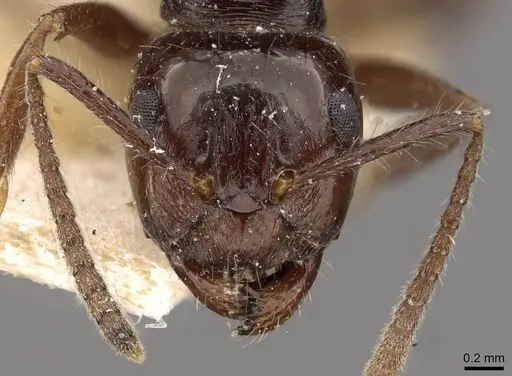
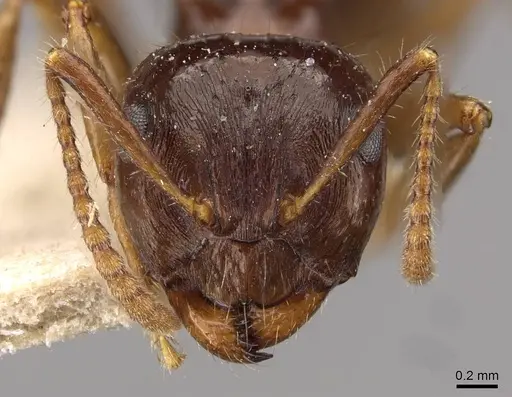
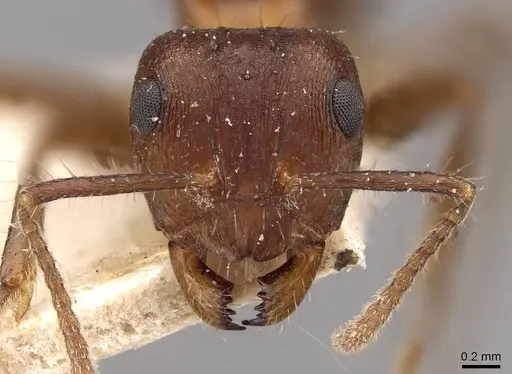
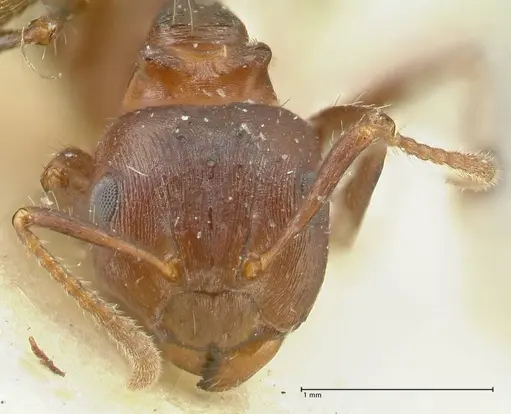
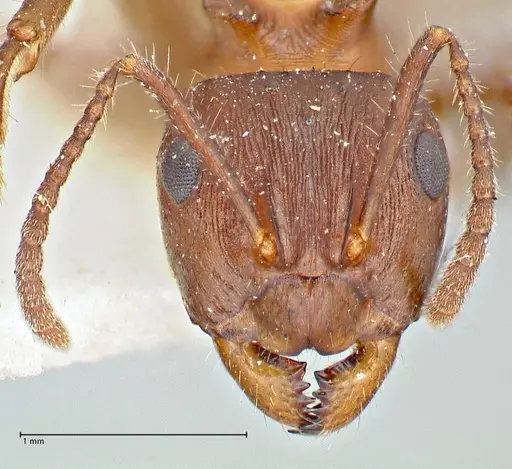
As a nocturnal species, Notoncus ectatommoides has eyes adapted for low light. Research shows they have only about 157 facets per eye, the lowest spatial resolution among ant species studied [1]. However, their facet diameters are relatively large, a common adaptation in nocturnal insects to capture more light [6]. Mean head width is 1.13±0.14 mm [1]. Despite the small visual system, these ants are capable of navigating around obstacles, though they detect obstacles later and detour closer to them compared to ants with more facets [1].
Housing and Nesting
In the wild, Notoncus ectatommoides nests under logs and in soil [2]. For captive colonies, a naturalistic setup with a deep soil substrate works well, allowing them to dig their own chambers. Y‑tong or plaster nests with moderate humidity chambers are also suitable. Because they are arboreal, include vertical branches or bark in the outworld for climbing. Keep humidity moderate, the substrate should feel slightly damp but never waterlogged. Provide a test tube with a water supply or a water tube. Escape prevention is critical due to their small size: use fine mesh on ventilation and a fluon or oil barrier on the outworld walls.
Feeding and Diet
The specific diet of Notoncus ectatommoides is not well documented. Based on related Melophorini and other Formicinae, it is likely omnivorous. Offer sugar water or honey water (changed regularly to prevent mould) and small protein sources such as fruit flies, pinhead crickets, or small mealworms. Feed protein 2-3 times per week and provide constant access to sugar water. Avoid large prey items, the ants are small. They may also scavenge dead insects. [2]
Seasonal Care and Activity
Notoncus ectatommoides is nocturnal, so most activity will occur during the evening and night [6][2]. As a temperate Australian species, a winter diapause is likely required. During the cooler months (roughly June-August in the southern hemisphere), reduce temperatures to 10-15 °C for 2-3 months. This mimics natural conditions and is important for colony health. Without diapause, brood development may stall and colonies may weaken. After diapause, gradually warm the nest to 20-24 °C.
Frequently Asked Questions
How long does it take for Notoncus ectatommoides to produce first workers?
The exact development timeline is unknown for this species. Based on typical Formicinae development and related Australian Melophorini, expect approximately 6-10 weeks from egg to worker at optimal temperature (around 22-24 °C). This is an estimate, actual time may vary.
Can I keep Notoncus ectatommoides in a test tube?
Test tubes can work for founding colonies, but because these ants are arboreal and like vertical space, consider moving them to a naturalistic or Y‑tong setup once the colony is established (e.g., after about 10-20 workers). Ensure the test tube has adequate moisture without flooding.
Are Notoncus ectatommoides good for beginners?
This species is rated Medium difficulty. The limited species‑specific information makes care somewhat uncertain. Beginners may prefer a more documented species, but experienced keepers interested in Australian natives will find it a rewarding challenge.
What do Notoncus ectatommoides eat?
Based on related species, they are omnivorous. Offer sugar water or honey for carbohydrates, and small protein sources like fruit flies, pinhead crickets, or tiny mealworms. Feed protein 2-3 times per week and keep sugar water available constantly.
Do Notoncus ectatommoides need hibernation?
Yes, a winter diapause is likely required given their Australian temperate distribution. Provide 2-3 months at reduced temperatures (10-15 °C) during winter, roughly corresponding to the cooler months in your region.
How big do Notoncus ectatommoides colonies get?
Colony size data is not available for this species. Based on related Melophorini, expect moderate colony sizes probably reaching several hundred workers over several years. This is speculative.
When are Notoncus ectatommoides active?
This species is nocturnal, with peak activity during the evening and night. Workers typically rest in the nest during daylight hours [6].
Can I keep multiple Notoncus ectatommoides queens together?
The colony structure (monogyne vs polygyne) is unconfirmed for this species. Combining unrelated queens is not recommended as it has not been documented as successful. Single‑queen colonies are the safest approach.
What makes Notoncus ectatommoides different from other Australian ants?
Their mating behavior is unique, males form dense swarming balls around emerging females during nuptial flights. They are also one of the few truly nocturnal Australian ants with specialised visual adaptations for low‑light conditions [6][1].
Report an Issue
The current care sheet is based fully on literature. See inconsistencies, or something that's incorrect? Please , it will be resolved after review from an admin. Contributing to the blogs tab also helps providing information, to make us be able to further improve the caresheets. Thank you for your support!
References

This caresheet is licensed under CC BY-SA 4.0 .
Community Blogs
CASENT0006130
View on AntWeb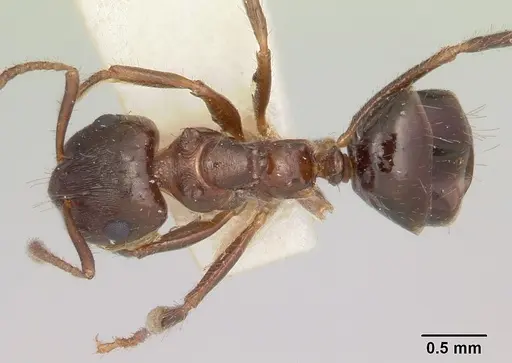
CASENT0010856
View on AntWeb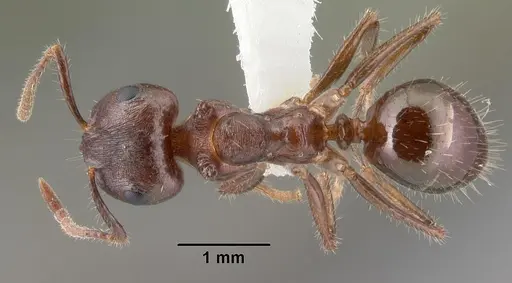
CASENT0172023
View on AntWeb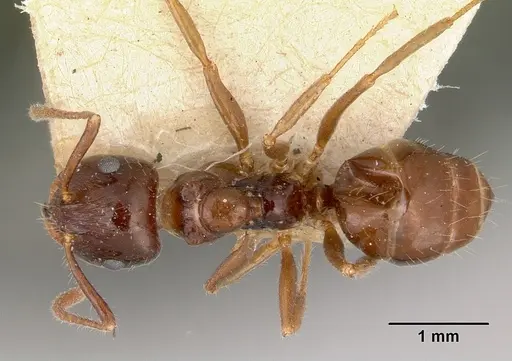
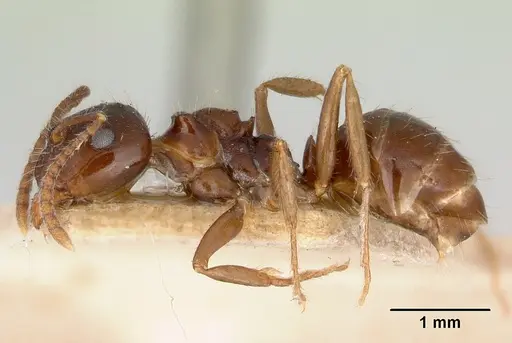
CASENT0172026
View on AntWeb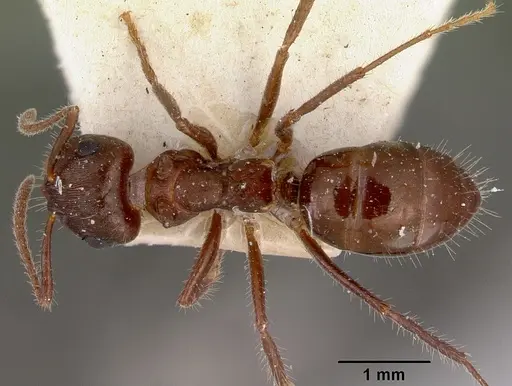
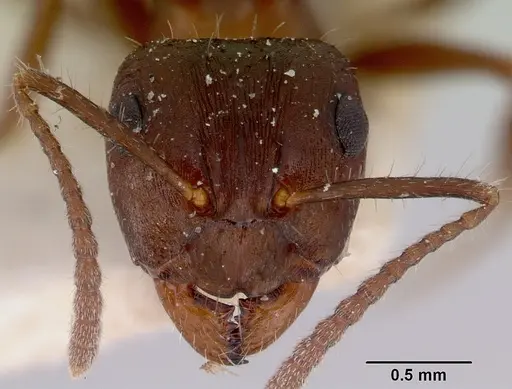
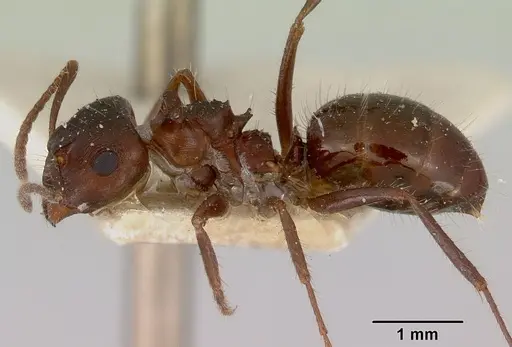
CASENT0173309
View on AntWeb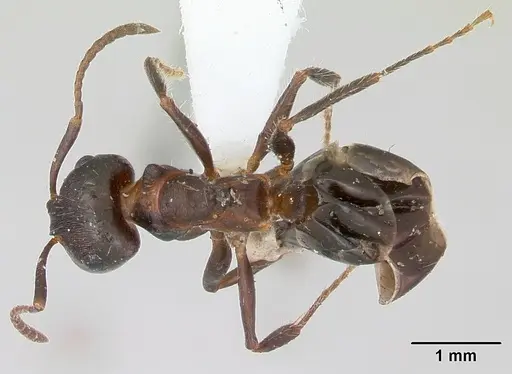
CASENT0903251
View on AntWeb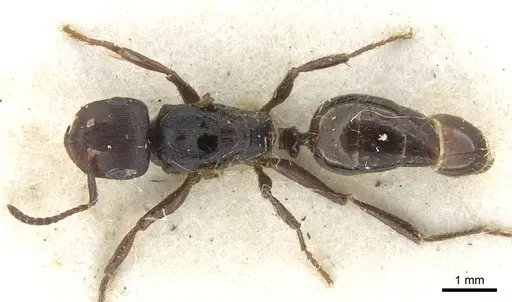
CASENT0909834
View on AntWeb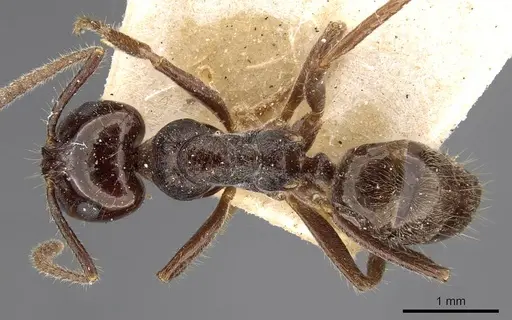
CASENT0909835
View on AntWeb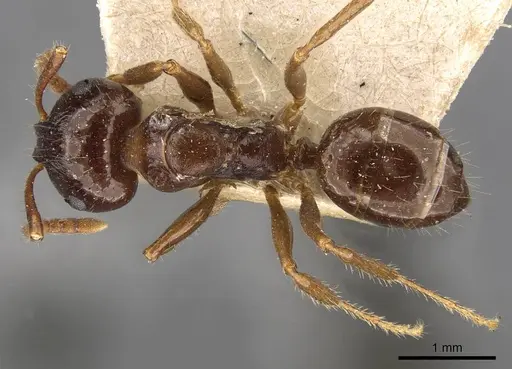
CASENT0909836
View on AntWeb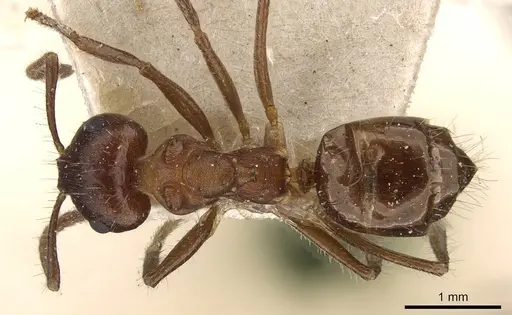
CASENT0913757
View on AntWeb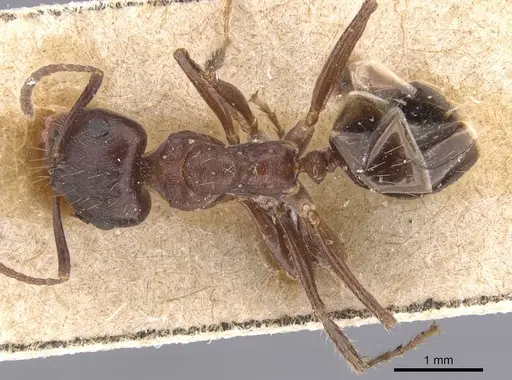
FOCOL2220
View on AntWeb
FOCOL2221
View on AntWeb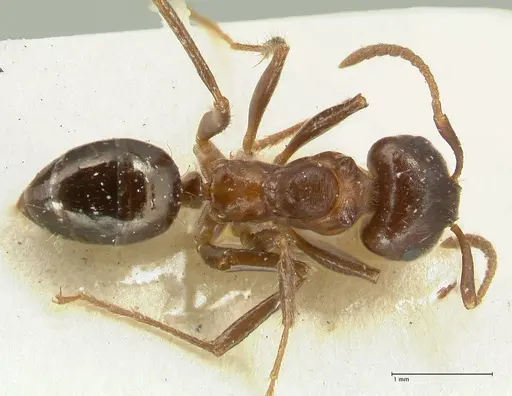
FOCOL2222
View on AntWeb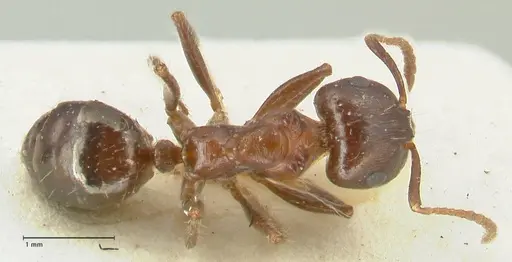
FOCOL2223
View on AntWeb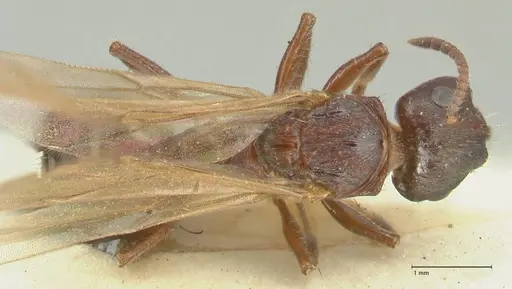
FOCOL2224
View on AntWeb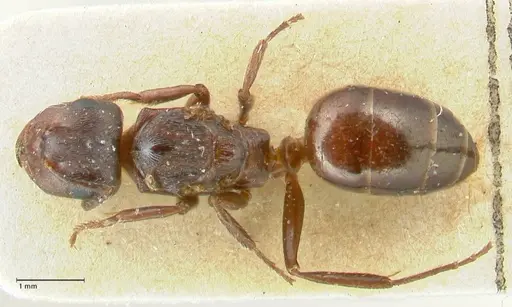
FOCOL2962
View on AntWeb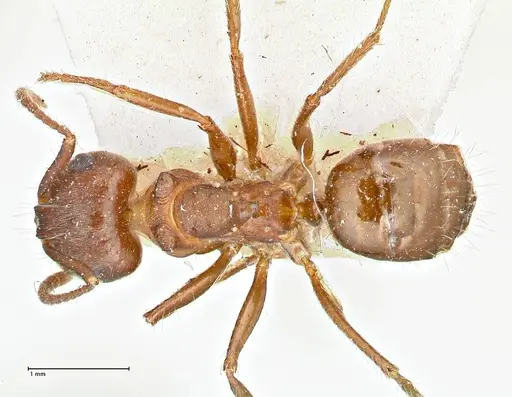
Literature
Loading distribution map...Loading products...