
Nesomyrmex vicinus
- Sci. Name
- Nesomyrmex vicinus
- Tribe
- Crematogastrini
- Subfamily
- Myrmicinae
- Author
- Mayr, 1887
- Distribution
- Found in 1 countries
Introduction
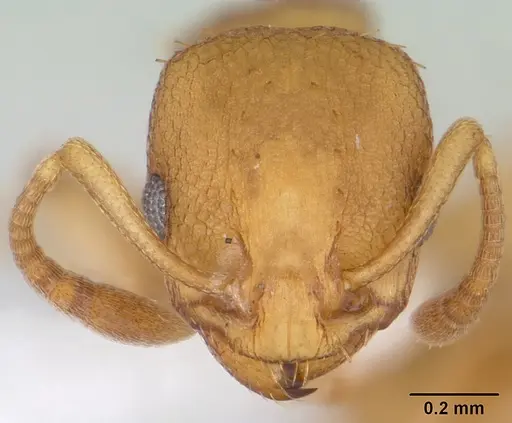
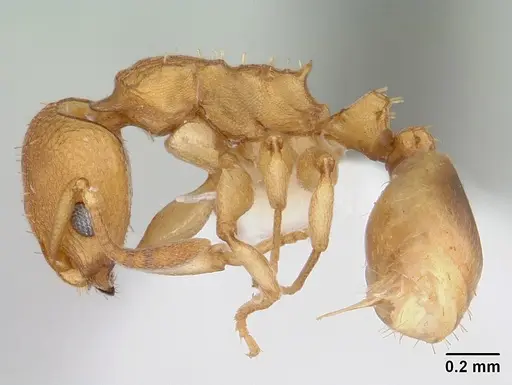
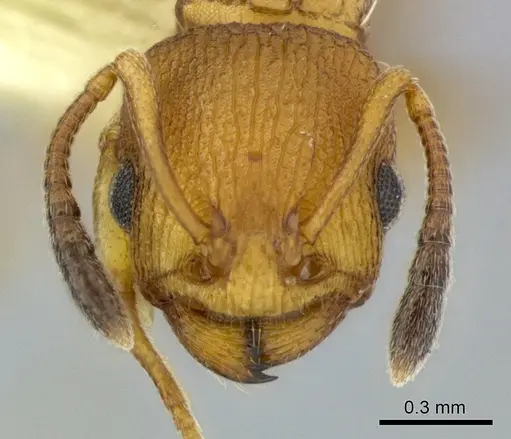
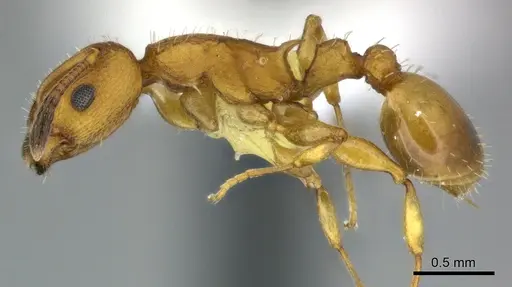
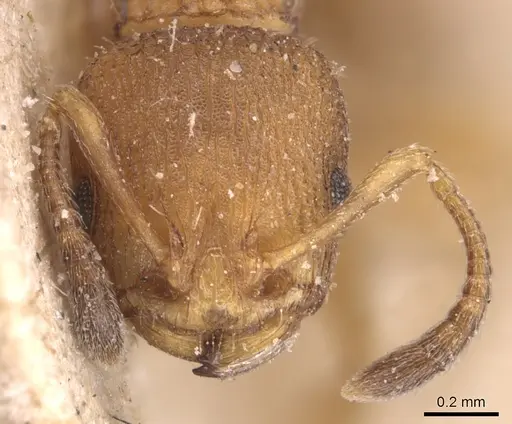
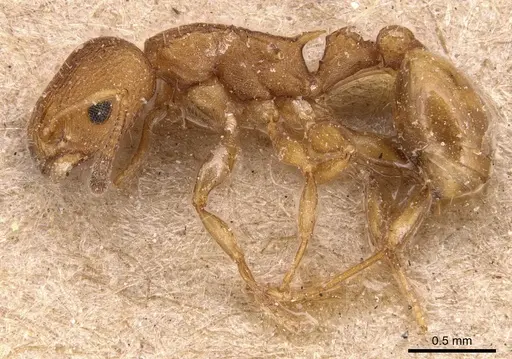
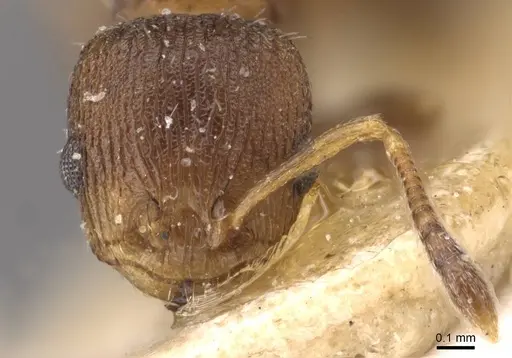
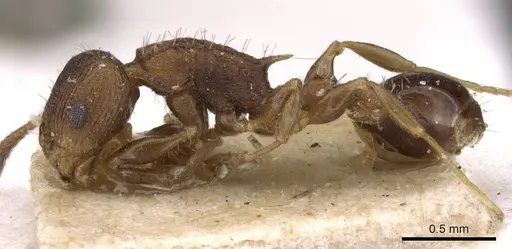
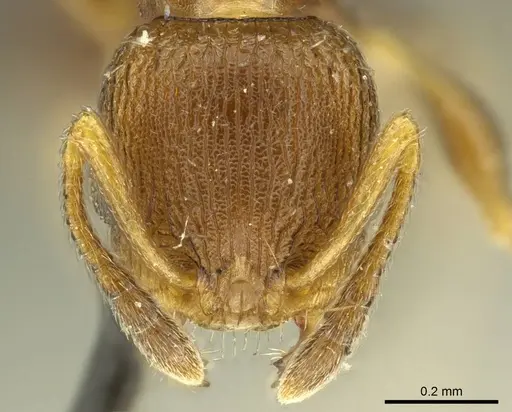
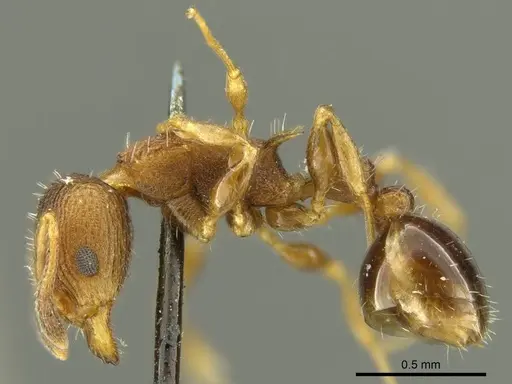
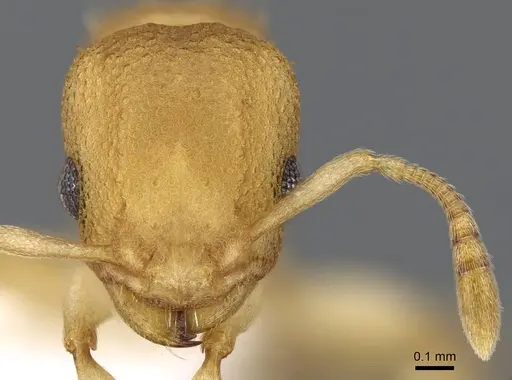
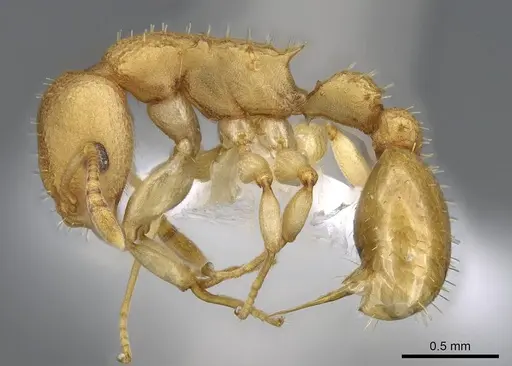
Nesomyrmex vicinus is a small ant species native to the Neotropical region, including Mexico, Brazil, Argentina, and Paraguay . Workers are tiny, but specific body size data is unavailable from the research context. This species was originally described as Leptothorax vicinus and reclassified to Nesomyrmex . It inhabits moist montane forests and semi-arid tropical regions, showing adaptability to varying conditions . The most notable trait is its defense mechanism: a modified stinger used to smear venom onto enemies, typical of the Crematogastrini tribe.
Quick Summary
- Difficulty: Easy
- Origin & Habitat: Neotropical region, Mexico, Brazil, Argentina, and Paraguay, found in moist montane forests and semi-arid areas [1][2].
- Colony Type: Colony structure is unconfirmed, no specific data on queen number or social system.
- Size & Growth:
- Queen: Size data unavailable, no total length measurements in research context.
- Worker: Size data unavailable, no total length measurements in research context.
- Colony: Unknown, no colony size data in research context.
- Growth: Moderate
- Development: Estimated 6-8 weeks at tropical temperatures, based on genus patterns [1]. (Development time inferred from Nesomyrmex genus, specific timing unconfirmed for this species.)
- Antkeeping:
- Temperature: Keep warm and stable, roughly low-to-mid 20s°C, as inferred from tropical distribution. No specific data in research context.
- Humidity: Keep nest substrate consistently moist but not waterlogged, as typical for tropical species. No specific data in research context.
- Diapause: No, tropical species do not require hibernation, based on geographic range [1].
- Nesting: Prefers small cavities in nature, in captivity, test tube setups or small nests with tight chambers work well, inferred from genus patterns [1].
- Behavior: Generally docile and non-aggressive, workers are small and timid, foraging quietly. Escape risk is high due to tiny size, use fine mesh barriers. No sting risk to keepers.
- Common Issues: tiny size requires careful escape prevention with fine mesh or barriers., limited research means care aspects are often inferred rather than confirmed., slow colony growth may test patience compared to faster-growing species., wild-caught colonies may carry undetected parasites.
Housing and Nest Setup
You should use a test tube setup for founding or small colonies, as it provides humidity control. For larger colonies, small Y-tong or plaster nests work well, with chambers scaled to their tiny size. Ensure passages are narrow for security, and avoid tall open spaces. Use fine mesh on ventilation to prevent escapes [1].
Feeding and Diet
You can offer sugar sources like honey or diluted syrup constantly, and protein from small insects like fruit flies or pinhead crickets 2-3 times per week. Remove uneaten prey after 24 hours to prevent mold. This is based on general ant care and Nesomyrmex genus patterns [1].
Temperature and Seasonal Care
You should keep the nest area warm, around low-to-mid 20s°C, as inferred from their tropical distribution. Avoid temperatures below 18°C for extended periods. No hibernation is needed, but a slight winter reduction to 20-22°C may be beneficial [1].
Colony Development and Growth
Colonies grow moderately, first workers may appear in 6-8 weeks at optimal temperatures. Growth is steady but slow, taking months to years to reach larger sizes. Patience is key, as specific timelines are unconfirmed [1].
Behavior and Temperament
Workers are docile and flee when threatened, with no sting risk. Their small size means escape prevention is critical. They forage quietly for sugars and small prey, typical of the genus [1].
Frequently Asked Questions
How long does it take for Nesomyrmex vicinus to produce first workers?
At optimal temperatures, expect first workers in approximately 6-8 weeks, based on genus patterns. Specific data for this species is unconfirmed [1].
Can I keep multiple queens together?
Colony type is unconfirmed, combining queens is not recommended as they may fight. Wild colonies typically have one queen, but no specific data exists.
Do Nesomyrmex vicinus ants sting?
No, they do not sting humans. Their defense mechanism involves smearing venom, but they pose no danger to keepers [1].
What temperature range is best?
Keep them warm, roughly low-to-mid 20s°C, as inferred from their tropical habitat. Avoid extremes below 18°C or above 30°C.
How big do colonies get?
Colony size is unknown from research, no data on maximum workers exists.
What do they eat?
They are omnivorous, offer sugar sources constantly and protein like small insects 2-3 times per week, based on general ant care [1].
Are they good for beginners?
Yes, they are considered easy due to docile nature and small size, but escape prevention is crucial. Growth is slow, requiring patience.
Do they need hibernation?
No, as a tropical species, they do not require hibernation. A slight winter temperature reduction may be beneficial but is not necessary.
When should I move them to a larger nest?
Move when the test tube becomes crowded or colony reaches 30-50 workers, using small nests with tight chambers [1].
Why are my ants dying or not growing?
Common causes include incorrect temperature, dry humidity, overfeeding leading to mold, or inadequate escape prevention. Check these basics first.
Report an Issue
The current care sheet is based fully on literature. See inconsistencies, or something that's incorrect? Please , it will be resolved after review from an admin. Contributing to the blogs tab also helps providing information, to make us be able to further improve the caresheets. Thank you for your support!
References

This caresheet is licensed under CC BY-SA 4.0 .
Community Blogs
CASENT0173997
View on AntWeb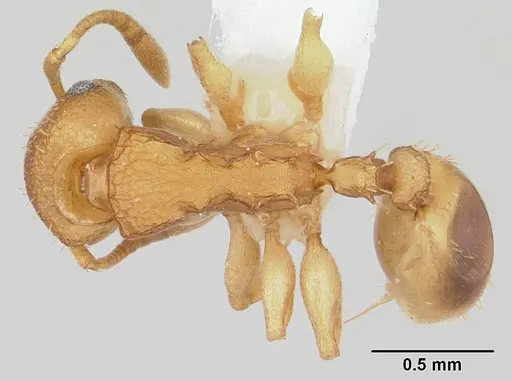
CASENT0246291
View on AntWeb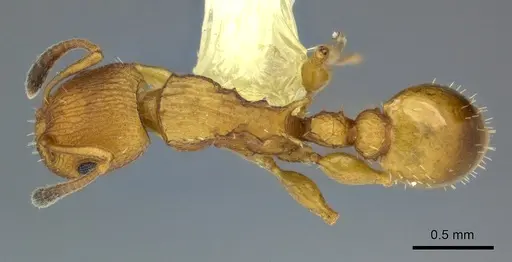
CASENT0904727
View on AntWeb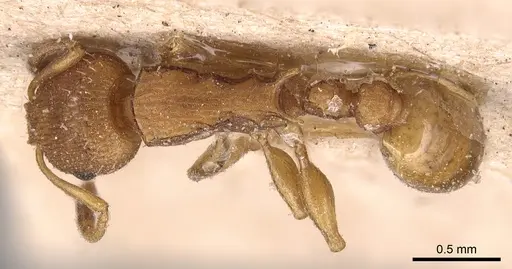
CASENT0909000
View on AntWeb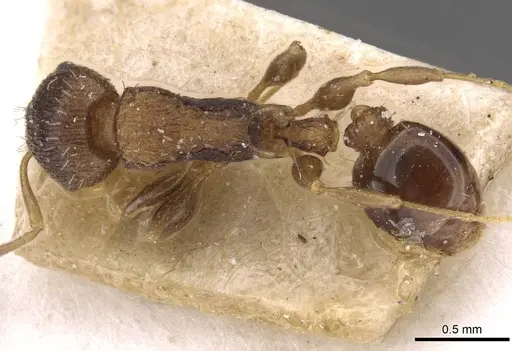
CASENT0919735
View on AntWeb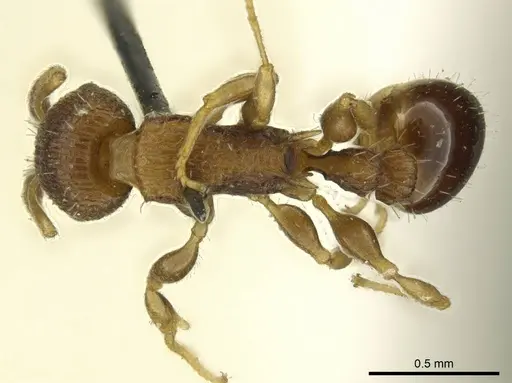
CASENT0922001
View on AntWeb
Literature
Loading distribution map...Loading products...