
Nesomyrmex vannoorti
- Sci. Name
- Nesomyrmex vannoorti
- Tribe
- Crematogastrini
- Subfamily
- Myrmicinae
- Author
- Mbanyana & Robertson, 2008
- Distribution
- Found in 1 countries
Introduction
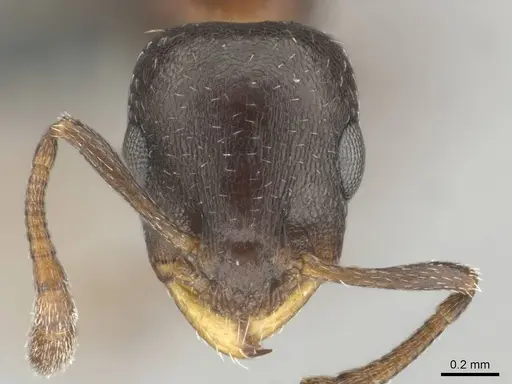
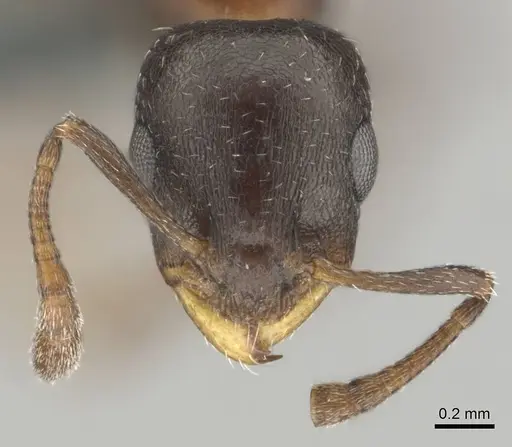
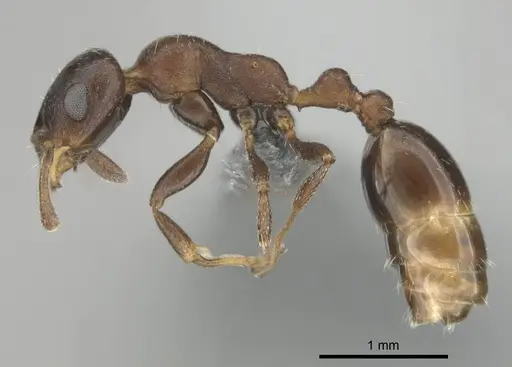
Nesomyrmex vannoorti is a tiny ant species endemic to South Africa, belonging to the Nesomyrmex simoni species group. They have large eyes and an unarmed propodeum, forming a smooth convex shape. Coloration is typically dark brown head and gaster with lighter mesosoma and nodes, or uniformly medium brown. The species is distinguished from similar Nesomyrmex species by having erect hairs on the propodeum . This ground-nesting species is found in the Nama-Karoo biome on dolerite soils, an arid to semi-arid region . They are surface-active foragers, captured using pitfall traps, yellow pan traps, and sweep netting.
Quick Summary
- Difficulty: Hard
- Origin & Habitat: South Africa (Western Cape), endemic to Nama-Karoo biome on dolerite soils [1][2]
- Colony Type: Colony structure unconfirmed
- Size & Growth:
- Queen: size data unavailable
- Worker: size data unavailable
- Colony: Unknown, no colony size data available
- Growth: Unknown
- Development: Estimated 6-10 weeks based on similar small Myrmicinae, but unconfirmed for this species (Development time may vary with temperature)
- Antkeeping:
- Temperature: Start around 22-26°C and observe colony activity. No specific data exists for this species, Nama-Karoo experiences warm summers but can be cool in winter [1].
- Humidity: Low to moderate, Nama-Karoo is an arid to semi-arid region. Keep substrate moderately dry with occasional damp areas. Avoid overly humid conditions [1].
- Diapause: Unknown, likely experiences reduced activity in cooler months given the temperate to subtropical climate of their range [1].
- Nesting: Ground-nesting species, naturalistic setups with soil or sand substrates work well. Y-tong or plaster nests with narrow chambers scaled to their tiny size are appropriate [2].
- Behavior: Temperament is poorly documented. As a ground-nesting species in the Myrmicinae, they are likely generalist foragers. Their tiny size means escape prevention is critical, use fine mesh barriers. Defense: As a member of the Myrmicinae subfamily and Crematogastrini tribe, they likely use a smear defense mechanism with a modified stinger to apply venom to enemies. They are not known to be aggressive but may bite if threatened. Activity patterns in the wild suggest surface foraging during warmer periods [1].
- Common Issues: no captive husbandry data exists, this is an advanced species for experienced keepers willing to experiment., their tiny size makes escape likely without fine mesh barriers., slow growth potential may frustrate beginners expecting visible progress., humidity requirements are unclear, start with drier conditions and adjust based on colony health., no documented diet preferences, will require experimentation with standard ant foods.
Housing and Nest Setup
Nesomyrmex vannoorti is a ground-nesting species native to South Africa's Nama-Karoo, an arid to semi-arid biome. For captivity, use a naturalistic setup with a soil or sand substrate, or a Y-tong/plaster nest with chambers scaled to their tiny size. The chambers should be narrow and compact. Provide a water tube but monitor humidity carefully, they come from dry conditions and may prefer drier nesting areas with occasional access to moisture. A small outworld for foraging allows you to observe their activity and offer food. Escape prevention is critical due to their tiny size, use fine mesh on any ventilation holes and ensure all connections are sealed [2][1].
Feeding and Diet
Diet preferences are not documented for this species. As a Myrmicinae ant, they likely accept a standard ant diet of sugar sources (honey water, sugar water) and protein (small insects, mealworms, fruit flies). Start with offering honey water or sugar water once or twice weekly, along with small protein items. Remove uneaten food after 24-48 hours to prevent mold. Given their small size, any prey items should be appropriately sized, flightless fruit flies, pinhead crickets, or small mealworm pieces work well. Monitor for acceptance and adjust offerings based on colony response [3].
Temperature and Seasonal Care
No specific temperature requirements exist in the scientific literature. The Nama-Karoo experiences warm summers (25-35°C) and cool winters (5-15°C), suggesting they can tolerate a range but prefer warmer conditions. Start around 22-26°C and observe colony behavior, if workers are active and foraging, the temperature is suitable. If they cluster together and show reduced activity, consider a slight increase. A heating cable on one side of the nest can create a gradient, allowing ants to self-regulate. Winter cooling is likely beneficial given their temperate origin, but the exact diapause requirements are unknown, consider providing a cool period (15-18°C) during winter months [1].
Colony Establishment
Since colony structure and founding behavior are unconfirmed for this species, you'll need to approach establishment carefully. If you obtain a founding queen, assume claustral founding (queen seals herself in and raises first workers alone) as this is typical for Nesomyrmex, but this is unconfirmed. Provide a small test tube setup with water reservoir and keep it stable at around 24°C. Do not disturb the queen during founding, she needs peace to lay eggs and raise the first brood. First workers (nanitics) will be smaller than normal workers and may take time to emerge. Once workers emerge, you can begin offering food and gradually expand their housing as the colony grows [3].
Frequently Asked Questions
How long does it take for Nesomyrmex vannoorti to produce first workers?
The egg-to-worker timeline is unconfirmed for this species. Based on similar small Myrmicinae ants, expect approximately 6-10 weeks from egg to first worker at optimal temperature (around 24-26°C). This is an estimate, actual development time may vary [3].
What do Nesomyrmex vannoorti ants eat?
Diet is not documented for this species. Start with standard ant foods: honey water or sugar water for carbohydrates, and small protein sources like fruit flies, small mealworms, or cricket pieces. Remove uneaten food after 24-48 hours. Adjust offerings based on what your colony accepts [3].
Are Nesomyrmex vannoorti ants good for beginners?
This species is not recommended for beginners. No captive husbandry data exists, and their tiny size and unknown requirements make them challenging. They are better suited for experienced antkeepers willing to experiment with care conditions. If you're new to antkeeping, consider more established species with documented care requirements [3].
Do Nesomyrmex vannoorti ants sting?
As a Myrmicinae ant, they have a stinger but it is likely too small to penetrate human skin effectively. They may bite if threatened but are not considered dangerous. Their small size and docile nature make them unlikely to be aggressive toward keepers [3].
What temperature should I keep Nesomyrmex vannoorti at?
No specific requirements exist, start around 22-26°C and observe your colony. If workers are active and foraging, the temperature is suitable. Provide a temperature gradient using a heating cable on one side of the nest so ants can self-regulate. The Nama-Karoo climate suggests they prefer warmer conditions but can tolerate cooler periods [1].
Do Nesomyrmex vannoorti ants need hibernation?
Diapause requirements are unknown. Given their origin in South Africa's temperate to subtropical Nama-Karoo, they likely experience cooler winters. Consider providing a cool period (15-18°C) during winter months, but this is an educated guess based on their geographic origin rather than documented behavior [1].
How big do Nesomyrmex vannoorti colonies get?
Maximum colony size is unknown, no colony size data exists in the scientific literature. Based on their small size and typical Nesomyrmex patterns, colonies likely reach several hundred workers at most. Growth is expected to be slow given the limited data on this species [1].
Can I keep multiple Nesomyrmex vannoorti queens together?
Colony structure is unconfirmed for this species. Multiple-queen colonies (polygyne) have not been documented. Unless you confirm otherwise, assume single-queen (monogyne) colonies and do not combine unrelated queens. This applies to founding colonies, pleometrosis (multiple queens founding together) has not been studied in this species [3].
What type of nest should I use for Nesomyrmex vannoorti?
Use nests with chambers scaled to their tiny size, Y-tong, plaster, or naturalistic setups with compact chambers work well. They are ground-nesting, so provide a soil or sand substrate. Keep humidity moderate to low, as they come from arid Nama-Karoo conditions. Escape prevention is critical due to their very small size [2].
Why are my Nesomyrmex vannoorti dying?
Without documented care requirements, diagnosing problems is difficult. Common issues include: escape due to inadequate barriers (their tiny size allows them through standard mesh), humidity imbalance (likely prefer drier conditions), temperature stress (avoid extremes), and stress from disturbance during founding. Start with drier, warmer conditions and adjust gradually based on colony response [3].
Report an Issue
The current care sheet is based fully on literature. See inconsistencies, or something that's incorrect? Please , it will be resolved after review from an admin. Contributing to the blogs tab also helps providing information, to make us be able to further improve the caresheets. Thank you for your support!
References

This caresheet is licensed under CC BY-SA 4.0 .
Community Blogs
CASENT0257342
View on AntWeb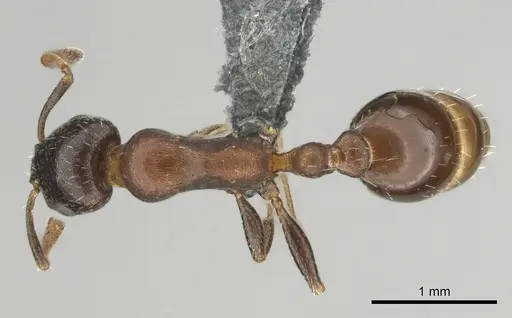
Literature
Loading distribution map...Loading products...