
Nesomyrmex striatus
- Sci. Name
- Nesomyrmex striatus
- Tribe
- Crematogastrini
- Subfamily
- Myrmicinae
- Author
- Csősz & Fisher, 2016
- Distribution
- Found in 1 countries
Introduction
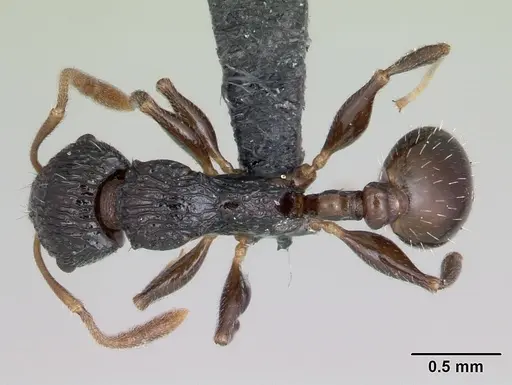
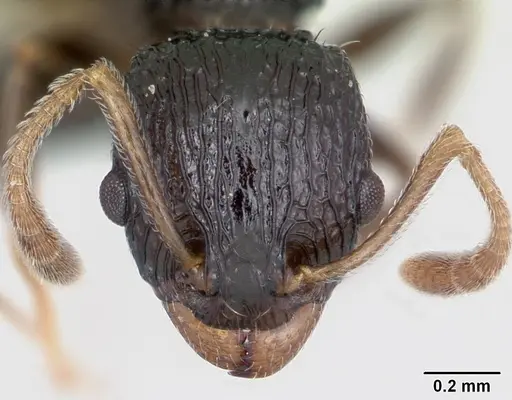
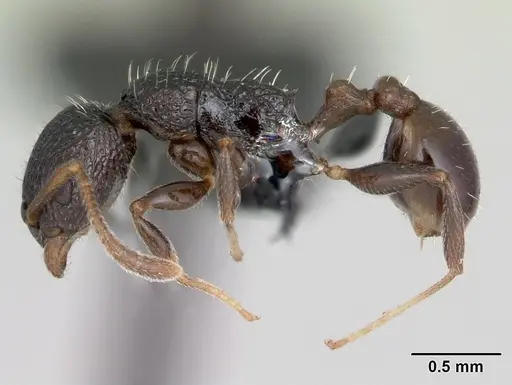
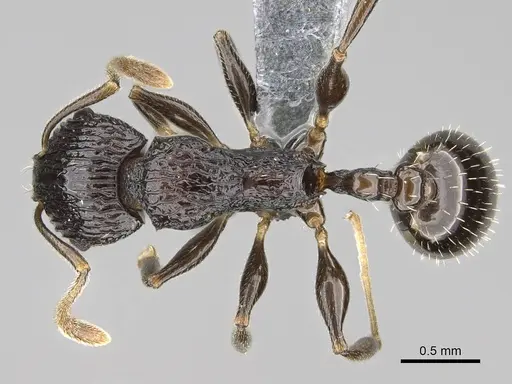
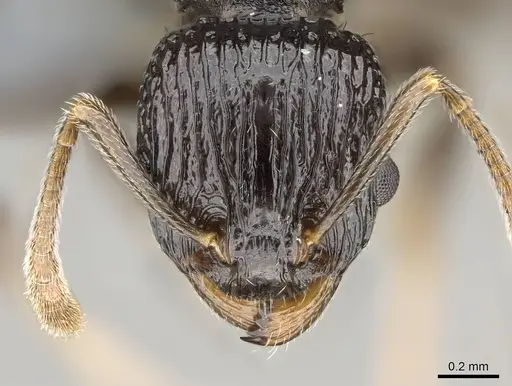
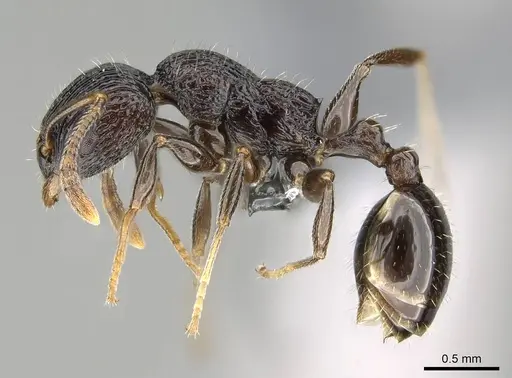
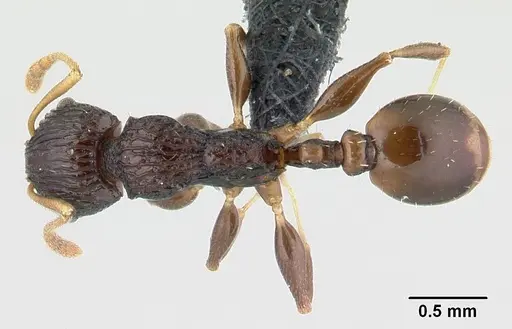
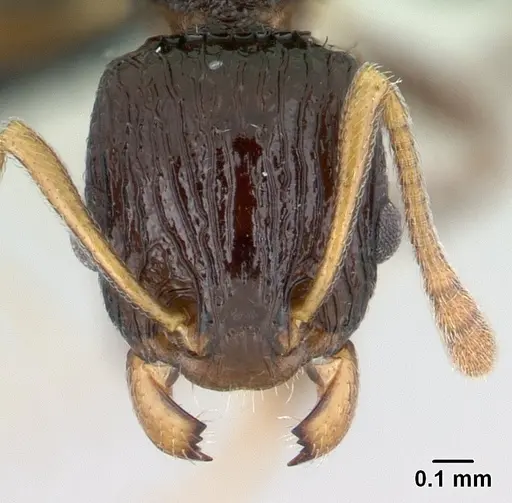
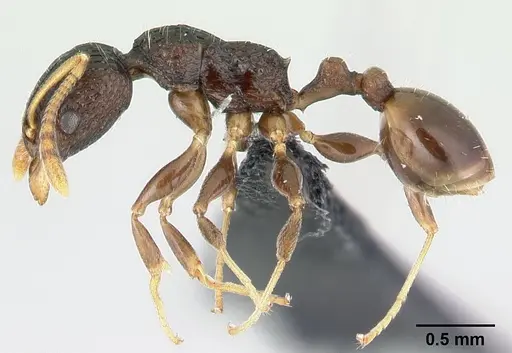
Nesomyrmex striatus is a small, jet-black ant species endemic to the montane rainforests of southeastern Madagascar. Workers are uniformly black with coarse striate sculpturing on the head and mesosoma . Body size data is unavailable, but the species belongs to the sikorae species group and inhabits elevations between 900-1125 meters . This species was formally described in 2016 and is known for its distinctive upward-curving propodeal spines and smooth petiole surfaces .
Quick Summary
- Difficulty: Medium
- Origin & Habitat: Montane rainforests of southeastern Madagascar at elevations of 900-1125 meters [1].
- Colony Type: Unconfirmed, no specific data on queen number or colony structure.
- Size & Growth:
- Queen: Size data unavailable
- Worker: Size data unavailable
- Colony: Unknown for this species
- Growth: Moderate, inferred from typical Myrmicinae patterns
- Development: Unknown, no specific data available (Development time is unconfirmed, based on genus patterns, it may take several weeks at optimal temperature.)
- Antkeeping:
- Temperature: Keep at cool temperatures around 18-22°C, based on their montane habitat [1].
- Humidity: Keep substrate consistently moist but not waterlogged, based on rainforest habitat.
- Diapause: Unknown, no specific data available
- Nesting: Use Y-tong or plaster nests with small chambers scaled to their size. Avoid acrylic nests. Provide a humid microclimate.
- Behavior: Workers are relatively calm and non-aggressive. Escape prevention is important due to their small size. They are generalist foragers.
- Common Issues: limited availability, this is a rarely kept species, specific temperature requirements may be challenging, humidity control is important to prevent mold or desiccation, lack of species-specific care information requires reliance on genus-level guidance
Natural History and Distribution
Nesomyrmex striatus is endemic to southeastern Madagascar, specifically the Anosy Mountains region. It inhabits montane rainforests at elevations between 900-1125 meters, with a mean elevation of 1054 meters [1]. The habitat is characterized by dense vegetation and high humidity. The species was formally described in 2016 based on worker morphology [1].
Identification and Morphology
2.5 aid identification [1].
Housing and Nest Preferences
Use Y-tong or plaster nests with small chambers appropriate for their size. Provide a humid microclimate with moist substrate. In nature, they likely nest in rotting wood or under bark, so textured surfaces can help. Ensure connections are secure to prevent escapes due to their small size.
Temperature and Humidity Requirements
Based on their montane habitat, keep temperatures around 18-22°C [1]. Humidity should be maintained with consistently moist substrate, allowing some drying between waterings. Avoid waterlogging or excessive dryness.
Feeding and Diet
As omnivores, they likely accept sugar sources like honey water and protein from small insects. Offer food every few days and remove uneaten items promptly. Prey should be appropriately sized for their small stature.
Colony Development and Growth
Specific development data is unavailable. Based on typical Myrmicinae patterns, growth is moderate. Founding behavior is unconfirmed, and colony size remains small. Patience is needed as first workers may take time to emerge.
Frequently Asked Questions
How long does it take for Nesomyrmex striatus to produce first workers?
Specific data is unavailable. Based on typical Myrmicinae development, it may take several weeks at optimal temperature, but no confirmed timeline exists.
What temperature do Nesomyrmex striatus ants need?
Keep them at 18-22°C, based on their montane rainforest habitat [1].
How big do Nesomyrmex striatus colonies get?
Colony size is unknown for this species.
Can I keep multiple Nesomyrmex striatus queens together?
Colony structure is unconfirmed. Without specific evidence, it is not recommended to combine queens.
Do Nesomyrmex striatus ants sting?
As Myrmicinae, they have a stinger, but due to their small size, the sting is typically not noticeable to humans. They are not aggressive.
What do Nesomyrmex striatus ants eat?
They are likely omnivorous. Offer sugar water weekly and small insects every few days. Remove uneaten food promptly.
Is Nesomyrmex striatus a good species for beginners?
This species is rated as Medium difficulty. Limited care information and specific temperature requirements make it better for experienced keepers.
Do Nesomyrmex striatus need hibernation or diapause?
Diapause requirements are unknown due to lack of specific data.
Where is Nesomyrmex striatus found in the wild?
This species is endemic to montane rainforests in southeastern Madagascar at elevations of 900-1125 meters [1].
How do I identify Nesomyrmex striatus?
Workers are small, black ants with coarse striate sculpturing on the head and mesosoma, upward-curving propodeal spines, and smooth petiole surfaces [1].
Report an Issue
The current care sheet is based fully on literature. See inconsistencies, or something that's incorrect? Please , it will be resolved after review from an admin. Contributing to the blogs tab also helps providing information, to make us be able to further improve the caresheets. Thank you for your support!
References

This caresheet is licensed under CC BY-SA 4.0 .
Community Blogs
Literature
Loading distribution map...Loading products...