
Nesomyrmex stramineus
- Sci. Name
- Nesomyrmex stramineus
- Tribe
- Crematogastrini
- Subfamily
- Myrmicinae
- Author
- Arnold, 1948
- Distribution
- Found in 2 countries
Introduction
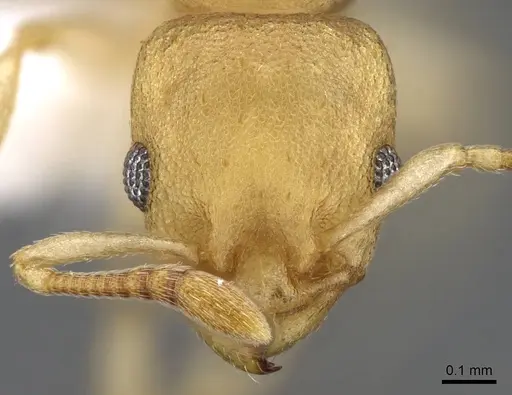
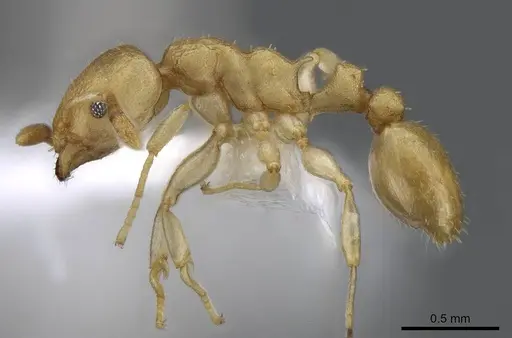
Nesomyrmex stramineus is a tiny pale-yellow ant native to southern Africa, specifically South Africa and Eswatini. Workers are about 2.8 mm in total length, making them one of the smaller ant species in the hobby . They belong to the angulatus species group and are morphologically very close to Nesomyrmex denticulatus and Nesomyrmex innocens, with some researchers suggesting they may be the same species . These ants nest in dead wood on trees in savanna woodland and Afromontane forest habitats .
Quick Summary
- Difficulty: Medium
- Origin & Habitat: Southern Africa (South Africa and Eswatini), found in savanna woodland and Afromontane forest, nesting in dead wood on trees [3][2].
- Colony Type: Colony structure is unconfirmed due to rarity and lack of published data. Based on typical Nesomyrmex patterns, likely single-queen colonies.
- Size & Growth:
- Queen: Size data unavailable, no documented queen measurements.
- Worker: ~2.8 mm total length [1]
- Colony: Unknown, only known from few collection events, considered rather rare [2]
- Growth: Unknown, no development data available
- Development: Estimated 6-8 weeks based on typical Myrmicinae development patterns at warm temperatures (No direct development data exists, estimate based on genus-level patterns for small Myrmicinae ants.)
- Antkeeping:
- Temperature: Aim for 22-26°C, they come from warm African habitats and likely prefer stable temperatures within this range [3][2].
- Humidity: Keep the nest substrate consistently moist but not waterlogged, they nest in dead wood in forest environments, suggesting moderate humidity [3][2].
- Diapause: Unknown, no published data on overwintering. Southern African populations may not require true diapause due to mild winters.
- Nesting: Prefer dead wood on trees, in captivity, use wood-based nests like Y-tong or naturalistic setups with rotting wood pieces [3][2].
- Behavior: These are small, generally peaceful ants. They are not known to be aggressive. Their defense mechanism involves a modified stinger used to smear venom onto enemies, typical of Myrmicinae ants. Their tiny size means escape risk is high, excellent prevention is essential. They are arboreal nesters and may prefer elevated positions.
- Common Issues: tiny size makes escape likely without fine mesh barriers, rarely kept species means limited husbandry knowledge, be prepared to experiment, no published data on founding behavior or colony development timelines, wild-caught colonies may be difficult to establish due to rarity and specific habitat needs, small colony sizes mean losses have bigger impact, every ant matters
Housing and Nest Setup
Nesomyrmex stramineus is a tiny arboreal species that naturally nests in dead wood on trees [3][2]. In captivity, use Y-tong nests with chambers scaled to their small size, or naturalistic setups with rotting wood or cork. Chambers should be tight and narrow to prevent escapes. Escape prevention is critical, use fine mesh barriers and seal all connections, as they can squeeze through very small gaps.
Feeding and Diet
Like most small Myrmicinae, they likely eat honeydew and small prey. In captivity, provide sugar water or honey water constantly, and offer small soft-bodied prey like fruit flies or springtails 2-3 times per week. Remove uneaten prey within 24-48 hours to prevent mold.
Temperature and Humidity
Aim for 22-26°C with a gentle gradient, as they come from warm African habitats [3][2]. Keep nest substrate moderately moist but not saturated, reflecting their forest environment [3][2].
Colony Establishment and Growth
This species is rarely kept, with no published data on founding. Based on typical Myrmicinae patterns, queens may use claustral founding, but this is unconfirmed. Growth rate is unknown, and colonies likely grow slowly. Be patient with founding colonies.
Seasonal Care
Diapause requirements are unknown. Southern Africa has mild winters, so a slight temperature reduction to 18-20°C during winter may be appropriate, but avoid cold below 15°C. Reduce feeding during cooler periods but do not stop entirely.
Defense Mechanism
As a member of Myrmicinae, Crematogastrini, this species uses a smear defense mechanism with a modified stinger to wipe venom onto enemies rather than piercing flesh. This is typical for the subfamily and tribe.
Frequently Asked Questions
How long does it take for Nesomyrmex stramineus to produce first workers?
The exact timeline is unknown. Based on typical Myrmicinae development, expect 6-8 weeks from egg to worker at optimal temperatures (22-26°C). Founding colonies may take several months to establish their first workers.
What do Nesomyrmex stramineus ants eat?
They likely accept sugar sources like honey water and small soft-bodied prey such as fruit flies or springtails. Keep sugar water available constantly and offer protein 2-3 times weekly.
Are Nesomyrmex stramineus good for beginners?
This species is not ideal for beginners due to rarity, lack of established husbandry, and high escape risk. Start with more common species first.
Do Nesomyrmex stramineus ants sting?
They have a smear defense mechanism typical of Myrmicinae, but their tiny size means any sting would be negligible. They are not known to be aggressive.
What temperature do Nesomyrmex stramineus need?
Aim for 22-26°C with a gentle gradient, as they come from warm African habitats [3][2].
Can I keep multiple Nesomyrmex stramineus queens together?
This is unknown due to lack of data. It is not recommended to attempt combining unrelated queens, stick to single-queen colonies.
What type of nest is best for Nesomyrmex stramineus?
Y-tong nests with small chambers or naturalistic setups with rotting wood pieces work well, as they naturally nest in dead wood [3][2].
Why are my Nesomyrmex stramineus escaping?
Their tiny size allows them to squeeze through small gaps. Use fine mesh, seal connections with barriers, and check for any openings.
How big do Nesomyrmex stramineus colonies get?
Unknown, this species is rarely collected, and no colony size data exists. Colonies are likely small due to their tiny size and rarity.
Do Nesomyrmex stramineus need hibernation?
Diapause requirements are unconfirmed. Southern Africa has mild winters, so a slight temperature reduction to 18-20°C during winter may be appropriate, but avoid cold below 15°C.
Report an Issue
The current care sheet is based fully on literature. See inconsistencies, or something that's incorrect? Please , it will be resolved after review from an admin. Contributing to the blogs tab also helps providing information, to make us be able to further improve the caresheets. Thank you for your support!
References

This caresheet is licensed under CC BY-SA 4.0 .
Community Blogs
CASENT0922011
View on AntWeb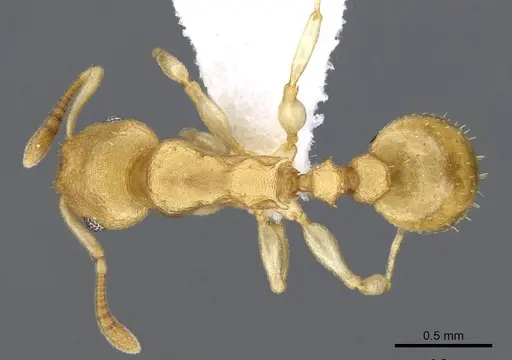
Literature
Loading distribution map...Loading products...