
Nesomyrmex sellaris
- Sci. Name
- Nesomyrmex sellaris
- Tribe
- Crematogastrini
- Subfamily
- Myrmicinae
- Author
- Csősz & Fisher, 2016
- Distribution
- Found in 1 countries
Introduction
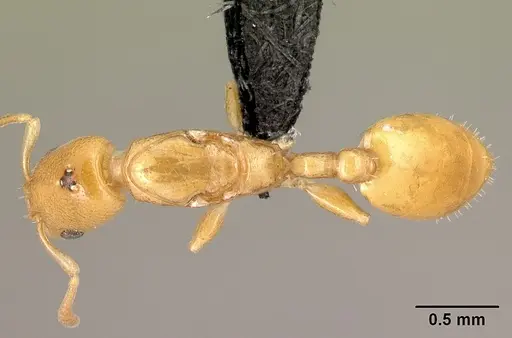
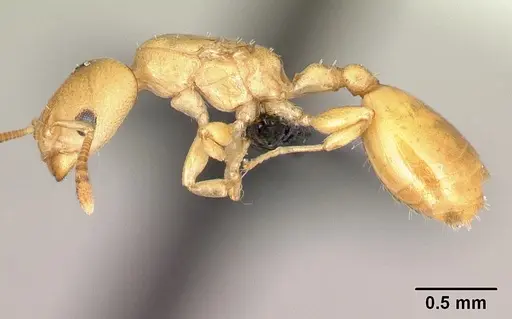
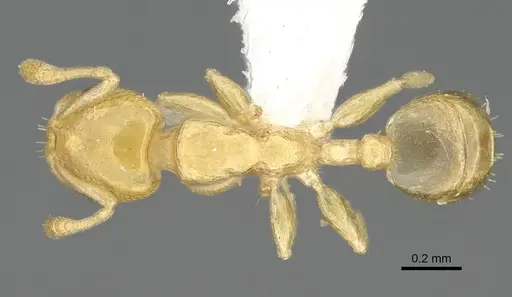
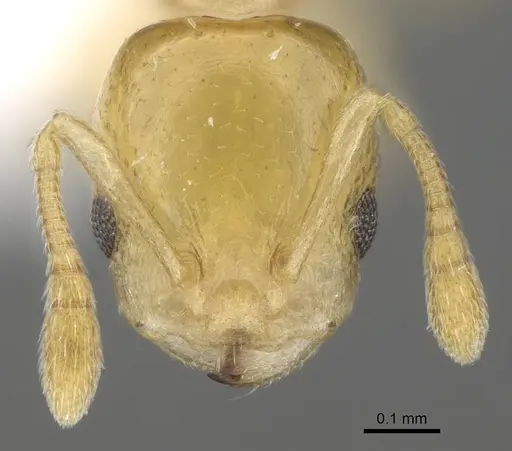
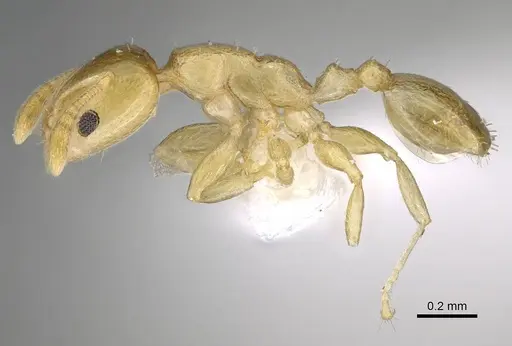
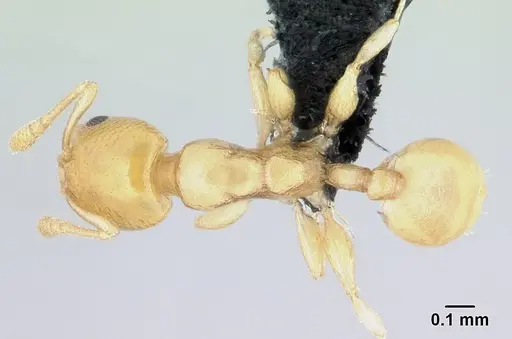
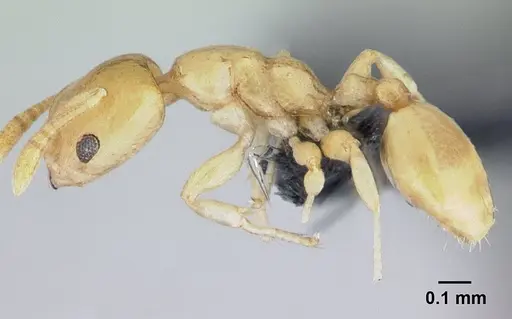
Nesomyrmex sellaris is a tiny yellow ant species native to eastern Madagascar. Workers are uniformly yellow with a distinctive deep saddle-like depression between the mesonotum and propodeum, which inspired their scientific name. This species belongs to the brevicornis species group and was formally described in 2016 . In the wild, they inhabit diverse environments from tropical dry forests to rainforests at elevations of 20-1130 meters, showing adaptability to varying conditions .
Quick Summary
- Difficulty: Unknown
- Origin & Habitat: Eastern Madagascar, from tropical dry forests to rainforests at elevations of 20-1130 meters [1]
- Colony Type: Unconfirmed, no data on queen number or colony structure
- Size & Growth:
- Queen: Size data unavailable
- Worker: Size data unavailable
- Colony: Unknown, no colony size data available
- Growth: Unknown
- Development: Unknown, no direct measurements. Based on typical Nesomyrmex patterns, estimate 6-10 weeks at tropical temperatures, but this is inferred. (No specific development data exists for this species.)
- Antkeeping:
- Temperature: Start around 22-26°C and observe colony behavior. As a Madagascar lowland species, they likely prefer warm conditions. Provide a gentle temperature gradient if possible [2].
- Humidity: Keep nest substrate consistently moist but not waterlogged. Their wild habitat spans dry to wet forests, so they tolerate a range [2].
- Diapause: Unknown, Madagascar species may not require strong diapause, but activity may slow during cooler periods.
- Nesting: Use test tube setups or small nests with moist substrate. Provide minimal disturbance during founding [2].
- Behavior: Behavior is unstudied, but as a tiny Myrmicinae, they are likely docile. Their primary defense is a smear mechanism using a modified stinger, typical of their subfamily. Escape risk is high due to small size, use fine mesh barriers.
- Common Issues: limited biological data makes care experimental, monitor closely for stress, small size increases escape risk, use fine mesh and secure barriers, unknown founding behavior may challenge colony establishment, diet acceptance is unstudied, start with standard ant foods and observe
Appearance and Identification
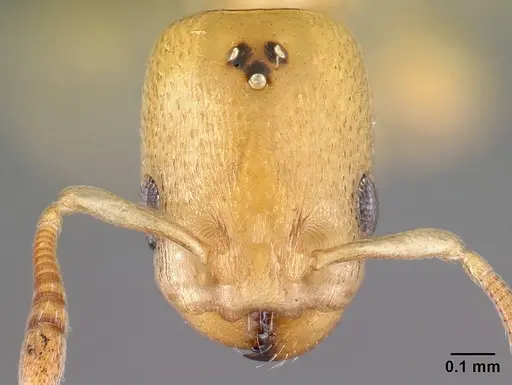
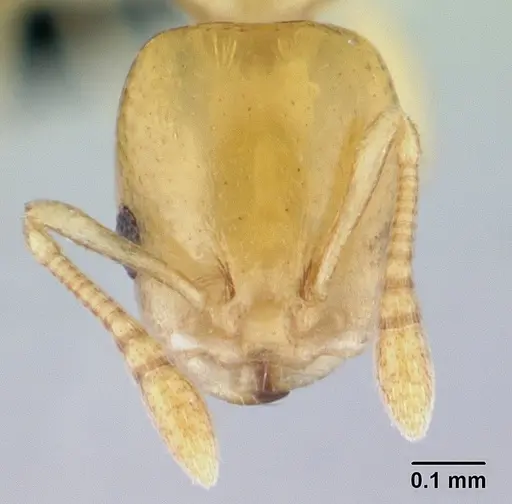
Nesomyrmex sellaris workers are small ants with a uniform yellow body color. The most distinctive feature is the deep mesopropodeal depression, a saddle-like groove between the mesonotum and propodeum, reflected in their name 'sellaris' [1]. They have fine foveae on the head and shiny, imbricate sculpture. Exact body size is not documented in available research.
Natural Distribution and Habitat
This species is endemic to eastern Madagascar, found in diverse habitats from tropical dry forests to rainforests at elevations of 20-1130 meters [1]. This broad range indicates adaptability to varying humidity and temperature conditions, useful for captive care.
Housing and Nesting
No specific natural nesting data exists, but as small Myrmicinae, they do well in test tube setups or small nests with moist substrate. Provide minimal disturbance during founding. Escape prevention is critical due to their tiny size, use fine mesh barriers [2].
Feeding and Diet
No species-specific dietary studies exist. As small ants, they likely accept sugar sources like honey water and small protein prey such as fruit flies or springtails. Offer small amounts every few days and remove uneaten food [2].
Temperature and Seasonal Care
As a Madagascar lowland species, they prefer warm conditions around 22-26°C. Provide a temperature gradient for self-regulation. Diapause requirements are unknown, but activity may slow in cooler months [2].
Frequently Asked Questions
How long does it take for Nesomyrmex sellaris to develop from egg to worker?
No direct data exists. Based on typical patterns for small Nesomyrmex, estimate 6-10 weeks at tropical temperatures, but this is inferred [2].
What do Nesomyrmex sellaris ants eat?
No species-specific data. They likely accept sugar sources and small protein prey like fruit flies [2].
Are Nesomyrmex sellaris good for beginners?
Unknown due to limited data. Their small size and lack of care information make experimental keeping challenging [2].
Do Nesomyrmex sellaris ants sting?
No specific data, but as tiny Myrmicinae, they have a smear defense mechanism typical of their subfamily. Stings are likely ineffective on humans.
What temperature should I keep Nesomyrmex sellaris at?
Start around 22-26°C with a gradient. Exact optimal range is unknown [2].
How big do Nesomyrmex sellaris colonies get?
Colony size data is not available. Expect moderate growth based on their small size [2].
Can I keep multiple Nesomyrmex sellaris queens together?
No data on colony structure. Keep one queen per setup until more information is available.
Do Nesomyrmex sellaris need hibernation?
Diapause requirements are unknown. As a tropical species, they may not need true hibernation [2].
Why are my Nesomyrmex sellaris escaping?
Their small size allows them to squeeze through gaps. Use fine mesh barriers and secure lids [2].
Is Nesomyrmex sellaris a polygynous species?
No data on queen number. This remains unknown.
Report an Issue
The current care sheet is based fully on literature. See inconsistencies, or something that's incorrect? Please , it will be resolved after review from an admin. Contributing to the blogs tab also helps providing information, to make us be able to further improve the caresheets. Thank you for your support!
References

This caresheet is licensed under CC BY-SA 4.0 .
Community Blogs
Literature
Loading distribution map...Loading products...