
Nesomyrmex rugosus
- Sci. Name
- Nesomyrmex rugosus
- Tribe
- Crematogastrini
- Subfamily
- Myrmicinae
- Author
- Csősz & Fisher, 2016
- Distribution
- Found in 1 countries
Introduction
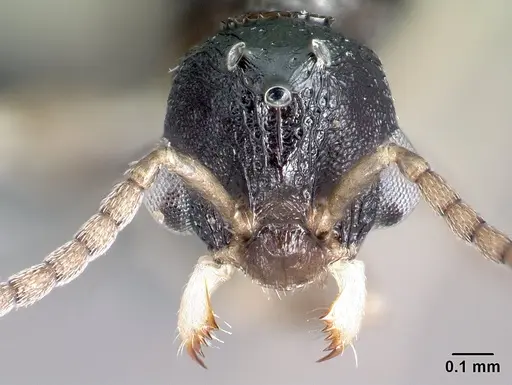
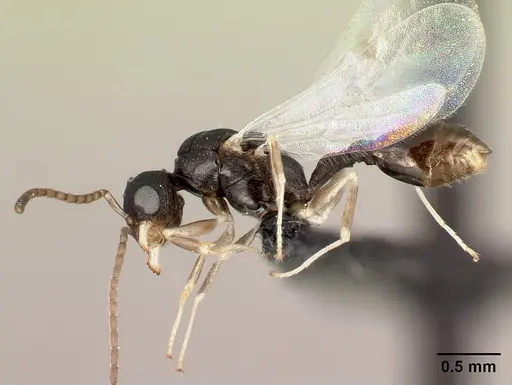
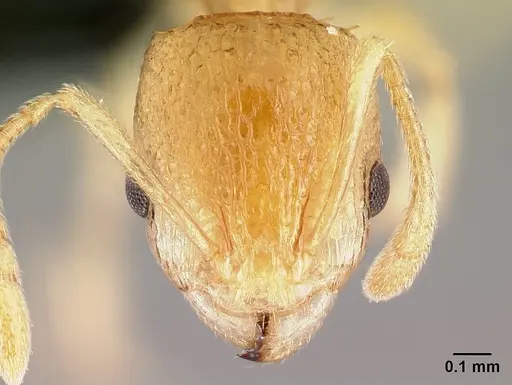
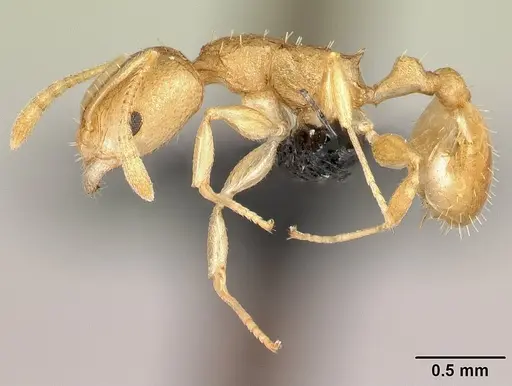
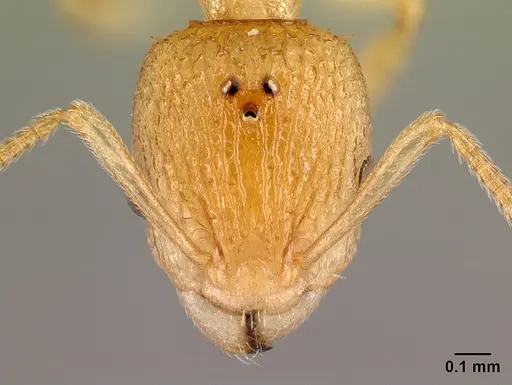
Nesomyrmex rugosus is a tiny rainforest ant found only in Madagascar. Workers measure about 0.75 mm in head size, but full body length data is unavailable . They have a yellow to brown body with a rough, wrinkled texture that gives the species its name . You will find them in rainforests along the eastern and southern coasts of Madagascar, living between 200 and 520 meters above sea level . This species belongs to the sikorae species group, a diverse cluster of ants that evolved extensively on Madagascar. They are relatively new to science, described in 2016,and we know very little about how they live in captivity. Their coarse body sculpturing and small size make them a unique challenge for antkeepers.
Quick Summary
- Difficulty: Hard
- Origin & Habitat: Rainforests of eastern and southern Madagascar, elevation 200-520m (mean 390m) [1][2]
- Colony Type: Unconfirmed, scientific literature has not documented their queen structure or social organization.
- Size & Growth:
- Queen: size data unavailable
- Worker: size data unavailable
- Colony: Unknown, no colony size data available
- Growth: Unknown, no development studies exist
- Development: Unconfirmed, no direct measurements exist. Based on typical tropical Myrmicinae patterns, expect roughly 4-8 weeks at stable warm temperatures, but this is speculative. (Development timeline has not been studied. Estimates based on genus-level patterns only.)
- Antkeeping:
- Temperature: Inferred: Keep warm and stable, roughly 22-28°C. Start around 25°C and watch how the colony reacts.
- Humidity: Inferred: Provide a humidity gradient. Keep the nest substrate consistently moist but not waterlogged, and offer a water source.
- Diapause: Unknown, Madagascar is tropical, so they likely do not need a winter dormancy period, but this is unconfirmed.
- Nesting: Inferred: They likely nest in rotting wood or soil in natural habitat. Use small plaster, soil, or 3D-printed nests with tight chambers.
- Behavior: Undocumented in science. Based on their tiny size, they are likely docile. Escape prevention is critical, they can slip through the smallest gaps. Use fine mesh barriers and secure lids.
- Common Issues: tiny size makes escape likely without proper barriers., no established captive care guidelines make this an experimental species., humidity requirements are inferred rather than confirmed., unknown growth rate makes feeding schedules difficult to optimize., limited availability means you may struggle to find queens or colonies.
Appearance and Identification
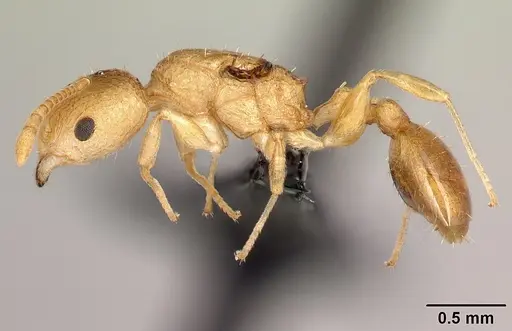
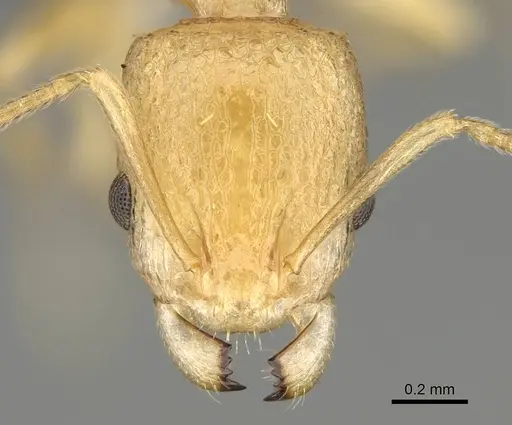
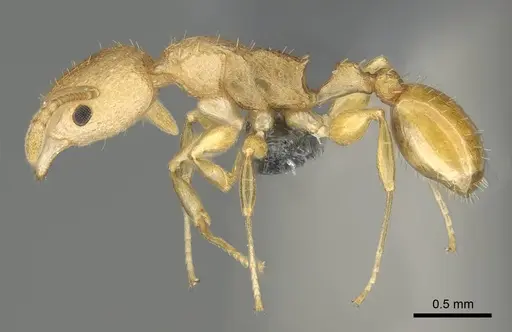
Nesomyrmex rugosus workers are very small. Their heads measure about 0.75 mm across, but we do not have full body length measurements [1][2]. The most noticeable feature is their rough, wrinkled body texture, which gives the species its name [1]. They are yellow to brown all over [1]. You can spot them by their straight propodeal spines and 12-segmented antennae [1]. Scientists only described this species in 2016,so detailed captive care guides do not exist yet.
Natural Habitat and Distribution
You will only find this species in Madagascar. They live in rainforests along the eastern and southern coasts [1][2]. Their natural range sits between 200 and 520 meters above sea level, with an average around 390 meters [1][2]. This elevation range points to a lowland to mid-elevation rainforest habitat. The eastern coast gets heavy rainfall year-round, while the southern coast is slightly drier but still tropical. You should replicate these warm, humid conditions in captivity.
Housing and Nest Setup
Their tiny size means you must focus heavily on escape prevention. Use small plaster, soil, or 3D-printed nests with chambers scaled to their size. Avoid large open spaces that make it hard for workers to find each other. Keep the nest substrate consistently moist but never waterlogged. Since they come from a rainforest environment, maintain high humidity around the setup. Check all seams and lids daily to stop any workers from slipping out.
Feeding and Diet
Science has not documented what this species eats in the wild. Based on typical Myrmicinae behavior, they likely forage for tiny arthropods and accept sweet liquids. Offer a constant sugar source like diluted honey water. Provide small protein items like fruit fly pupae, springtails, or tiny insect pieces. Watch how the colony accepts food and adjust portions based on what they actually consume.
Temperature and Humidity Requirements
You should keep this species warm and stable. Aim for 22-28°C, with 25°C as a solid starting point. Watch their behavior to fine-tune the temperature. If workers cluster near heat, raise it slightly. If they avoid warm spots, lower it. Maintain high humidity by keeping the nest substrate damp and providing a water source. Stability matters more than hitting exact numbers.
Colony Development and Growth
No scientific studies track how this species grows in captivity. The queen has not been formally described, so we do not know how they start new colonies. Expect slow initial growth while the queen raises her first workers. Once workers emerge, the colony should grow steadily, though likely slower than larger species due to their tiny size. You will need to be patient and monitor development closely.
Frequently Asked Questions
How long does it take for Nesomyrmex rugosus to produce first workers?
The egg-to-worker timeline is unconfirmed. Based on typical tropical Myrmicinae patterns, expect roughly 4-8 weeks at stable warm temperatures, but this is speculative.
What do Nesomyrmex rugosus ants eat?
Specific diet has not been documented. Based on typical Myrmicinae behavior, they likely accept sugar sources like honey water and small protein prey like fruit flies or springtails. Start with these standard foods and observe what the colony accepts.
Are Nesomyrmex rugosus good for beginners?
This species is not recommended for beginners. Their tiny size requires specialized housing and strict escape prevention, and we lack established captive care guidelines. You should have experience with micro-ants before attempting this species.
Do Nesomyrmex rugosus ants sting?
Stinging behavior has not been documented. Given their tiny size, any sting would likely be negligible to humans. They are probably not a significant stinging threat.
What temperature should I keep Nesomyrmex rugosus at?
Temperature requirements are inferred from habitat, not confirmed. Keep them warm at 22-28°C, with 25°C as a good starting point. Monitor colony activity to fine-tune.
Do Nesomyrmex rugosus need hibernation or diapause?
Diapause requirements are unknown. Madagascar is tropical with year-round warmth, so they likely do not require a winter dormancy period. Do not attempt hibernation unless you have specific evidence the species needs it.
How big do Nesomyrmex rugosus colonies get?
Maximum colony size is unknown. Based on their tiny worker size and typical Nesomyrmex patterns, colonies will likely remain modest. We cannot give a reliable number.
Can I keep multiple Nesomyrmex rugosus queens together?
Colony structure is unconfirmed. Whether they are single-queen or multiple-queen colonies has not been documented. Combining unrelated queens is not recommended due to lack of data.
Why are my Nesomyrmex rugosus escaping?
Their extremely small size makes escape likely without excellent barriers. Use fine mesh, tight-fitting lids, and fluon barriers on any potential escape routes. Check all connections and seams regularly.
Is Nesomyrmex rugosus aggressive?
Aggression levels have not been documented. Based on typical Nesomyrmex behavior and their small size, they are likely docile and non-aggressive. However, without documented behavior, observe your colony for temperament.
Report an Issue
The current care sheet is based fully on literature. See inconsistencies, or something that's incorrect? Please , it will be resolved after review from an admin. Contributing to the blogs tab also helps providing information, to make us be able to further improve the caresheets. Thank you for your support!
References

This caresheet is licensed under CC BY-SA 4.0 .
Community Blogs
CASENT0121890
View on AntWeb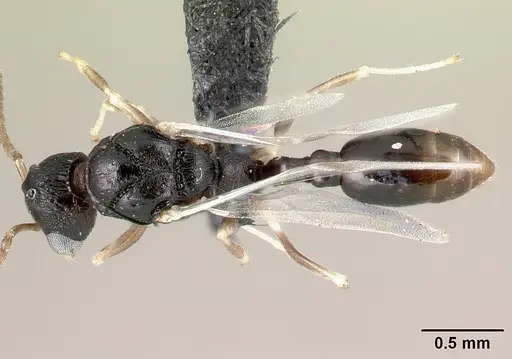
CASENT0121931
View on AntWeb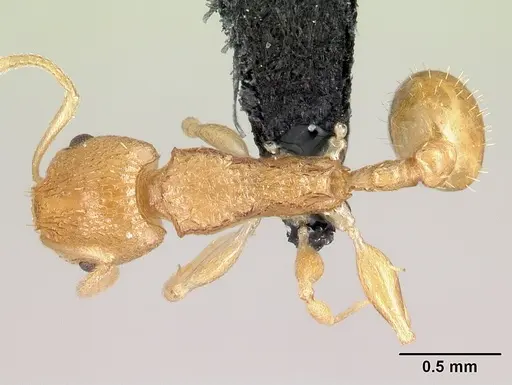
CASENT0122544
View on AntWeb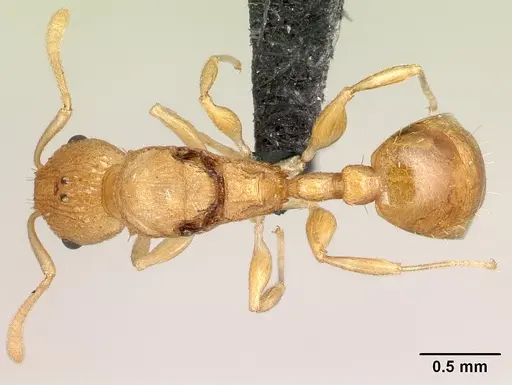
CASENT0374465
View on AntWeb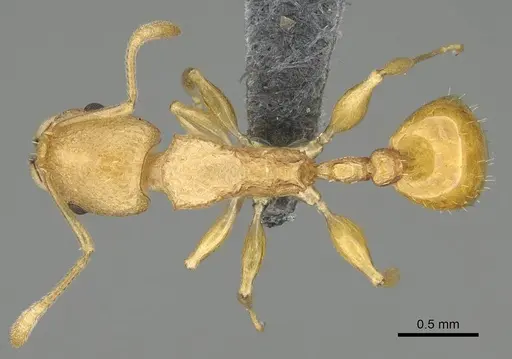
Literature
Loading distribution map...Loading products...