
Nesomyrmex retusispinosus
- Sci. Name
- Nesomyrmex retusispinosus
- Tribe
- Crematogastrini
- Subfamily
- Myrmicinae
- Author
- Forel, 1892
- Distribution
- Found in 1 countries
Introduction
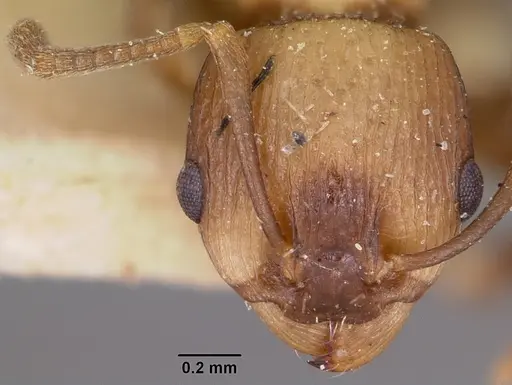
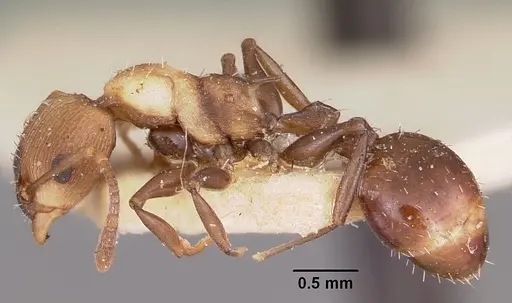
Nesomyrmex retusispinosus is a tiny ant native to rainforests and montane forests in central Madagascar, found at elevations between 918-1080m . Workers are yellow to brown with sculptured heads . This species belongs to the Nesomyrmex sikorai species group. Defense involves smearing venom with a modified stinger, typical of Myrmicinae ants.
Quick Summary
- Difficulty: Medium
- Origin & Habitat: Central Madagascar, specifically rainforests and montane forests at 918-1080m elevation [1][2]
- Colony Type: Colony structure is unconfirmed.
- Size & Growth:
- Queen: Size data unavailable, no total length measurements provided in research.
- Worker: Size data unavailable, no total length measurements provided in research.
- Colony: Unknown, no colony size data available.
- Growth: Likely slow to moderate based on small size and tropical habitat.
- Development: Unknown, no specific development data for this species. (Based on typical tropical Myrmicinae patterns, development may take 6-10 weeks at warm temperatures, but this is an estimate.)
- Antkeeping:
- Temperature: Based on montane forest habitat, aim for cool temperatures around 20-24°C, avoiding overheating [1].
- Humidity: Keep nest substrate consistently moist but not waterlogged, as they come from humid rainforest environments [2].
- Diapause: Unknown, as a tropical species, they likely do not require hibernation, but this is unconfirmed.
- Nesting: In nature, they likely nest in rotting wood or under bark in humid forests. In captivity, use small test tube setups or Y-tong nests with tight chambers [2].
- Behavior: Behavior is poorly documented. Based on typical Nesomyrmex patterns, they are likely docile and non-aggressive. Defense involves smearing venom with a modified stinger. Workers are small but active foragers. Escape prevention is critical due to their tiny size, use fine mesh barriers.
- Common Issues: tiny size makes escape prevention critical, use fine mesh barriers., high humidity requirements can lead to mold if ventilation is inadequate., wild-caught colonies may be stressed from collection and transport., development timeline is unconfirmed, so patience is needed.
Housing and Nest Setup
Due to their very small size, Nesomyrmex retusispinosus requires appropriately scaled housing. A small test tube setup works well for founding colonies, use a test tube with a water reservoir stopped with cotton. For established colonies, a small Y-tong nest with narrow chambers works well. Keep nesting materials consistently moist [2].
Feeding and Diet
Dietary requirements are not specifically documented. Based on typical ant behavior, offer small protein sources like fruit flies or springtails, and sugar sources like honey water. Feed small amounts every 2-3 days and remove uneaten food to prevent mold.
Temperature and Humidity Management
Aim for cool temperatures around 20-24°C based on their montane habitat [1]. Keep humidity high with moist substrate, but avoid waterlogging [2].
Defense Mechanism
This species uses a smear defense mechanism, typical of Myrmicinae ants. They have a modified stinger to wipe venom onto enemies rather than piercing flesh.
Handling and Observation
Workers are docile and unlikely to sting humans effectively. Use soft brushes for handling and fine mesh barriers to prevent escape due to their tiny size.
Colony Establishment and Growth
Establishing a colony may be challenging due to limited information. House queens in small test tube setups with constant moisture. Growth is likely slow, so patience is needed.
Frequently Asked Questions
How long does it take for Nesomyrmex retusispinosus to produce first workers?
The exact timeline is unconfirmed. Based on typical tropical Myrmicinae patterns, it may take 6-10 weeks from egg to worker at warm temperatures, but this is an estimate.
What do Nesomyrmex retusispinosus ants eat?
Diet is not specifically documented. They likely accept small protein sources like fruit flies and sugar sources like honey water, based on general ant behavior.
Do Nesomyrmex retusispinosus ants sting?
They are unlikely to sting humans effectively due to their small stinger. They use a smear defense mechanism typical of Myrmicinae ants.
What temperature do Nesomyrmex retusispinosus ants need?
Based on their montane forest habitat, aim for 20-24°C [1].
How big do Nesomyrmex retusispinosus colonies get?
Colony size is not documented in scientific literature. Based on their small size, colonies likely remain relatively small.
Can I keep multiple Nesomyrmex retusispinosus queens together?
Colony structure is unconfirmed. Combining unrelated queens is not recommended as it has not been documented.
Do Nesomyrmex retusispinosus ants need hibernation?
As a tropical species, they likely do not require hibernation, but this is unconfirmed.
Why are my Nesomyrmex retusispinosus dying?
Common causes include drying out due to low humidity, escape through small gaps, mold from poor ventilation, or stress from wild collection. Ensure proper humidity and escape prevention.
Are Nesomyrmex retusispinosus good for beginners?
This species is not ideal for beginners due to lack of documented care, tiny size requiring excellent escape prevention, and specific humidity needs.
What size enclosure do Nesomyrmex retusispinosus need?
They require small enclosures scaled to their size, such as test tubes for founding or small Y-tong nests for established colonies.
Report an Issue
The current care sheet is based fully on literature. See inconsistencies, or something that's incorrect? Please , it will be resolved after review from an admin. Contributing to the blogs tab also helps providing information, to make us be able to further improve the caresheets. Thank you for your support!
References

This caresheet is licensed under CC BY-SA 4.0 .
Community Blogs
CASENT0060902
View on AntWeb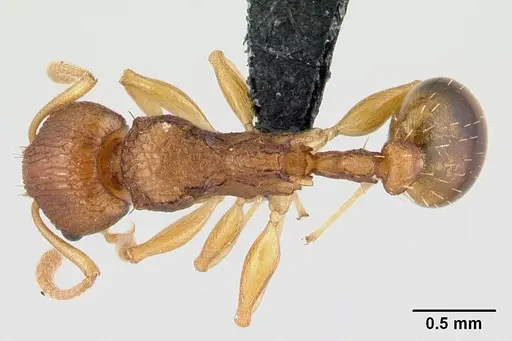
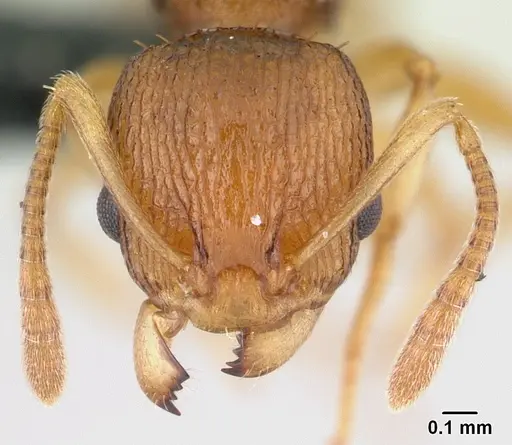
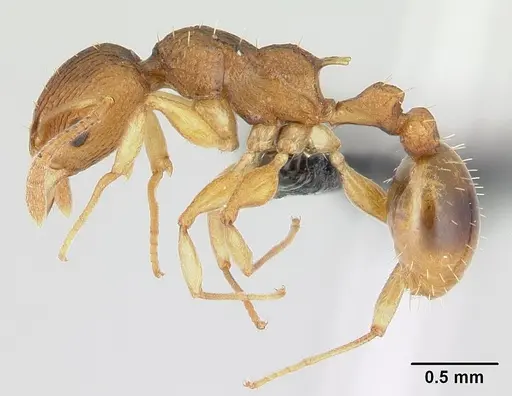
CASENT0101616
View on AntWeb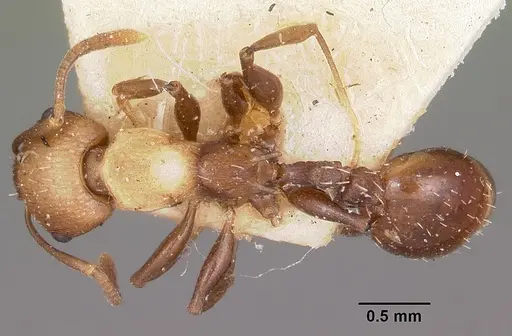
Literature
Loading distribution map...Loading products...