
Nesomyrmex reticulatus
- Sci. Name
- Nesomyrmex reticulatus
- Tribe
- Crematogastrini
- Subfamily
- Myrmicinae
- Author
- Csősz & Fisher, 2016
- Distribution
- Found in 1 countries
Introduction
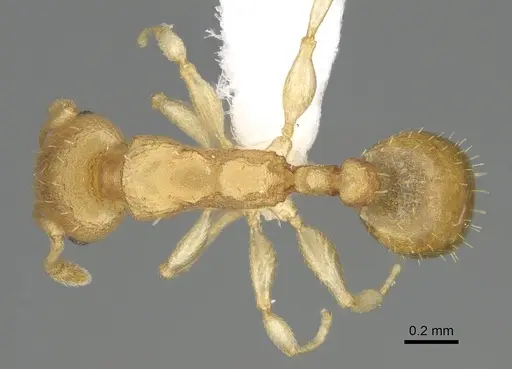
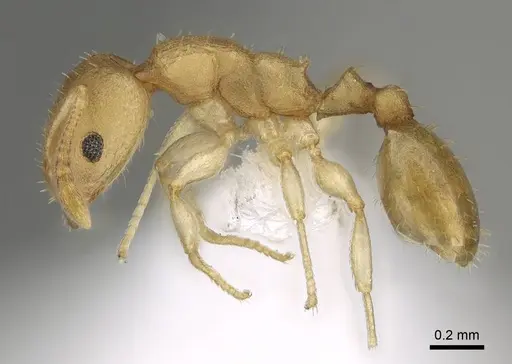
Nesomyrmex reticulatus is a tiny ant species native to Madagascar, belonging to the sikorae species group. Size data is unavailable for this species, but it has a yellow to brown concolorous body with fine reticulate sculpturing, which gives it its name . These ants inhabit dry forests in the lowlands of western and southern Madagascar, typically at elevations between 50-130 meters . The species is notable for its micro-reticulate body sculpturing, which may serve defensive or camouflage functions .
Quick Summary
- Difficulty: Unknown
- Origin & Habitat: Dry forests in lowlands of western and southern Madagascar, elevations 50-130m (mean 94m) [1][2]
- Colony Type: Colony structure is unconfirmed, no published data on queen number or colony organization for this species
- Size & Growth:
- Queen: Size data unavailable
- Worker: Size data unavailable
- Colony: Unknown, no colony size data published
- Growth: Unknown, no development studies available
- Development: Unconfirmed, estimated 6-10 weeks based on typical Myrmicinae development at warm temperatures (No direct development data exists for this species. Estimates based on genus-level patterns for small tropical Myrmicinae.)
- Antkeeping:
- Temperature: Based on Madagascar lowland dry forest habitat, keep warm around 24-28°C [1]
- Humidity: Keep nest substrate moderately dry to slightly moist, reflecting dry forest conditions [1]
- Diapause: No, tropical species do not require hibernation
- Nesting: Prefer small cavities in rotting wood or soil. Use Y-tong, plaster, or 3D-printed nests scaled to tiny size. Ensure excellent escape prevention.
- Behavior: Workers are small and likely docile. Defense mechanism involves smearing venom, typical of Myrmicinae Crematogastrini ants. Escape risk is high due to tiny size, use fine mesh barriers.
- Common Issues: very small size makes escape prevention critical, use fine mesh and tight-fitting barriers, no published care information means keepers must experiment with conditions, slow growth and small colony sizes may be frustrating for beginners, wild-caught colonies may have parasites or diseases not yet understood, humidity balance is challenging, too wet can kill them, too dry may prevent brood development
Natural History and Distribution
Nesomyrmex reticulatus is endemic to Madagascar, found in dry forests along the western and southern coasts. These ants inhabit lowland areas at elevations between 50-130 meters, with an average collection elevation of 94 meters [1]. The dry forest habitat suggests adaptation to seasonal conditions with wet and dry periods. The species was described in 2016 by Csösz and Fisher as part of a morphological study [1]. The name 'reticulatus' refers to the fine, net-like sculpturing on the body [1].
Identification and Morphology
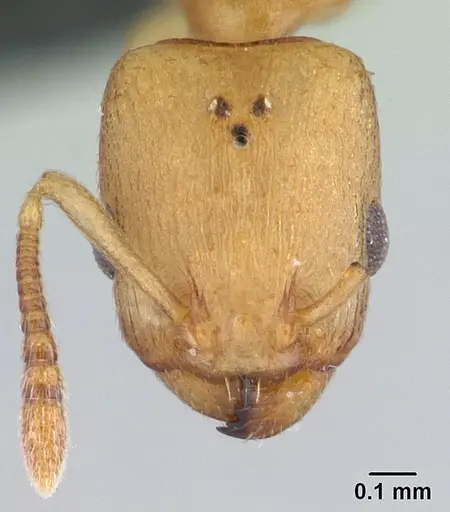
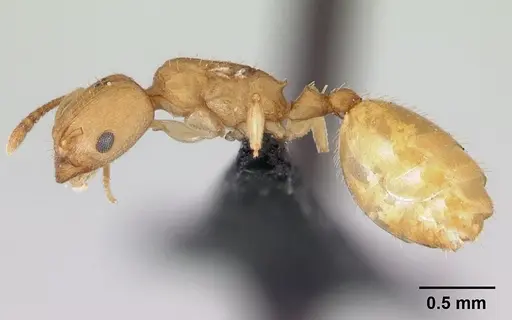
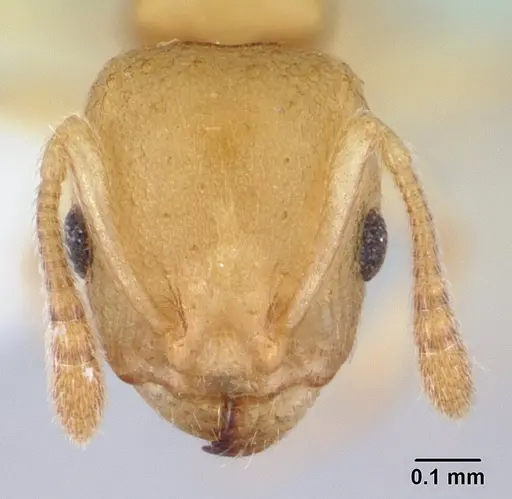
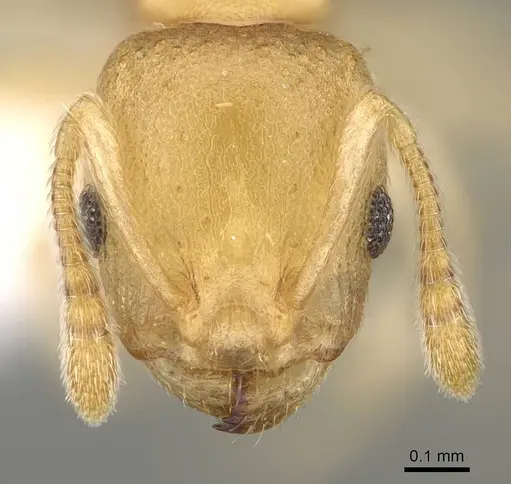
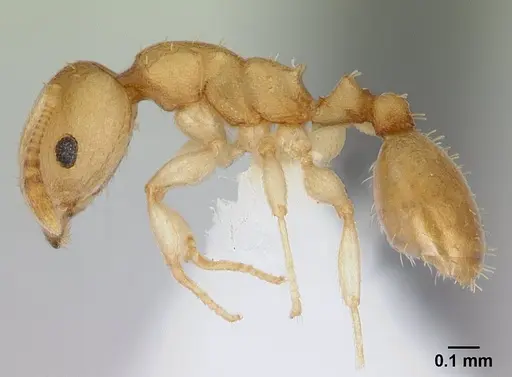
Workers are tiny ants with body color ranging from yellow to brown, concolorous [1]. The head has rugoso-reticulate sculpture with areolate ground sculpture, and the mesosoma has areolate ground sculpture with dispersed rugae [1]. Propodeal spines are straight, triangular, and blunt [1]. These features help distinguish them from other Nesomyrmex species.
Housing and Nesting
No specific captive care information exists, so inferences are based on natural habitat and genus patterns. The dry forest environment suggests moderately dry to slightly moist conditions. Use Y-tong, plaster, or 3D-printed nests with narrow chambers scaled to tiny size. Ensure excellent escape prevention with fine mesh barriers. [1]
Feeding and Diet
Specific diet is undocumented. As small Myrmicinae ants, they likely eat small insects, honeydew, and may accept sugar water. Offer small live prey like fruit flies and experiment with sugar sources. Remove uneaten food promptly to prevent mold.
Temperature and Seasonal Care
Based on Madagascar lowland dry forest habitat, aim for temperatures around 24-28°C [1]. Provide a temperature gradient for thermoregulation. Being tropical, they do not require diapause, maintain warm conditions year-round.
Behavior and Temperament
Specific behavioral observations are not available, but Nesomyrmex species are generally docile. Workers are small and likely forage individually. Defense involves smearing venom, typical of Myrmicinae Crematogastrini ants. Escape prevention is critical due to tiny size.
Frequently Asked Questions
How long does it take for Nesomyrmex reticulatus to produce first workers?
The egg-to-worker development timeline is unconfirmed. Based on typical Myrmicinae development at warm temperatures, estimate approximately 6-10 weeks from egg to first worker.
What do Nesomyrmex reticulatus ants eat?
Their specific diet is undocumented, but as small Myrmicinae ants they likely eat small insects and honeydew. Offer small live prey and experiment with sugar water.
What temperature should I keep Nesomyrmex reticulatus at?
Based on their Madagascar lowland dry forest habitat, aim for 24-28°C [1]. Provide a temperature gradient. They do not require hibernation.
Are Nesomyrmex reticulatus ants aggressive?
Aggression levels are not documented, but Nesomyrmex species are generally not aggressive. They are small, docile ants focused on foraging.
How big do Nesomyrmex reticulatus colonies get?
Maximum colony size is unknown, no published data exists. Based on small worker size, colonies likely remain relatively small.
Do Nesomyrmex reticulatus ants sting?
Stinging behavior is not documented, but as Myrmicinae ants, they have the anatomical capability. Their small size means any sting would be minimal and unlikely to penetrate human skin.
Can I keep multiple Nesomyrmex reticulatus queens together?
Colony structure is unconfirmed. No data exists on multiple queens. Do not attempt combining unrelated queens without evidence of acceptance.
What type of nest is best for Nesomyrmex reticulatus?
No specific nesting data exists, but their tiny size suggests small Y-tong, plaster, or 3D-printed nests with narrow chambers. Ensure excellent escape prevention.
Report an Issue
The current care sheet is based fully on literature. See inconsistencies, or something that's incorrect? Please , it will be resolved after review from an admin. Contributing to the blogs tab also helps providing information, to make us be able to further improve the caresheets. Thank you for your support!
References

This caresheet is licensed under CC BY-SA 4.0 .
Community Blogs
CASENT0073583
View on AntWeb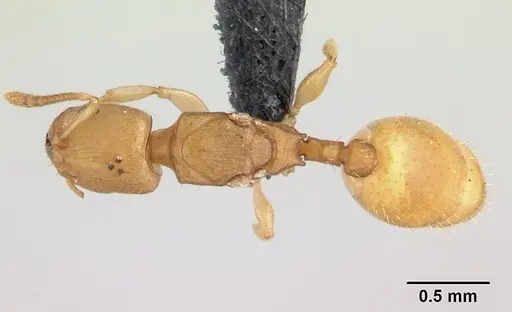
CASENT0418497
View on AntWeb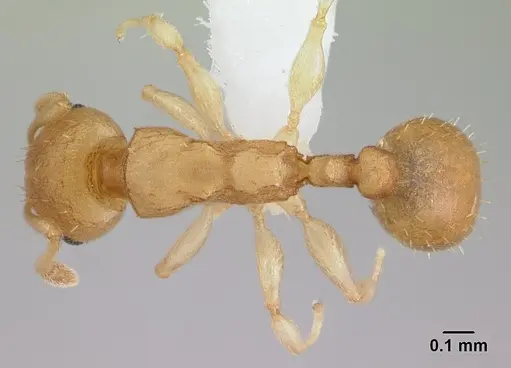
Literature
Loading distribution map...Loading products...