
Nesomyrmex fragilis
- Sci. Name
- Nesomyrmex fragilis
- Tribe
- Crematogastrini
- Subfamily
- Myrmicinae
- Author
- Csősz & Fisher, 2016
- Distribution
- Found in 1 countries
Introduction
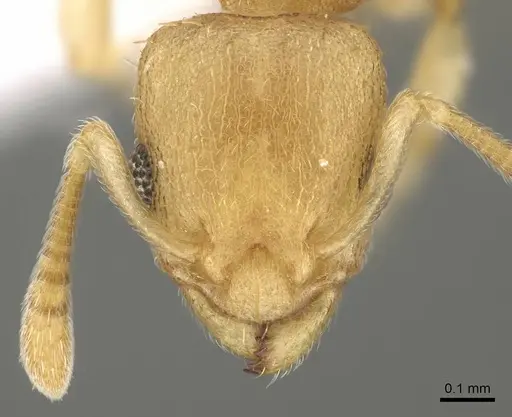
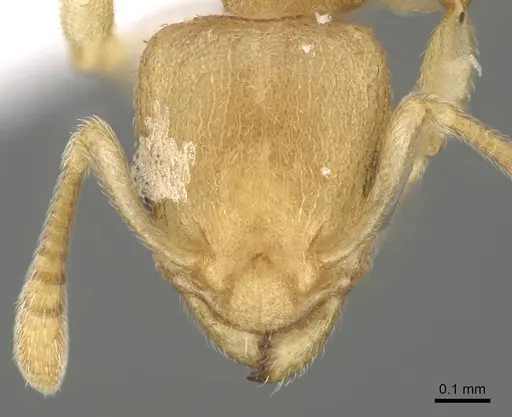
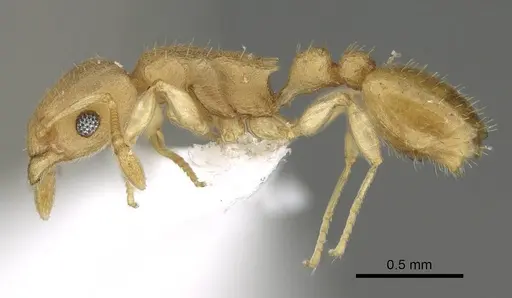
Nesomyrmex fragilis is a tiny yellow ant endemic to northern Madagascar, named 'fragilis' (meaning fragile) due to its remarkably small size . Workers are entirely yellow (concolorous) with a distinctive rugoso-reticulate sculpture pattern on the head and mesosoma . They have relatively large eyes for their size and 12-segmented antennae . This species belongs to the Nesomyrmex angulatus species group and is found across various forest types in the Antsisarana region of northern Madagascar, including tropical dry forests, disturbed forests, rainforests, and littoral rainforests . A single specimen has also been recorded from the Mahajanga region far south of their main range . Full body size measurements are not available in the scientific literature. The cephalic size (head measurement) is approximately 0.54mm, but this represents head size only, not total body length . This tiny stature suggests they occupy a specialized ecological niche in the leaf litter layer of Madagascar's forests.
Quick Summary
- Difficulty: Unknown, no captive husbandry data available
- Origin & Habitat: Northern Madagascar (Antsisarana region), including Nosy Be island. Found in tropical dry forests, disturbed forests, rainforests, and littoral rainforests [1].
- Colony Type: Unconfirmed, colony structure has not been documented in the scientific literature
- Size & Growth:
- Queen: Size data unavailable, no queen measurements published
- Worker: Head size approximately 0.54mm (cephalic size), full body length data unavailable [1]
- Colony: Unknown, no colony size data available
- Growth: Unknown, no development data available
- Development: Estimated 5-8 weeks based on typical small Myrmicinae development at tropical temperatures (This is a rough estimate, no direct development studies exist for this species.)
- Antkeeping:
- Temperature: Keep at 24-28°C based on their tropical Madagascar habitat. A small heating cable on one side of the nest can create a gradient if room temperature is below this range.
- Humidity: Maintain moderate to high humidity (60-80%) reflecting their rainforest and littoral forest habitat. Keep the nest substrate consistently moist but not waterlogged.
- Diapause: Unlikely, as a tropical species from Madagascar, they probably do not require a diapause period
- Nesting: In captivity, small test tubes or nests with tight chambers work well for their tiny size. They likely nest in leaf litter, under stones, or in rotting wood in the wild.
- Behavior: Behavior is unstudied in captivity. Based on their small size and genus placement in Myrmicinae, they are likely timid and non-aggressive, foraging in the leaf litter layer for small prey. As Myrmicinae, they have a stinger but due to their tiny size, they are unlikely to penetrate human skin. Escape prevention is critical due to their minute size, they can squeeze through the smallest gaps. Use fine mesh and tight-fitting lids.
- Common Issues: no captive husbandry data exists, this is an extremely rare species in the antkeeping hobby, tiny size makes escape prevention challenging, standard test tube cotton may need to be packed tightly, humidity control is important, too dry and colonies will fail, too wet and mold becomes an issue, lack of available care information means keepers must experiment carefully with small test colonies, wild-caught colonies may carry parasites or pathogens unfamiliar to captive antkeepers
Appearance and Identification
Nesomyrmex fragilis is among the smaller ant species, with workers having a head size of approximately 0.54mm [1]. Full body length data is not available in the scientific literature. Their most distinctive feature is their entirely yellow (concolorous) body color [1]. The head has a characteristic rugoso-reticulate sculpture pattern with areolate ground sculpture, and the mesosoma shows similar textured sculpture [1]. They have relatively large eyes for their size and 12-segmented antennae [1]. The propodeal spines are triangular and blunt, and the petiole and postpetiole both display characteristic sculpture patterns [1]. These ants are part of the angulatus species group.
Natural Habitat and Distribution
This species is endemic to northern Madagascar, primarily found in the Antsisarana region including Nosy Be island. They occur in multiple forest types: tropical dry forests, disturbed forests, rainforests, and littoral rainforests [1]. The type locality is the Lokobe Nature Reserve on Nosy Be, collected at an elevation of 30 meters [1]. One unusual record exists from the Mahajanga region far south of their main distribution area [1]. In their native habitat, they likely live in the leaf litter layer, under stones, or in rotting wood. They have been found occurring syntopically with Nesomyrmex bidentatus in western Antsisarana [1].
Housing and Nesting
Due to their extremely small size, housing Nesomyrmex fragilis requires attention to scale. Standard test tubes work but ensure the cotton is packed tightly to prevent escape, these tiny ants can squeeze through surprisingly small gaps. Small nests with narrow chambers scaled to their size are ideal. In the wild, they likely nest in leaf litter, under stones, or in small cavities in rotting wood. For captivity, provide a small, humid nest chamber connected to a foraging area. Because of their tiny size, the foraging area should also be appropriately scaled.
Feeding and Diet
The specific diet of Nesomyrmex fragilis has not been documented, but based on their small size and genus placement in Myrmicinae, they likely are omnivorous like most ants in this subfamily. They probably consume small insects, honeydew from aphids or scale insects, and may tend aphids for their sweet secretions. In captivity, you should offer small protein sources like fruit flies, pinhead crickets, or small mealworms, along with sugar water or honey as an energy source. Given their tiny size, prey items should be appropriately small.
Temperature and Humidity Requirements
As a tropical species from Madagascar, Nesomyrmex fragilis requires warm and moderately humid conditions. Aim for temperatures in the range of 24-28°C, which reflects their natural habitat in tropical forests. You can achieve this with a small heating cable placed on one side of the nest to create a temperature gradient, allowing the ants to regulate their own temperature by moving between warmer and cooler areas. Humidity should be maintained at 60-80%, consistent with the rainforest and littoral forest environments where they are found. Keep the nest substrate consistently moist but avoid waterlogging.
Colony Development and Growth
No specific data exists on the development timeline of Nesomyrmex fragilis. Based on typical patterns for small Myrmicinae ants in tropical environments, you can expect development from egg to worker to take approximately 5-8 weeks under optimal conditions (around 26°C). The first workers (nanitics) will likely be smaller than subsequent workers. Colonies probably remain small given the tiny size of the workers. Growth rate is unknown but is probably moderate. This is a species that has never been kept in captivity before, so you will be pioneering its husbandry.
Frequently Asked Questions
Can I keep Nesomyrmex fragilis in a test tube?
Yes, test tubes can work, but you must use tight-fitting cotton and consider the tiny size of these ants, they can escape through very small gaps. A small nest with appropriately scaled chambers is likely a better option.
How long does it take for Nesomyrmex fragilis to produce first workers?
No specific data exists for this species. Based on typical small tropical Myrmicinae, expect approximately 5-8 weeks from egg to first worker at optimal temperatures (around 26°C).
What do Nesomyrmex fragilis eat?
Their exact diet is unstudied. Based on genus patterns, they likely accept small protein sources (fruit flies, tiny insects) and sugar sources (honey water, sugar water).
Do Nesomyrmex fragilis ants sting?
As a Myrmicinae member, they have a stinger but due to their extremely small size, they are unlikely to penetrate human skin or cause noticeable pain. They are probably docile and non-aggressive.
Are Nesomyrmex fragilis good for beginners?
No, this species has no captive husbandry data available and is extremely rare in the antkeeping hobby. It is not recommended for beginners.
What temperature do Nesomyrmex fragilis need?
Keep them at 24-28°C based on their tropical Madagascar habitat. A small heating cable on part of the nest can provide warmth if room temperature is below this range.
Do Nesomyrmex fragilis need hibernation?
Unlikely, as a tropical species from Madagascar, they probably do not require a diapause or hibernation period.
How big do Nesomyrmex fragilis colonies get?
Colony size is unknown but is likely small based on the tiny worker size and typical Nesomyrmex colony patterns.
Can I keep multiple Nesomyrmex fragilis queens together?
The colony structure of this species has not been documented. Without data on whether they are single-queen or multi-queen colonies, combining unrelated queens is not recommended.
Why are my Nesomyrmex fragilis dying?
Without captive care data, we cannot identify specific problems. However, common issues with poorly-known species include: incorrect humidity (too dry or too wet), inappropriate temperature, stress from handling, or parasites from wild-caught colonies.
Report an Issue
The current care sheet is based fully on literature. See inconsistencies, or something that's incorrect? Please , it will be resolved after review from an admin. Contributing to the blogs tab also helps providing information, to make us be able to further improve the caresheets. Thank you for your support!
References

This caresheet is licensed under CC BY-SA 4.0 .
Community Blogs
CASENT0421396
View on AntWeb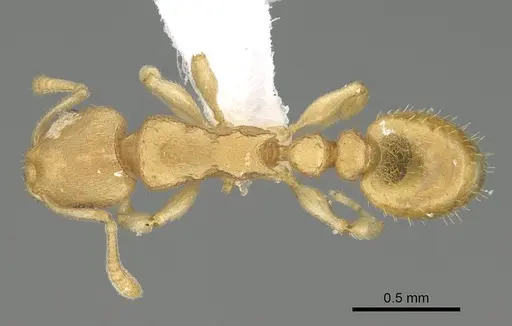
Literature
Loading distribution map...Loading products...