
Nesomyrmex flavigaster
- Sci. Name
- Nesomyrmex flavigaster
- Tribe
- Crematogastrini
- Subfamily
- Myrmicinae
- Author
- Csősz & Fisher, 2016
- Distribution
- Found in 1 countries
Introduction
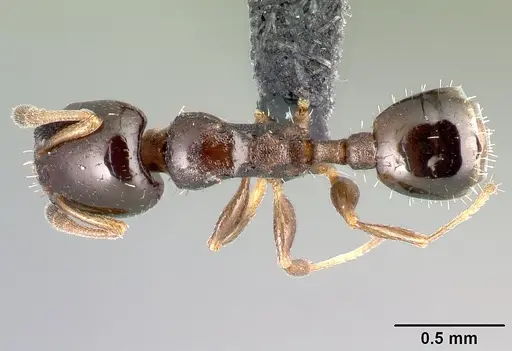
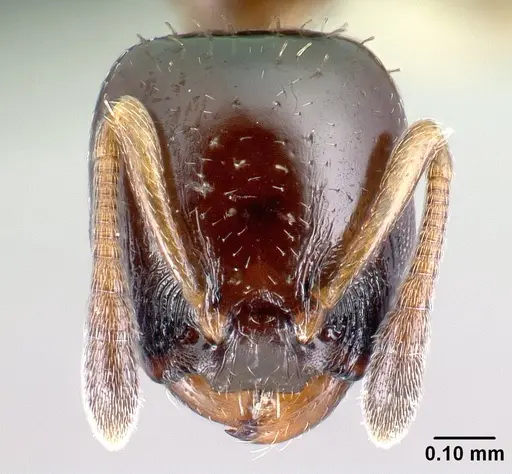
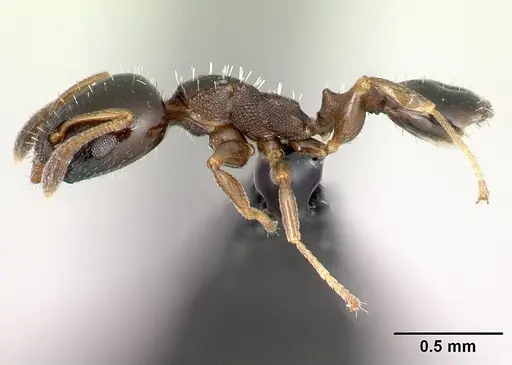
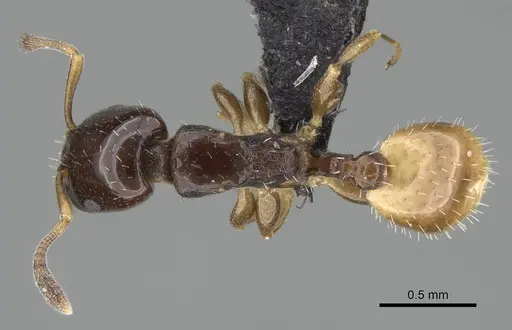
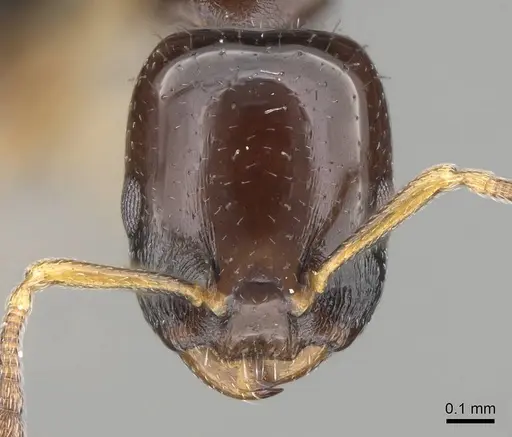
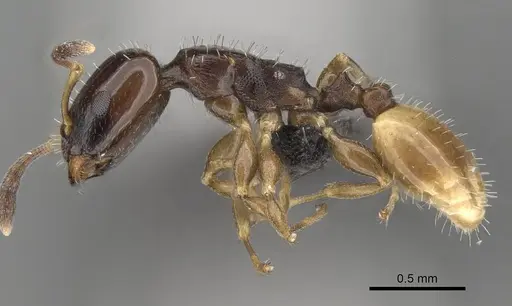
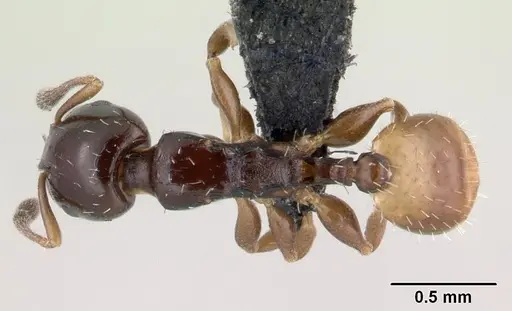
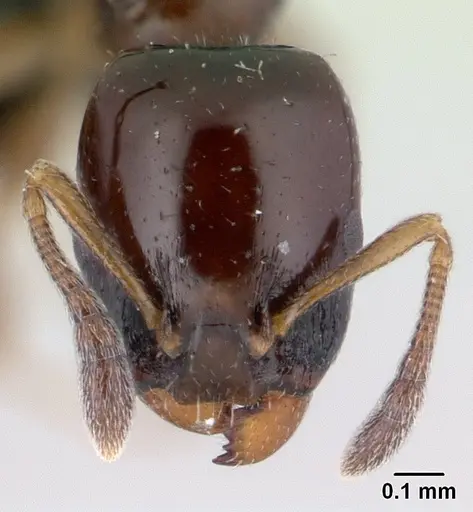
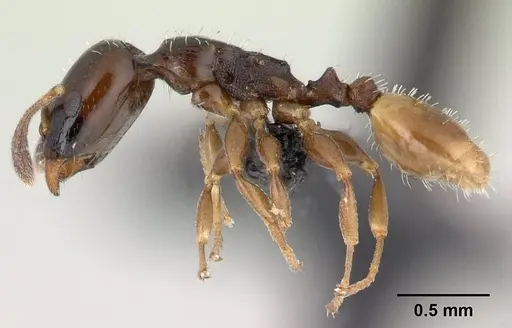
Nesomyrmex flavigaster is a tiny ant species native to Madagascar, first described in 2016. Workers have a dark brown to black body with a pale yellow gaster, creating a distinctive two-tone appearance . Body size data is unavailable, as only head measurements are provided in the research. This species is found only in southern Madagascar at the Cap Sainte Marie Reserve, with introduced populations in northern areas like Nosy Be airport and Manerinerina . They inhabit low vegetation in spiny forests, urban gardens, and disturbed forest areas . This species is notable for its extremely limited natural distribution and human-introduced populations, making it a rare find for antkeepers.
Quick Summary
- Difficulty: Expert
- Origin & Habitat: Southern Madagascar (Réserve Spéciale de Cap Sainte Marie near Marovato) at 200m elevation, with introduced populations in northern Madagascar (Nosy Be, Manerinerina). Inhabits low vegetation in spiny forests, urban gardens, and disturbed forest areas [1].
- Colony Type: Colony structure is unconfirmed. Based on Nesomyrmex patterns, likely monogyne (single queen).
- Size & Growth:
- Queen: Unknown
- Worker: Size data unavailable for body length
- Colony: Unknown
- Growth: Unknown
- Development: Unknown, no direct data exists for this species (Development timeline is unconfirmed, based on tropical Myrmicinae patterns, but specific data is lacking.)
- Antkeeping:
- Temperature: Keep warm, as they are tropical ants from Madagascar. Roughly low-to-mid 20s°C, but exact needs are unknown.
- Humidity: Provide a humidity gradient, mostly dry nest chamber with one small moist area, as they inhabit dry spiny forests [1].
- Diapause: No, tropical ants do not require hibernation. Keep temperatures stable year-round [1].
- Nesting: They naturally nest in low vegetation. Use Y-tong, plaster, or soil nests with small chambers scaled to their size. Provide climbing structures [1].
- Behavior: These ants are very small and active. Workers forage in the vegetation layer. Escape prevention is critical due to their tiny size, they can squeeze through small gaps. They are not aggressive and likely have a mild sting, but are harmless to humans due to their size.
- Common Issues: tiny size means escapes are likely without fine mesh barriers, limited data makes care requirements uncertain, expect some trial and error, slow colony growth can frustrate beginners, wild-caught colonies may have parasites that kill them in captivity, need very small prey items due to tiny worker size
Housing and Nest Setup
Nesomyrmex flavigaster requires careful housing due to their extremely small size. Use a Y-tong nest or a small test tube setup with chambers scaled to their tiny dimensions. The chambers should be narrow, these are very small ants. Because they naturally nest in low vegetation, provide some climbing structures like small twigs or artificial plants in the outworld. Escape prevention is critical: use fine mesh (at least 0.5mm) on all openings, as these ants can squeeze through gaps that would stop larger species. A small outworld is fine since colonies start small [1].
Feeding and Diet
Based on typical Nesomyrmex and Myrmicinae feeding patterns, these ants are likely omnivorous. Offer small protein sources like fruit flies, springtails, or other tiny arthropods. Sugar water or honey should be offered occasionally, though some tiny Myrmicinae prefer protein over sugar. Feed small amounts every 2-3 days and remove uneaten food to prevent mold. Their tiny workers need correspondingly tiny prey items, even small fruit flies may need to be cut up.
Temperature and Humidity
As tropical Madagascar ants, Nesomyrmex flavigaster needs warm conditions. Keep the nest at roughly low-to-mid 20s°C, with a slight gradient if possible. A small heating cable on one side of the nest can help maintain warmth. For humidity, provide a gradient with a mostly dry nest chamber and one small moist area, as they inhabit dry spiny forests. Provide a water tube for drinking access. Avoid temperatures below 20°C or sudden temperature changes, as these are sensitive tropical species [1].
Colony Establishment
Since colony structure is not well documented for this species, assume standard claustral founding if confirmed. A newly mated queen will seal herself in a small chamber and raise the first brood alone on her stored fat reserves. The first workers (nanitics) will be very small. Do not disturb the founding chamber for at least 4-6 weeks. Once workers emerge, introduce small food items and allow the colony to grow naturally. Growth will likely be slow, small species typically take months to reach even 50 workers.
Unique Considerations
This species was only described in 2016,so there is very limited captive husbandry information. Expect to experiment with care conditions and document your results. The natural population in southern Madagascar is extremely localized, and some northern populations appear to be human introductions. If you obtain a colony, excellent record-keeping will help advance knowledge of this species in captivity. Their distinctive yellow gaster makes them visually striking despite their tiny size [1].
Frequently Asked Questions
How long does it take for Nesomyrmex flavigaster to produce first workers?
Unknown, no direct development data exists for this species. Based on similar small Myrmicinae, it may take several weeks, but specific timelines are unconfirmed.
What do Nesomyrmex flavigaster ants eat?
Based on typical Myrmicinae diet, they likely accept small protein sources like fruit flies, springtails, and other tiny arthropods. Offer sugar water or honey occasionally. Their tiny workers need very small prey items.
Do Nesomyrmex flavigaster ants sting?
They likely have a stinger but due to their extremely small size, it would be imperceptible to humans. They are not considered dangerous.
Can I keep Nesomyrmex flavigaster in a test tube?
Yes, a small test tube setup can work for founding colonies. Use a tube with a small water reservoir and ensure the cotton is packed tightly to prevent escapes through the tiny gaps these small ants can exploit.
What temperature do Nesomyrmex flavigaster ants need?
Keep them warm, as they are tropical ants from Madagascar. Roughly low-to-mid 20s°C, but exact needs are unknown. Use a heating cable or mat if your room temperature is below this range.
How big do Nesomyrmex flavigaster colonies get?
Colony size is unknown, no data is available on maximum worker counts.
Do Nesomyrmex flavigaster ants need hibernation?
No, they are tropical ants from Madagascar and do not require hibernation or winter cooling. Keep temperatures stable year-round [1].
Are Nesomyrmex flavigaster good for beginners?
No, this is not recommended for beginners. The species was only described in 2016 with very limited captive data, their tiny size makes escape prevention challenging, and care requirements are not well established. Experienced antkeepers interested in rare species are better suited for this challenge.
Why is Nesomyrmex flavigaster distinctive?
They have a striking two-tone appearance: dark brown to black body with a pale yellow gaster (rear section). This contrast gives them their scientific name 'flavigaster' meaning 'yellow belly'. They are also among the smaller ant species, though exact body size is unknown [1].
Where is Nesomyrmex flavigaster naturally found?
Only in southern Madagascar at the Cap Sainte Marie Reserve near Marovato, at about 200m elevation. Human-introduced populations exist in northern areas near Nosy Be airport and Manerinerina. They live in low vegetation of spiny forests [1].
How do I prevent Nesomyrmex flavigaster from escaping?
Use fine mesh (0.5mm or smaller) on all ventilation holes and connections. Check all seams and edges carefully, these tiny ants can squeeze through impossibly small gaps. A barrier like fluon on the inner rim of the outworld can help.
When should I move Nesomyrmex flavigaster to a formicarium?
Wait until the colony has a reasonable number of workers and the test tube is becoming crowded. For this small species, a small Y-tong, plaster, or soil nest with appropriately sized chambers works well. Move them only when they show signs of needing more space.
Report an Issue
The current care sheet is based fully on literature. See inconsistencies, or something that's incorrect? Please , it will be resolved after review from an admin. Contributing to the blogs tab also helps providing information, to make us be able to further improve the caresheets. Thank you for your support!
References

This caresheet is licensed under CC BY-SA 4.0 .
Community Blogs
Literature
Loading distribution map...Loading products...