
Nesomyrmex edentatus
- Sci. Name
- Nesomyrmex edentatus
- Tribe
- Crematogastrini
- Subfamily
- Myrmicinae
- Author
- Csősz & Fisher, 2016
- Distribution
- Found in 1 countries
Introduction
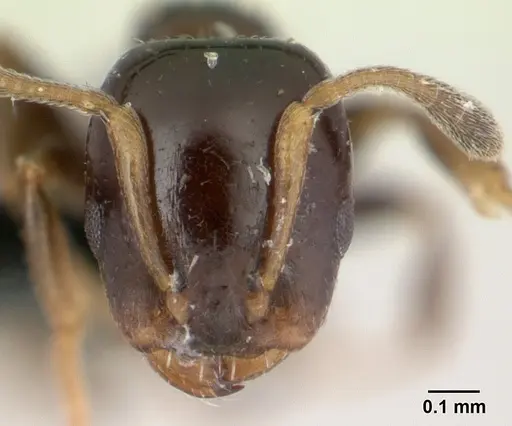
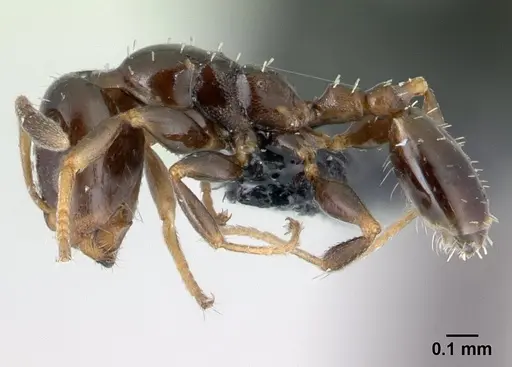
Nesomyrmex edentatus is a tiny black ant species endemic to the littoral rainforests of eastern coastal Madagascar . The species name 'edentatus' refers to its most distinctive feature - the complete absence of propodeal teeth, which sets it apart from related species in the brevicornis group . Workers are extremely small, among the smallest in the genus . These ants were collected by beating low vegetation, indicating they are arboreal or live in the forest understory rather than on the ground . This is one of the least studied ant species from Madagascar's threatened coastal littoral forests.
Quick Summary
- Difficulty: Unknown, likely Expert
- Origin & Habitat: Littoral rainforests of eastern coastal Madagascar, collected from low vegetation at elevations of 10-150m [1][2]
- Colony Type: Unconfirmed, colony structure has not been documented for this species
- Size & Growth:
- Queen: Unknown, no queen description available
- Worker: ~2-3mm, inferred from Nesomyrmex genus [1]
- Colony: Unknown, no colony size data available
- Growth: Unknown, no development data available
- Development: Unconfirmed, no direct data exists for this species (Development timeline has not been studied. Related Nesomyrmex species may provide estimates, but no confirmed data is available.)
- Antkeeping:
- Temperature: Unknown, start around 22-26°C and observe colony activity. Madagascar's eastern coast is tropical with warm, humid conditions year-round.
- Humidity: Likely requires high humidity based on littoral rainforest habitat. Keep substrate consistently moist but not waterlogged.
- Diapause: Unknown, tropical species may have reduced activity periods rather than true hibernation, but diapause requirements have not been studied.
- Nesting: Arboreal, likely accepts Y-tong nests or test tube setups with high humidity. Their small size and vegetation-dwelling habits suggest they prefer tight, humid chambers.
- Behavior: Behavior is unstudied. Their collection method (beating low vegetation) suggests they are surface-active on leaves and branches rather than ground-dwelling. Likely non-aggressive given their tiny size. Escape prevention is critical due to their extremely small size, standard test tube setups may work but fine mesh barriers are essential.
- Common Issues: extreme small size makes escape prevention critical, they can squeeze through standard barrier gaps, no established care guidelines exist, keepers are essentially pioneering captive husbandry, humidity control is challenging, too dry causes mortality, too wet causes mold, no dietary information available, experimental feeding required, wild-caught colonies may have parasites or diseases not yet documented
Discovery and Taxonomy
Nesomyrmex edentatus was formally described in 2016 by Sándor Csösz and Brian L. Fisher as part of a comprehensive taxonomic revision of the Malagasy brevicornis species group [1]. The species was discovered during extensive ant surveys conducted across Madagascar's eastern coastal forests. The type specimens were collected from multiple locations including Analava Mandrisy, Masoala Peninsula, and Mandena near Tolagnaro, at elevations ranging from 10 to 150 meters above sea level [1]. The most distinctive morphological feature is the complete absence of propodeal teeth, which is reflected in the species name 'edentatus' (meaning 'toothless' in Latin) [1].
Natural Habitat and Distribution
This species is endemic to the littoral rainforests of eastern coastal Madagascar, one of the island's most threatened forest types [1]. Littoral forests are unique ecosystems that occur along the eastern coast in a narrow band between the ocean and the eastern highlands. These forests are characterized by high humidity, relatively stable temperatures, and dense vegetation. The ants were collected exclusively by beating low vegetation, meaning they live among the leaves and branches of forest understory plants rather than in soil or ground nests [1]. This arboreal or at least vegetation-dwelling lifestyle is an important consideration for captive care, as it suggests they prefer humid, enclosed spaces rather than open foraging areas.
Current State of Knowledge
Nesomyrmex edentatus represents a species where almost no biological or ecological information exists beyond basic morphology and distribution. We do not know their colony structure (whether they have one queen or multiple), their founding behavior (whether queens seal themselves in or must forage), their diet (what they eat in nature), their development timeline (how long from egg to worker), or their behavior (foraging patterns, aggression, defense mechanisms). This makes them one of the most challenging species to keep in captivity, as there are no established care protocols to draw from. Keepers who obtain this species will essentially be pioneering their captive husbandry through careful observation and experimentation.
Housing and Setup Recommendations
Given their extremely small size and vegetation-dwelling habits, housing requires careful consideration. Use test tube setups or Y-tong nests with very tight chambers scaled to their tiny size. Escape prevention must be excellent, standard cotton plugs and barrier methods may not be sufficient for ants this small. Consider using fine mesh (0.5mm or smaller) on any ventilation holes. Maintain high humidity to simulate their littoral rainforest habitat. A small water reservoir in the outworld can help maintain humidity without over-saturating the nest. Since they were collected from vegetation, consider adding small twigs, leaves, or moss to the outworld to provide climbing surfaces and foraging opportunities. Observe whether they prefer to stay in the nest or explore the outworld, this will guide future setup modifications.
Feeding Strategy
No specific dietary information exists for this species. As a member of Myrmicinae, they likely have typical omnivorous habits, but their tiny size suggests they may prefer very small prey items. Start with small protein sources like fruit flies, pinhead crickets (very small), or tiny insects. They may also accept sugar sources like honey water or sugar water, though this is unconfirmed. Given their collection from vegetation, they might have a stronger preference for honeydew or nectar than ground-nesting species. Feed small amounts initially and observe what gets consumed. Remove uneaten food promptly to prevent mold. The experimental nature of feeding cannot be overstated, keepers should be prepared to try various small food items and document what the colony accepts.
Temperature and Seasonal Care
Temperature requirements are completely unstudied for this species. The littoral rainforests of eastern Madagascar experience warm, humid conditions year-round with average temperatures in the mid-to-high 20s Celsius. Start around 22-26°C and monitor colony behavior, if workers become sluggish, slightly increase temperature, if they avoid the heated area, reduce it. A gentle temperature gradient allows the colony to self-regulate. Since this is a tropical species, they likely do not require true hibernation, but may have seasonal activity patterns tied to wet and dry seasons. During cooler or drier periods, activity may naturally decrease. Do not assume diapause is required, tropical ants often just reduce activity rather than enter true dormancy.
Frequently Asked Questions
How long does it take for Nesomyrmex edentatus to develop from egg to worker?
This is completely unconfirmed, no development data exists for this species. Based on typical Myrmicinae patterns, expect several weeks at warm temperatures, but this is purely an estimate. Keepers will need to document their own observations to establish a timeline.
What do Nesomyrmex edentatus eat?
Diet is unconfirmed. Start with small live prey (fruit flies, tiny crickets) and sugar sources (honey water, sugar water). Their tiny size suggests they need very small food items. Document what your colony accepts and adjust accordingly.
Are Nesomyrmex edentatus good for beginners?
No. This species is not recommended for beginners. There are no established care guidelines, no dietary information, no confirmed colony structure, and no development data. Keeping this species successfully requires significant antkeeping experience and a willingness to experiment.
How big do Nesomyrmex edentatus colonies get?
Unknown, colony size has not been documented. Based on their extremely small worker size and related species, colonies are likely relatively small, but this is an estimate.
Do Nesomyrmex edentatus ants sting?
Unknown, sting capability has not been documented. Given their extremely small size, any sting would likely be negligible to humans even if present. Their primary defense is likely escape rather than stinging.
What temperature should I keep Nesomyrmex edentatus at?
Start around 22-26°C and observe colony behavior. Increase slightly if workers are sluggish, decrease if they avoid heated areas. No specific optimal temperature has been determined for this species.
Can I keep multiple Nesomyrmex edentatus queens together?
Unknown, colony structure has not been documented. Do not attempt combining unrelated queens without documented evidence that this species tolerates polygyny.
Is Nesomyrmex edentatus claustral or semi-claustral?
Unconfirmed, founding behavior has not been studied. Based on typical Myrmicinae patterns, they are likely claustral (queen seals herself in and lives off stored fat), but this is an inference, not a confirmed fact.
Why are my Nesomyrmex edentatus escaping?
Their extremely small size makes them excellent escape artists. Use fine mesh (0.5mm or smaller), ensure all connections are tight, and consider barrier methods like fluon on test tube rims. Standard barriers that work for larger ants may not contain this species.
Where does Nesomyrmex edentatus live in the wild?
They are found only in the littoral rainforests of eastern coastal Madagascar, where they live in low vegetation (collected by beating leaves and branches). This arboreal lifestyle suggests they prefer humid, enclosed spaces with climbing surfaces.
What makes Nesomyrmex edentatus different from other ants?
They are among the smallest Nesomyrmex species and are the only known species in their group with no propodeal teeth (the 'edentatus' name means toothless). They are also among the least studied ant species in Madagascar, with almost no biological data available.
Do Nesomyrmex edentatus need hibernation?
Unknown, tropical species often do not require true hibernation. They may have reduced activity periods during cooler seasons, but this has not been studied. Do not assume diapause is required without evidence.
Report an Issue
The current care sheet is based fully on literature. See inconsistencies, or something that's incorrect? Please , it will be resolved after review from an admin. Contributing to the blogs tab also helps providing information, to make us be able to further improve the caresheets. Thank you for your support!
References

This caresheet is licensed under CC BY-SA 4.0 .
Community Blogs
CASENT0067086
View on AntWeb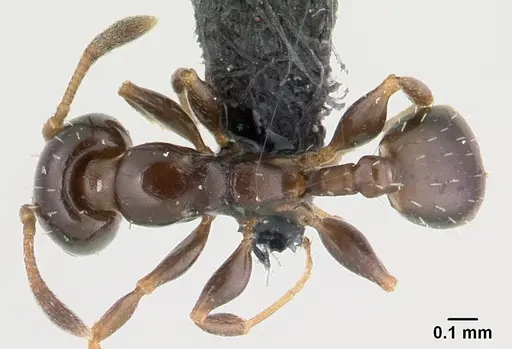
Literature
Loading distribution map...Loading products...