
Nesomyrmex clypeatus
- Sci. Name
- Nesomyrmex clypeatus
- Tribe
- Crematogastrini
- Subfamily
- Myrmicinae
- Author
- Csősz & Fisher, 2016
- Distribution
- Found in 1 countries
Introduction
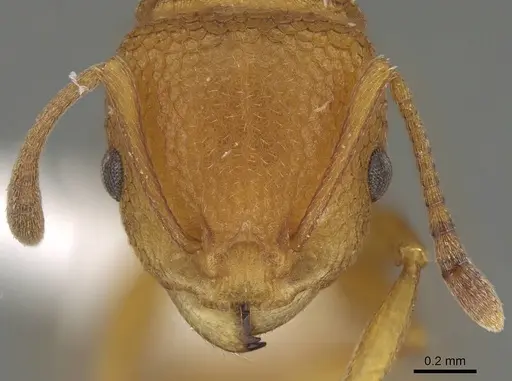
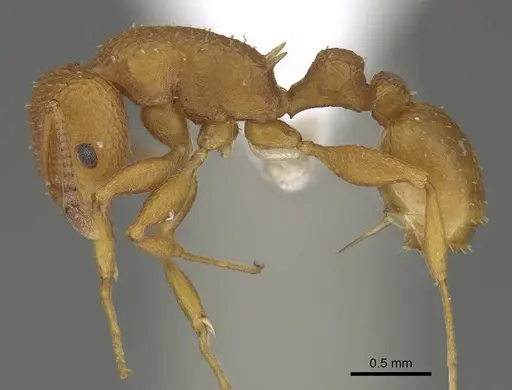
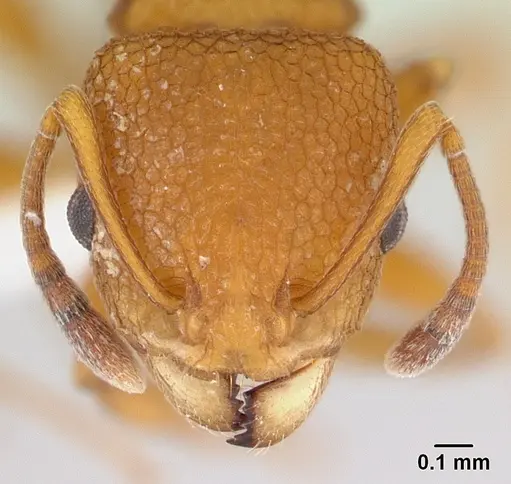
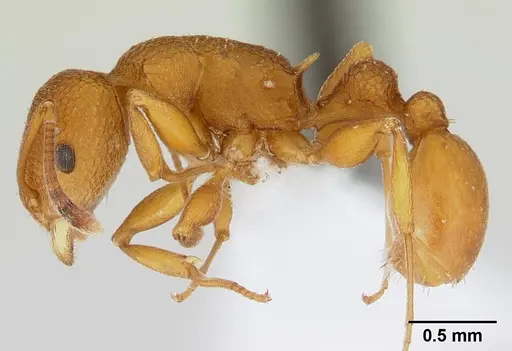
Nesomyrmex clypeatus is a tiny ant species endemic to the dry forests of northern Madagascar . Workers are small (total length not precisely measured but estimated around 2-3 mm based on genus patterns) with a yellow to brown body color and a distinctly darker antennal club . You can identify this species by a unique median notch on the front of its head (clypeus), which gives it the species name 'clypeatus' . The head has distinctive ridged sculpture patterns, and workers have short propodeal spines . Found only in tropical dry forests and littoral forests of the Ankarana region in northern Madagascar, this species was only formally described in 2016 , making it one of the more recently discovered ants in the hobby.
Quick Summary
- Difficulty: Expert
- Origin & Habitat: Endemic to the Malagasy region, specifically tropical dry forests and littoral forests of northern Madagascar, particularly the Ankarana Special Reserve area [1][2]
- Colony Type: Colony structure is unconfirmed. No published data exists on whether this species is single-queen (monogyne) or multi-queen (polygyne) [1].
- Size & Growth:
- Queen: Unknown, no queen description has been published [1]
- Worker: Worker total length has not been published, based on genus patterns, estimated around 2-3 mm [1]
- Colony: Unknown, no colony size data available [1]
- Growth: Unknown, no development timing has been studied [1]
- Development: Unknown, no direct observations of development exist [1]. Based on typical Nesomyrmex patterns and their small size, development likely takes 6-10 weeks at optimal temperature, but this is purely estimated. (This is a recently described species (2016) with no published biological data. All timing is estimated from genus-level patterns [1].)
- Antkeeping:
- Temperature: Based on their origin in tropical dry forests [1], aim for warm conditions around 24-28°C. Provide a temperature gradient so ants can self-regulate. Room temperature in the low-to-mid 20s°C is likely suitable.
- Humidity: Dry forest habitat [1] suggests moderate to lower humidity needs. Keep nest substrate lightly moist but allow it to partially dry between waterings. Avoid overly damp conditions.
- Diapause: Unknown, no published data on overwintering requirements [1]. Madagascar has mild winters, so they may not require a true diapause. Consider a cool period (15-18°C) for 2-3 months during winter months if mimicking natural seasonal cycles.
- Nesting: No specific nesting data exists [1]. Based on typical Nesomyrmex behavior and their dry forest habitat, they likely nest in soil, under stones, or in rotting wood. A naturalistic setup with soil substrate or a Y-tong/plaster nest with moderate moisture works as a starting point.
- Behavior: No behavioral observations have been published [1]. Based on genus patterns, they are likely docile and not aggressive. Their small size makes escape prevention critical, they can squeeze through standard test tube barriers. Use fine mesh and tight-fitting lids. Foraging style is unknown but likely involves ground-level hunting for small prey. They likely use a smearing defense (modified stinger that wipes venom onto attackers), typical of the Crematogastrini tribe.
- Common Issues: complete lack of published biological data makes care challenging [1], small size means escapes are likely without fine mesh barriers, colony may be slow-growing or have high founding mortality, humidity balance is tricky, too wet causes mold, too dry kills brood, no established disease or pest prevention strategies for this species
Species Discovery and Taxonomy
Nesomyrmex clypeatus was only formally described in 2016 by Sándor Csösz and Brian Fisher. The species name 'clypeatus' refers to the distinctive median notch on the clypeus (the plate covering the front of the ant's head), which is unique among the Nesomyrmex angulatus species group [1]. The type specimens were collected from the Ankarana Special Reserve in northern Madagascar [1]. This recent discovery means that biological and behavioral studies have not yet been conducted, making this one of the least-known ant species available in the antkeeping hobby [1].
Natural Habitat and Distribution
This species is endemic to northern Madagascar, found specifically in tropical dry forests and littoral forests [1][2]. The Ankarana region where it was discovered features semi-arid conditions with distinct wet and dry seasons [2]. This suggests the species is adapted to warmer, drier conditions than many other Malagasy ants. They have not been found outside this limited geographic area [1].
Identification and Morphology
Workers of Nesomyrmex clypeatus are small ants, total length has not been precisely measured but is estimated around 2-3 mm based on genus patterns [1]. The body is yellow to brown in color, concolorous (one color) with only the antennal club (clava) being darker [1]. A key identifying feature is the median clypeal notch, a small notch in the front margin of the head [1]. Workers have propodeal spines that are straight or slightly bent, angled at 50-60 degrees [1]. The scapes (antenna shafts) have only pubescence (fine hairs), no large setae [1].
Housing and Nest Setup
Since no published care information exists [1], recommendations are based on typical Nesomyrmex requirements and their dry forest habitat [2]. Use a small nest such as a test tube setup for founding colonies, or a small Y-tong or plaster nest for established colonies. Provide a temperature gradient by placing the nest on a heating cable on one side, aiming for 24-28°C in the warm zone. For substrate moisture, keep it lightly damp but allow drying between waterings, these are not moisture-dependent ants. Ensure excellent escape prevention due to their tiny size, standard cotton or foam barriers may not suffice. Use fine mesh on any ventilation holes.
Feeding and Nutrition
No specific dietary studies exist for this species [1]. Based on genus patterns and their small size, they likely are omnivorous, feeding on small insects, honeydew, and nectar. For captivity, offer small live prey such as fruit flies, pinhead crickets, or small mealworms. Sugar water or honey can be offered occasionally, though acceptance is uncertain. Feed small amounts twice weekly and remove uneaten food to prevent mold. Given their small size, prey items should be appropriately scaled, very small portions of chopped insects may be more readily accepted than whole prey.
Challenges and Considerations
Keeping Nesomyrmex clypeatus presents significant challenges due to the complete lack of published biological data [1]. Everything about their care must be inferred from related species or guessed based on their habitat. Expect higher mortality rates during founding and slower growth than more commonly kept species. They may have specific humidity or temperature requirements that are not yet understood. This species is best suited for experienced antkeepers who are comfortable with experimental care and can adapt to the ant's needs based on observation rather than established protocols [1].
Frequently Asked Questions
How long does it take for Nesomyrmex clypeatus to produce first workers?
The egg-to-worker timeline is unknown, no development studies have been published [1]. Based on typical Nesomyrmex patterns and their small size, expect 6-10 weeks at optimal temperature, but this is purely an estimate.
What do Nesomyrmex clypeatus ants eat?
No dietary studies exist for this species [1]. Based on genus patterns, they likely accept small live prey (fruit flies, small insects) and sugar sources. Offer a varied diet and observe what they accept.
Are Nesomyrmex clypeatus good for beginners?
No. This is an expert-level species due to the complete lack of published care information [1]. They are not recommended for beginners.
Do Nesomyrmex clypeatus ants sting?
Unknown, no observations have been published [1]. Given their very small size, any sting would likely be imperceptible. As a member of the Crematogastrini tribe, they are expected to use a smearing defense (wiping venom onto attackers) rather than traditional stinging.
What temperature do Nesomyrmex clypeatus need?
Based on their Madagascar dry forest habitat [1], aim for 24-28°C with a gradient. Room temperature in the low-to-mid 20s°C is likely suitable. Provide a heating cable on part of the nest for warmer conditions.
Do Nesomyrmex clypeatus need hibernation?
Unknown, no published data on overwintering requirements [1]. Madagascar has mild winters, so a true diapause may not be necessary. A cool period of 2-3 months at 15-18°C may be beneficial if mimicking natural seasons.
How big do Nesomyrmex clypeatus colonies get?
Colony size is unknown, no published colony data exists [1]. Based on typical Nesomyrmex patterns, colonies likely reach dozens to a few hundred workers.
Can I keep multiple Nesomyrmex clypeatus queens together?
Unknown, no data exists on colony structure or queen behavior [1]. Do not attempt combining unrelated queens until more is known about their social structure.
What size escape prevention do I need for Nesomyrmex clypeatus?
Excellent escape prevention is critical due to their very small size (estimated around 2-3 mm). Standard cotton or foam barriers may not suffice. Use fine mesh (at least 0.5 mm or smaller) on all ventilation and ensure lids fit tightly.
Where is Nesomyrmex clypeatus found in the wild?
This species is endemic to northern Madagascar, specifically the Ankarana Special Reserve region. It lives in tropical dry forests and littoral forests [1][2].
When do Nesomyrmex clypeatus have nuptial flights?
Unknown, no published data on reproduction timing or nuptial flight season exists [1].
Is Nesomyrmex clypeatus aggressive?
No behavioral observations have been published [1]. Based on typical Nesomyrmex behavior, they are likely docile and non-aggressive. They likely rely on a smearing defense mechanism (wiping venom onto attackers), typical of the Crematogastrini tribe.
Report an Issue
The current care sheet is based fully on literature. See inconsistencies, or something that's incorrect? Please , it will be resolved after review from an admin. Contributing to the blogs tab also helps providing information, to make us be able to further improve the caresheets. Thank you for your support!
References

This caresheet is licensed under CC BY-SA 4.0 .
Community Blogs
CASENT0422552
View on AntWeb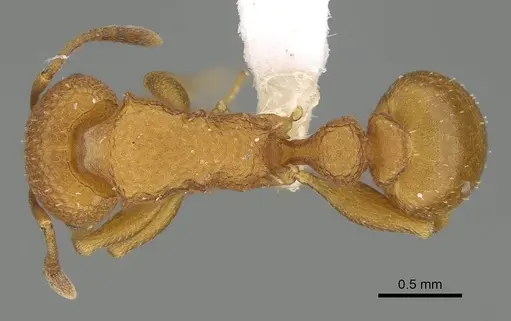
CASENT0427944
View on AntWeb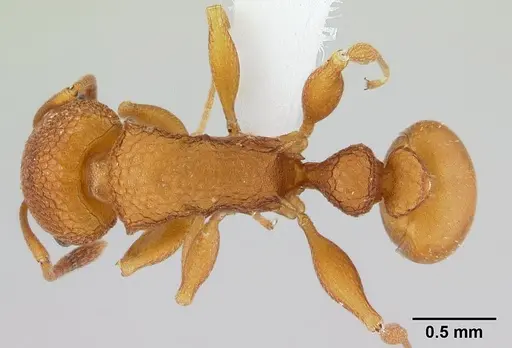
Literature
Loading distribution map...Loading products...