
Nesomyrmex capricornis
- Sci. Name
- Nesomyrmex capricornis
- Tribe
- Crematogastrini
- Subfamily
- Myrmicinae
- Author
- Csősz & Fisher, 2015
- Distribution
- Found in 1 countries
Introduction
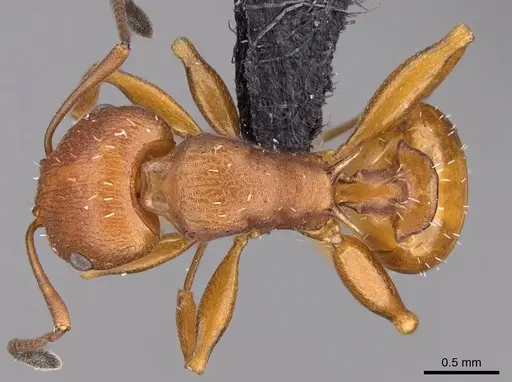
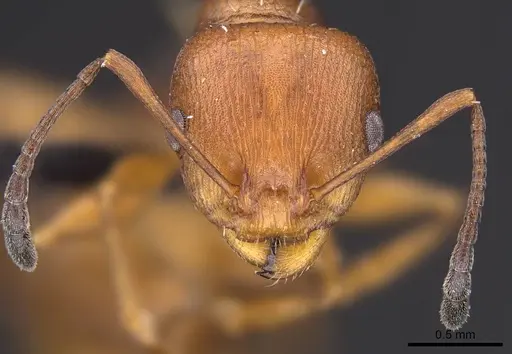
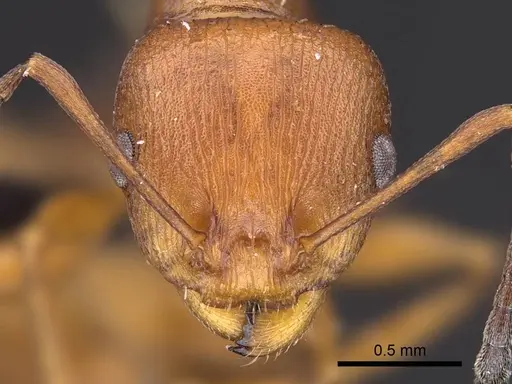
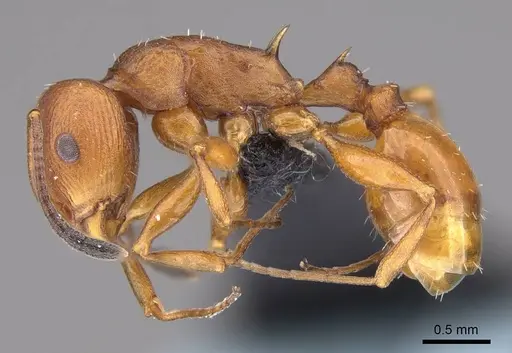
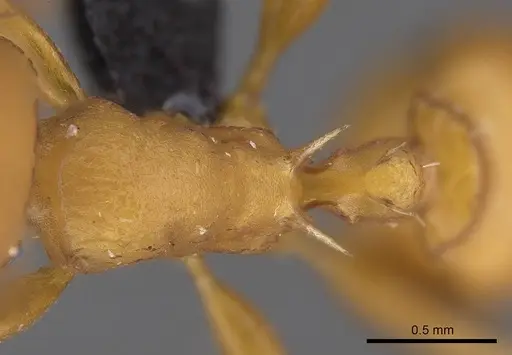
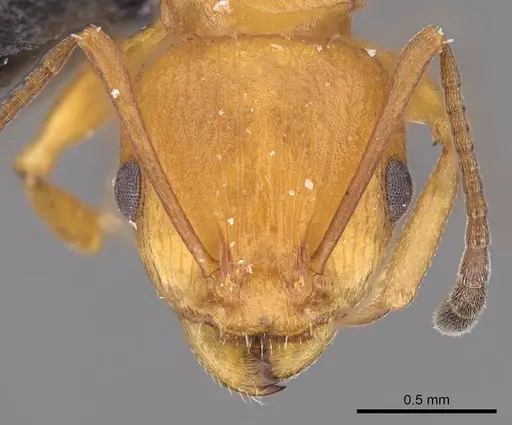
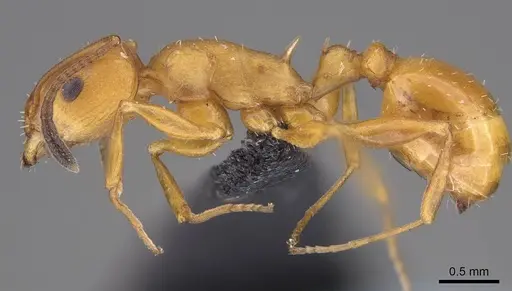
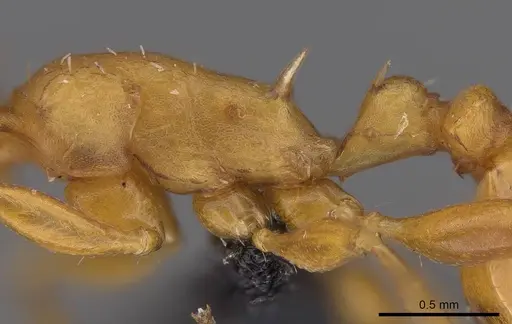
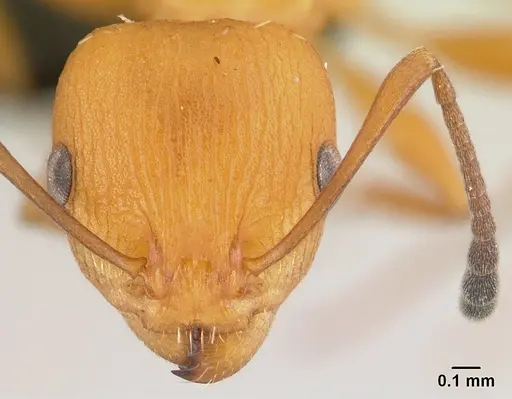
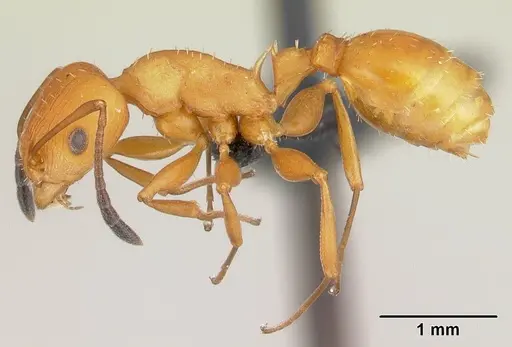
Nesomyrmex capricornis is a tiny yellow ant native to the isolated dry forests of southern Madagascar. Workers are very small, making them one of the smaller ant species kept in captivity. This species belongs to the hafahafa species-group and is instantly recognizable by its three pairs of distinctive dorsal spines: pronotal spines, propodeal spines, and uniquely shaped anterodorsal spines on the petiolar node that give the species its name (capricornis means 'goat horn' in Latin). The body is uniformly yellow with only the antennal club slightly darker. These ants inhabit tiny pockets of remaining forest in southern Madagascar, specifically in Forêt Mahavelo near the Isantoria River and in Parc National d'Andohahela at Forêt de Manantalinjo . What makes N. capricornis particularly interesting is its extremely restricted distribution - it is only known from a handful of highly isolated forest fragments in one of the most threatened regions of Madagascar. This isolation means the species has evolved unique morphological adaptations, including those distinctive spines, that set it apart from any other ant species in the Malagasy region or on the African continent . For antkeepers, this is a rare opportunity to keep a truly uncommon species with fascinating morphology.
Quick Summary
- Difficulty: Expert
- Origin & Habitat: Southern Madagascar, isolated forests in the Toliara region (Forêt Mahavelo and Parc National d'Andohahela, Forêt de Manantalinjo) at low elevations around 110m [1][2]
- Colony Type: Colony structure is unconfirmed. Based on typical Nesomyrmex patterns, likely single-queen colonies, though this has not been directly documented.
- Size & Growth:
- Queen: Size data unavailable, no documented queen measurements exist
- Worker: Size data unavailable, the research provides head measurements (cephalic size ~1mm) but not total body length. Inferred from Nesomyrmex genus as very small (~2-3mm total length)
- Colony: Unknown, no colony size data is available for this species
- Growth: Unknown, no development data exists for this species
- Development: Unconfirmed, no development data available for this species (No direct development data exists for this species. Estimates based on related Nesomyrmex species and typical Myrmicinae patterns cannot be confirmed.)
- Antkeeping:
- Temperature: Keep at 24-28°C, these are tropical ants from southern Madagascar requiring warm, stable conditions. A gentle gradient allowing workers to self-regulate is ideal.
- Humidity: Moderate to high, these forest-dwelling ants prefer humid conditions. Keep nest substrate consistently moist but not waterlogged, with some drier areas available.
- Diapause: Unlikely, as a tropical species from southern Madagascar, they probably do not require a true hibernation period. However, a slight cool-down during the dry season (May-October) may be beneficial.
- Nesting: In nature they likely nest in rotting wood or under stones in forest floor habitats. In captivity, a Y-tong (AAC) nest or plaster nest with tight chambers works well. Their tiny size means chambers should be appropriately scaled, avoid large open spaces.
- Behavior: These ants are small and generally non-aggressive. Workers are active foragers that likely search for small prey and honeydew. Their tiny size makes them excellent escape artists, escape prevention must be excellent, using fine mesh and tight-fitting lids. They do not sting and pose no danger to keepers. As Myrmicinae ants, they have a modified stinger used to smear venom rather than pierce skin. Workers likely exhibit typical Myrmicinae behavior with moderate activity levels.
- Common Issues: tiny size means escapes are likely without fine mesh barriers, no published care information makes successful keeping challenging, humidity control is critical, too dry and colonies fail, too wet and mold becomes a problem, wild-caught colonies may have parasites or diseases that kill them in captivity, lack of species-specific care data means keepers must experiment carefully
Housing and Nest Setup
Nesomyrmex capricornis is a tiny ant requiring appropriately scaled housing. A Y-tong (AAC) nest or plaster formicarium works well, these provide the humidity control these forest ants need while allowing you to observe the colony. The chambers should be relatively small and tight-fitting, large open spaces stress small ants and make them feel insecure. For the outworld, a simple plastic container works fine, but ensure all connections are secure. Because of their minute size, escape prevention is absolutely critical, use fine mesh on any ventilation holes and ensure all lids fit tightly. A test tube setup can work for founding colonies, but monitor humidity carefully as small water reservoirs dry out quickly. [1][2]
Feeding and Diet
In the wild, these tiny ants likely forage for small arthropods, honeydew from aphids and scale insects, and other micro-prey. In captivity, offer small live prey such as springtails, fruit flies, and other tiny insects. Sugar water or honey water should be offered occasionally, though acceptance may vary. Protein is important for colony growth, offer small insects a few times per week. Remove uneaten prey within a day or two to prevent mold. Because of their small size, food items must be appropriately sized.
Temperature and Humidity
As tropical ants from southern Madagascar, N. capricornis requires warm and humid conditions. Keep the nest area at 24-28°C, this supports normal colony activity and likely aids brood development. A heating cable on one side of the nest can create a gentle gradient, but avoid direct heat that could dry out the nest. Humidity is crucial, these forest ants evolved in environments with consistent moisture. Keep the nest substrate consistently damp but not waterlogged. A water reservoir connected to the nest helps maintain humidity. Allow some drier areas in the setup so ants can self-regulate if needed. [1]
Seasonal Care
Southern Madagascar has distinct wet (November-March) and dry (May-October) seasons. While these ants likely do not require true hibernation, they may benefit from a slight seasonal variation. During the natural dry season, you might reduce temperatures slightly and allow the nest to dry out a bit more between waterings. This mimics natural conditions and may stimulate colony activity. However, avoid dramatic temperature swings, these ants come from relatively stable forest environments.
Handling and Temperament
These tiny ants are not aggressive and pose no danger to keepers. They do not have a functional sting that can penetrate human skin. Workers are likely cautious foragers rather than bold defenders. However, their small size means they can easily be accidentally crushed during colony maintenance. When working with them, use gentle movements and consider using soft tools. The three pairs of spines on workers give them a distinctive appearance but are not used for defense. As members of the Myrmicinae subfamily and Crematogastrini tribe, their primary defense is a smear mechanism, they wipe venom onto enemies rather than stinging. [1]
Frequently Asked Questions
How long does it take for Nesomyrmex capricornis to produce first workers?
This is unconfirmed, no development data exists for this species. Expect a wait of several weeks to a few months, but exact timelines are unknown. Be patient with founding colonies.
What do Nesomyrmex capricornis eat?
These tiny ants likely accept small live prey (springtails, fruit flies, tiny crickets), sugar water or honey, and possibly fruit. Offer small insects as the primary protein source, and keep sugar water available continuously. Remove uneaten food promptly to prevent mold.
Can I keep multiple queens together?
This has not been documented for this species. Based on typical Nesomyrmex patterns, they likely form single-queen colonies. Combining unrelated queens is not recommended as fighting is likely. If you catch multiple founding queens, house them separately.
Do Nesomyrmex capricornis ants sting?
No, these ants are not known to sting in a way that affects humans. Their small size means any potential sting would be imperceptible. They are completely safe to handle with basic precautions. As Myrmicinae, they have a smear-type venom delivery system rather than a piercing stinger.
What temperature do they need?
Keep them at 24-28°C. These are tropical ants requiring warm, stable conditions. A gentle gradient allowing workers to move between warmer and cooler areas is ideal. Avoid temperatures below 20°C or above 32°C.
Are Nesomyrmex capricornis good for beginners?
No, this species is not recommended for beginners. There is virtually no published care information, they require precise humidity control, their tiny size makes them challenging to house properly, and they are difficult to acquire. This species is best suited for experienced antkeepers who can provide stable conditions and have experience with difficult species.
How big do colonies get?
Colony size is unknown for this species. Based on their restricted habitat in isolated forest fragments, colonies likely remain relatively small. Do not expect massive colonies.
Why are my ants dying?
Common causes include: too low humidity (ants need consistent moisture), temperature extremes (keep at 24-28°C), escape through tiny gaps (use fine mesh), mold from overwatering or uneaten food, or stress from too-large enclosures. Check your setup against each of these factors. Also consider that wild-caught colonies may carry parasites.
Do they need hibernation?
No, as tropical ants from southern Madagascar, they likely do not require true hibernation. However, a slight seasonal cool-down during the natural dry season (May-October) may be beneficial. Reduce temperatures by a few degrees rather than a full hibernation.
When should I move them to a formicarium?
Wait until the colony has a decent number of workers before moving from a test tube setup. Ensure the formicarium is appropriately sized, small chambers rather than large open spaces. Introduce some of the original nest material to help them accept the new setup.
Report an Issue
The current care sheet is based fully on literature. See inconsistencies, or something that's incorrect? Please , it will be resolved after review from an admin. Contributing to the blogs tab also helps providing information, to make us be able to further improve the caresheets. Thank you for your support!
References

This caresheet is licensed under CC BY-SA 4.0 .
Community Blogs
CASENT0452724
View on AntWeb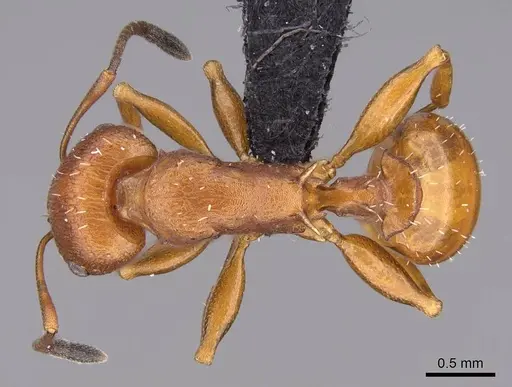
CASENT0452740
View on AntWeb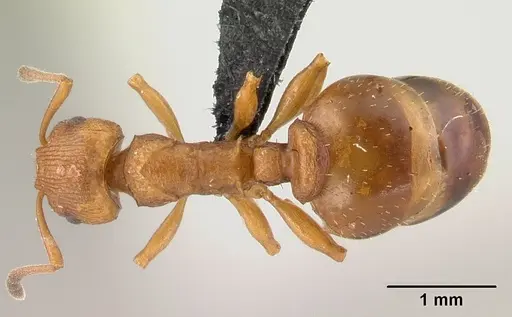
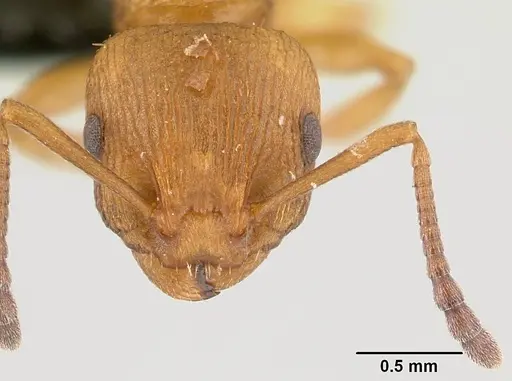
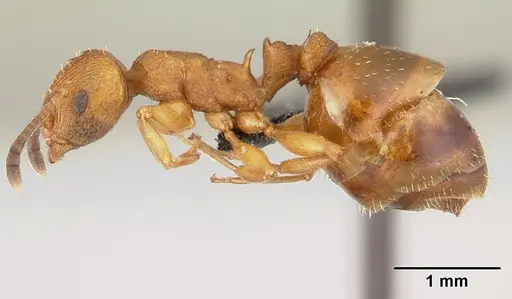
CASENT0452741
View on AntWeb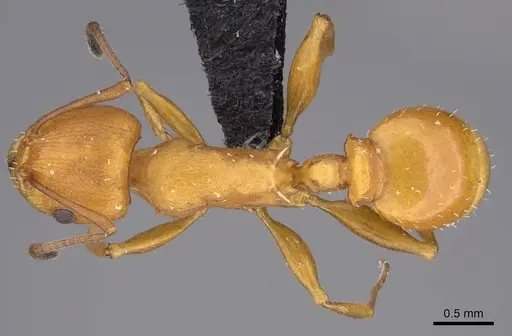
CASENT0459118
View on AntWeb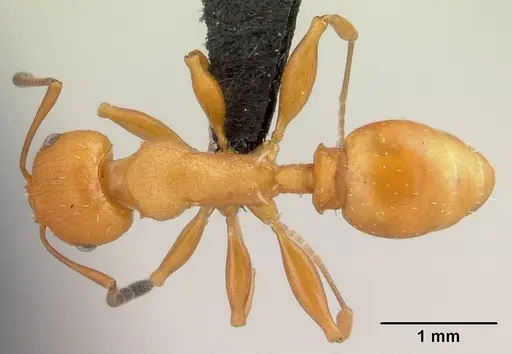
Literature
Loading distribution map...Loading products...