
Nesomyrmex braunsi
- Sci. Name
- Nesomyrmex braunsi
- Tribe
- Crematogastrini
- Subfamily
- Myrmicinae
- Author
- Forel, 1912
- Distribution
- Found in 1 countries
Introduction
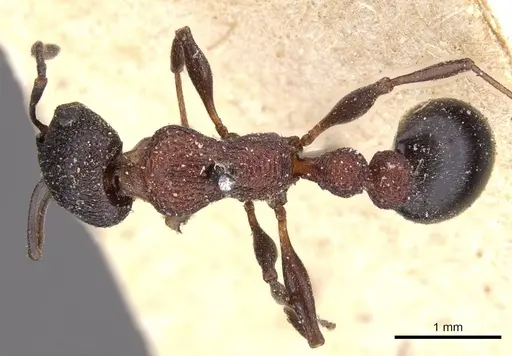
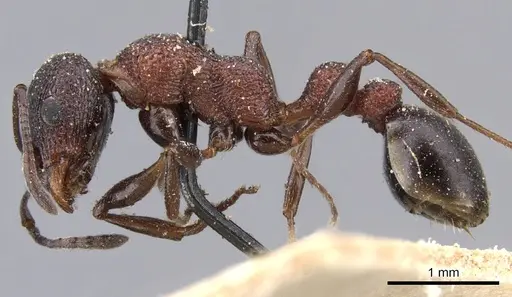
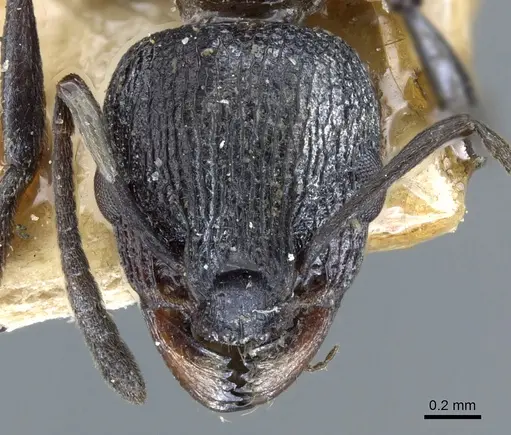
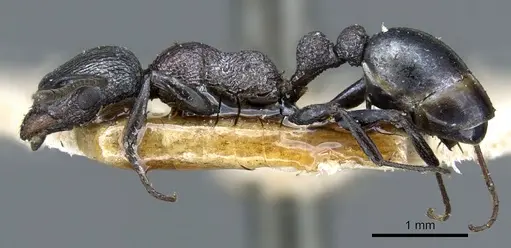
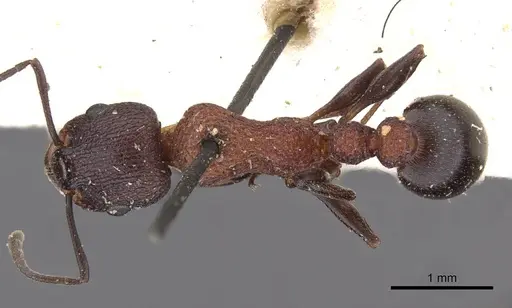
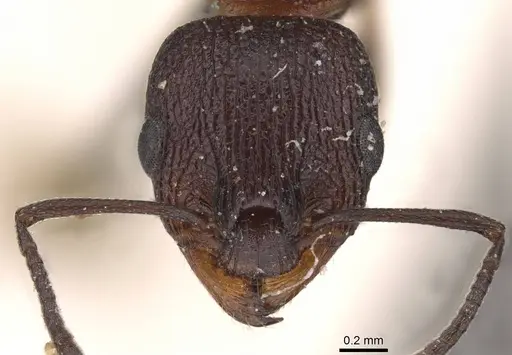
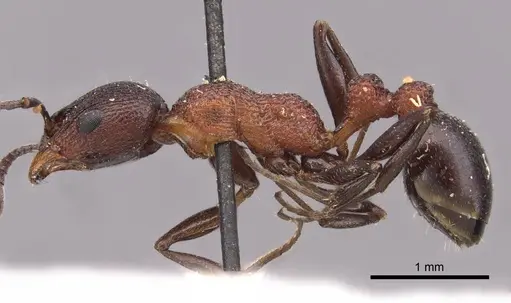
Nesomyrmex braunsi is a large, striking ant species endemic to South Africa. Workers measure 5.2-5.9mm in total length and feature a distinctive color pattern: the head and gaster are dark brown to reddish-black, while the mesosoma, petiole, and postpetiole are reddish, creating a strong two-tone appearance . This species belongs to the N. simoni group, which contains 17 species all endemic to South Africa . They are ground-nesting ants that build simple soil nests with open entrances, sometimes surrounded by a small circle of excavated soil . The propodeum is unarmed (lacking spines), and the body has almost no visible hairs on the dorsal surfaces .
Quick Summary
- Difficulty: Medium
- Origin & Habitat: South Africa, specifically the Nama-Karoo region. They live in semi-arid to arid open habitats and nest in soil with simple entrance holes [3][1].
- Colony Type: Colony structure is unconfirmed. All Nesomyrmex species in the simoni group are ground-nesting [2].
- Size & Growth:
- Queen: Unconfirmed, queen measurements not documented in available research
- Worker: 5.2-5.9mm total length [1]
- Colony: Unconfirmed, colony size has not been documented in scientific literature
- Growth: Unknown
- Development: Unconfirmed, no development data available for this species (Development time is unknown. Based on typical Myrmicinae patterns, it may take 6-10 weeks at optimal temperature, but this is purely an estimate with no species-specific data.)
- Antkeeping:
- Temperature: Based on their native Nama-Karoo habitat (semi-arid South African grassland), they likely tolerate warm to hot conditions. Start around 22-26°C and observe colony activity. Provide a temperature gradient so ants can choose their preferred zone.
- Humidity: Nama-Karoo is a dry region, so they likely prefer relatively dry conditions. Keep nest substrate moderately moist but allow it to dry partially between waterings. Avoid overly damp conditions.
- Diapause: Unknown, no specific research on hibernation requirements for this species. South African ants may have reduced activity during cooler months but full diapause requirements are unconfirmed.
- Nesting: Natural nesting occurs in soil with simple entrance holes [1]. In captivity, a Y-tong (AAC) nest or plaster nest works well. Provide a layer of dry to slightly damp soil or sand as substrate. They are ground-nesting, so horizontal chambers rather than vertical tubes suit their natural behavior.
- Behavior: These are relatively calm, non-aggressive ants. Workers are medium-sized and forage on the ground. The defense mechanism for this specific species is unconfirmed, the subfamily Myrmicinae typically uses a smear defense with a modified stinger, but species-specific data is lacking [1]. Their large size makes them easy to observe. Standard escape prevention should be used.
- Common Issues: colony structure is poorly documented, you may not know if your colony is single-queen or multi-queen, no specific development data means growth expectations are uncertain, humidity requirements are inferred, not confirmed, observe your colony's behavior to adjust, wild-caught colonies may have parasites that affect survival in captivity, their South African origin means they may not tolerate prolonged cold, queen size and colony size data are completely unavailable in scientific literature
Appearance and Identification
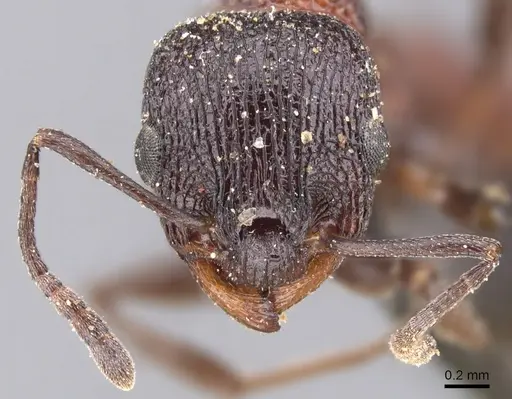
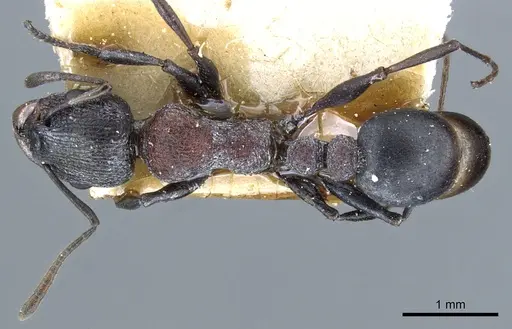
Nesomyrmex braunsi workers are relatively large for a Myrmicinae ant, measuring 5.2-5.9mm in total length [1]. They have a very distinctive appearance that makes them easy to identify. The head and gaster are dark brown to reddish-black, while the middle parts of the body (the mesosoma, petiole, and postpetiole) are a reddish color, this creates a striking two-tone look that immediately sets them apart [3]. The propodeum has no spines or teeth, which is unusual and helps identify this species [3][2]. Unlike many ants, they have almost no visible hairs on their dorsal surfaces, giving them a relatively smooth appearance [2]. The closest related species is Nesomyrmex simoni, but that species has two distinct teeth on its propodeum, while N. braunsi is completely unarmed [1]. Workers have 12 antennal segments [2].
Natural Habitat and Distribution
This species is endemic to South Africa, meaning it is found nowhere else on Earth [2]. It lives specifically in the Nama-Karoo, a semi-arid to arid region characterized by sparse vegetation and dry conditions [3]. They are ground-nesting ants that create simple soil nests. The nest entrance is typically in the open and may be surrounded by a small circle of excavated soil particles [1]. Specimens have been collected using pitfall traps, yellow pan traps, and malaise traps, as well as by sweeping vegetation, indicating they forage actively on the ground surface [3]. The N. simoni group, to which this species belongs, contains 17 species all endemic to South Africa, making this a truly regional specialty [2].
Housing and Nest Setup
In captivity, these ants do well in standard formicarium setups. Since they are ground-nesting ants from a relatively dry region, provide them with a nest that allows for soil-like conditions. A Y-tong (AAC) nest with a dirt chamber works well, or you can use a plaster nest with a soil insert. The key is to provide moderate humidity that can dry out partially between waterings, they are not a high-humidity species. Allow the nest substrate to become slightly dry on the surface before rehydrating. Provide a temperature gradient by placing a heating cable on one side of the nest, allowing workers to move between warmer and cooler areas. The outworld (foraging area) should be a standard container where you can offer food and water.
Feeding and Diet
The specific diet of Nesomyrmex braunsi has not been documented in scientific literature. As ground-nesting Myrmicinae, they likely have a typical omnivorous diet similar to related species. They probably collect honeydew from aphids and other small insects in the wild. In captivity, offer a mix of sugar sources (honey water or sugar water) and protein sources (dead insects like fruit flies, mealworms, or crickets). Feed protein roughly twice per week, and keep sugar water available at all times. Remove uneaten prey after 24-48 hours to prevent mold. Since they are from a dry region, ensure they have access to fresh water.
Temperature and Seasonal Care
Based on their native habitat in the Nama-Karoo region of South Africa, these ants likely prefer warmer conditions. The Nama-Karoo experiences hot summers and mild to cool winters, so they probably tolerate a wide temperature range. Start around 22-26°C as a baseline and observe your colony. If workers cluster near a heat source, increase temperature slightly. If they avoid heated areas, reduce temperature. Provide a temperature gradient so ants can self-regulate. During winter, room temperature is likely sufficient, but monitor for reduced activity which may indicate they prefer cooler conditions for a rest period. Full diapause requirements are unknown for this species.
Behavior and Handling
Nesomyrmex braunsi workers are relatively calm and not particularly aggressive. Workers are active foragers that search for food on the ground surface. They are large enough to handle easily and observe, making them good for keepers who want to watch ant behavior. The defense mechanism for this species is not documented in research, Myrmicinae ants typically have a modified stinger used to smear venom rather than pierce, but species-specific data is lacking [1]. Standard escape prevention (Fluon on container edges, tight-fitting lids) is sufficient. They are diurnal, actively foraging during daylight hours.
Frequently Asked Questions
How long does it take for Nesomyrmex braunsi to produce first workers?
The exact development time is unconfirmed, no scientific data exists for this species. There is no research documenting egg-to-worker development time.
What do Nesomyrmex braunsi ants eat?
Their specific diet has not been documented. Based on related species, they likely accept sugar water or honey, and protein sources like fruit flies, small crickets, or mealworms. Offer protein twice weekly and keep sugar water available at all times.
Are Nesomyrmex braunsi good for beginners?
They are rated as Medium difficulty. They are larger and easier to see than many Myrmicinae. However, their exact care requirements (especially humidity and temperature) are not well-documented, which may require some experimentation. They are not the easiest species for complete beginners but are manageable for those with some antkeeping experience.
Do Nesomyrmex braunsi ants sting?
The defense mechanism for this specific species is unconfirmed. Myrmicinae ants typically have a modified stinger used to smear venom, but species-specific data is lacking. Handle with standard caution until more is known.
How big do Nesomyrmex braunsi colonies get?
The maximum colony size is unconfirmed. No scientific literature documents maximum colony size for this species.
What temperature should I keep Nesomyrmex braunsi at?
Start around 22-26°C based on their South African origin. Provide a temperature gradient so ants can choose their preferred zone. Observe colony behavior, if workers cluster near heat, increase slightly, if they avoid heated areas, reduce temperature.
Do Nesomyrmex braunsi need hibernation?
Diapause requirements are unknown. South African ants may have reduced activity during cooler months, but full hibernation (like temperate species require) has not been documented. Monitor your colony for natural slowdowns in winter and adjust care accordingly.
Can I keep multiple Nesomyrmex braunsi queens together?
Colony structure (single-queen vs multi-queen) is unconfirmed for this species. Combining unrelated queens is not recommended since this has not been documented and could result in aggression.
What type of nest is best for Nesomyrmex braunsi?
A Y-tong (AAC) nest with a dirt chamber or a plaster nest with soil works well. They are ground-nesting ants from a dry region, so provide moderately moist substrate that can dry partially between waterings. Avoid overly humid conditions.
Where is Nesomyrmex braunsi found?
This species is endemic to South Africa, specifically the Nama-Karoo region. It is found nowhere else in the world.
Report an Issue
The current care sheet is based fully on literature. See inconsistencies, or something that's incorrect? Please , it will be resolved after review from an admin. Contributing to the blogs tab also helps providing information, to make us be able to further improve the caresheets. Thank you for your support!
References

This caresheet is licensed under CC BY-SA 4.0 .
Community Blogs
Literature
Loading distribution map...Loading products...