
Nesomyrmex bidentatus
- Sci. Name
- Nesomyrmex bidentatus
- Tribe
- Crematogastrini
- Subfamily
- Myrmicinae
- Author
- Csősz & Fisher, 2016
- Distribution
- Found in 1 countries
Introduction
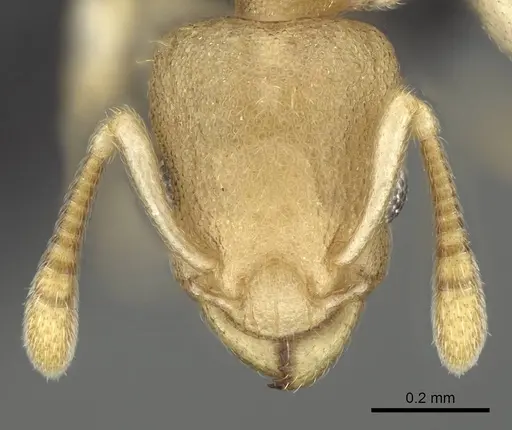
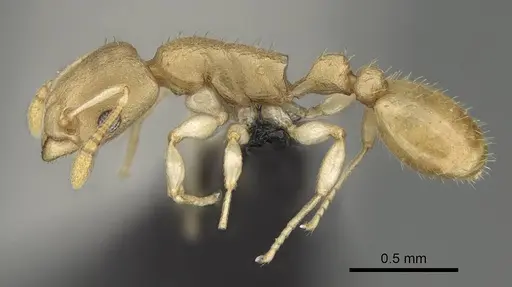
Nesomyrmex bidentatus is a tiny yellow ant endemic to Madagascar, belonging to the angulatus species group within the Myrmicinae subfamily. Workers are uniformly yellow with a concolorous body, featuring distinctive short, blunt propodeal spines that give the species its name 'bidentatus' (two-toothed) . These ants inhabit rainforests and littoral rainforests along the entire coastline of Madagascar, where they sometimes occur alongside their close relative N. fragilis in western regions . This species was formally described in 2016,making it a recently recognized ant with limited documented biology.
Quick Summary
- Difficulty: Unknown, Insufficient data for reliable care recommendations
- Origin & Habitat: Rainforests and littoral rainforests along the coastline of Madagascar [2][3]
- Colony Type: Unconfirmed, colony structure has not been documented in scientific literature
- Size & Growth:
- Queen: Size data unavailable, queen measurements not described in available literature
- Worker: Approximately 2-3mm total length, inferred from Nesomyrmex genus patterns
- Colony: Unknown, no colony size data available
- Growth: Unknown
- Development: Unknown, no development data available for this species (Development timeline has not been studied for this species)
- Antkeeping:
- Temperature: Likely 22-28°C based on Madagascar rainforest habitat, provide a warm, stable environment typical of tropical species
- Humidity: High humidity required, rainforest species. Keep nest substrate consistently moist but not waterlogged. Provide a humidity gradient with a moist side and slightly drier area.
- Diapause: No, Madagascar is tropical with no cold winter, so these ants do not require hibernation. Maintain stable temperatures year-round.
- Nesting: Based on their small size and rainforest habitat, they likely prefer humid nest chambers. A Y-tong (AAC) nest or plaster nest with small chambers works well for their tiny size.
- Behavior: Behavior is poorly documented. As tiny rainforest ants, they likely forage in leaf litter and decaying wood. Their small size means excellent escape prevention is critical, they can squeeze through very small gaps.
- Common Issues: small size makes escape likely without fine mesh barriers, lack of documented care means starting conditions are estimates, monitor colony response and adjust, high humidity needs can lead to mold if ventilation is poor, wild-caught colonies may have unknown parasites or health issues, slow growth or failure to thrive may occur if conditions do not match their needs
Species Identification and Appearance
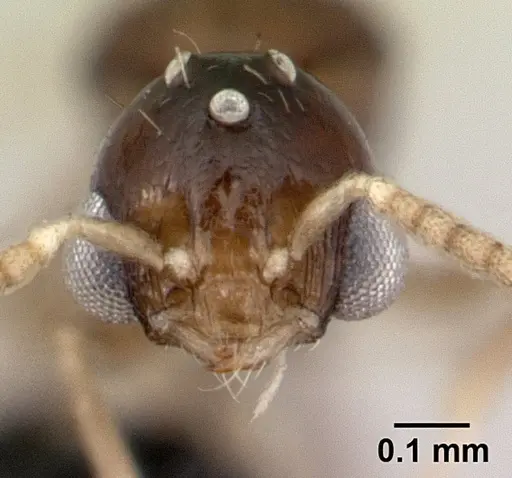
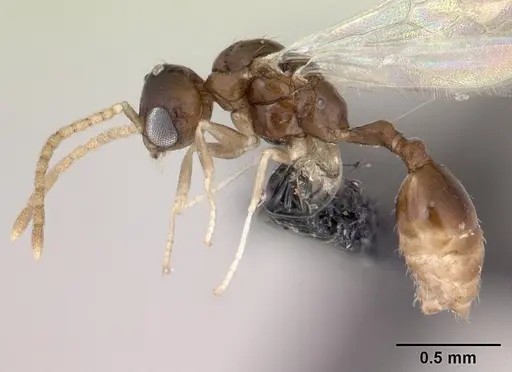
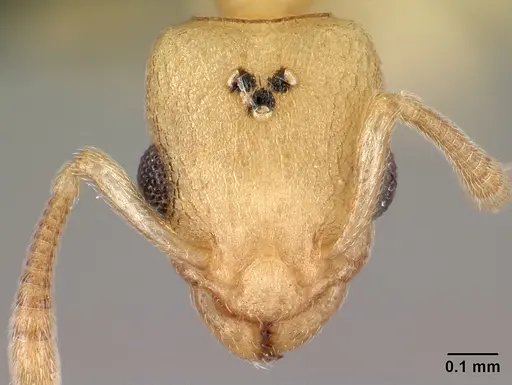
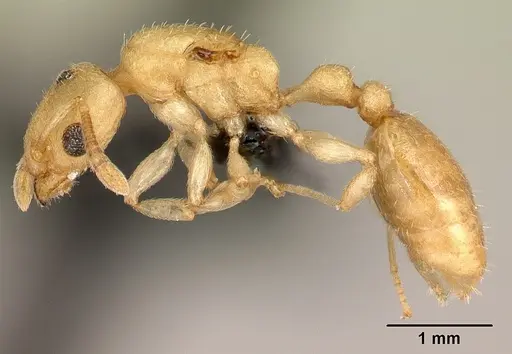
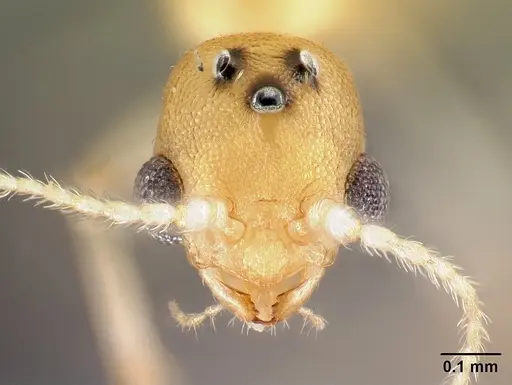
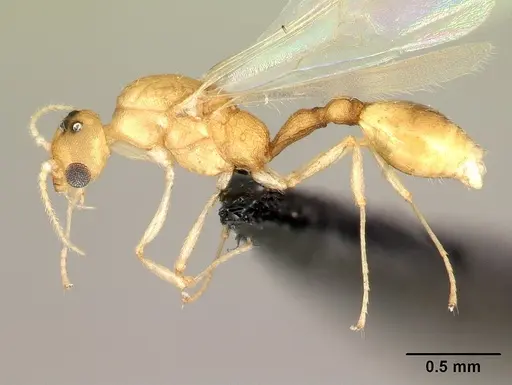
Nesomyrmex bidentatus workers are small yellow ants with a uniformly colored body [1]. Their most distinctive feature is the pair of short, blunt propodeal spines on the rear of their thorax, this is what gives them their species name 'bidentatus' meaning 'two-toothed' [4][1]. They have 12 antennomeres (ant segments) and their head shape shows postocular sides that converge anteriorly [4]. The species can be distinguished from related Nesomyrmex species by these short, blunt spines and the lack of an anterolateral pronotal corner [5]. This species was formally described in 2016 by Csösz and Fisher.
Natural Habitat and Distribution
This species is endemic to Madagascar, found exclusively in rainforests and littoral (coastal) rainforests along the entire coastline of the island [2]. This means they are adapted to warm, humid tropical conditions with consistent year-round temperatures. In some western regions around Antsiranana, they occur alongside their close relative N. fragilis (sister species) in the same habitat areas [2]. The Madagascar rainforest environment is characterized by high humidity, warm temperatures, and abundant leaf litter and decaying wood where these tiny ants likely nest and forage.
Housing and Nest Setup
Because this is a very small ant species with limited documented care, recommendations are based on their likely needs from the genus and habitat. Use a nest with small, tight chambers scaled to their tiny body size. A Y-tong (AAC) nest or plaster nest works well, these materials hold humidity well while allowing you to observe the colony. The nest should have a water reservoir or moisture gradient so part of the nest stays moist while drier areas are available. For the outworld, use a simple container with good escape prevention, their small size means they can escape through gaps that larger ants cannot. Apply fluon or use tight-fitting lids with fine mesh ventilation.
Feeding and Diet
The specific diet of N. bidentatus has not been documented in scientific literature. As a tiny rainforest Myrmicinae ant, they likely have a generalist diet similar to other Nesomyrmex species, probably foraging for small insects, honeydew, and nectar. In captivity, offer small protein sources like fruit flies, pinhead crickets, or small mealworms. Sugar water or honey can be offered as an energy source. Because of their small size, prey items should be appropriately sized. Remove uneaten food promptly to prevent mold in the humid environment they require.
Temperature and Humidity Requirements
As a Madagascar rainforest species, these ants need warm and humid conditions. Aim for temperatures in the 22-28°C range, stable and warm, typical of tropical environments. A slight temperature gradient allows the ants to choose their preferred spot. Humidity should be high, keep the nest substrate consistently moist but not waterlogged. In a Y-tong or plaster nest, you can achieve this with a water reservoir. Good ventilation is also important to prevent mold while maintaining humidity. Avoid placing the nest near air conditioning or drafty areas that could cause temperature fluctuations.
Colony Development and Growth
No specific development data exists for this species. Queens likely seal themselves in during founding and live off stored fat reserves until the first workers emerge, but this is not confirmed for this specific species. Colony size in the wild is unknown. Be patient and consistent with care as this is a poorly studied species and adjustments may be needed.
Frequently Asked Questions
How do I care for Nesomyrmex bidentatus ants?
Care recommendations are based on their Madagascar rainforest habitat since specific care data does not exist. Keep them warm (22-28°C) and humid (moist nest substrate). Use a small-scaled nest like Y-tong or plaster. Feed small protein prey and sugar sources. Their tiny size means escape prevention must be excellent.
What do Nesomyrmex bidentatus eat?
Their exact diet is unconfirmed, but they likely accept small insects, honeydew, and nectar like other Nesomyrmex species. Offer small prey like fruit flies or tiny mealworms, plus sugar water or honey. Remove uneaten food promptly.
How long does it take for Nesomyrmex bidentatus to develop from egg to worker?
This is unknown, no development data exists for this species.
Do Nesomyrmex bidentatus ants need hibernation?
No, Madagascar is tropical with no winter, so these ants do not require hibernation. Keep temperatures stable year-round in the warm range (22-28°C).
Are Nesomyrmex bidentatus good for beginners?
This species is not recommended for beginners due to lack of documented care information. Their tiny size also requires excellent escape prevention. Consider starting with better-documented species before attempting this rarely kept ant.
How big do Nesomyrmex bidentatus colonies get?
Colony size is unknown, no wild colony data exists for this species.
Do Nesomyrmex bidentatus ants sting?
As Myrmicinae ants, they have a stinger but due to their very small size, they are unlikely to penetrate human skin or cause noticeable pain. They are not considered dangerous to keepers.
Can I keep multiple Nesomyrmex bidentatus queens together?
Colony structure is unconfirmed, we do not know if they are single-queen or multi-queen. Do not combine unrelated foundress queens as this has not been documented for this species and may result in fighting.
What size nest do I need for Nesomyrmex bidentatus?
Use a nest with small chambers scaled to their tiny size. Y-tong (AAC) nests or plaster nests work well. Avoid large, open chambers. The nest should hold humidity well.
Where is Nesomyrmex bidentatus found?
This species is endemic to Madagascar, found only in rainforests and littoral rainforests along the entire coastline of the island.
Report an Issue
The current care sheet is based fully on literature. See inconsistencies, or something that's incorrect? Please , it will be resolved after review from an admin. Contributing to the blogs tab also helps providing information, to make us be able to further improve the caresheets. Thank you for your support!
References

This caresheet is licensed under CC BY-SA 4.0 .
Community Blogs
CASENT0050229
View on AntWeb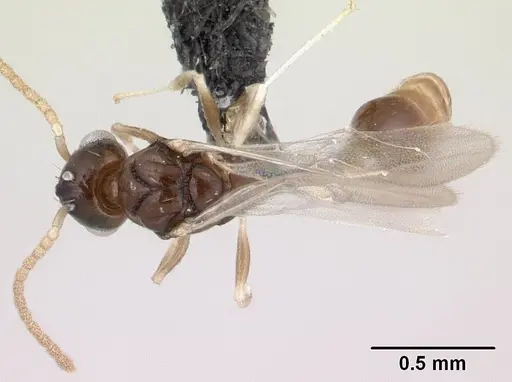
CASENT0067105
View on AntWeb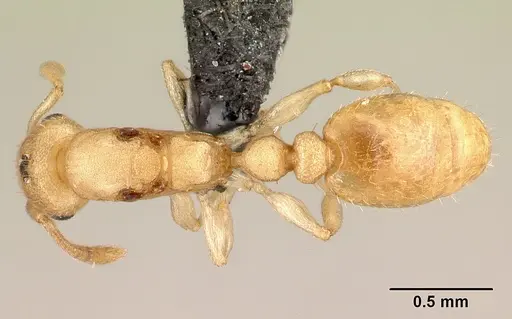
CASENT0071597
View on AntWeb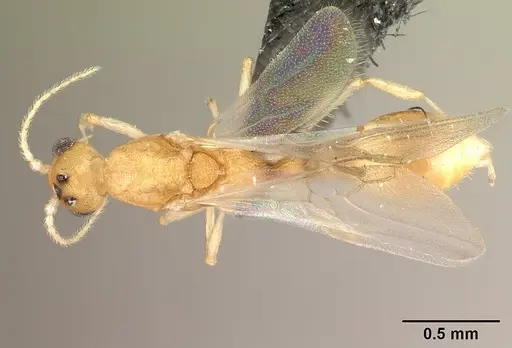
CASENT0486461
View on AntWeb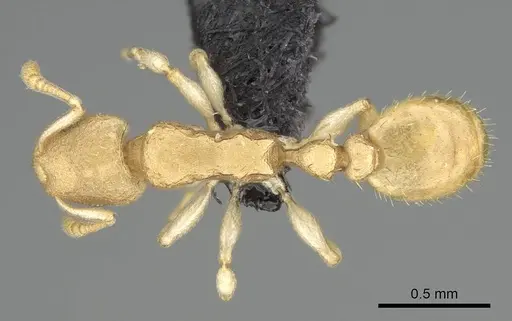
Literature
Loading distribution map...Loading products...