
Neoponera solisi
- Sci. Name
- Neoponera solisi
- Tribe
- Ponerini
- Subfamily
- Ponerinae
- Author
- MacKay & MacKay, 2010
- Distribution
- Found in 1 countries
Introduction
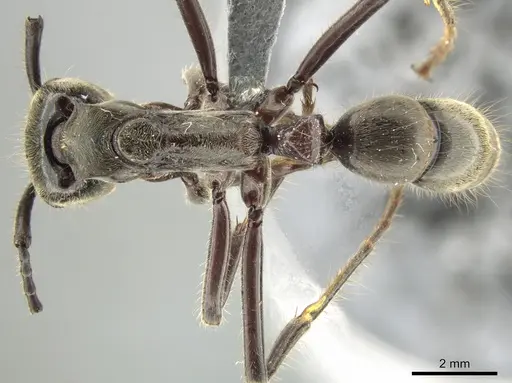
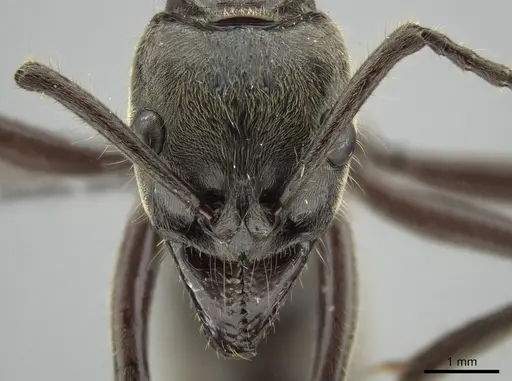
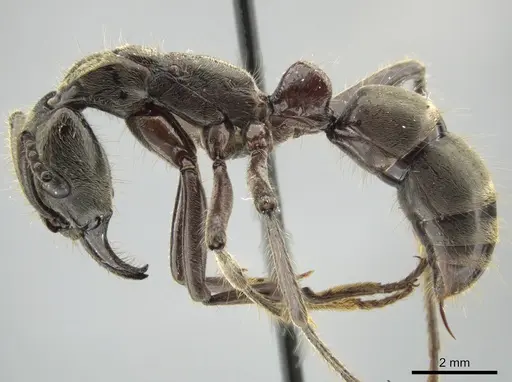
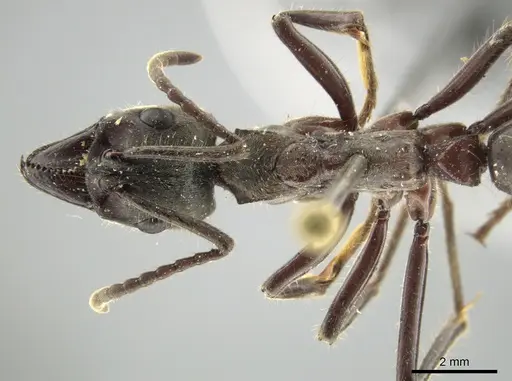
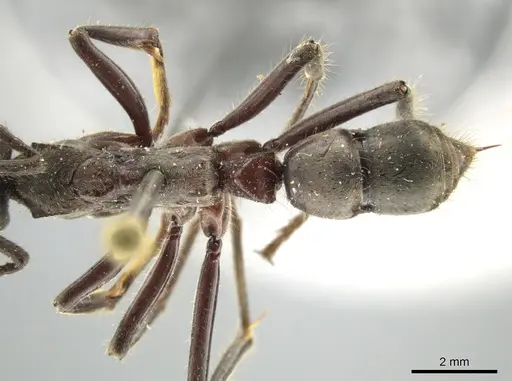
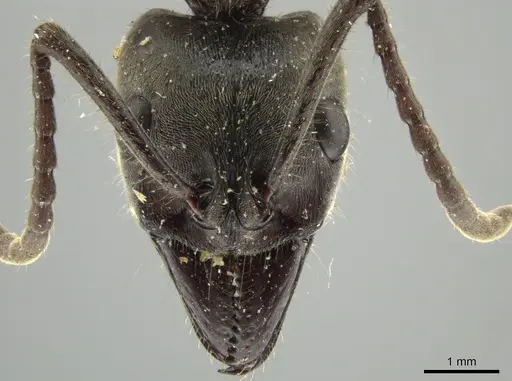
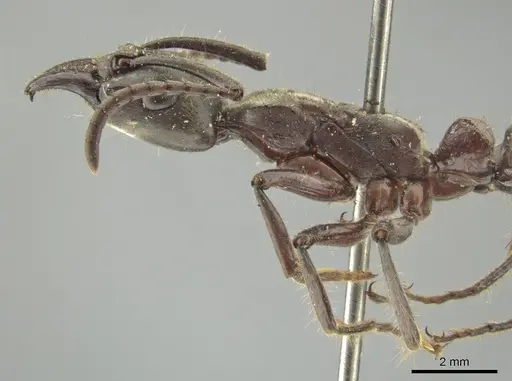
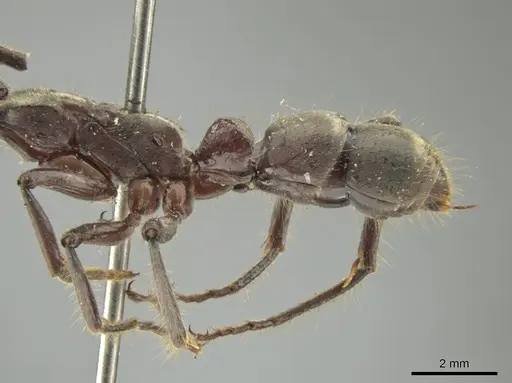
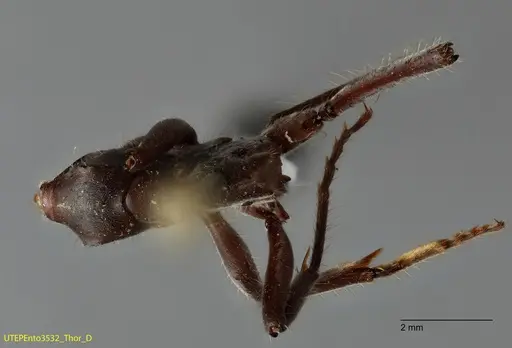
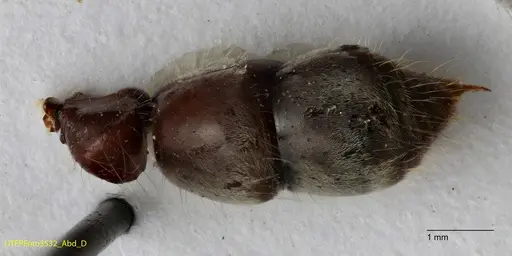
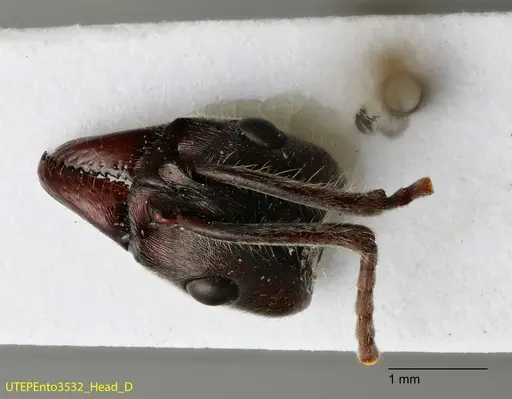
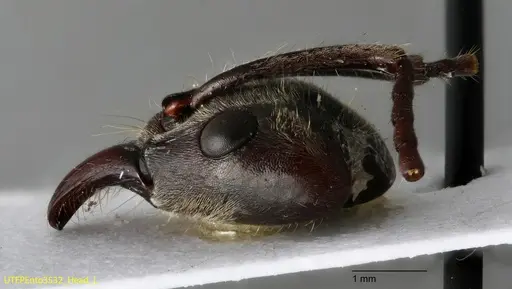
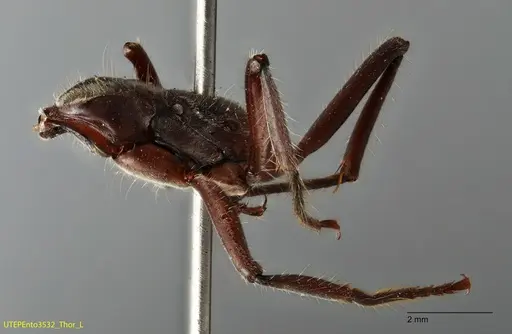
Neoponera solisi is a moderately large ponerine ant native to Costa Rica, specifically the Heredia region . Workers are about 13mm in total length and entirely black, with large eyes located in the middle of the head . Queens are larger at 18mm, black with reddish-brown appendages . This species belongs to the foetida species group and is identified by its smooth, glossy posterior petiole face and partially developed malar carina . Males are unknown for this species . It was originally described as Pachycondyla solisi in 2010 and named after Costa Rican myrmecologist Manuel Solís .
Quick Summary
- Difficulty: Expert
- Origin & Habitat: Tropical rainforests of Costa Rica, Heredia province at 400-600m elevation [1][2].
- Colony Type: Colony structure is unconfirmed, no field observations exist. Based on related Neoponera species, likely forms single-queen colonies.
- Size & Growth:
- Antkeeping:
- Temperature: Keep warm, roughly 24-28°C, based on tropical origin.
- Humidity: Keep nest substrate consistently moist but not waterlogged, as this species is from humid forests.
- Diapause: No diapause likely, given tropical origin.
- Nesting: In wild, likely nests in soil or rotting wood [1]. In captivity, use moist substrate or Y-tong/plaster nest.
- Behavior: Neoponera solisi is predatory with a sting, typical of Ponerinae. Workers are active foragers. Escape prevention is important due to moderate size.
- Common Issues: escape risk: workers are moderate-sized but may explore, ensure barriers are secure., diet: requires live prey, sugar alone is insufficient for brood development., humidity control: maintain moist substrate to prevent desiccation., founding behavior is unconfirmed, queen may need hunting opportunities if semi-claustral.
Species Identification and History
Neoponera solisi was originally described as Neoponera solisi by Mackay and Mackay in 2010,based on worker and queen specimens from Heredia, Costa Rica [1]. The species was moved to Neoponera in a 2014 revision [1]. It belongs to the foetida species group, characterized by morphological features like the clypeus structure [2]. The species was named after Costa Rican myrmecologist Manuel Solís [1].
Natural Habitat and Distribution
This species is known only from Heredia province, Costa Rica, specifically Braulio Carrillo National Park at 400-600m elevation [1][2]. The habitat is tropical rainforest with high humidity and warm temperatures [1]. Related Neoponera species typically nest in soil, under stones, or in rotting wood on the forest floor [1].
Appearance and Morphology
Workers are 13mm total length, entirely black, with convex head sides and large eyes in the middle of the head [1]. The malar carina is partially developed, and the petiole has a smooth, glossy posterior face [1]. Queens are 18mm, black with reddish-brown appendages [1]. Both castes have erect hairs and appressed pubescence [1].
Care Recommendations Based on Genus Patterns
Since no species-specific data exists, care is inferred from related Neoponera and Ponerinae patterns. Keep temperatures warm (24-28°C) and humidity high with moist substrate. Provide a protein-based diet of live prey like mealworms or crickets. Use a test tube setup for founding, transitioning to larger formicaria as colonies grow.
Temperament and Defense
As a Ponerinae, Neoponera solisi has a functional sting for prey and defense. Workers are active foragers, likely hunting individually or in small groups. Escape prevention is important due to their moderate size.
Frequently Asked Questions
How long does it take for Neoponera solisi to produce first workers?
The egg-to-worker timeline is unknown. Based on typical Neoponera patterns, estimate 8-12 weeks at optimal temperature.
What do Neoponera solisi ants eat?
They require protein-rich live prey such as mealworms or crickets. Sugar water may be accepted as supplementary energy.
Are Neoponera solisi ants dangerous?
Yes, they possess a functional sting used for prey capture and defense. The sting can cause pain, but severe reactions are uncommon.
What temperature and humidity do Neoponera solisi need?
Keep them warm at roughly 24-28°C with moist substrate, based on their tropical origin.
Can I keep multiple Neoponera solisi queens together?
Colony structure is unconfirmed. No data exists on whether they are monogyne or polygyne [1]. Based on related species, single-queen colonies are common, but combining queens is not recommended without evidence.
How big do Neoponera solisi colonies get?
Maximum colony size is unknown, no wild colony data exists [1]. Related Neoponera species form colonies of dozens to hundreds of workers.
Do Neoponera solisi need hibernation?
No diapause is likely, given their tropical origin in Costa Rica. Keep temperatures stable year-round.
Is Neoponera solisi good for beginners?
No, this species is rated Expert difficulty due to lack of species-specific data and requirements for live prey and careful handling.
What type of nest should I use for Neoponera solisi?
Use a naturalistic setup with moist substrate or a Y-tong/plaster nest, scaled to their moderate size.
Why is there no information about Neoponera solisi biology?
This is a recently described species (2010) known only from a few specimens in Costa Rica, with no field studies or captive breeding observations [1].
Report an Issue
The current care sheet is based fully on literature. See inconsistencies, or something that's incorrect? Please , it will be resolved after review from an admin. Contributing to the blogs tab also helps providing information, to make us be able to further improve the caresheets. Thank you for your support!
References

This caresheet is licensed under CC BY-SA 4.0 .
Community Blogs
Literature
Loading distribution map...Loading products...