
Neoponera obscuricornis
- Sci. Name
- Neoponera obscuricornis
- Tribe
- Ponerini
- Subfamily
- Ponerinae
- Author
- Emery, 1890
- Distribution
- Found in 10 countries
Introduction
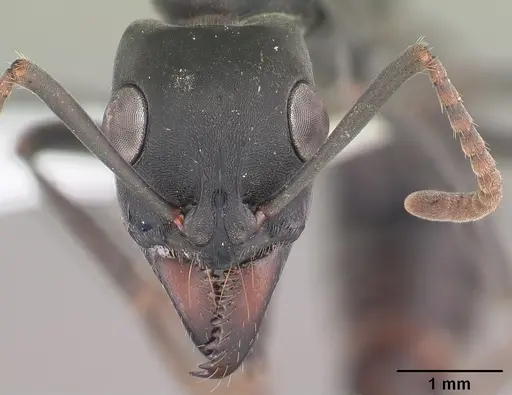
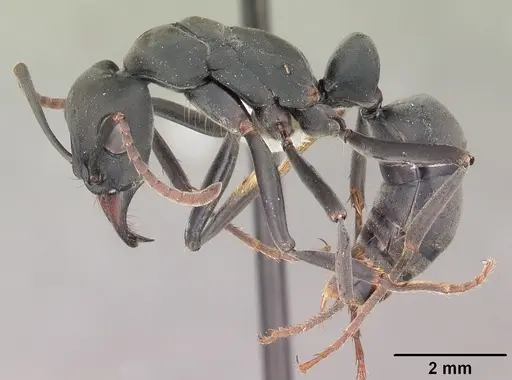
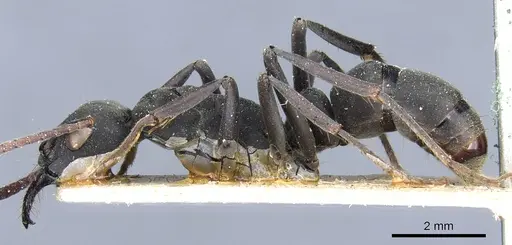
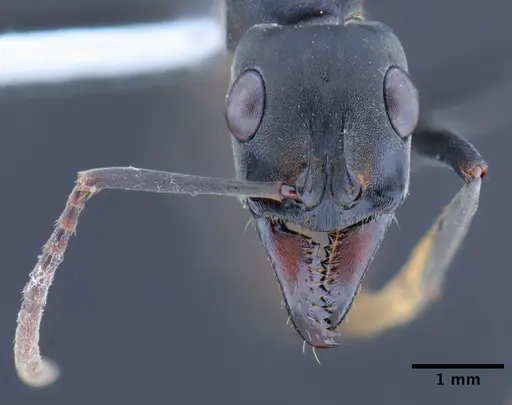
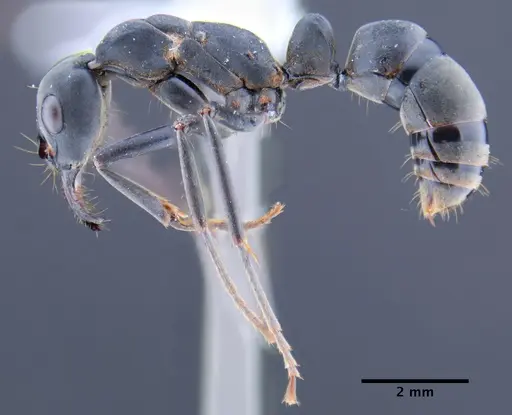
Neoponera obscuricornis is a medium-sized ponerine ant native to the Neotropical region, ranging from southern Mexico down to southern Brazil. Workers measure 10-11mm total length and are distinctive for their entirely dark antennae (the funiculus is dark, not yellow-tipped like the similar N. apicalis), large bulging eyes, and smooth, satiny appearance caused by fine punctate sculpture. The body is black with brownish appendages. This is a rarely-encountered rainforest species found from sea level up to 700m elevation, typically nesting in rotting logs . What makes this species particularly interesting is its social flexibility - colonies can function with either a single queen or multiple queens (facultatively polygynous), and they employ tandem running to recruit nestmates to food sources .
Quick Summary
- Difficulty: Medium
- Origin & Habitat: Rainforests and humid subtropical forests of the Neotropical region, from southern Mexico through Central America to Brazil, Bolivia, Paraguay, and Ecuador. Found at elevations from sea level to 700m, with one record at 1100m [1][2][5].
- Colony Type: Facultatively polygynous, colonies can have a single queen (monogyne) or multiple queens working together (polygyne), typically 1-5 queens per colony. Worker reproduction has been documented in queenright colonies but gamergates are absent [3][6][7].
- Size & Growth:
- Queen: Approximately 12-14mm (inferred from worker size and genus patterns)
- Worker: 10-11mm total length [1][2]
- Colony: Up to 130 workers in wild colonies, with 15-250 being typical (mean around 51 workers) [8][3]
- Growth: Moderate, cocoon stage takes approximately 35 days at 24°C [9]
- Development: Approximately 6-8 weeks at optimal temperature (inferred from 35-day cocoon stage plus egg/larval periods) (Development studied in detail at 24°C and 65% humidity. Cocoon alone takes 35 days, with black cuticle appearing at day 36 [9].)
- Antkeeping:
- Temperature: Keep around 24-26°C. Laboratory colonies thrive at 24°C with 65% relative humidity [9]. Being a tropical rainforest species, they need warm, stable conditions without temperature drops.
- Humidity: High humidity preferred, aim for 65-80%. Keep the nest substrate consistently moist but not waterlogged. These are forest-floor ants that need damp conditions [9].
- Diapause: No, as a tropical species, they do not require hibernation. Activity may slow slightly during cooler periods but they remain active year-round.
- Nesting: In the wild, colonies nest in rotting logs and natural cavities in dead wood. In captivity, they do well in plaster nests or naturalistic setups with rotten wood pieces. They modify existing cavities rather than excavate their own chambers [1][2].
- Behavior: N. obscuricornis is a generalist predator that hunts alone. Workers move quickly with an erratic, wasp-like gait and patrol large areas searching for prey. They do not use mass recruitment but will use tandem running (one ant leads another to food) to recruit a few nestmates. They are not territorial and do not show aggression toward conspecifics from different colonies when not carrying prey. However, they will fight over prey items when one ant is carrying food [10]. Workers are monomorphic (all the same size). They have a functional stinger and can deliver painful venom [11].
- Common Issues: queen loss during founding, claustral founding behavior is unconfirmed, so wild-caught colonies are more reliable, escape risk due to medium size, use standard barriers but fine mesh is not critical for this species, slow colony growth, cocoon stage alone takes 5 weeks, patience is required, humidity management, being rainforest species, they need consistent moisture but mold can be an issue in poorly ventilated setups, prey acceptance, being obligate predators, they need live prey, they will not accept sugar water or honey as primary food
Housing and Nest Setup
N. obscuricornis does well in a variety of captive setups. Plaster nests work well, the species has been successfully kept in laboratory plaster nests (26×19cm) with a connected foraging area [9]. Naturalistic setups with rotting wood pieces are also suitable since they naturally nest in dead wood. The key is providing a humid environment with chambers that match their natural nesting in rotting logs. A water tube or moisture reservoir connected to the nest helps maintain humidity. Foraging areas should be spacious enough for their active hunting behavior, these ants patrol and move quickly, so avoid cramped setups. Use a test tube setup for founding colonies, then move to a proper nest once the colony reaches 15-20 workers.
Feeding and Diet
This is an obligate predator, they hunt and kill live prey rather than scavenging. In the wild, they feed heavily on spittlebug nymphs (Deois flavopicta), with prey items rising from 63.6% to 93.7% of their diet as prey density increases [10]. They also eat caterpillars, other small insects, and have been observed feeding on blowfly larvae at carcasses [12]. Offer live prey such as fruit flies, small crickets, mealworms, and waxworms. They are solitary foragers and do not recruit large numbers to food, a few workers may be led to prey via tandem running, but they typically hunt alone. They will not accept sugar water or honey as primary foods. Feed 2-3 times per week, adjusting based on colony size and consumption. Remove uneaten prey after 24 hours.
Temperature and Seasonal Care
As a tropical rainforest species, N. obscuricornis requires warm conditions. Laboratory colonies have been successfully maintained at 24°C with 65% relative humidity [9]. Aim for 24-26°C in your setup. They do not require hibernation or winter cooling, this is a year-round active species. Temperature drops below 20°C can slow activity and may stress colonies. A small heating cable on one side of the nest can create a gradient, allowing ants to self-regulate their temperature preference. Avoid placing heating directly on water reservoirs as this causes excessive condensation.
Behavior and Colony Dynamics
This species shows fascinating social flexibility. Colonies can have either one queen or multiple queens (facultatively polygynous), with typical queen counts of 1-5 per colony [3]. When a colony loses its queen, workers can reproduce, worker reproduction has been documented in queenright colonies, though gamergates are absent (worker-derived reproductives are not present) [6][7]. During colony emigrations (they readily move nests), queens are transported mid-sequence, not first or last [13]. Workers use tandem running to recruit nestmates to food sources [4]. They are fast-moving ants with an erratic, wasp-like gait and do not show territorial aggression toward conspecifics from other colonies unless competing over prey [10].
Defense and Venom
N. obscuricornis has a functional stinger and uses venom for prey capture and defense. Their venom glands contain compounds including benzaldehyde, limonene, trimethylpyrazine,2,5-dimethyl-3-ethylpyrazine, and indole [11]. The mandibular glands contain primarily pyrazines (2,5-dimethylpyrazine being the major component at 77%) along with benzaldehyde, limonene, and indole [4]. These compounds likely serve both defensive and alarm functions. While not typically aggressive toward keepers, a sting can cause localized pain. The pain level is moderate, comparable to other Ponerinae of similar size.
Frequently Asked Questions
Can I keep Neoponera obscuricornis in a test tube?
Yes, test tubes work well for founding colonies and small colonies up to 20-30 workers. Use a water tube with cotton to maintain humidity. Once the colony grows beyond this size, transfer to a proper nest (plaster or naturalistic) with more space for foraging and hunting.
How long until first workers appear?
Development is slow, the cocoon stage alone takes about 5 weeks (35 days) at 24°C. Total time from egg to worker is approximately 6-8 weeks at optimal temperature. Expect patience during the founding phase.
What do Neoponera obscuricornis eat?
They are obligate predators that require live prey. Feed them small insects like fruit flies, small crickets, mealworms, and waxworms. They do not accept sugar water or honey. They are solitary hunters that patrol for prey rather than recruiting large numbers to food.
Can I keep multiple queens together?
Yes, this species is facultatively polygynous, colonies can have either a single queen or multiple queens (typically 1-5). In the wild, both monogyne and polygyne colonies exist. You can keep multiple foundress queens together, though some may eventually be rejected or one may dominate.
Are Neoponera obscuricornis good for beginners?
This species is rated as Medium difficulty. While not the hardest ant to keep, they require more attention than common species, specifically, they need live prey (not just sugar water), warm temperatures, and high humidity. They are also slow-growing. Not recommended as a first ant, but manageable for those with some experience.
How big do colonies get?
Colonies typically reach 50-130 workers in the wild, with some sources reporting up to 250 workers. They are not among the largest ponerines, but colonies can be long-lived and sustainable.
Do they need hibernation?
No. As a tropical rainforest species from the Neotropics, they do not require hibernation. Keep them warm year-round (24-26°C). Activity may slow slightly during cooler periods but they remain active.
Why are my Neoponera obscuricornis dying?
Common issues include: low humidity (they need 65-80% moisture), temperatures below 20°C, lack of live prey (they cannot survive on sugar/food alone), and stress from frequent disturbances. Also ensure they have proper ventilation to prevent mold while maintaining humidity.
When should I move them to a formicarium?
Move from test tube to a proper nest when the colony reaches 15-30 workers or when the test tube becomes cramped. They do well in plaster or naturalistic nests that can hold humidity. Ensure the foraging area is spacious enough for their active hunting behavior.
Report an Issue
The current care sheet is based fully on literature. See inconsistencies, or something that's incorrect? Please , it will be resolved after review from an admin. Contributing to the blogs tab also helps providing information, to make us be able to further improve the caresheets. Thank you for your support!
References

This caresheet is licensed under CC BY-SA 4.0 .
Community Blogs
CASENT0103058
View on AntWeb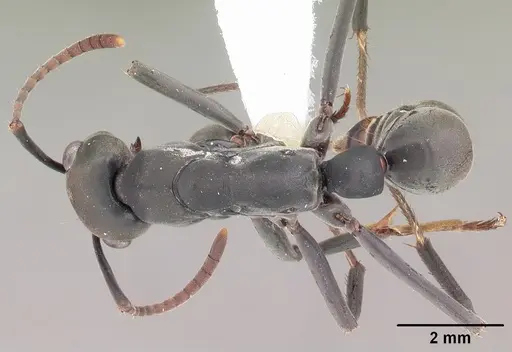
CASENT0249155
View on AntWeb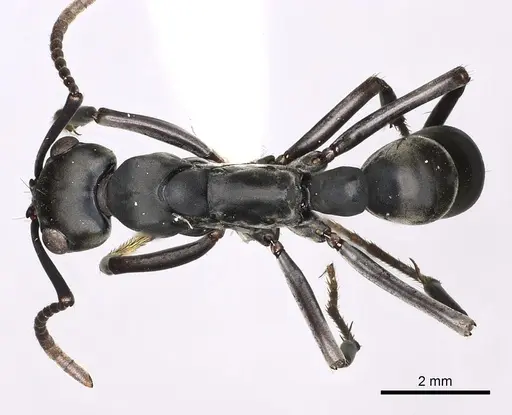
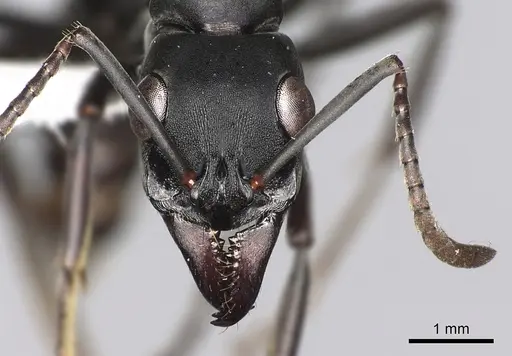
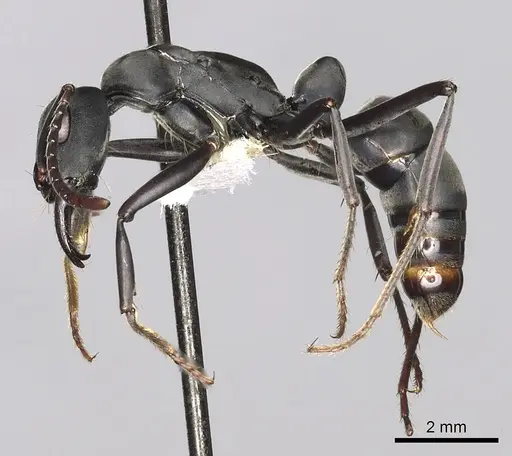
CASENT0903883
View on AntWeb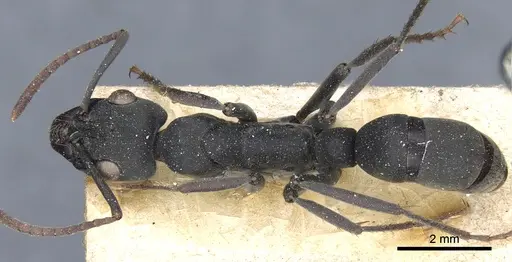
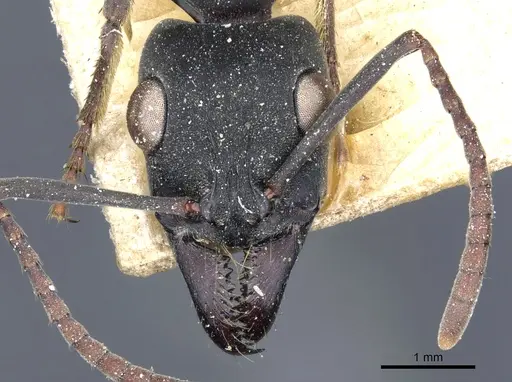
DZUP549364
View on AntWeb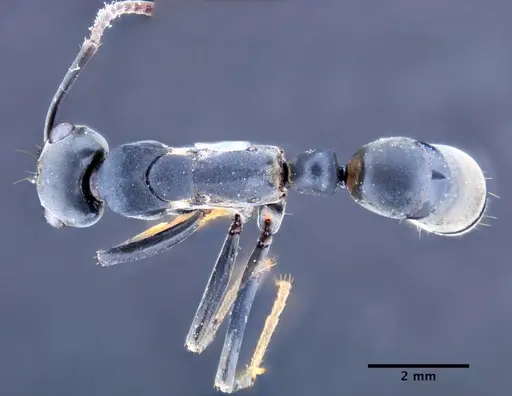
Literature
Loading distribution map...Loading products...