
Neoponera curvinodis
- Sci. Name
- Neoponera curvinodis
- Tribe
- Ponerini
- Subfamily
- Ponerinae
- Author
- Forel, 1899
- Distribution
- Found in 8 countries
Introduction
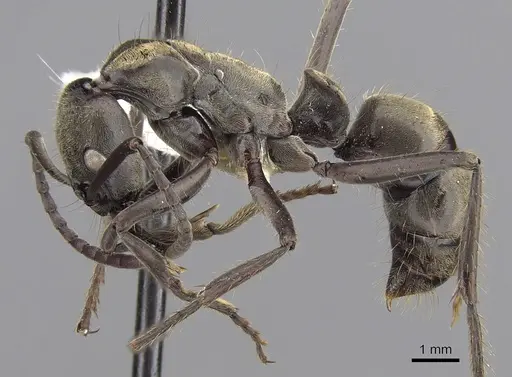
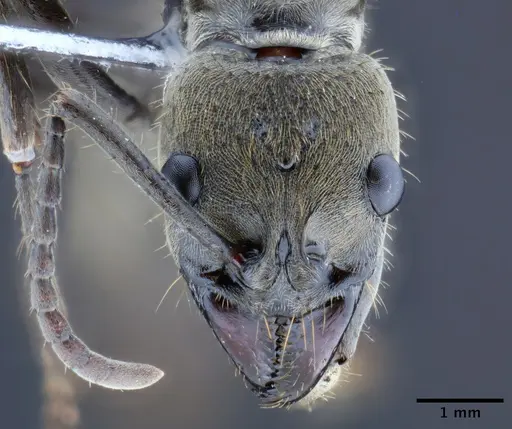
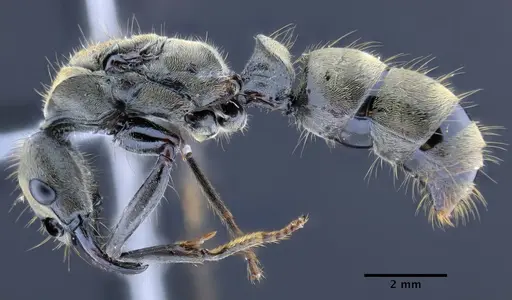
Neoponera curvinodis is a large ponerine ant native to the Neotropical region, ranging from Guatemala down through Costa Rica, Panama, Colombia, Ecuador, Peru, and into Brazil. Workers reach about 13mm in total length and are predominantly black with a beautiful covering of golden appressed pubescence that gives them a silky sheen. The species gets its name from the Latin 'curvus' (bent) and 'nodus' (swelling), referring to the distinctly curved, concave anterior face of the petiole that distinguishes it from related species like Neoponera villosa and Neoponera inversa. This is an arboreal species that nests in cavities of palm trees and hollow Cecropia stems, typically around one meter above ground level. Unlike many aggressive ponerines, Neoponera curvinodis is relatively calm - workers quickly retreat and hide when their nest is disturbed rather than attacking en masse.
Quick Summary
- Difficulty: Medium
- Origin & Habitat: Neotropical rainforests from Guatemala to Brazil, typically found in wet to moist forest habitats at elevations from sea level to around 1200m. Nests in tree cavities including palm stems (Syagrus) and hollow Cecropia branches [1][2].
- Colony Type: Single-queen colonies (monogyne). One studied nest contained 85 workers,1 queen, and various brood stages. Colonies may have multiple reproductive females including winged gynes [3].
- Size & Growth:
- Queen: ~13mm, queens are relatively large, dark brown to nearly black [1]
- Worker: 13mm total length, large black ants with golden pubescence [1]
- Colony: At least 85 workers from one documented nest [3].
- Growth: Moderate, Ponerine ants typically develop more slowly than many myrmicines
- Development: Estimated 8-12 weeks at tropical temperatures based on related Neoponera species (Development time is inferred from genus-level data since specific studies are lacking. Tropical species typically develop faster than temperate ones.)
- Antkeeping:
- Temperature: Keep at 24-28°C, they are a tropical species requiring warm, stable conditions. A gentle gradient allowing warmer and cooler areas is ideal.
- Humidity: High humidity (70-85%), their natural habitat is wet/moist forest. Keep nest substrate consistently moist but not waterlogged. Provide a water source.
- Diapause: No, as a tropical species, they do not require hibernation. Maintain warm conditions year-round.
- Nesting: Arboreal setup works best, they naturally nest in tree cavities. A vertical formicarium or Y-tong with narrow chambers mimics their preferred hollow stem environment. Provide multiple chambers connected by narrow passages.
- Behavior: Generally less aggressive than related species like Neoponera villosa. Workers are quick to retreat when disturbed rather than attacking, making them somewhat easier to handle than many ponerines. They are arboreal foragers, hunting on vegetation and using leaves to move between plants. They possess a functional stinger. Escape prevention is important though not as critical as with tiny ants, their larger size makes standard barriers effective.
- Common Issues: tropical warmth requirements mean colonies can struggle in cool rooms or during winter without heating, arboreal nature means they need vertical space and may not thrive in horizontal-only setups, wild-caught colonies may carry parasites or commensal invertebrates that were documented living in their nests, slow colony growth compared to many common ants can frustrate beginners, high humidity needs can lead to mold problems if ventilation is inadequate
Housing and Nest Setup
Neoponera curvinodis is an arboreal species that naturally nests in tree cavities, particularly in palm stems (Syagrus) and hollow Cecropia branches. For captive care, a vertical formicarium or Y-tong nest works well, these mimic the narrow, vertical chambers they prefer in the wild. The chambers should be appropriately scaled to their 13mm worker size, with narrow connecting passages. Because they naturally nest about a meter above ground in the wild, they appreciate having some vertical space to move through. A test tube setup can work for founding colonies, but expect to move them to a more elaborate setup as the colony grows. Provide a water source and keep the nest area humid. An outworld with live plants or branches allows them to exhibit their natural arboreal foraging behavior. [1]
Feeding and Diet
Like most Ponerinae, Neoponera curvinodis is a predatory species that hunts small invertebrates. In the wild, workers forage on vegetation and hunt prey. For captive colonies, offer small live prey such as fruit flies, small crickets, mealworms, and other appropriately-sized insects. Protein should make up the majority of their diet. They may accept some sugar sources, but ponerines are typically less interested in honey or sugar water than myrmicine ants. Feed them a few times per week, adjusting based on colony size and consumption. Remove uneaten prey after 24-48 hours to prevent mold issues. [3]
Temperature and Humidity
Being a tropical species from Neotropical rainforests, Neoponera curvinodis requires warm, humid conditions. Maintain temperatures between 24-28°C year-round. A heating cable on one side of the nest can create a gentle gradient, allowing workers to choose their preferred temperature. Humidity should be kept high (70-85%), the substrate should feel consistently moist but never waterlogged. Mist the nest occasionally and provide a water source. Good ventilation is important to prevent mold, but avoid excessive airflow that dries things out. Unlike temperate species, they do not require any winter cooling or diapause period. [1]
Behavior and Colony Dynamics
One of the appealing aspects of Neoponera curvinodis for antkeepers is its relatively calm temperament compared to related species like Neoponera villosa. When disturbed, workers rapidly exit the nest or hide rather than swarming to attack. They still possess stingers and can deliver a painful sting if provoked, but they are less likely to do so than many other ponerines. Workers are arboreal foragers, comfortable moving through vegetation, in captivity they will climb and explore vertical spaces. The species shows interesting color variation in males, with some having brown petioles and yellow gasters and legs while others are entirely black. Colonies can contain multiple reproductive females including winged gynes, though they appear to be primarily single-queen colonies. [3][1]
Colony Growth and Development
Documented colonies show at least 85 workers, and the species likely forms moderate-sized colonies typical of Ponerinae. One studied nest contained 1 wingless queen (gyne),7 workers,6 immature individuals,5 winged gynes, and 2 males, this suggests the colony was in a reproductive phase with multiple potential new queens. Development from egg to worker likely takes 8-12 weeks at optimal tropical temperatures, similar to related Neoponera species. Growth is typically moderate rather than rapid. Colonies may have commensal invertebrates living in the nest, this is documented in the wild and should be monitored if you acquire a wild-caught colony. [3]
Frequently Asked Questions
How long does it take for Neoponera curvinodis to produce first workers?
Based on related Neoponera species, expect 8-12 weeks from egg to worker at optimal temperatures (24-28°C). This is slower than many common ants, so patience is required.
Do Neoponera curvinodis ants sting?
Yes, they possess a functional stinger and can sting if threatened. However, they are less aggressive than related species like Neoponera villosa and typically retreat when disturbed rather than attacking.
Are Neoponera curvinodis good for beginners?
They are rated as medium difficulty. While less aggressive than many ponerines, they require specific conditions (tropical warmth, high humidity, arboreal setup) that make them better suited for keepers with some antkeeping experience.
What do Neoponera curvinodis eat?
They are predatory ants that hunt small invertebrates. Feed them small live prey like fruit flies, small crickets, and mealworms. Protein should be the main food source. They may accept some sugar occasionally but are not heavy honey-water drinkers.
Can I keep multiple Neoponera curvinodis queens together?
This species appears to be primarily single-queen (monogyne). While wild colonies may contain multiple winged gynes, these are typically new reproductives rather than co-operating egg-layers. Combining unrelated foundress queens is not recommended as it has not been documented.
Do Neoponera curvinodis need hibernation?
No, they are a tropical species from the Neotropical region and do not require hibernation or cooling periods. Keep them warm (24-28°C) year-round.
What size do Neoponera curvinodis colonies reach?
Documented colonies have at least 85 workers, and mature colonies are likely larger. They are considered moderately-sized colonies for a ponerine ant.
What makes Neoponera curvinodis different from similar species?
They can be distinguished by their strongly concave anterior face of the petiole (the 'curvinodis' name means 'bent swelling'). They are also less aggressive than the similar Neoponera villosa, making them somewhat easier to handle.
When do Neoponera curvinodis alates appear?
Winged gynes have been collected in various months including May, June, July, August, and December in different parts of their range, suggesting nuptial flights may occur during warm, wet periods.
Why are my Neoponera curvinodis dying?
Common causes include: temperatures below 24°C (they need tropical warmth), low humidity causing desiccation, improper feeding (they need live protein prey), or stress from excessive disturbance. Check your conditions first.
Report an Issue
The current care sheet is based fully on literature. See inconsistencies, or something that's incorrect? Please , it will be resolved after review from an admin. Contributing to the blogs tab also helps providing information, to make us be able to further improve the caresheets. Thank you for your support!
References

This caresheet is licensed under CC BY-SA 4.0 .
Community Blogs
CASENT0281901
View on AntWeb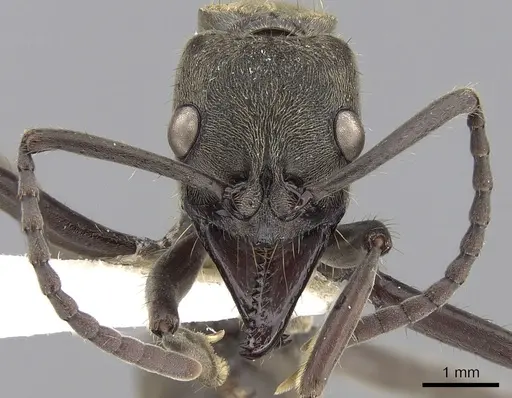
INPAHYM033800
View on AntWeb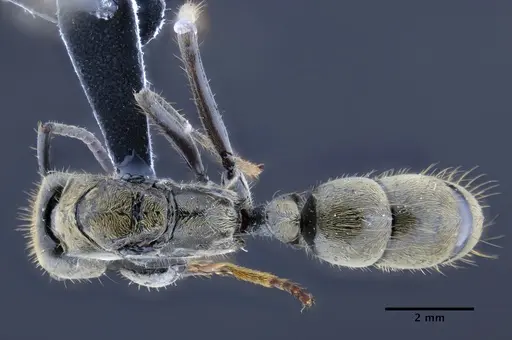
Literature
Loading distribution map...Loading products...