
Neivamyrmex punctaticeps
- Sci. Name
- Neivamyrmex punctaticeps
- Subfamily
- Dorylinae
- Author
- Emery, 1894
- Distribution
- Found in 7 countries
Introduction
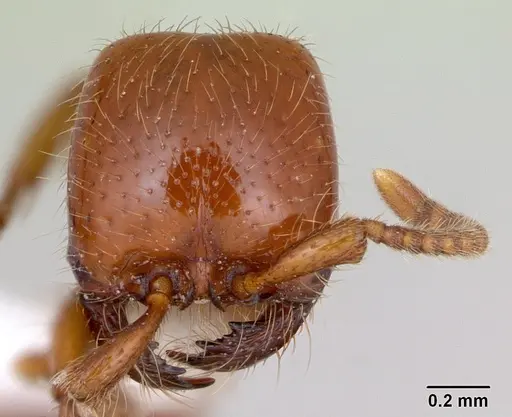
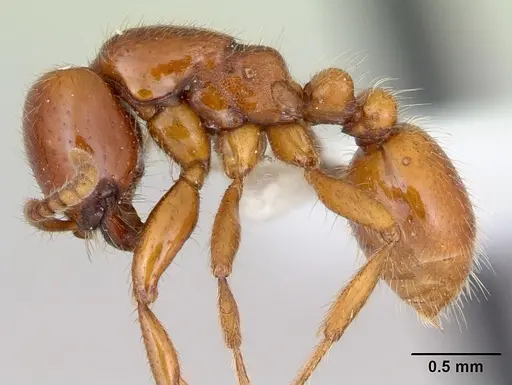
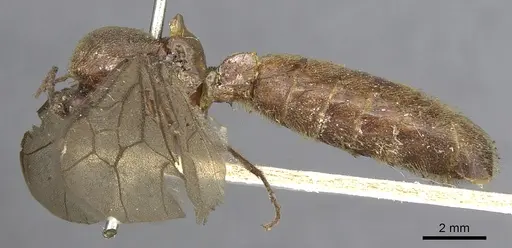
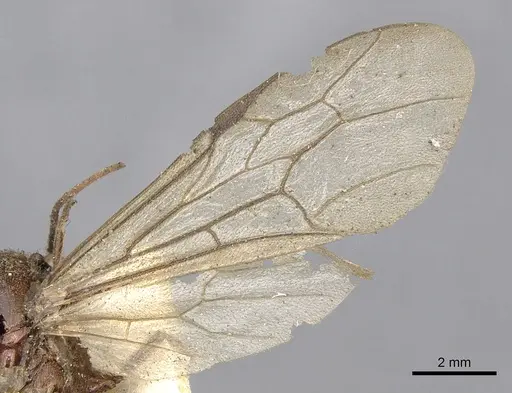
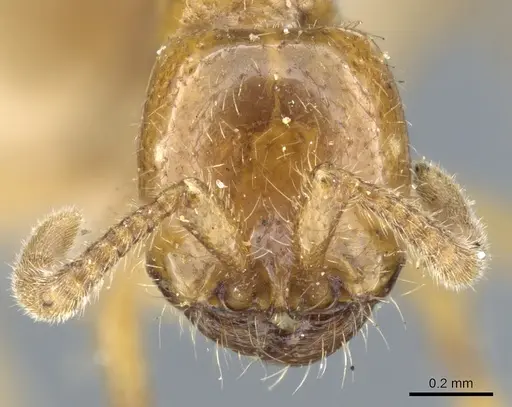
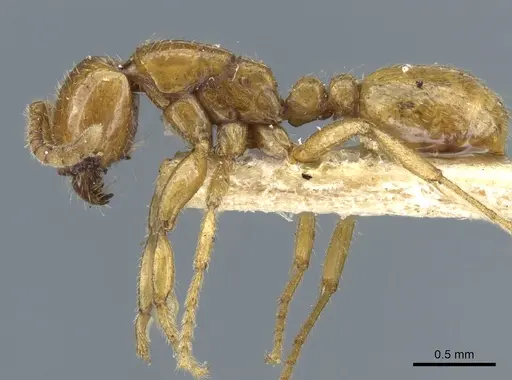
Neivamyrmex punctaticeps is a small army ant species found throughout the Neotropics, from Mexico down to Argentina. Workers measure 4-5mm with a distinctive appearance featuring abundant strong punctations on the face and a straight posterior propodeum. Their eyes are extremely small and indistinct, barely visible under close examination. The body is smooth and polished, colored deep yellowish brown to reddish brown with lighter legs and gaster. This species is primarily subterranean, living in forest environments and is considered a habitat specialist restricted to primary forest . They are predatory army ants that form raiding columns, with workers observed marching with mandibles open and pointed upward . Only the worker caste has been described for this species - no queen or male has been documented .
Quick Summary
- Difficulty: Expert
- Origin & Habitat: Neotropical region, found in primary forests from Mexico to Argentina, including Brazil, Colombia, Costa Rica, Guatemala, and Venezuela [5][6]. They inhabit cloud forests up to 1500m elevation and are exclusive to forest environments [1][7].
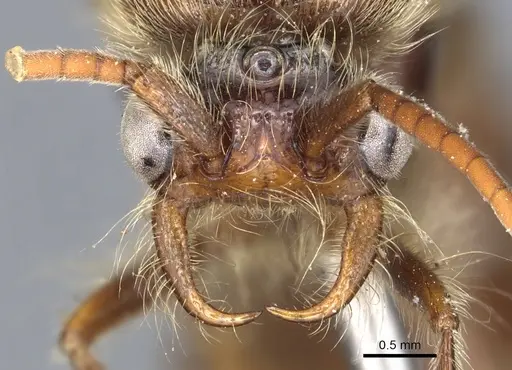
- Colony Type: Unknown colony structure, this species is only known from the worker caste, with no documented queen or colony founding behavior [4]. DNA barcoding evidence suggests N. punctaticeps (workers) may be synonymous with N. halidaii (males), indicating this is likely a single species with different castes not yet matched [8].
- Size & Growth:
- Antkeeping:
- Temperature: Keep at room temperature typical for Neotropical forest-dwelling ants. Provide a temperature gradient allowing ants to self-regulate.
- Humidity: Requires high humidity consistent with cloud forest and primary forest habitats. Keep substrate consistently moist but not waterlogged.
- Diapause: Unknown, no documented diapause or hibernation requirements. As a Neotropical species, they likely do not require cold-induced dormancy.
- Nesting: Subterranean nesting species. In captivity, use a naturalistic setup with deep soil or a plaster nest with chambers. They prefer enclosed dark spaces and will likely nest underground. Provide access to a foraging area.
- Behavior: Army ant behavior, they form raiding columns and are predatory on other invertebrates. Workers observed marching in tight columns with mandibles open and pointed upward, a defensive posture typical of army ants [3]. They are subterranean foragers, among the top 10 most abundant subterranean ant species in Amazonian Ecuador [9]. Their small size (4-5mm) combined with their active raiding behavior means escape prevention is important. They are not aggressive toward humans but will defend their colony vigorously. As predators, they require a protein-rich diet.
- Common Issues: no colony founding information makes initial establishment difficult, only workers are known, subterranean lifestyle means they may be inactive during daylight hours and difficult to observe, no documented development timeline makes growth expectations uncertain, habitat specialist, may not adapt to captivity if kept in non-primary forest conditions, predatory nature requires constant live prey which can be challenging to maintain
Identification and Appearance
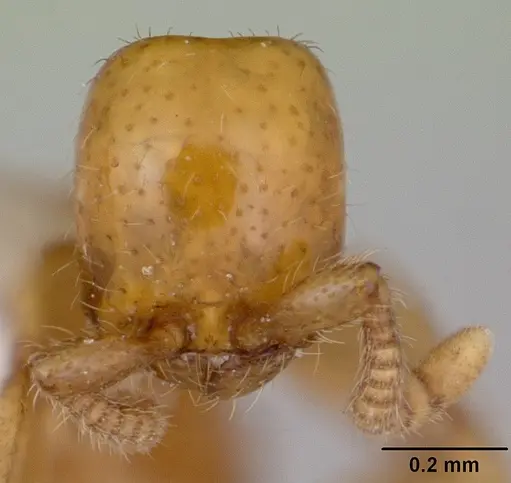
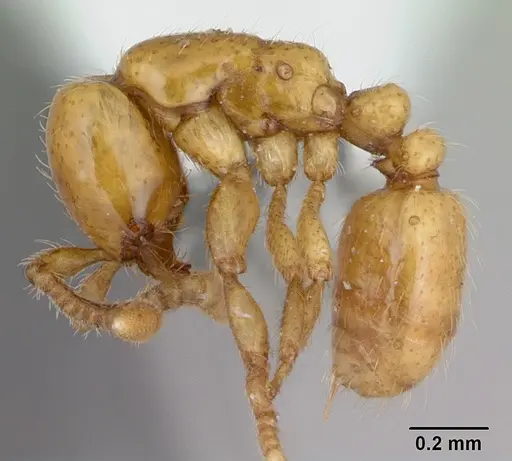
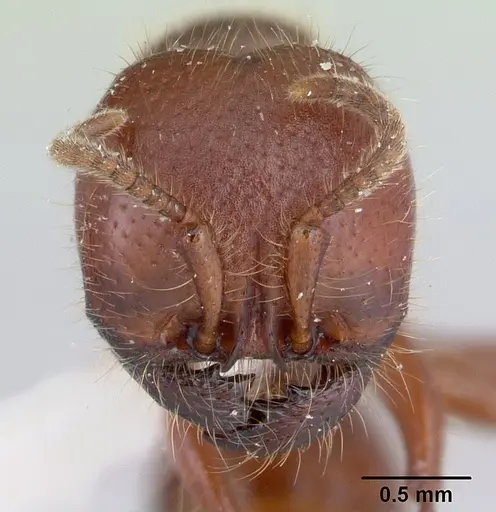
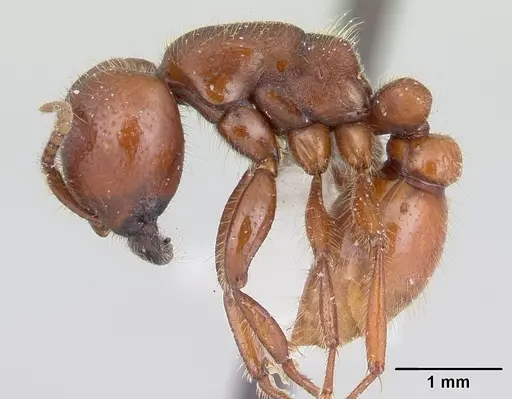
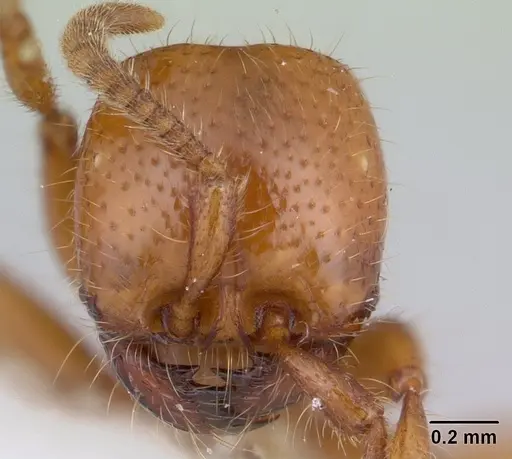
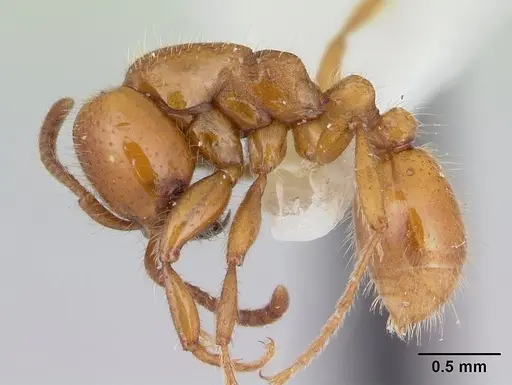
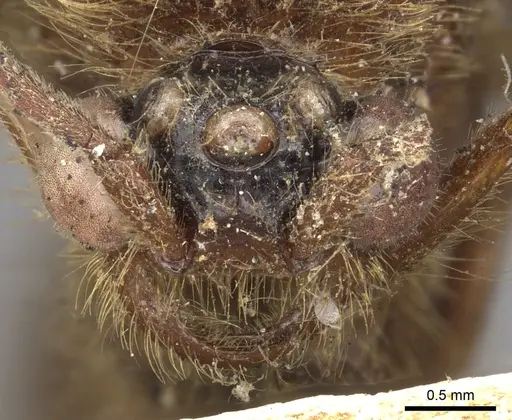
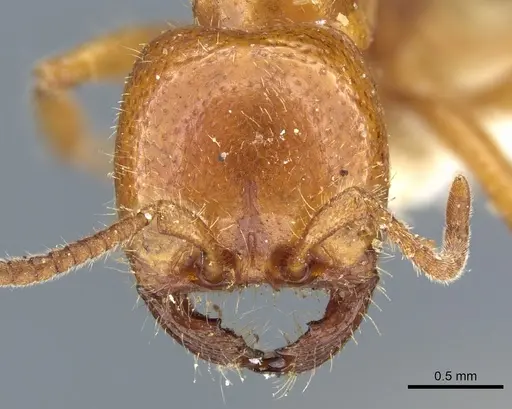
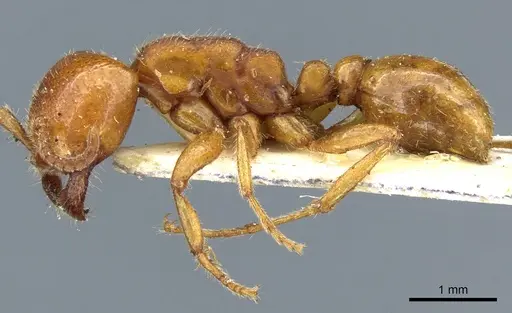
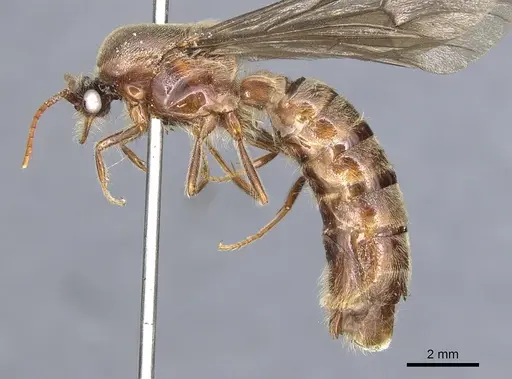
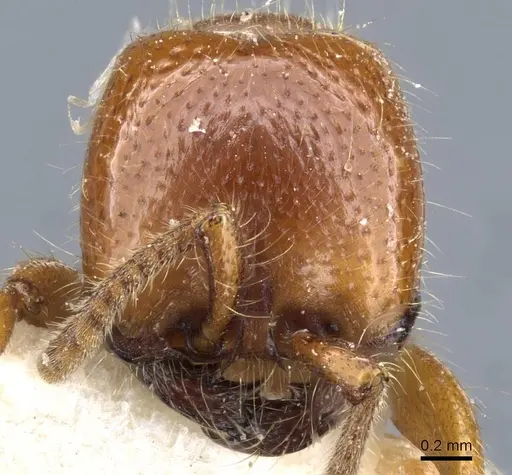
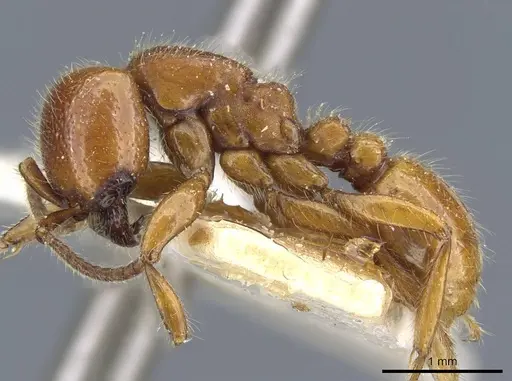
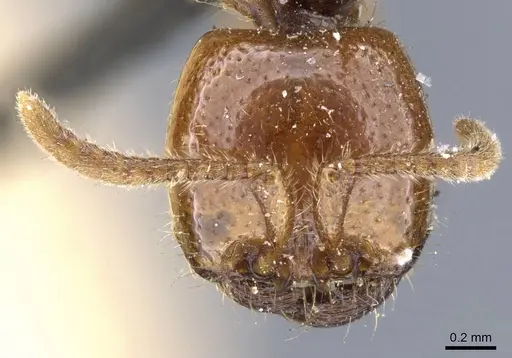
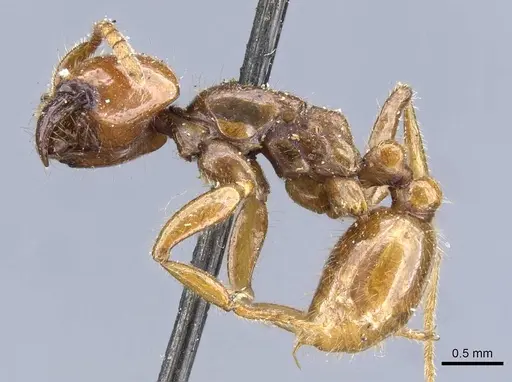
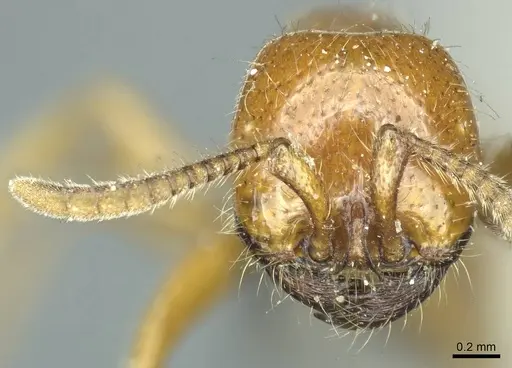
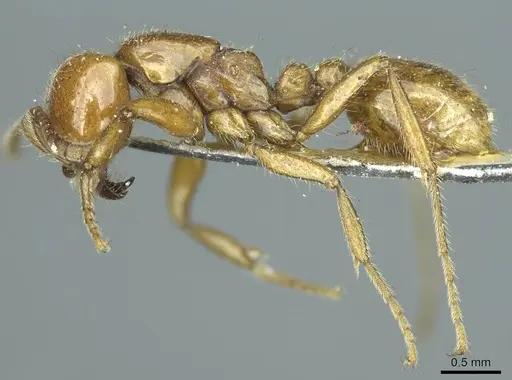
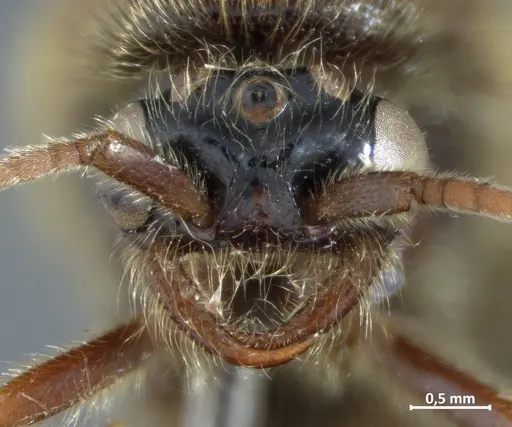
Neivamyrmex punctaticeps workers are small ants measuring 4-5mm. The most distinctive feature is the abundant strong punctations on the face, giving them their scientific name. The posterior face of the propodeum is straight and not concave, as long as or longer than the dorsal face. Their eyes are extremely small and indistinct, appearing placed beneath the general surface of the head and only visible after careful examination. The antennal scape is robust and short, less than three times as long as its greatest width. The body is unusually smooth and highly polished, colored deep yellowish brown to reddish brown, with lighter petiole, post-petiole, gaster, and legs. The mandibles and frontal carinae are much darker. This species is similar to Neivamyrmex swainsonii but can be distinguished by the pilosity, N. punctaticeps has relatively dense, short, uniform-length hairs on the mesosomal dorsum, while N. swainsonii has longer, sparser hairs of variable length [3].
Natural History and Behavior
This is a predatory army ant species that forms raiding columns. Workers have been observed marching in tight columns on the main road in the Monteverde Cloud Forest Reserve at 1500m elevation in Costa Rica. The column was tight, with rows of stationary workers on the sides, mandibles open and pointed upward in a defensive posture. The column was partially on open ground, partially under a soil-covered gallery before disappearing underground. Several phorid flies were observed running with the column, which is a common phenomenon with army ant raids as these flies feed on the ants. They have been found in rotten logs at ground level and are considered a subterranean species, among the top 10 most abundant subterranean ant species in Amazonian Ecuador [9]. In Venezuela, a colony was observed crossing barriers like culverted creeks, paved roads, and sidewalks, appearing to come from adjacent dry forest and mountain savanna zones [7]. They are also known to be preyed upon by fossorial (burrowing) reptiles like Amphisbaena fuliginosa [10].
Habitat and Distribution
Neivamyrmex punctaticeps has a broad Neotropical distribution spanning from Mexico down to Argentina. They are found in Argentina, Bolivia, Brazil, Colombia, Costa Rica, Ecuador, French Guiana, Guatemala, Guyana, Honduras, Mexico, Paraguay, Suriname, Trinidad and Tobago, and Venezuela [3]. This species is a habitat specialist restricted to primary forest, they occupy 38 regions in primary forest but are not found in secondary forest or rubber plantations [2]. In Colombia, they have been recorded in Amazonas, Boyacá, Caquetá, Cundinamarca, Nariño, Santander, and Tolima departments [5]. They are exclusive to forest environments and have been recorded in the Planalto Serrano region of southern Brazil using tree pitfall methods [1]. In Argentina, they are found in Santa Fe, Entre Ríos, and Corrientes provinces and are assigned to the functional group Tropical Climate Specialists [11].
Keeping Neivamyrmex punctaticeps in Captivity
This is an expert-level species to keep due to the lack of documented colony information and their specialized biology. Since only the worker caste is known and no queen has been described, establishing a colony in captivity is extremely challenging. You would need to obtain a wild colony, which is difficult as they are subterranean and their nest has rarely been found. If you obtain a colony, provide a naturalistic setup with deep soil or a plaster nest with multiple chambers. They require high humidity consistent with their cloud forest and primary forest origins. Keep them at room temperature with a gradient. As predatory army ants, they need a constant supply of live prey, small insects like fruit flies, pinhead crickets, and other small arthropods. They are not suitable for beginners due to their specialized requirements and the complete lack of information on colony founding and development. Their small size (4-5mm) means escape prevention is important, use fine mesh barriers. They are primarily active at night when they conduct raids, so observe them in evening hours for best activity. [9][2]
Frequently Asked Questions
Can I keep Neivamyrmex punctaticeps in a test tube setup?
A test tube setup is not recommended for this species. Neivamyrmex punctaticeps is a subterranean army ant that requires space for raiding columns and constant movement. They need a naturalistic setup with deep substrate or a multi-chambered nest, plus a foraging area. Test tubes are too confined for their predatory, column-forming behavior.
What do Neivamyrmex punctaticeps eat?
As predatory army ants, they require live protein prey. They are known to raid other ant colonies and arthropods in the wild. In captivity, offer small live insects like fruit flies, springtails, small crickets, and other tiny arthropods. They are not scavengers like some ant species, they actively hunt and need moving prey to trigger their predatory response.
How long does it take for Neivamyrmex punctaticeps to develop from egg to worker?
This is unknown. The species is only known from worker castes, and no research has documented their brood development timeline. There is no information on egg, larva, or pupa stages for this species. This is one of the major gaps in knowledge that makes keeping this species challenging.
Are Neivamyrmex punctaticeps good for beginners?
No. This species is rated Expert difficulty and is not suitable for beginners. The primary challenges are: only the worker caste is known (no described queen), no documented colony founding behavior, no development timeline, and they require specific primary forest conditions. Additionally, their subterranean lifestyle and predatory nature make them difficult to observe and feed properly.
Can I keep multiple queens together?
This is unknown. The colony structure of Neivamyrmex punctaticeps has not been documented because only workers have been collected, no queen or male has been described. Without knowing whether they are single-queen or multi-queen colonies in the wild, combining unrelated queens is not recommended. The related species N. halidaii is known from males only, and DNA barcoding suggests they may be the same species, but this does not provide information on colony structure.
Do Neivamyrmex punctaticeps need hibernation or diapause?
This is unknown. As a Neotropical species found in cloud forests and primary forests from Mexico to Argentina, they likely do not require cold-induced dormancy. However, no research has documented their seasonal behavior or whether they have any rest period. Most Neotropical ants do not undergo true hibernation but may reduce activity during unfavorable seasons.
Why are my Neivamyrmex punctaticeps dying?
Without documented care requirements, colony failure is likely due to improper conditions. Potential issues include: wrong humidity (they need high humidity like their cloud forest habitat), lack of live prey (they are obligate predators), insufficient space for column formation, and stress from captivity if they require specific primary forest conditions. They are also habitat specialists that may not adapt to secondary environments. Additionally, wild-caught colonies may carry parasites, they have been found in the stomach contents of fossorial reptiles, suggesting they face significant predation pressure in the wild.
When will Neivamyrmex punctaticeps produce alates (reproductives)?
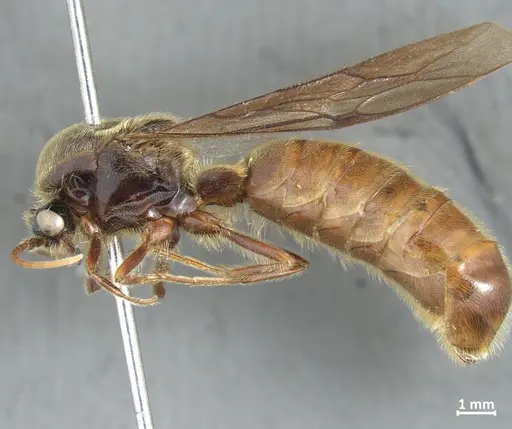
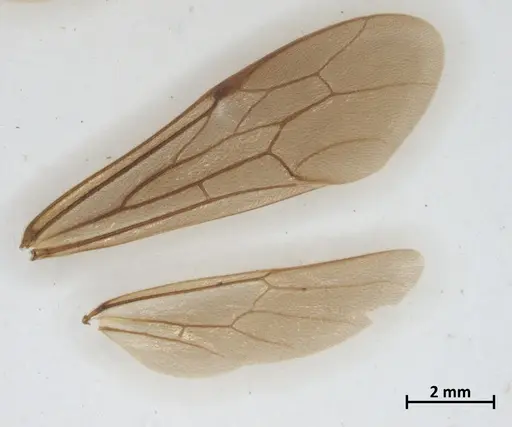
This is unknown. Only the worker caste has been described for this species. Males are known from the possibly synonymous species Neivamyrmex halidaii, but no queen or reproductive castes have been documented for N. punctaticeps specifically. Without knowing the colony structure or having a mated queen, predicting alate production is impossible.
What is the best nest type for Neivamyrmex punctaticeps?
A naturalistic setup with deep soil substrate is most appropriate, as this is a subterranean species that nests underground. A plaster nest with multiple chambers connected to a foraging area works well. They prefer dark, enclosed spaces and will likely remain in the nest during daylight hours, emerging at night to raid. Provide a moisture source to maintain high humidity.
How big do Neivamyrmex punctaticeps colonies get?
This is unknown. No colony size data exists for this species. As army ants, they may form large colonies like other Dorylinae species, but this is speculative. The related army ant species (Eciton) can have colonies with hundreds of thousands of workers, but N. punctaticeps is a much smaller species and may have smaller colonies.
Report an Issue
The current care sheet is based fully on literature. See inconsistencies, or something that's incorrect? Please , it will be resolved after review from an admin. Contributing to the blogs tab also helps providing information, to make us be able to further improve the caresheets. Thank you for your support!
References

This caresheet is licensed under CC BY-SA 4.0 .
Community Blogs
CASENT0173531
View on AntWeb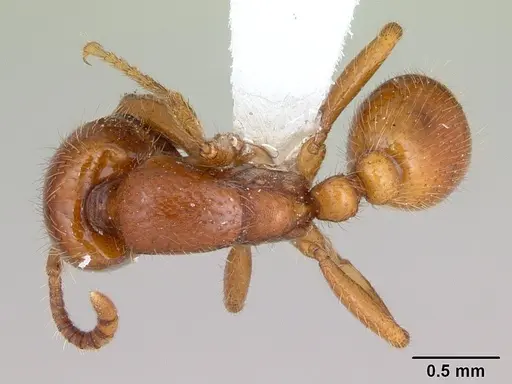
CASENT0173532
View on AntWeb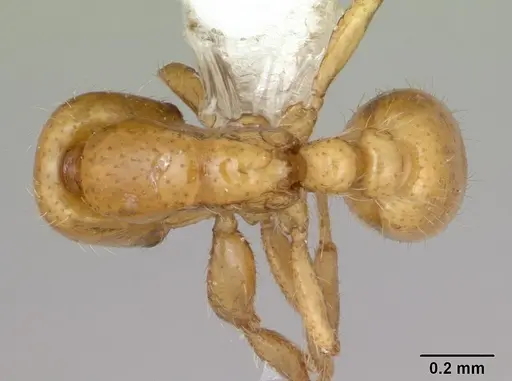
CASENT0178594
View on AntWeb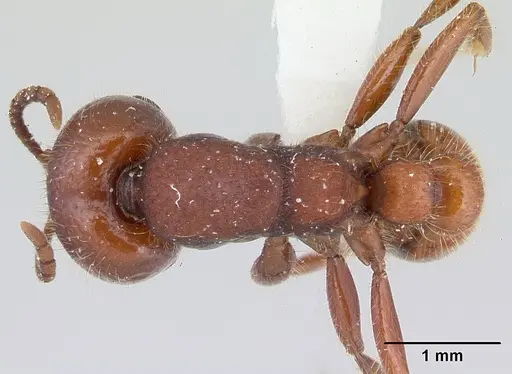
CASENT0178595
View on AntWeb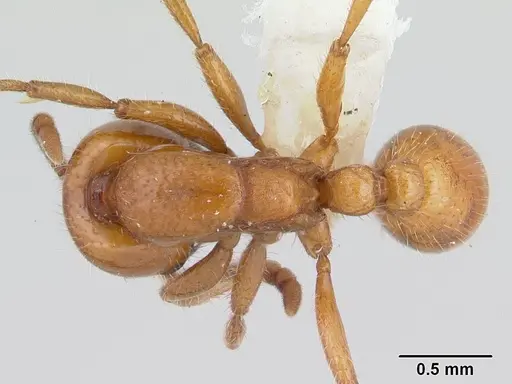
CASENT0901962
View on AntWeb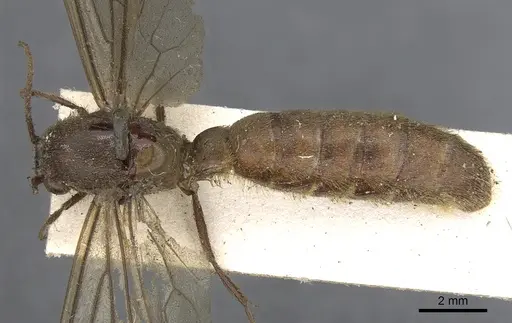
CASENT0903734
View on AntWeb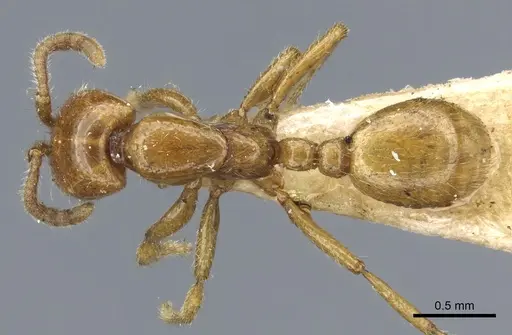
CASENT0903737
View on AntWeb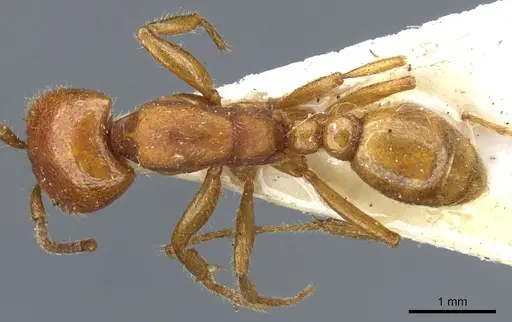
CASENT0903743
View on AntWeb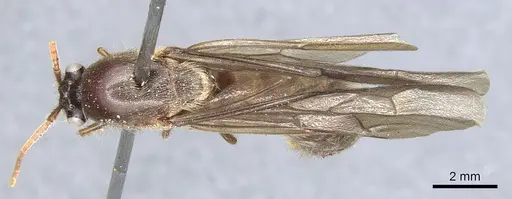
CASENT0905959
View on AntWeb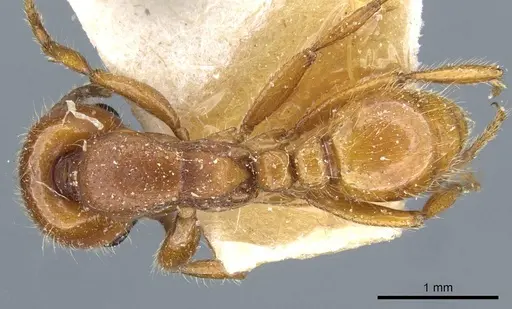
CASENT0905960
View on AntWeb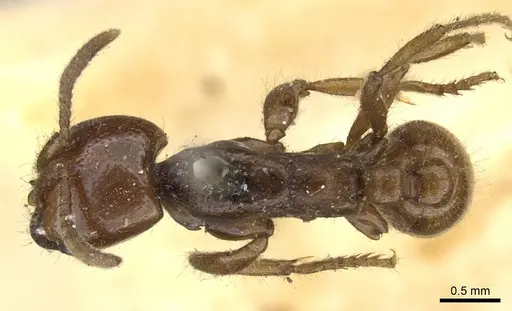
CASENT0915862
View on AntWeb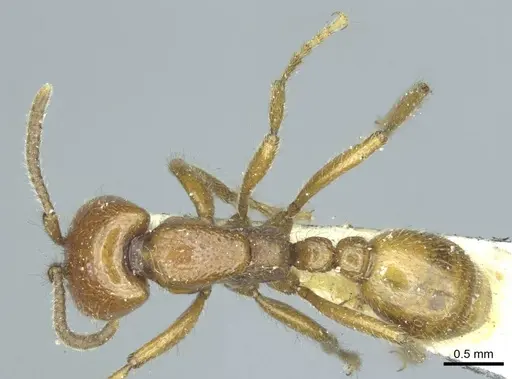
DZUP549828
View on AntWeb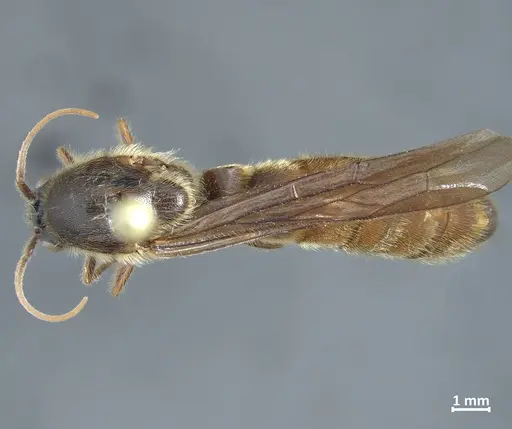
Literature
Loading distribution map...Loading products...