
Neivamyrmex postangustatus
- Sci. Name
- Neivamyrmex postangustatus
- Subfamily
- Dorylinae
- Author
- Borgmeier, 1934
- Distribution
- Found in 1 countries
Introduction
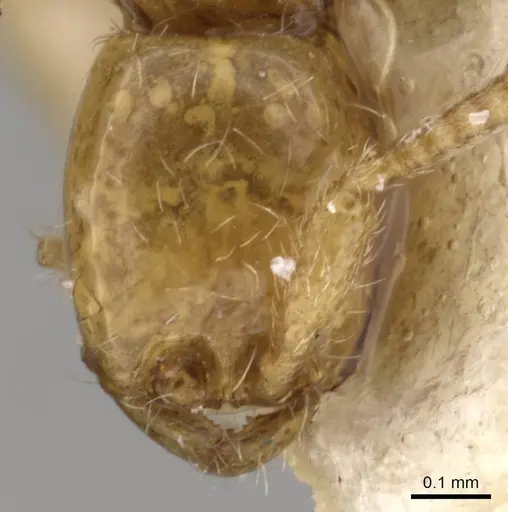
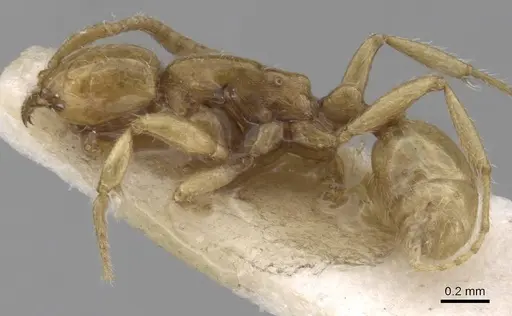
Neivamyrmex postangustatus is a Neotropical army ant species in the subfamily Dorylinae. Workers are small and slender, but size data is unavailable from current research. The species was originally described from Paramaribo, Suriname in 1934 . It is found across northern South America, including Brazil, French Guiana, Guyana, and Suriname, with a record from Belém in Pará, Brazil . It inhabits tropical forest environments. Army ants like this one exhibit a nomadic lifestyle, moving between bivouacs and conducting predatory raids, but specific details about this species are poorly documented.
Quick Summary
- Difficulty: Expert
- Origin & Habitat: Tropical forests of northern South America, Brazil, French Guiana, Guyana, and Suriname. Type locality is Paramaribo, Suriname, with records from Belém in Pará, Brazil [2][1][3].
- Colony Type: Army ant colony structure, nomadic with permanent queen. Colony type is unconfirmed for this specific species, but Neivamyrmex colonies typically contain a single queen.
- Size & Growth:
- Queen: Size data unavailable
- Worker: Size data unavailable
- Colony: Unknown for this species, based on genus patterns, colonies may reach several thousand workers
- Growth: Unknown
- Development: Unknown, no direct studies on development timeline for this species (Development timeline unconfirmed.)
- Antkeeping:
- Temperature: Based on Neotropical habitat, keep warm at 24-28°C[3]
- Humidity: Maintain high humidity, keep substrate consistently moist but not waterlogged[3]
- Diapause: No, as a Neotropical species, they do not require hibernation
- Nesting: Army ants do not build permanent nests. In captivity, form bivouacs in dark, humid enclosures with a foraging area[3]
- Behavior: Army ants are highly predatory and aggressive hunters. Workers are blind and locate prey through chemical trails. They conduct raids and are nomadic. Escape prevention is important due to their active nature[3]
- Common Issues: nomadic lifestyle makes them challenging to keep, they need space to move their bivouac regularly, predatory nature requires constant protein input, colonies can starve without adequate prey, high humidity requirements can lead to mold problems if ventilation is inadequate, blind workers may fall into water sources and drown, remove standing water, colonies may abandon bivouacs if conditions are unsuitable, stress from poor conditions causes colony abandonment
Understanding Army Ant Biology
Neivamyrmex postangustatus belongs to the Dorylinae subfamily, commonly known as army ants. Unlike most ant species that establish permanent nests, army ants are nomadic, they regularly move their entire colony between locations, forming temporary shelters called bivouacs. This nomadic lifestyle is driven by their predatory nature, they exhaust prey in one area and must move to find new hunting grounds. Colony structure centers on a single permanently winged queen who mates with multiple males during a nuptial flight. Workers are blind or nearly blind, relying on chemical pheromone trails and vibrations to communicate and locate prey [3].
Housing and Enclosure Setup
Keeping army ants like Neivamyrmex postangustatus requires a specialized setup that accommodates their nomadic nature. The enclosure should have two main areas: a dark, humid chamber for the bivouac and a spacious foraging area where raids can occur. The bivouac chamber should be kept completely dark and lined with moist substrate that the ants can tunnel through. Use a test tube setup with cotton for water reserves in the founding stages, transitioning to a formicarium as the colony grows. Escape prevention is critical, use fluon on all rim edges and ensure connections are secure [3].
Feeding and Nutrition
Army ants are obligate predators, they require a constant supply of live prey to survive and reproduce. In captivity, provide regular live prey items such as mealworms, crickets, fruit flies, and other small insects. The colony will conduct raids on prey items, overwhelming them through sheer numbers. Feed small prey items frequently rather than large items infrequently. Remove any uneaten prey after 24 hours to prevent mold [3].
Temperature and Seasonal Care
As a Neotropical species from northern South America, Neivamyrmex postangustatus requires warm, stable temperatures between 24-28°C. Temperature directly affects their activity level and development. Use a heating cable or mat on one side of the enclosure to create a gentle temperature gradient. Unlike temperate species, this ant does not require hibernation or a true diapause period. Maintain humidity by misting the substrate regularly and ensuring water sources are available [3].
Colony Development and Growth
The development timeline for Neivamyrmex postangustatus has not been specifically studied, but army ant colonies generally grow more rapidly than typical ant species once established. A newly mated queen will found her colony semi-claustrally, unlike fully claustral queens that seal themselves away, army ant queens must continue hunting to feed themselves and their brood until the first workers emerge. The first generation of workers are typically smaller and emerge within several weeks. After this initial brood, the colony can grow exponentially if fed adequately [3].
Frequently Asked Questions
Is Neivamyrmex postangustatus a good species for beginners?
No. This species is not recommended for beginners. Army ants have specialized care requirements including constant live prey, high humidity, warm temperatures, and space for nomadic behavior. They are also difficult to acquire as they are rarely available in the antkeeping hobby [3].
How long does it take for the first workers to emerge?
The exact development timeline for this species is unconfirmed. Based on typical army ant patterns, first workers likely emerge within 3-6 weeks after the queen lays her first eggs, assuming optimal temperatures around 26°C. However, this is an estimate based on genus-level patterns [3].
Can I keep multiple queens together?
No. Neivamyrmex colonies are typically monogyne (single queen). While some army ant species may have temporary multi-queen phases during colony fission, combining unrelated queens is not recommended and would likely result in fighting [3].
What do I feed my Neivamyrmex postangustatus colony?
Feed them live prey items. Army ants are obligate predators and require constant protein from hunting. Suitable prey includes small crickets, mealworms, fruit flies, and other small insects. Feed small prey frequently rather than large items infrequently. Remove uneaten prey after 24 hours to prevent mold [3].
Do I need to hibernate Neivamyrmex postangustatus?
No. As a Neotropical species from tropical South America, they do not require hibernation. Maintain temperatures between 24-28°C year-round. Their activity may naturally decrease during certain seasons in their native range, but they do not enter true diapause like temperate species [3].
How big do Neivamyrmex postangustatus colonies get?
Colony size for this specific species is unconfirmed in scientific literature. Based on typical Neivamyrmex genus patterns, colonies may reach several thousand workers at maturity[3].
When should I move my colony to a formicarium?
Army ant colonies should remain in test tube setups until they reach several hundred workers. At that point, you can provide a simple formicarium with a dark chamber for the bivouac and a connected foraging area. Unlike typical ants, army ants do not need elaborate nest structures, they need darkness, humidity, and space to raid [3].
Why is my army ant colony abandoning their bivouac?
Colony abandonment usually indicates stress from poor conditions. Common causes include inadequate humidity, temperature issues, insufficient prey, mold problems, or disturbance from light. Army ants are sensitive to their environment. Review your temperature, humidity, and feeding schedule [3].
Report an Issue
The current care sheet is based fully on literature. See inconsistencies, or something that's incorrect? Please , it will be resolved after review from an admin. Contributing to the blogs tab also helps providing information, to make us be able to further improve the caresheets. Thank you for your support!
References

This caresheet is licensed under CC BY-SA 4.0 .
Community Blogs
CASENT0911205
View on AntWeb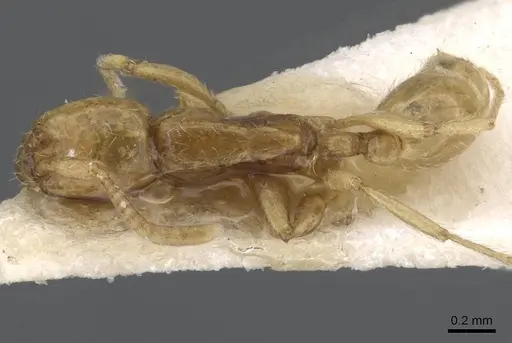
Literature
Loading distribution map...Loading products...