
Neivamyrmex legionis
- Sci. Name
- Neivamyrmex legionis
- Subfamily
- Dorylinae
- Author
- Smith, 1855
- Distribution
- Found in 2 countries
Introduction
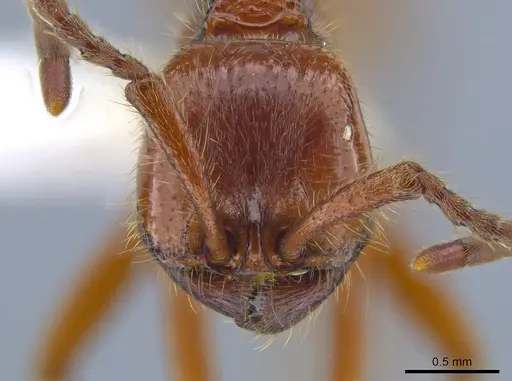
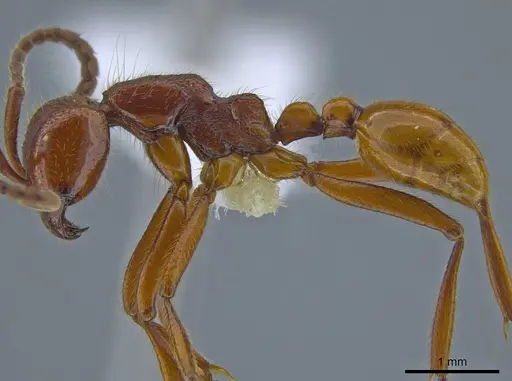
Neivamyrmex legionis is a small army ant species native to the Neotropical region, found across Argentina, Brazil, French Guiana, and Paraguay . Workers are light red-brown to yellow-red in color and possess well-developed eyes and ocelli, which is unusual for army ants that typically rely more on chemical communication . This species is known locally as 'Guerreira' (warrior) in Brazil . Unlike many army ants that form massive colonies, N. legionis appears to be a relatively small species and is rarely encountered, making up only 0.06% of ant specimens in some surveys . The species is assigned to the Tropical Climate Specialists functional group, indicating it prefers warm, humid forest environments .
Quick Summary
- Difficulty: Expert
- Origin & Habitat: Neotropical region, Argentina, Brazil, French Guiana, Paraguay. Found in tropical and subtropical forests, including arboreal restinga habitats in coastal Brazil [4]. Type locality is Santarém, Pará, Brazil [6].
- Colony Type: Colony structure is unconfirmed. As a Dorylinae army ant, likely forms colonies with a single queen, but this has not been directly documented.
- Size & Growth:
- Queen: Size data unavailable, queen described but measurements not available in accessible sources [7]
- Worker: Small army ant, exact measurements not specified in available literature [7]
- Colony: Likely small to moderate for an army ant, exact colony size unconfirmed
- Growth: Unknown, no development data available
- Development: Unknown, no direct development studies exist for this species (Development timeline has not been studied. Based on typical Dorylinae patterns at tropical temperatures, expect several months, but this is an estimate.)
- Antkeeping:
- Temperature: Keep at tropical temperatures, aim for 24-28°C with a slight gradient. This species is classified as a Tropical Climate Specialist [5], so warmth is important.
- Humidity: High humidity required, think damp tropical forest floor. Keep nest substrate consistently moist but not waterlogged.
- Diapause: No, as a tropical species, they do not require hibernation. Maintain warm conditions year-round.
- Nesting: Natural nesting is poorly documented. In captivity, provide a humid nest setup with chambers large enough for colony aggregation. Army ants typically prefer dark, enclosed spaces. A naturalistic setup with moist substrate or a plaster nest works well.
- Behavior: This is an army ant with predatory raiding behavior. Workers are light red-brown and have well-developed eyes, unusual for Dorylinae [2]. They raid in columns, with documented observations of ants moving through indoor spaces (cellars) at night between midnight and 3 AM [8]. Unlike some Eciton species that aggressively expel humans and animals, N. legionis moved rapidly through the space without searching behavior [8]. They host multiple beetle guests including Teratosoma, Ecitodulus, Myrmedonia, and Xenocephalus species, which mimic the ants' color for protection [9]. Escape prevention should be excellent, while not among the smallest ants, army ants are skilled at finding gaps.
- Common Issues: tropical species requires warm, humid conditions year-round, cold or dry conditions can be fatal, rare in captivity with limited availability, finding colonies is difficult, predatory raiding behavior means they need constant access to live prey, small colony size may make them less impressive than other army ants, escape artists, army ants can squeeze through small gaps and need secure barriers
Natural History and Distribution
Neivamyrmex legionis is a small army ant found throughout the Neotropical region, with documented records in Argentina (Misiones province), Brazil, French Guiana, and Paraguay [1]. The type locality is Santarém in Pará, Brazil [6]. This species is assigned to the Tropical Climate Specialists (TCS) functional group, indicating preference for warm, humid conditions typical of tropical forests [5]. It has been collected in various habitats including arboreal restinga (coastal sand forest) in Santa Catarina, Brazil, where it was quite rare comprising only 0.06% of specimens collected [4]. The species is known locally as 'Guerreira' (warrior) in Brazil [3].
Identification and Morphology
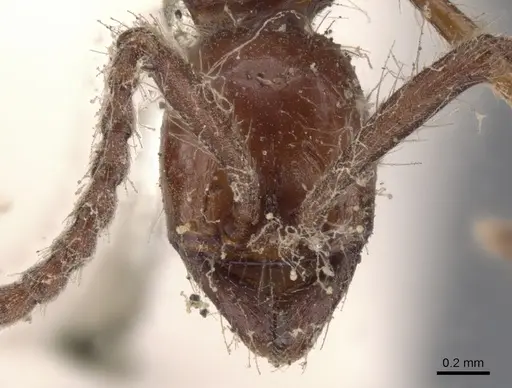
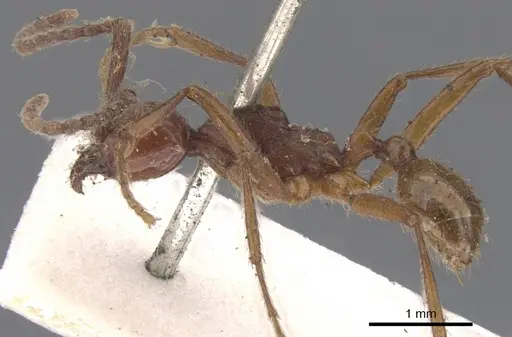
Workers are small compared to many other army ants, described as light red-brown to yellow-red in color [2]. One distinctive feature is their well-developed eyes and ocelli (simple eyes used for detecting light), which is unusual for army ants that typically rely heavily on chemical communication rather than vision [2][9]. This suggests they may be more visually oriented than related species. The queen has been described but detailed measurements are not readily available in accessible literature [7].
Behavior and Raiding Patterns
Like other army ants, Neivamyrmex legionis exhibits predatory raiding behavior. One documented observation from Brazil describes a colony moving in a broad column through a house cellar, traveling from one side to the other rapidly without stopping or searching the house extensively [8]. This raiding occurred at night between midnight and 3:00 AM and continued with unchanged strength until the observer became too tired [8]. This behavior differed from typical Eciton species which typically search aggressively and can expel humans and animals from an area [8]. The presence of well-developed eyes suggests they may use visual cues during nocturnal raids more than related species.
Ecological Associates
Neivamyrmex legionis hosts several remarkable beetle guests that live within the ant colony and mimic the ants' color for protection. Documented guests include Teratosoma, Ecitodulus, Myrmedonia, and Xenocephalus species [9]. Specific beetle associates include Ecitophiletus constrictus, Cephalothops Zikáni, Ecitodulus crassicornis, and Xenocephalus goeldii, collected from ant columns [8]. They also serve as hosts for the Phorid fly Commoptera affinis [10]. This mimicry, where the guests match the ants' red-yellow coloration, is a classic example of protective mimicry in myrmecophilous organisms [2][9].
Housing and Care in Captivity
This is an expert-level species due to its specific requirements and rarity in the antkeeping hobby. Provide a warm, humid environment with temperatures around 24-28°C and high substrate moisture [5]. As predatory army ants, they require constant access to live prey, typically other small insects. A naturalistic setup with moist substrate or a plaster nest works well. Ensure excellent escape prevention as army ants are skilled at finding gaps. Provide a dark nesting area as they prefer enclosed spaces. Because this species is rarely kept, there is limited captive husbandry information, observe your colony closely and adjust conditions based on their activity and health.
Feeding and Nutrition
As an army ant species, Neivamyrmex legionis is predatory and raids for live prey. In captivity, offer a variety of small live insects such as fruit flies, small crickets, mealworms, and other appropriately-sized prey. Army ants typically do not store food, so regular feeding is necessary. The frequency should be adjusted based on colony size, larger colonies need more frequent feeding. Unlike some ants, they are not typically scavengers and prefer fresh prey. Sugar sources are generally not accepted by predatory army ants.
Frequently Asked Questions
Is Neivamyrmex legionis a good species for beginners?
No. This is an expert-level species due to its specific tropical humidity and temperature requirements, rarity in the hobby, and need for constant live prey. Most antkeepers should start with easier species like Lasius, Camponotus, or Messor.
What do Neivamyrmex legionis ants eat?
They are predatory army ants that require live prey. Feed small insects like fruit flies, pinhead crickets, small mealworms, and other appropriately-sized live prey. They do not typically accept sugar sources or dead food like some ant species.
How big do Neivamyrmex legionis colonies get?
Colony size is not well documented in scientific literature. As a small army ant species, colonies are likely smaller than classic army ant species like Eciton. Exact maximum colony size is unknown.
Do Neivamyrmex legionis need hibernation?
No. As a tropical species from the Neotropical region, they do not require hibernation. Keep them warm year-round at 24-28°C.
Can I keep multiple Neivamyrmex legionis queens together?
This has not been documented. In the wild, army ants typically have single-queen colonies. Combining unrelated queens is not recommended without specific evidence that this species accepts pleometrosis (multiple queen founding).
How long does it take for Neivamyrmex legionis to develop from egg to worker?
The development timeline has not been scientifically documented for this species. Based on typical Dorylinae patterns at tropical temperatures, expect several months (possibly 2-4 months) from egg to worker, but this is an estimate.
Where does Neivamyrmex legionis live in the wild?
They are found across the Neotropical region including Argentina, Brazil, French Guiana, and Paraguay. They inhabit tropical and subtropical forests and have been recorded in arboreal restinga habitats in coastal Brazil.
Why is it called 'Guerreira'?
The common name 'Guerreira' (meaning warrior in Portuguese) was recorded in early Brazilian literature [3]. This likely refers to their aggressive raiding behavior typical of army ants.
Are Neivamyrmex legionis aggressive?
As army ants, they are predatory and will raid other insects for food. However, documented observations suggest they may be less aggressive toward humans than some other army ant species, passing through spaces without actively searching for and expelling people [8].
Report an Issue
The current care sheet is based fully on literature. See inconsistencies, or something that's incorrect? Please , it will be resolved after review from an admin. Contributing to the blogs tab also helps providing information, to make us be able to further improve the caresheets. Thank you for your support!
References

This caresheet is licensed under CC BY-SA 4.0 .
Community Blogs
CASENT0644312
View on AntWeb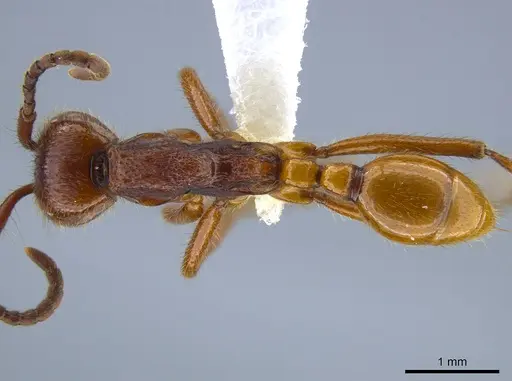
CASENT0902653
View on AntWeb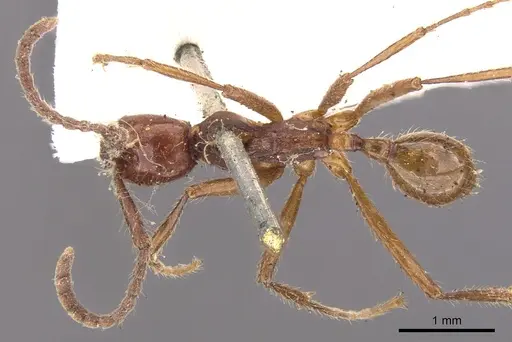
Literature
Loading distribution map...Loading products...