
Neivamyrmex clavifemur
- Sci. Name
- Neivamyrmex clavifemur
- Subfamily
- Dorylinae
- Author
- Borgmeier, 1953
- Distribution
- Found in 1 countries
Introduction
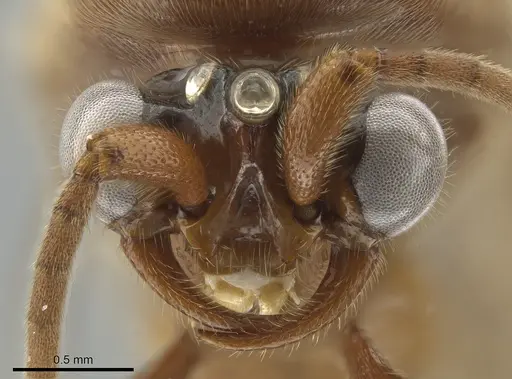
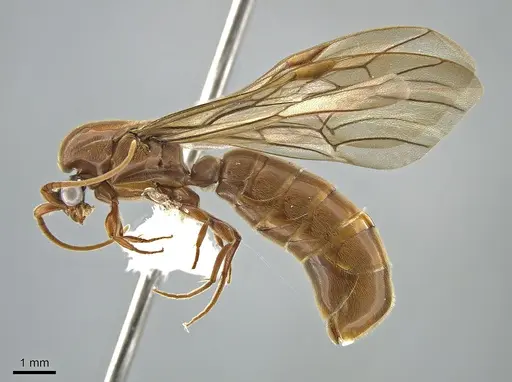
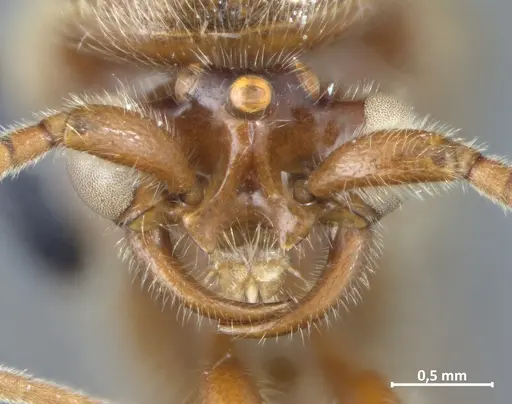
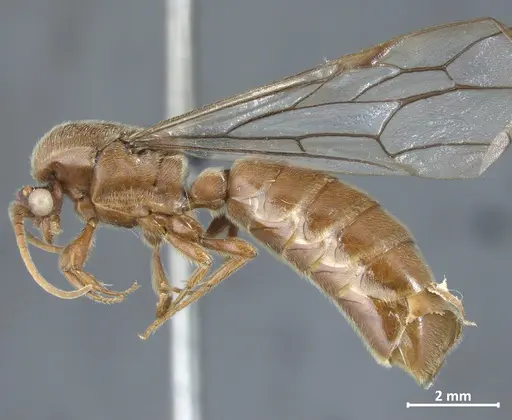
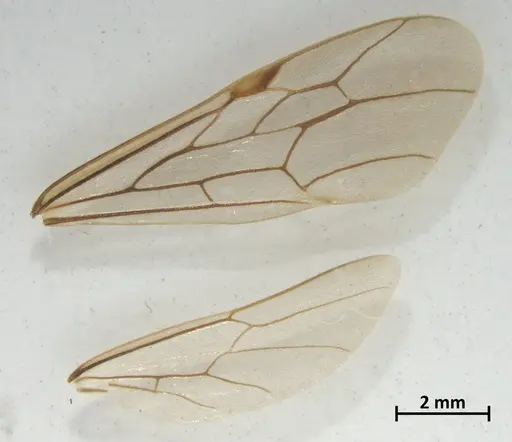
Neivamyrmex clavifemur is a Neotropical army ant species in the subfamily Dorylinae. The species was described from male specimens collected in Brazil (Rio de Janeiro and São Paulo), with additional records from Argentina, Colombia (Caquetá), Paraguay, and Peru . Males can be identified by their very narrow posterior torulo-posttorular complex and scapes that are as long as the mandibles but much shorter than the foreleg femora . This is a male-described species - workers have never been documented, making captive keeping impossible as the biology and morphology of the worker caste remains completely unknown. Like other army ants in the Dorylinae subfamily, they are predatory and raid the colonies of other ants to capture brood . The reproductive period in Brazil runs from November to February, based on nuptial flight data from Ilhéus .
Quick Summary
- Difficulty: Expert
- Origin & Habitat: Neotropical region, found in Argentina, Brazil, Colombia, Paraguay, and Peru. Specific habitats are not well documented, but Neivamyrmex species typically inhabit forest floors and are nocturnal raiders [3][1].
- Colony Type: Unknown, this is a male-described species with no worker caste documented. The colony structure and queen number are unconfirmed. Most Neivamyrmex species are considered monogyne based on genus patterns, but this has not been verified for N. clavifemur specifically [3].
- Size & Growth:
- Queen: Unconfirmed, queens have not been described for this species
- Worker: Unknown, workers have never been documented
- Colony: Unknown, no colony size data available
- Growth: Unknown
- Development: Unknown, worker caste undescribed (Development timeline cannot be estimated without worker morphology data)
- Antkeeping:
- Temperature: Based on Neotropical distribution and related species, likely 22-28°C. No specific thermal studies exist for this species.
- Humidity: Based on typical Neotropical forest floor habitat, likely 60-80% humidity with moist substrate. No specific data available.
- Diapause: Likely minimal or none given tropical distribution. Nuptial flight activity occurs November-February in Brazil [4].
- Nesting: No nesting data exists for this species. Most Neivamyrmex are subterranean and create temporary bivouacs. In captivity, a naturalistic setup with deep substrate would be speculative but may be attempted.
- Behavior: Army ant behavior is characterized by nocturnal raiding. Workers raid the nests of other ant species to capture brood as food. However, since workers have never been described for N. clavifemur, specific behavioral observations are unavailable. Most Neivamyrmex species are aggressive raiders with well-developed stingers [3]. Escape risk cannot be assessed without worker size data.
- Common Issues: Workers have never been described, making species identification in captivity impossible., No captive husbandry information exists for this species., Only known from male specimens, queen and worker morphology completely unknown., Cannot verify colony ID without worker specimens., Extremely rare in the antkeeping hobby, no established protocols.
Species Identification and Taxonomic Status
Neivamyrmex clavifemur was originally described by Borgmeier in 1953 based solely on male specimens collected from Brazil [5]. The type locality is Itatiaia in Rio de Janeiro, Brazil, with specimens collected between 1926 and 1947 [5]. This is a male-described species, meaning the worker caste has never been documented or described in scientific literature. This is extremely unusual in ant taxonomy and creates significant challenges for both scientific study and antkeeping. Without workers, positive species identification in the field or from colony samples is essentially impossible. The male specimens can be distinguished by their very narrow posterior torulo-posttorular complex and the relative lengths of their scapes, mandibles, and foreleg femora [1]. The species is currently known from only a handful of male specimens across its range in Brazil, Colombia, Paraguay, and Peru [1][2].
Distribution and Habitat
Neivamyrmex clavifemur has a broad Neotropical distribution spanning Argentina, Brazil, Colombia, Paraguay, and Peru [3][1]. In Colombia, the species has been recorded in the Caquetá department [6][1]. The specific microhabitat preferences are not documented in scientific literature. However, the genus Neivamyrmex consists primarily of subterranean army ants that are most active at night. They create temporary bivouacs (temporary nests made from living workers linked together) rather than permanent nests. These ants raid other ant colonies to capture brood, which they eat. The lack of specific habitat data for N. clavifemur makes it impossible to provide precise captive habitat recommendations [3].
Reproductive Biology
Nuptial flight data from Ilhéus, Brazil shows that N. clavifemur has a reproductive period concentrated from November to February [4]. In a 2004 study,20 individuals were collected across 17 nights of occurrence, representing 1.53% of all Ecitoninae individuals collected at that site [4]. The activity curves were almost identical to Neivamyrmex swainsoni, suggesting similar seasonal patterns [4]. This is the extent of what is known about the reproductive biology of this species. The queen caste has never been described, so founding behavior (whether claustral or semi-claustral) is completely unknown. The timing of nuptial flights in other parts of its range (Colombia, Paraguay, Peru) may differ slightly based on local climate conditions.
Why This Species Cannot Be Kept in Captivity
This species is NOT recommended for antkeeping under any circumstances. The reasons are fundamental: (1) Workers have never been described, you cannot obtain, identify, or verify this species in captivity because there are no worker specimens to compare against. (2) No captive husbandry information exists, even if you obtained a colony, there are no established care protocols, feeding guidelines, or housing recommendations. (3) The species is known from fewer than 10 male specimens total, it is extremely rare in the wild and potentially threatened. (4) Positive identification is impossible, without workers, even expert entomologists cannot confirm species identity. (5) Legal concerns, collecting this species may be problematic as it appears to have a limited distribution and may be of conservation concern. If you are interested in keeping army ants, consider better-documented Neivamyrmex species or the more commonly available Eciton burchellii (butterfly ant) which has fully described workers and established care protocols [3].
Related Species and Alternative Recommendations
For antkeepers interested in army ants, several better-documented alternatives exist. The genus Neivamyrmex contains numerous species with described workers, though most are challenging to keep. Eciton burchellii (the butterfly ant) is perhaps the most famous army ant and has fully documented biology, it raids in columns during the day and creates dramatic bivouacs. Other Dorylinae genera like Labidus (also recently reclassified from Ecitoninae) have more accessible documentation. The key difference is that these species have fully described worker castes, known colony sizes, documented feeding behaviors, and established care protocols in the antkeeping hobby. N. clavifemur represents a taxonomic curiosity, interesting to researchers but completely unsuitable for captive keeping due to the fundamental lack of worker descriptions [3][7].
Frequently Asked Questions
Can I keep Neivamyrmex clavifemur in captivity?
No. This species cannot be kept in captivity because workers have never been described. Without workers, positive species identification is impossible and no captive husbandry information exists. This is one of the least suitable species for antkeeping in the entire Dorylinae subfamily.
Why are there no workers described for Neivamyrmex clavifemur?
This is simply a gap in scientific knowledge. The species was described from male specimens in 1953,and despite subsequent collections in Brazil, Colombia, Paraguay, and Peru, no researcher has yet documented the worker caste. This is unusual but not unprecedented in ant taxonomy, especially for rare or cryptic species.
What do Neivamyrmex clavifemur eat?
Unknown for this specific species. However, as army ants (Dorylinae), they almost certainly raid other ant colonies and consume brood (eggs, larvae, and pupae). The exact prey species and hunting behavior is unconfirmed.
How big do Neivamyrmex clavifemur colonies get?
Unknown. No colony size data exists for this species. Other Neivamyrmex species can have colonies ranging from a few hundred to several thousand workers, but this cannot be assumed for N. clavifemur.
What is the nuptial flight season for Neivamyrmex clavifemur?
Based on data from Ilhéus, Brazil, reproductive activity occurs from November to February [4]. This may vary in other parts of their range.
Are there any documented colonies of Neivamyrmex clavifemur in captivity?
No. There are no documented captive colonies of this species, and given the lack of worker descriptions, it would be impossible to verify such a colony if it existed.
What army ant species can I keep instead?
Consider Eciton burchellii (butterfly ant) which has fully described workers and established care protocols. Other alternatives include Labidus species, though documentation varies. These species have known colony structures, documented feeding behaviors, and established antkeeping protocols.
Report an Issue
The current care sheet is based fully on literature. See inconsistencies, or something that's incorrect? Please , it will be resolved after review from an admin. Contributing to the blogs tab also helps providing information, to make us be able to further improve the caresheets. Thank you for your support!
References

This caresheet is licensed under CC BY-SA 4.0 .
Community Blogs
CASENT0650521
View on AntWeb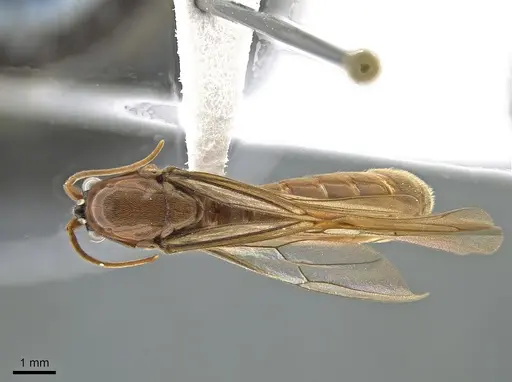
DZUP550187
View on AntWeb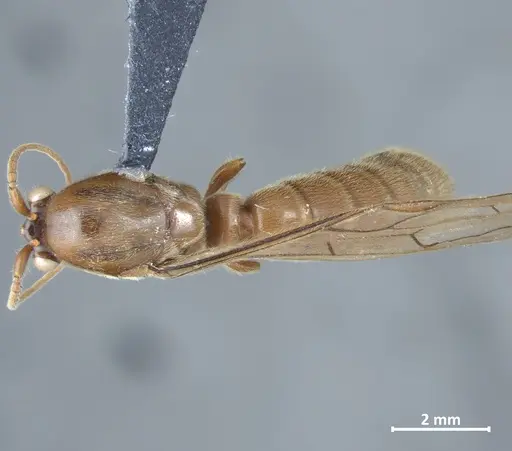
Literature
Loading distribution map...Loading products...