
Mystrium labyrinth
- Sci. Name
- Mystrium labyrinth
- Tribe
- Amblyoponini
- Subfamily
- Amblyoponinae
- Author
- Yoshimura & Fisher, 2014
- Distribution
- Found in 1 countries
Introduction
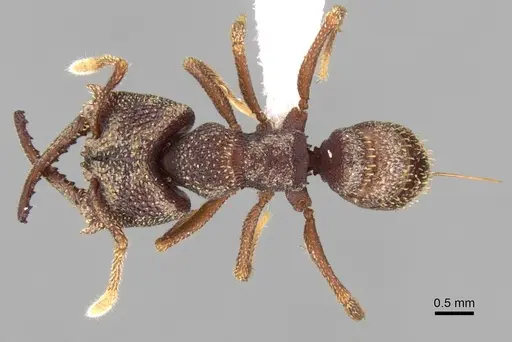
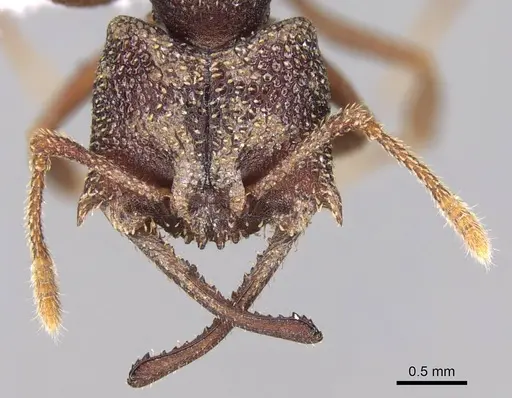
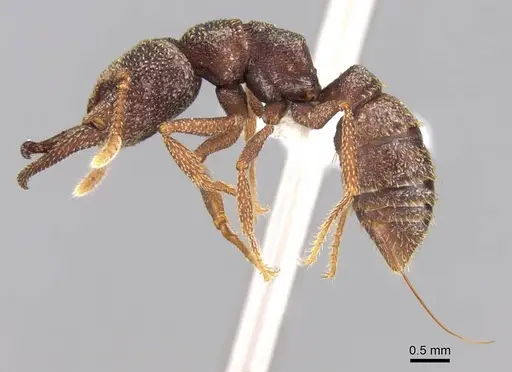
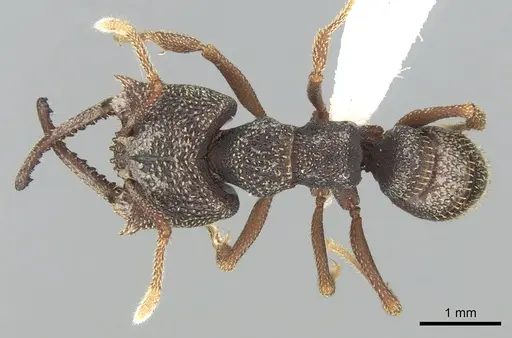
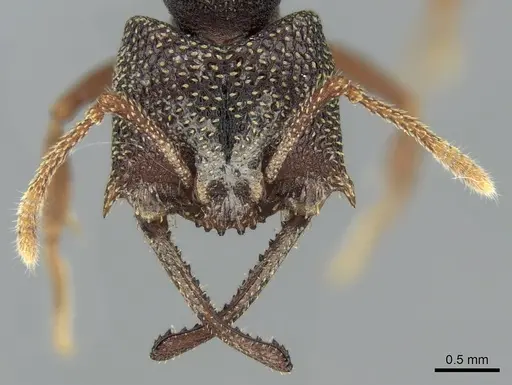
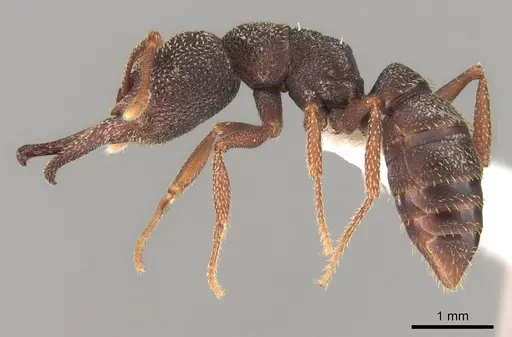
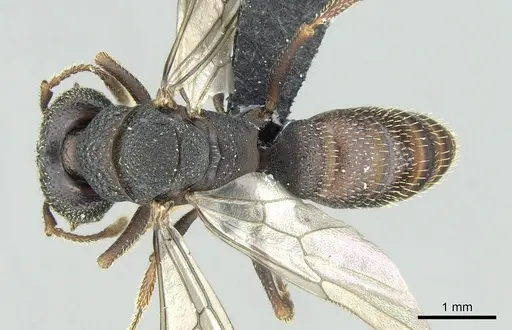
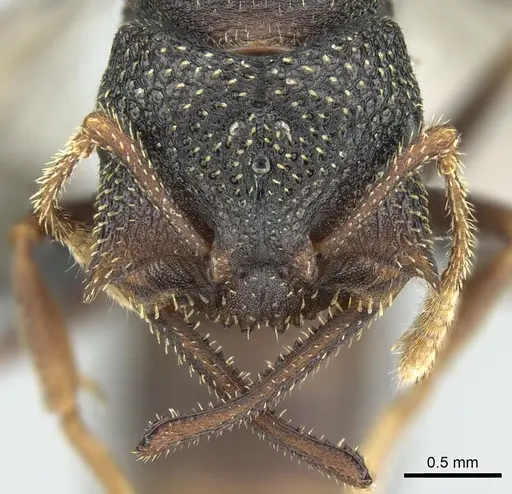
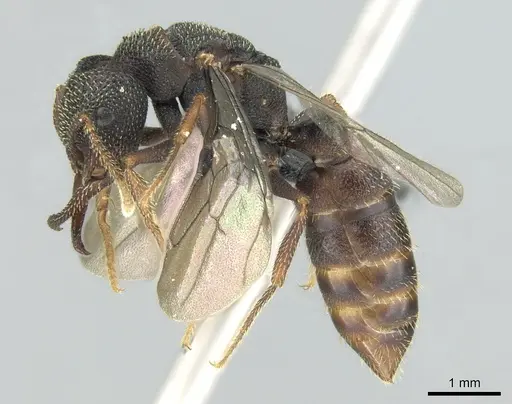
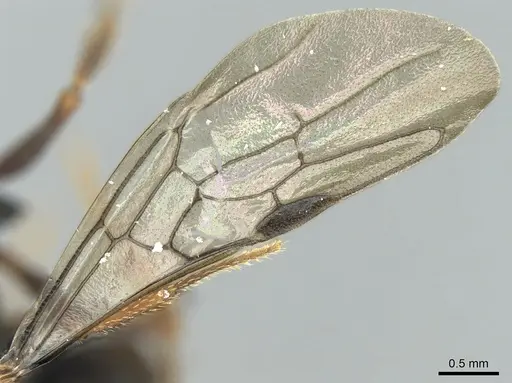
Mystrium labyrinth is a small predatory ant species from the Amblyoponinae subfamily, discovered in 2014 in Madagascar's rainforests. Workers display a distinctive reddish-brown to black coloration with strong reticulate sculpturing on the pronotum . This species is distinguished by its unusually long genal tooth that nearly reaches the anterior end of the clypeus, and its second maxillary palpomere being shorter than the third . Queens have well-developed wings and are slightly larger in body size than workers . As a recently described species from the Mystrium camillae group, biological observations in captivity are limited.
Quick Summary
- Difficulty: Medium
- Origin & Habitat: Endemic to Madagascar, specifically found in Parc National Montagne d'Ambre, Réserve Anjanaharibe-Sud, Ambohitsitondroina, and Isaka-Invondro at elevations of 350m and higher. They inhabit rainforest leaf litter [1][2].
- Colony Type: Colony structure is unconfirmed. No data exists for this species on queen number, polygyny, or multi-queen colonies.
- Size & Growth:
- Queen: Size data unavailable, measurements provided are head and mesosoma only [1].
- Worker: Size data unavailable, measurements provided are head and mesosoma only [1].
- Colony: Unknown, no colony size data available.
- Growth: Unknown, no development timing data exists.
- Development: Unconfirmed, no direct measurements exist. (Development timeline is unconfirmed for this species.)
- Antkeeping:
- Temperature: Keep at 24-28°C. This matches their Madagascar rainforest origin. A gentle gradient allowing warmer and cooler zones is recommended.
- Humidity: High humidity is essential, rainforest litter ants need consistently moist substrate. Keep the nest substrate damp but not waterlogged. Provide a water tube for drinking access.
- Diapause: Unknown for this species. Madagascar rainforests have mild seasons, so a true diapause may not be required. Consider a slight temperature reduction during winter months rather than full hibernation.
- Nesting: Natural nesting occurs in rainforest leaf litter. In captivity, they do well in test tubes with access to a moist outworld, or in small nests with tight chambers scaled to their tiny size. Provide damp soil or cotton as nesting material.
- Behavior: This is a tiny, cryptic ant species that forages in leaf litter. They are predatory on small arthropods. Workers are not aggressive toward keepers but may bite if handled. Their small size makes them excellent escape artists, fine mesh barriers are essential. They are likely nocturnal or crepuscular, matching litter-layer ant patterns. As Amblyoponinae, they possess a sting for defense.
- Common Issues: escape prevention is critical due to their tiny size, use fine mesh and tight-fitting lids, high humidity requirements can lead to mold if ventilation is inadequate, predatory diet means they need constant access to small live prey, colony failure from starvation is common, slow colony growth may cause keepers to overfeed, leading to mold and mite problems, no captive breeding data exists, wild-caught colonies may have high initial mortality
Housing and Setup
Mystrium labyrinth requires a setup that mimics their natural rainforest litter environment. A test tube setup works well for founding colonies, use a small test tube with a water reservoir sealed with cotton, giving them access to a moist cotton ball. For established colonies, a small nest or a naturalistic setup with damp leaf litter works well. The key is maintaining high humidity while allowing some ventilation to prevent mold. Because they are tiny, escape prevention is critical, use fine mesh on any openings. Provide a dark area for the nest since they naturally live in shaded litter. [1]
Feeding and Diet
As with other Amblyoponinae ants, Mystrium labyrinth is predatory on small arthropods. In captivity, they should be fed small live prey such as springtails, fruit fly larvae, tiny crickets, and other micro-arthropods. Feed small prey items 2-3 times per week, adjusting based on colony size and consumption. Remove uneaten prey after 24-48 hours to prevent mold. Sugar sources are not typically accepted by predatory Amblyoponinae, so focus on protein prey.
Temperature and Humidity
Maintain temperatures between 24-28°C, reflecting their Madagascar rainforest origin. A slight temperature gradient allows the colony to self-regulate. High humidity is essential, the nest area should have consistently damp substrate. Provide a water tube with a cotton wick so workers can drink directly. Mist the outworld occasionally but avoid dripping water directly on the nest. Poor humidity leads to desiccation and colony loss. [1]
Colony Development
Since Mystrium labyrinth was only described in 2014,no captive breeding data exists. The first workers (nanitics) will likely be smaller than mature workers. Colony growth is expected to be slow. Patience is key with this species. [1]
Behavior and Temperament
This is a cryptic, litter-dwelling ant that avoids light and disturbance. Workers are small and not aggressive, they will flee rather than attack if exposed. They are likely nocturnal or crepuscular, becoming more active during dim light conditions. Foraging likely occurs in the upper layers of leaf litter where they hunt small arthropods. Their long genal tooth is a distinctive morphological feature but its exact function is not documented, it may be used in prey handling or nest construction. As Amblyoponinae, they have a sting for defense. [1]
Frequently Asked Questions
How long does it take for Mystrium labyrinth to produce first workers?
The egg-to-worker timeline is unconfirmed for this species. No captive breeding data exists.
Can I keep multiple Mystrium labyrinth queens together?
This has not been documented. Combining unrelated queens is not recommended due to lack of data on their social structure.
What do Mystrium labyrinth ants eat?
They are predatory on small arthropods. Feed live springtails, fruit fly larvae, tiny crickets, and other micro-arthropods. Remove uneaten prey after 24-48 hours to prevent mold.
Do Mystrium labyrinth ants sting?
As Amblyoponinae, they possess a sting. However, their small size means they are not considered dangerous to humans.
What temperature do Mystrium labyrinth ants need?
Keep them at 24-28°C. This matches their Madagascar rainforest origin. A gentle temperature gradient is recommended.
Are Mystrium labyrinth good for beginners?
This species is rated as Medium difficulty. Their high humidity requirements, predatory diet, and tiny size make them challenging for complete beginners. Experienced antkeepers familiar with tropical litter ants will have better success.
Do Mystrium labyrinth need hibernation?
Diapause requirements are unknown. Madagascar has mild seasons, so a true hibernation is likely not required. Consider a slight temperature reduction during winter months rather than full hibernation.
Why are my Mystrium labyrinth dying?
Common causes include: escape through tiny gaps, low humidity, starvation, and mold from overfeeding. This species has no captive breeding data, so wild-caught colonies may have high initial mortality.
When should I move Mystrium labyrinth to a formicarium?
Wait until the colony reaches at least 20-30 workers before moving to a larger nest. Test tube setups work well for smaller colonies. Ensure the new setup maintains high humidity.
How big do Mystrium labyrinth colonies get?
Colony size is unknown for this species. No data exists on maximum colony size.
Report an Issue
The current care sheet is based fully on literature. See inconsistencies, or something that's incorrect? Please , it will be resolved after review from an admin. Contributing to the blogs tab also helps providing information, to make us be able to further improve the caresheets. Thank you for your support!
References

This caresheet is licensed under CC BY-SA 4.0 .
Community Blogs
Literature
Loading distribution map...Loading products...