
Myrmicocrypta urichi
- Sci. Name
- Myrmicocrypta urichi
- Tribe
- Attini
- Subfamily
- Myrmicinae
- Author
- Weber, 1937
- Distribution
- Found in 2 countries
Introduction
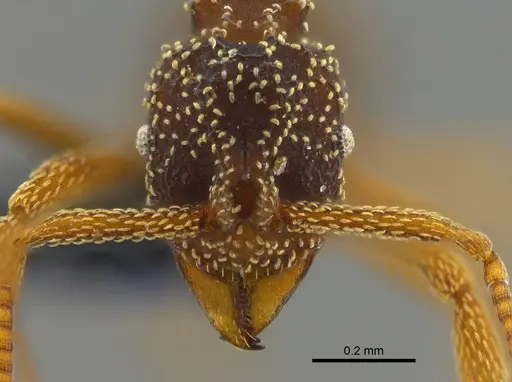
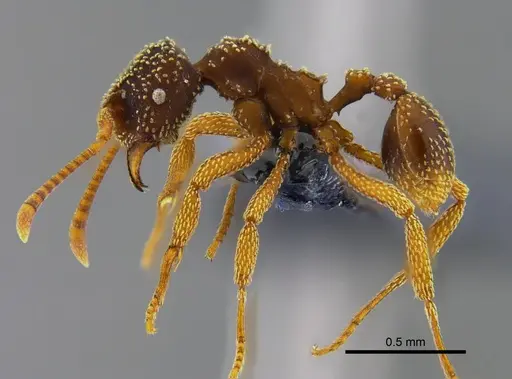
Myrmicocrypta urichi is a small, cryptic fungus-growing ant in the tribe Attini. Workers are dark brown and covered in scales, with an apical mandibular tooth as long as the preapical tooth and a postpetiole that is 2.5 times broader than long . It is native to the Neotropical region, found in Colombia, Venezuela, the Lesser Antilles, and Trinidad and Tobago . Type specimens were collected at Mayaro Bay, Trinidad . In Colombia it occurs at elevations from 250 m to 980 m in the departments of Antioquia and Caquetá . Like all attine ants, Myrmicocrypta urichi has an obligate mutualism with cultivated fungi – larvae eat only fungus, and adults eat partial fungus . The queen carries a fragment of the fungal cultivar from her parent nest to start a new garden when founding a colony . The species cultivates fungal subclade E .
Quick Summary
- Difficulty: Hard
- Origin & Habitat: Trinidad and Tobago, Colombia, Venezuela, and the Lesser Antilles [1][2]. In Colombia it has been recorded in Antioquia (600–980 m) and Caquetá (250–300 m) [1][4]. It inhabits tropical forests, likely nesting in soil or rotting wood.
- Colony Type: Fungus‑growing ant (Attini). Queen number has not been studied, likely single‑queen (monogyne) based on typical Attini patterns, but unconfirmed.
- Size & Growth:
- Queen: No published total length available for this species.
- Worker: No published total length available. Based on related Myrmicocrypta species, workers are likely a few millimeters long, but size data is unavailable.
- Colony: Unknown – no published colony size data.
- Growth: Slow (inferred from the fungus‑farming lifestyle).
- Development: Not documented, likely slow due to dependency on fungal garden growth. (Development is intimately tied to the health of the cultivated fungus.)
- Antkeeping:
- Temperature: Tropical species – keep warm, approximately 22–26 °C (estimated from tropical habitat, no specific published data). Avoid prolonged temperatures below 18 °C.
- Humidity: High humidity is essential for the fungal garden. Keep the nest substrate consistently moist but not waterlogged.
- Diapause: No, being a tropical species, hibernation is not required.
- Nesting: Likely nests in soil or small cavities. Use a test‑tube setup or a small chamber with fine substrate.
- Behavior: Cryptic and non‑aggressive. Workers are slow‑moving and docile. Because of their small size, excellent escape prevention is necessary.
- Common Issues: fungal garden failure is the most frequent cause of colony death – maintaining correct humidity and temperature is critical., overfeeding organic matter can lead to mould outbreaks that destroy the garden., colonies establish very slowly, patience is required during the founding phase., contamination from non‑symbiotic fungi or bacteria can kill the garden.
The Fungus‑Growing Lifestyle
Myrmicocrypta urichi is an obligate fungus‑grower (Attini). Larvae feed exclusively on the cultivated fungus, and adults also rely on it as a major part of their diet [5]. The queen carries a starter fragment of fungus in her mouth when she leaves the parent nest [5]. This mutualism means that the ant colony cannot survive without its fungal garden, and vice versa. The cultivated fungus belongs to clade 2,subclade E [6].
Feeding and the Fungus Garden
Unlike typical ants, you cannot feed Myrmicocrypta urichi with protein and sugar water alone. The fungal garden must be maintained by providing suitable organic substrate. Offer small pieces of leaf litter, dead wood, or other plant debris that the workers can process and incorporate into the garden. Avoid overfeeding, as decaying leftovers can cause mould that kills the fungus. Some colonies may also accept small prey insects, but this is not necessary. The fungus itself is the primary food source [5].
Temperature and Humidity
This species originates from tropical lowlands and foothills (250–980 m elevation) [1][4]. Therefore, keep the nest warm – around 22–26 °C (inferred from habitat). A small heating cable on one side can create a gradient. Humidity must be high: the fungal garden dries out easily. Keep the nest substrate consistently damp, but avoid waterlogging. A test‑tube water reservoir connected to the nest chamber works well to maintain moisture.
Colony Establishment and Growth
A newly mated queen already carries a fungal fragment in her infrabuccal pocket or mouth [5]. She excavates a small chamber, seals herself in, and begins cultivating the fungus. The first brood cannot develop until the fungal garden is established. The exact time from egg to first worker is unknown, but can take several months. Once the first nanitic workers emerge, growth remains slow. Never separate the ants from their fungus – the colony will die without it [5]. Patience is essential.
Housing and Nest Setup
Because the ants are small and require high humidity, a test‑tube setup is ideal for founding colonies. As the colony grows, you can move to a small nest with fine chambers – use Y‑tong (AAC), plaster, or a naturalistic soil nest. Always include a dedicated area where the fungus garden can be maintained on a substrate. Avoid large open spaces that may disturb the microclimate. Escape prevention is critical: use tight‑fitting lids and fine mesh, as workers are tiny and can squeeze through small gaps.
Frequently Asked Questions
What do Myrmicocrypta urichi eat?
They rely on a cultivated fungus. Larvae eat only fungus, and adults eat partial fungus [5]. Provide organic substrate (leaf litter, dead wood) for the garden. Some workers may accept small prey, but it is not required.
How long does it take for Myrmicocrypta urichi to produce first workers?
The exact timeline has not been documented. Because the queen must establish a fungal garden before raising any brood, the process is slow – likely several months. No specific data is available.
Are Myrmicocrypta urichi good for beginners?
No. This is an expert‑level species because the fungal garden must be maintained alive. Without a healthy fungus, the colony dies. It is also rare in the hobby. Beginners should start with easier species like Lasius or Messor.
Do Myrmicocrypta urichi need hibernation?
No. Being a tropical species from Colombia, Venezuela, and the Caribbean, they do not require hibernation. Keep them warm year‑round.
Can I keep multiple Myrmicocrypta urichi queens together?
This has not been studied. Based on typical Attini behavior, they are likely single‑queen colonies. Combining unrelated queens is not recommended and may lead to aggression.
Why is my Myrmicocrypta urichi colony dying?
The most likely cause is fungal garden failure. This can happen if humidity is too low, temperature is outside the suitable range, or if mould contaminates the garden [5]. Never separate the ants from their fungus.
What temperature should I keep Myrmicocrypta urichi at?
Based on its tropical origin, keep the nest at approximately 22–26 °C. Avoid sustained temperatures below 18 °C. No specific published data exists for this species.
How big do Myrmicocrypta urichi colonies get?
There is no published data on colony size. Related attine species range from a few hundred to several thousand workers, but for Myrmicocrypta urichi the size is unknown.
Where is Myrmicocrypta urichi found?
It is recorded from Trinidad and Tobago, Colombia, Venezuela, and the Lesser Antilles [1][2]. In Colombia it occurs in Antioquia (600–980 m) and Caquetá (250–300 m) [4][1].
Report an Issue
The current care sheet is based fully on literature. See inconsistencies, or something that's incorrect? Please , it will be resolved after review from an admin. Contributing to the blogs tab also helps providing information, to make us be able to further improve the caresheets. Thank you for your support!
References

This caresheet is licensed under CC BY-SA 4.0 .
Community Blogs
CASENT0912513
View on AntWeb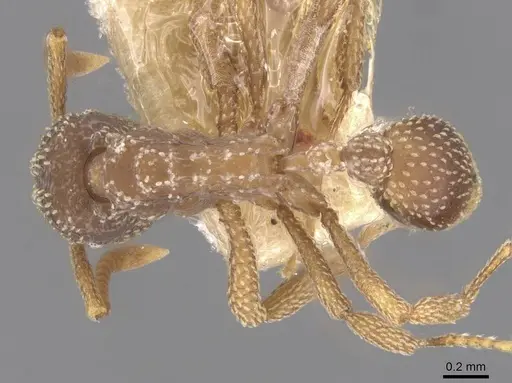
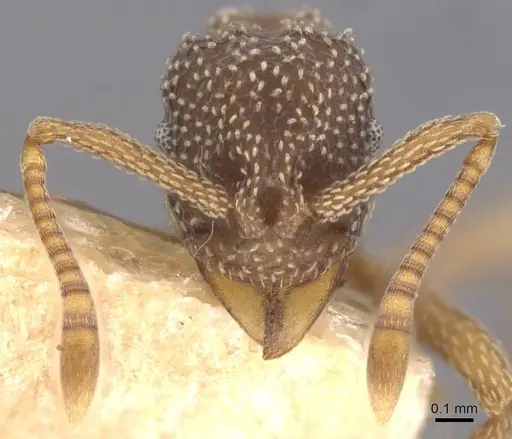
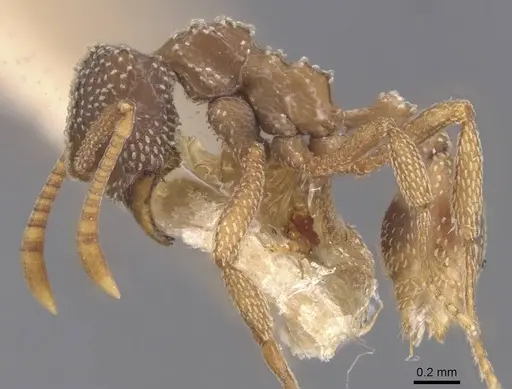
CBUMAGENT41969
View on AntWeb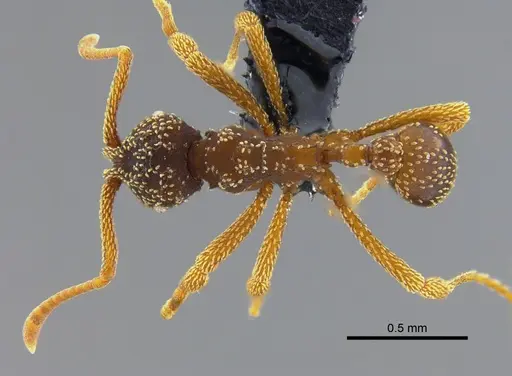
Literature
Loading distribution map...Loading products...