
Myrmicocrypta dilacerata
- Sci. Name
- Myrmicocrypta dilacerata
- Tribe
- Attini
- Subfamily
- Myrmicinae
- Author
- Forel, 1885
- Distribution
- Found in 1 countries
Introduction
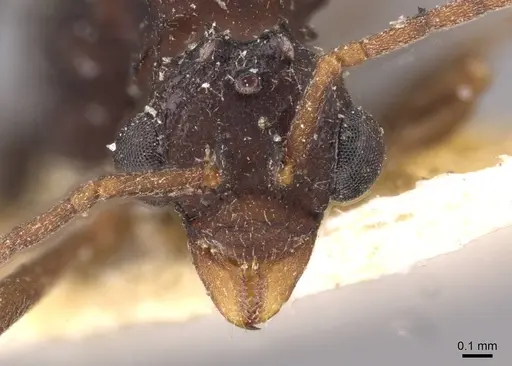
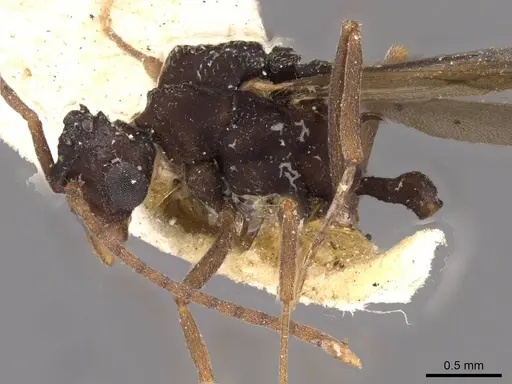
Myrmicocrypta dilacerata is a small fungus-growing ant in the tribe Attini . Workers are tiny, but size data is unavailable from current research . This species is recorded in Mexico, Belize, Costa Rica, Honduras, Nicaragua, and Panama , inhabiting tropical lowland forests . As a fungus-growing ant, it cultivates a specialized fungus garden for food, requiring plant material to feed the fungus .
Quick Summary
- Difficulty: Expert
- Origin & Habitat: Native to the Neotropical region, found in Mexico, Belize, Costa Rica, Honduras, Nicaragua, and Panama, typically in tropical lowland forests [2][3][1].
- Colony Type: Colony structure is unconfirmed for this species.
- Size & Growth:
- Queen: Size data unavailable, no total length measurements in research.
- Worker: Size data unavailable, no total length measurements in research.
- Colony: Unknown, maximum colony size not documented.
- Growth: Moderate, inferred from Attini patterns [1].
- Development: Estimated 6-10 weeks at optimal temperature based on Attini patterns [1]. (Development time inferred from typical Attini patterns, direct measurements not available for this species.)
- Antkeeping:
- Temperature: Keep warm at 24-28°C, inferred from tropical range [1].
- Humidity: Keep substrate consistently moist but not waterlogged, as high humidity is needed for fungus gardens [1].
- Diapause: No, this is a tropical species that does not require hibernation.
- Nesting: Use Y-tong (AAC) nests or plaster with moist substrate, providing space for fungus gardens [1].
- Behavior: This species has a functional sting but is less aggressive than other ants. Workers are small and slow-moving. Escape risk is moderate due to tiny size, use standard barrier methods.
- Common Issues: specialized diet requirement, they cannot survive on standard ant foods and need a fungal culture to be established., humidity control is critical, too dry and the fungus dies, killing the colony., slow growth means colonies take a long time to establish, requiring patience., very limited availability, this species is rarely kept in captivity and not commercially available., temperature sensitivity, drops below 20°C can be fatal to the fungus and the colony.
Understanding Fungus-Growing Ants
Myrmicocrypta dilacerata belongs to the tribe Attini, the fungus-growing ants [1]. These ants cultivate fungus gardens inside their nests, feeding the fungus plant material and consuming the fungal structures [1]. This makes them different from typical ants, as they cannot eat standard foods like sugar water or prey [1].
Feeding and Diet - The Fungus Garden
You must provide plant material for the ants to cultivate their fungus. Offer small pieces of fresh leaves or flower petals, which the ants will use to feed their garden [1]. Success depends on maintaining a healthy fungus culture, which is difficult in captivity [1].
Temperature and Humidity
As a tropical species, keep the nest at 24-28°C with high humidity [1]. Use a heating cable for a gentle gradient, and keep the substrate moist but not waterlogged [1].
Housing and Nest Setup
Use Y-tong (AAC) nests or plaster with moist substrate, providing chambers for the fungus garden [1]. Ensure escape prevention for tiny workers, and include an outworld for adding plant material [1].
Colony Development and Growth
Colony growth is slow, with first workers raised by the queen alone [1]. Expect gradual expansion over months to years [1].
Frequently Asked Questions
Can I keep Myrmicocrypta dilacerata in a test tube?
A test tube setup is not recommended. They need a nest with space for their fungus garden, such as Y-tong or plaster nests [1].
What do Myrmicocrypta dilacerata ants eat?
They eat fungal structures from their garden, which they cultivate using plant material like leaves [1].
How long until first workers in Myrmicocrypta dilacerata?
Estimated 6-10 weeks from egg to worker at optimal temperature, based on Attini patterns [1].
Are Myrmicocrypta dilacerata good for beginners?
No, this species is rated Expert difficulty due to specialized fungus-culturing needs [1].
Do Myrmicocrypta dilacerata need hibernation?
No, as a tropical species, it does not require hibernation [1].
How big do Myrmicocrypta dilacerata colonies get?
Maximum colony size is unknown [1].
Can I keep multiple queens together?
Colony structure is unconfirmed, so combining queens is not recommended [1].
Why is my Myrmicocrypta dilacerata colony dying?
Most likely due to fungus garden decline from incorrect humidity or temperature [1].
Where can I get Myrmicocrypta dilacerata?
This species is rarely available in the antkeeping hobby and not commercially bred [1].
Report an Issue
The current care sheet is based fully on literature. See inconsistencies, or something that's incorrect? Please , it will be resolved after review from an admin. Contributing to the blogs tab also helps providing information, to make us be able to further improve the caresheets. Thank you for your support!
References

This caresheet is licensed under CC BY-SA 4.0 .
Community Blogs
CASENT0281771
View on AntWeb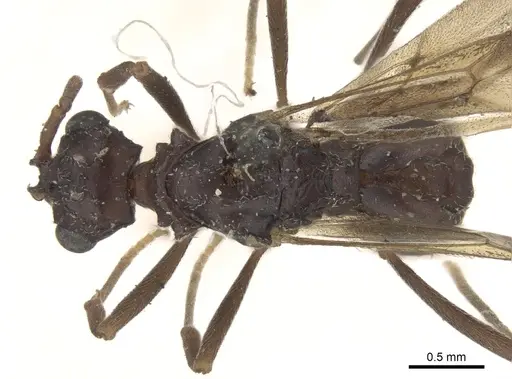
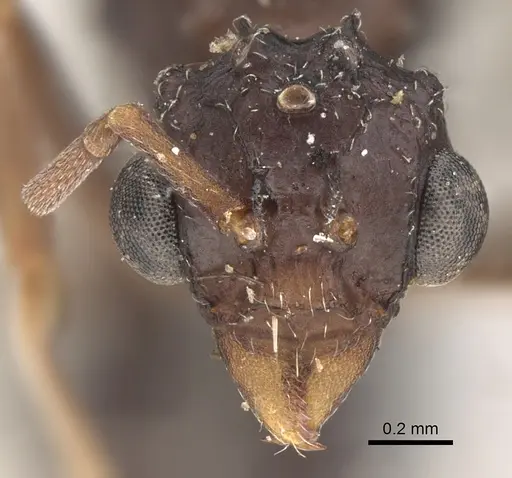
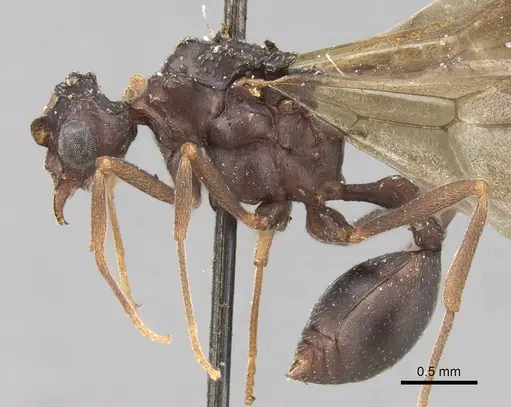
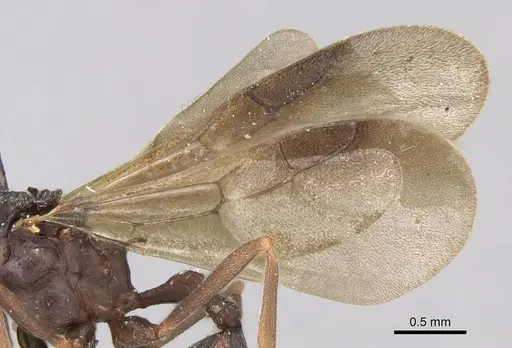
CASENT0909359
View on AntWeb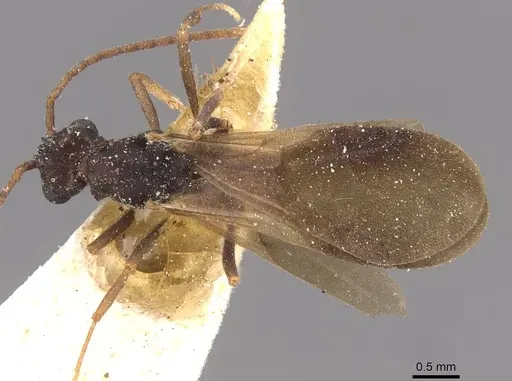
Literature
Loading distribution map...Loading products...