
Red Droptail ant
Myrmicaria baumi
- Sci. Name
- Myrmicaria baumi
- Tribe
- Solenopsidini
- Subfamily
- Myrmicinae
- Author
- Forel, 1901
- Common Name
- Red Droptail ant
- Distribution
- Found in 4 countries
Introduction
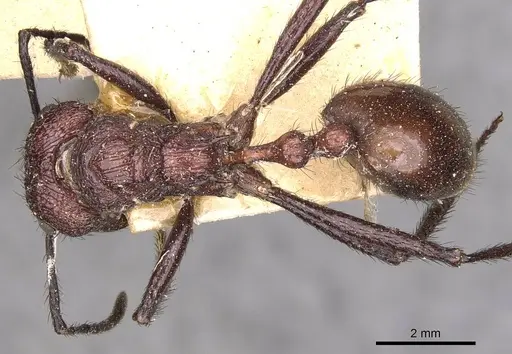
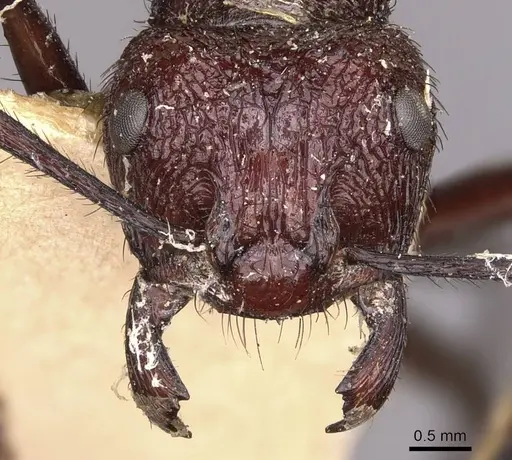
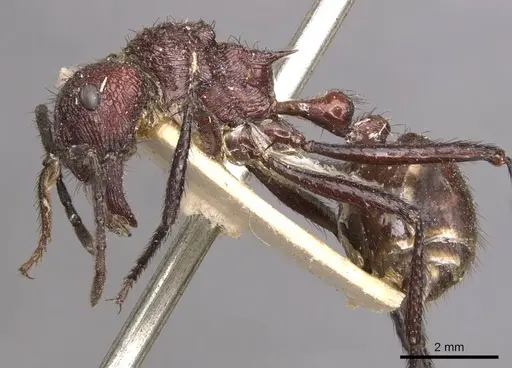
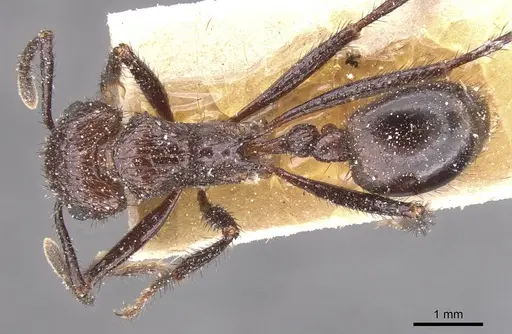
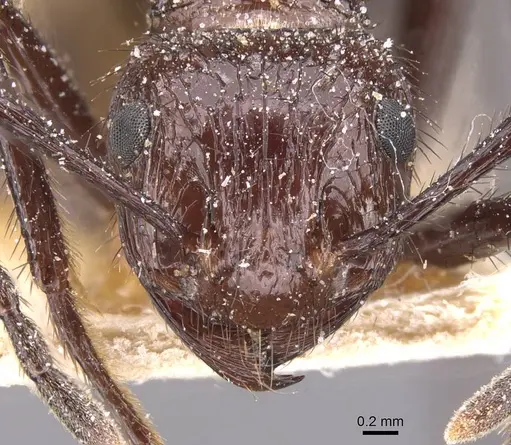
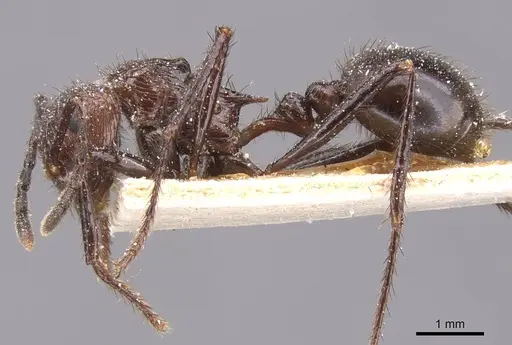
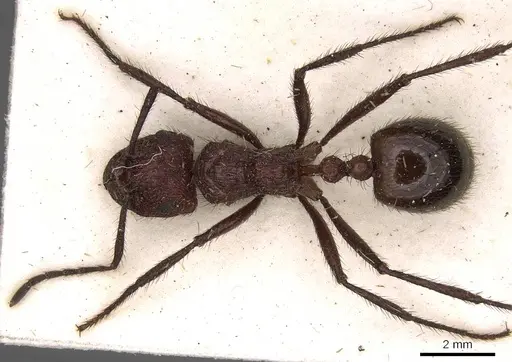
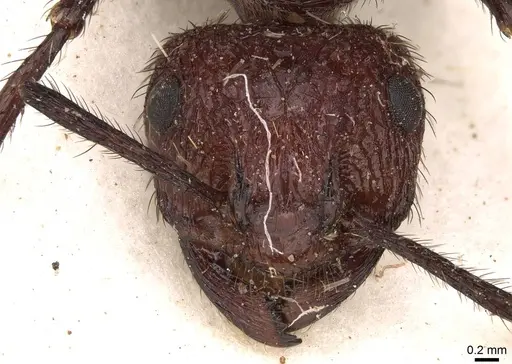
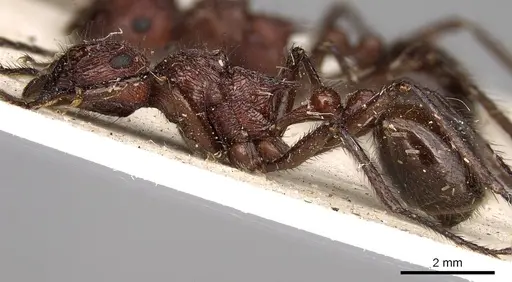
Myrmicaria baumi are dark reddish-brown ants with distinctive ridged sculpturing across their bodies . Workers have a net-like texture on the head with lengthwise ridges only between the frontal carinae, while the top of the pronotum shows crosswise ridges and the propodeum has lengthwise ridges . They inhabit the Afrotropical region, with confirmed records from Angola, Botswana, Ivory Coast, Namibia, and Sierra Leone . This species belongs to the tribe Solenopsidini, known for stinging ants that inject venom composed of piperidine alkaloids. Despite being described by Forel in 1901,their biology remains largely unstudied.
Quick Summary
- Difficulty: Expert
- Origin & Habitat: Afrotropical region (Angola, Botswana, Ivory Coast, Namibia, Sierra Leone) [2]. Likely tropical savanna or woodland based on collection localities.
- Colony Type: Unknown, single or multiple queen systems have not been documented.
- Size & Growth:
- Queen: Size data unavailable, inferred from Myrmicaria genus to be approximately 5-7 mm.
- Worker: Size data unavailable, inferred from Myrmicaria genus to be approximately 3-5 mm.
- Colony: Unknown.
- Growth: Unknown.
- Development: Estimated 6-10 weeks at 25-28°C based on typical tropical Myrmicinae patterns, but not directly studied for this species. (Development speed is estimated from related tropical ants. Actual timing may vary significantly.)
- Antkeeping:
- Temperature: Estimated 24-28°C based on Afrotropical distribution. Start at 25°C and adjust based on colony activity.
- Humidity: Estimated moderate to high. Keep nest substrate moist but not waterlogged, with good ventilation to prevent mold.
- Diapause: No, tropical species do not require winter rest [2].
- Nesting: Unknown in captivity. Natural history suggests soil or leaf litter nesting. A naturalistic setup with mixed substrates may work best.
- Behavior: Unknown. Estimated generalist foragers based on genus patterns. Escape risk depends on worker size (estimated small to medium), so use appropriate barriers.
- Common Issues: lack of biological data makes care unpredictable, you will be working from general genus patterns rather than confirmed facts., rarity in the trade means queens are hard to obtain and may be misidentified., tropical humidity requirements can lead to mold if ventilation is poor., unknown founding type means you may need to experiment with whether the queen seals herself in or needs to forage.
Distribution and Identification
Myrmicaria baumi occurs across West and Southern Africa, specifically recorded in Angola, Botswana, Ivory Coast, Namibia, and Sierra Leone [2]. They belong to the genus Myrmicaria within the tribe Solenopsidini. Workers can be recognized by their dark reddish-brown coloration and distinctive body sculpturing [1]. The head shows strong net-like texturing with lengthwise ridges only present between the frontal carinae, while the sides and back of the head lack these ridges [1]. The pronotum carries crosswise ridges, the mesonotum has lengthwise ridges but lacks a central raised ridge, and the propodeum has lengthwise ridges [1]. These features help distinguish them from similar African Myrmicaria species.
Defense Mechanism
Myrmicaria baumi belongs to the tribe Solenopsidini, which is known for ants that possess a functional sting. These ants inject a potent venom composed mostly of piperidine alkaloids, used for hunting prey and defending the colony. While specific venom composition has not been studied in M. baumi, the genus Myrmicaria is characterized by stinging behavior. Handle with care and assume they can defend themselves.
Natural History and Biology
Very little is known about the natural history of Myrmicaria baumi. Collection records suggest they inhabit tropical savanna and woodland environments across their range [2]. Like most Myrmicaria, they likely nest in soil or leaf litter, but specific nesting habits have not been documented. Their diet in the wild is unknown, though related species are generalist predators and scavengers. Colony size, queen number, and reproductive behavior remain unstudied. This lack of basic biological data makes them a challenging species for captive rearing, as keepers must extrapolate from general Myrmicinae patterns rather than confirmed species-specific care.
Captive Care Guidelines
Keeping Myrmicaria baumi requires flexibility and observation, as no standardized care protocol exists. Based on their tropical origins, maintain temperatures around 25-28°C with a gentle heat gradient. Humidity should be moderate to high, keep the nest substrate damp but not soaked, and ensure good airflow to prevent mold. For founding, start with a standard test tube setup: a water reservoir blocked with cotton, providing a humid chamber. Whether the queen is claustral (seals herself in and lives on fat reserves) or semi-claustral (needs to forage) is unknown, so offer small amounts of protein and sugar water weekly during founding, removing uneaten food promptly. Once workers arrive, feed small live prey such as fruit flies, springtails, or pinhead crickets, plus sugar water or honey. A naturalistic setup with soil, leaf litter, and flat stones may encourage natural nesting behavior better than artificial nests.
Challenges for Antkeepers
The primary challenge with Myrmicaria baumi is the complete absence of confirmed care information. You will be working from educated guesses based on genus patterns and distribution data. This makes colony failure likely if conditions are not guessed correctly. The species is rarely available in the ant trade, so obtaining a queen often requires personal collection from Africa or finding specialized dealers, with high risk of misidentification. Their small size means escape prevention must be excellent, use fine mesh and Fluon barriers. Without knowing their natural diet or colony structure, you must carefully observe and adjust. Mold is a constant risk in tropical setups, so balance humidity with ventilation. Finally, without confirmed development times, patience is essential, colonies may grow slowly or fail to develop, and distinguishing between normal delays and problems is difficult.
Frequently Asked Questions
Can I keep Myrmicaria baumi in a test tube?
Likely yes, but this is unconfirmed. Start with a standard test tube setup with a water reservoir and cotton plug, kept warm at 25-28°C. Since their founding type is unknown, offer small amounts of food weekly in case the queen needs to forage.
How long until Myrmicaria baumi get their first workers?
Unknown. Based on typical tropical Myrmicinae patterns, expect roughly 6-10 weeks at 25-28°C, but this is not confirmed for this species. Development may be faster or slower depending on temperature and individual variation.
Do Myrmicaria baumi need hibernation?
No. They come from tropical Africa and do not require a winter rest period or diapause [2]. Keep them warm year-round.
What do Myrmicaria baumi eat?
Unknown in detail. Likely small insects and sugar sources based on genus Myrmicaria. Offer fruit flies, springtails, and honey water or sugar water. Remove uneaten food to prevent mold.
Are Myrmicaria baumi good for beginners?
No. The lack of care information, rarity in the trade, and unknown biology make them suitable only for experienced keepers willing to experiment and potentially lose the colony while learning their requirements.
How big do Myrmicaria baumi colonies get?
Unknown. Colony size has not been documented in scientific studies. Based on related Myrmicaria species, they may reach several hundred workers, but this is speculative.
Can I keep multiple Myrmicaria baumi queens together?
Not recommended. Whether they are monogyne (single queen) or polygyne (multiple queens) is unknown. Combining unrelated queens risks fighting and death. Start with one queen until the species' social structure is confirmed.
Why are my Myrmicaria baumi dying?
Common issues include incorrect humidity (too wet causes mold, too dry desiccates), temperature too low (they need tropical warmth), or stress from disturbance. With no confirmed care data, mortality is high. Ensure excellent ventilation, stable warmth, and minimal disturbance.
Where can I buy Myrmicaria baumi?
They are extremely rare in captivity. You may need to collect them from their native range (West/Southern Africa) or find specialized dealers who focus on Afrotropical ants. Verify identification carefully, as Myrmicaria species can look similar.
Report an Issue
The current care sheet is based fully on literature. See inconsistencies, or something that's incorrect? Please , it will be resolved after review from an admin. Contributing to the blogs tab also helps providing information, to make us be able to further improve the caresheets. Thank you for your support!
References

This caresheet is licensed under CC BY-SA 4.0 .
Community Blogs
Literature
Loading distribution map...Loading products...