
Myrmicaria arachnoides
- Sci. Name
- Myrmicaria arachnoides
- Tribe
- Solenopsidini
- Subfamily
- Myrmicinae
- Author
- Smith, 1857
- Distribution
- Found in 5 countries
Introduction
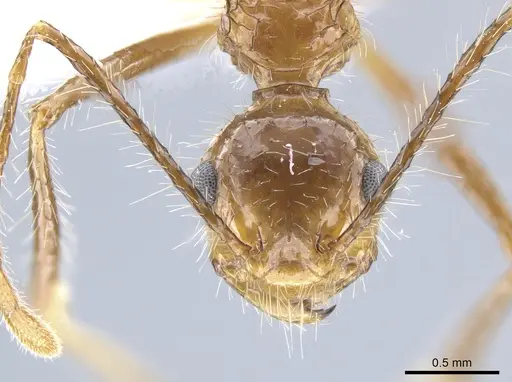
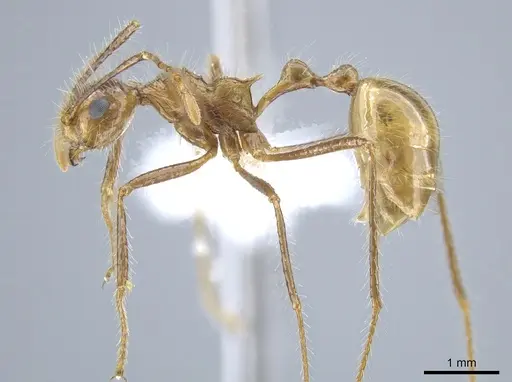
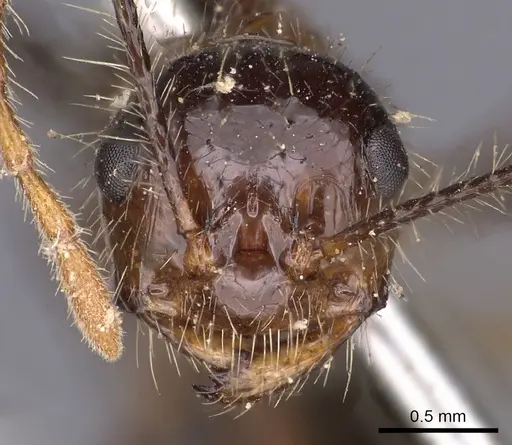
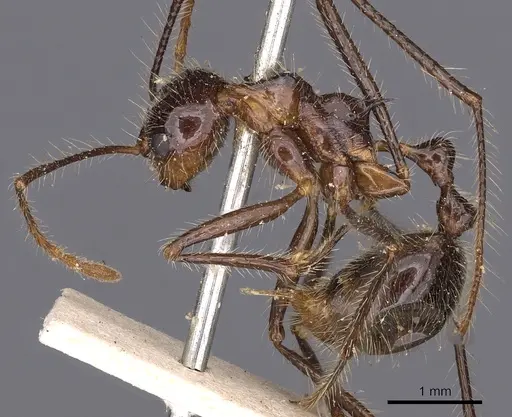
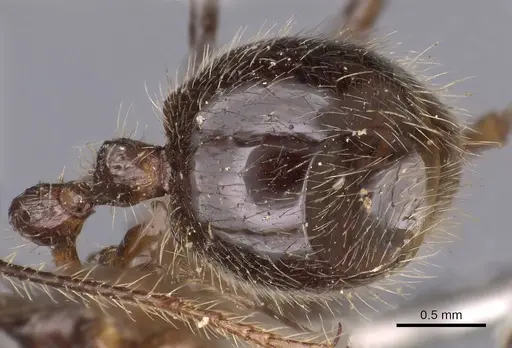
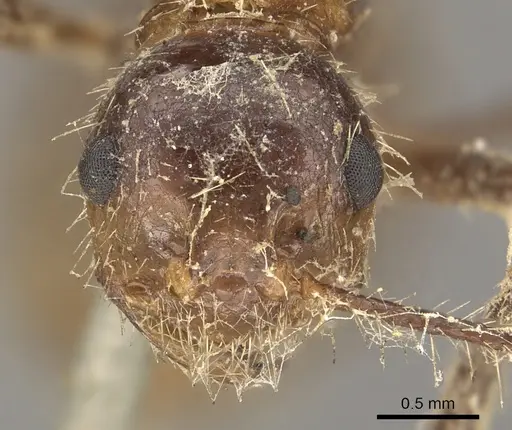
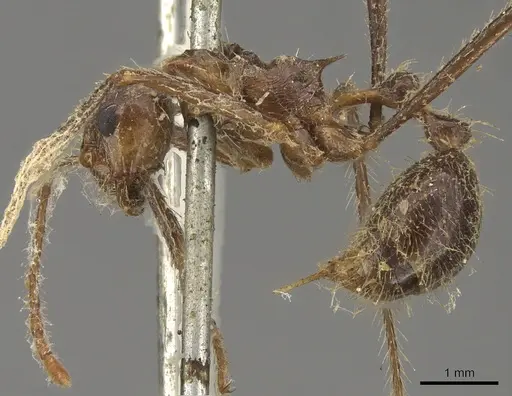
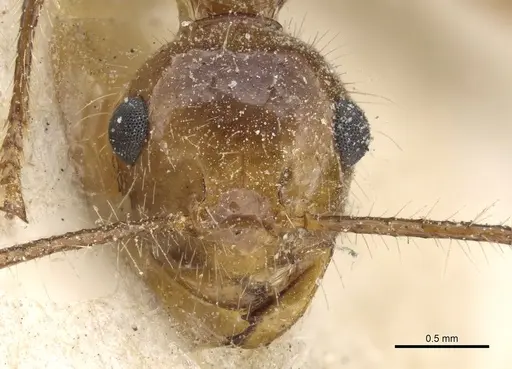
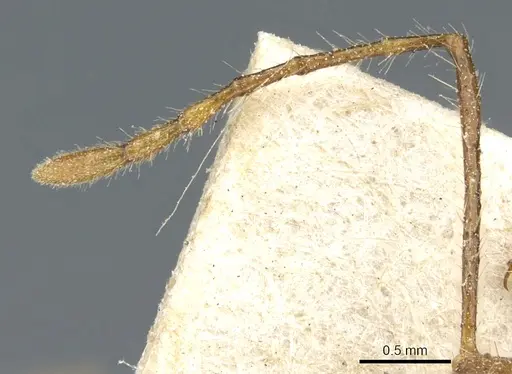
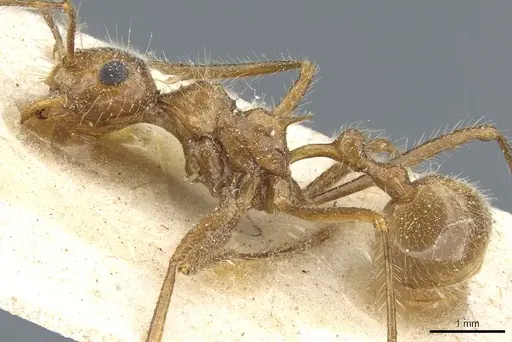
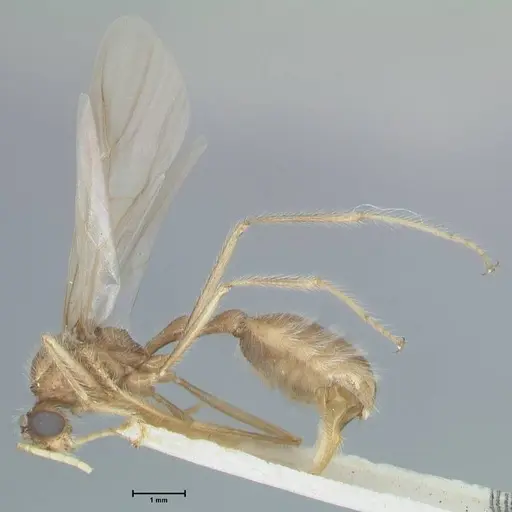
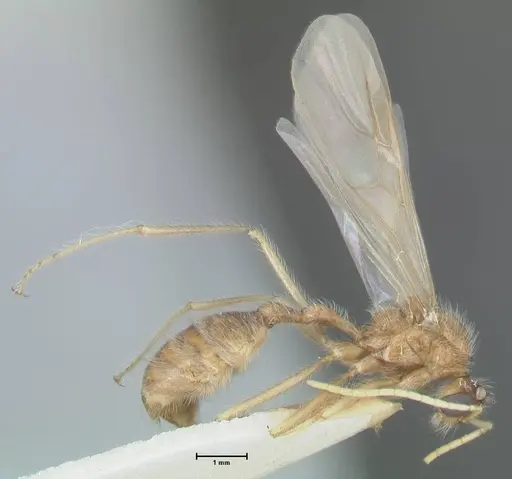
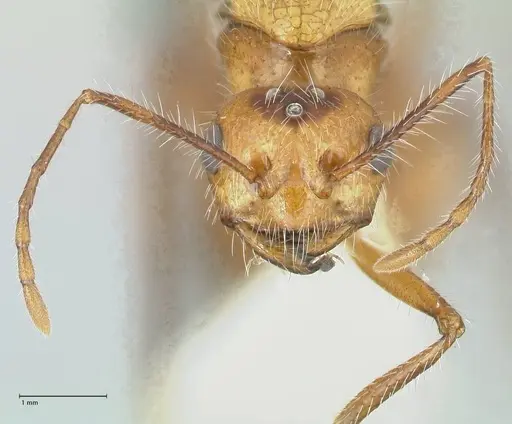
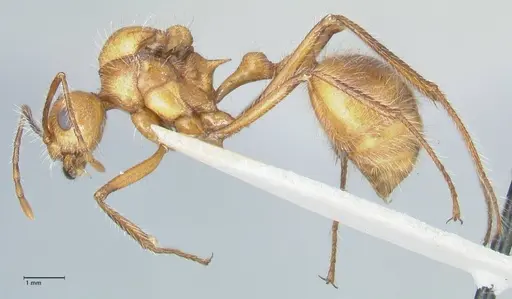
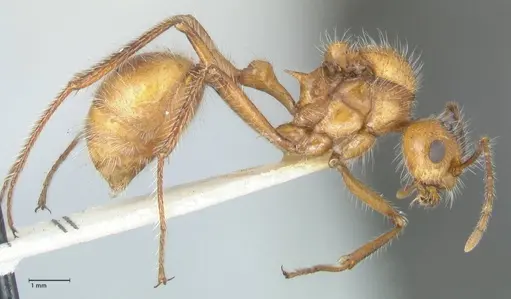
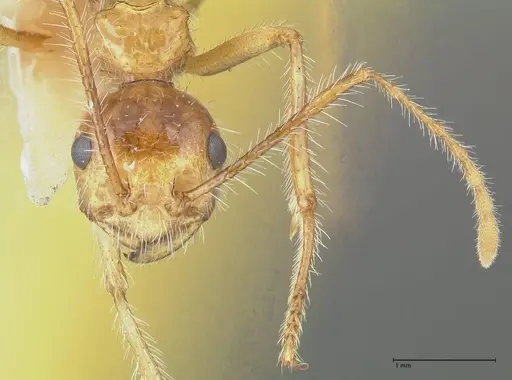
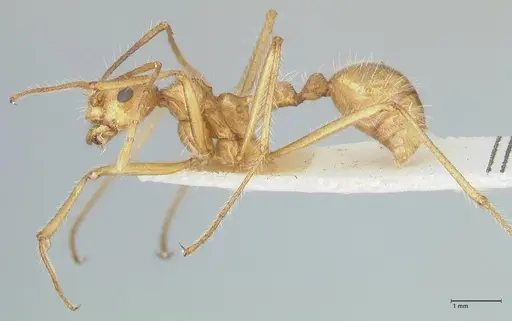
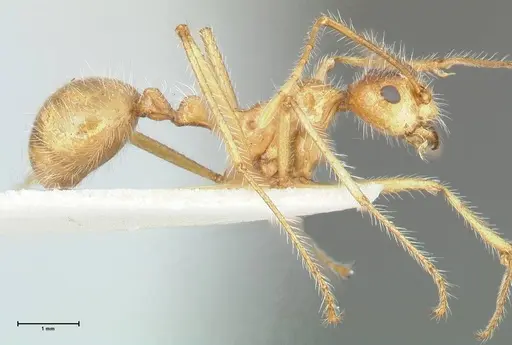
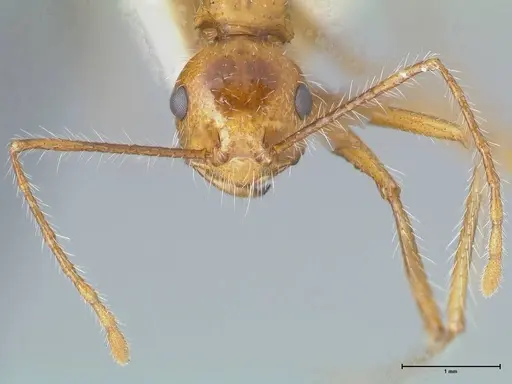
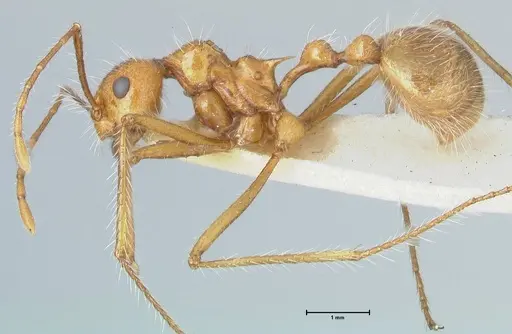
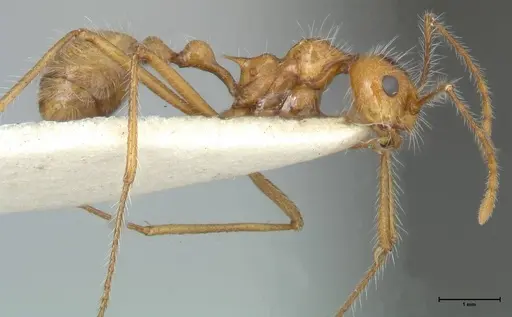
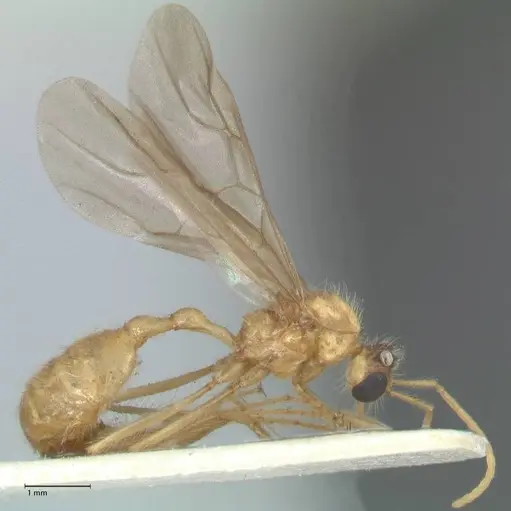
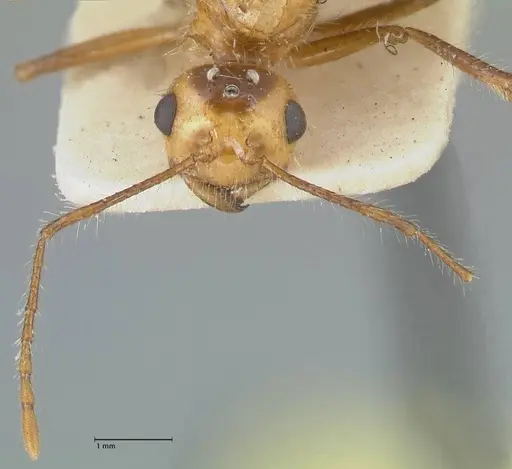
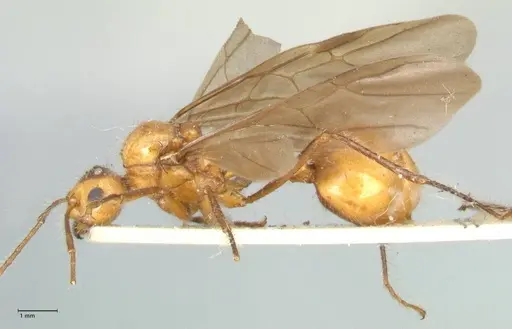
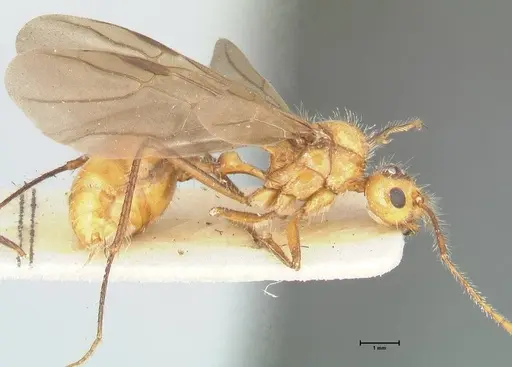
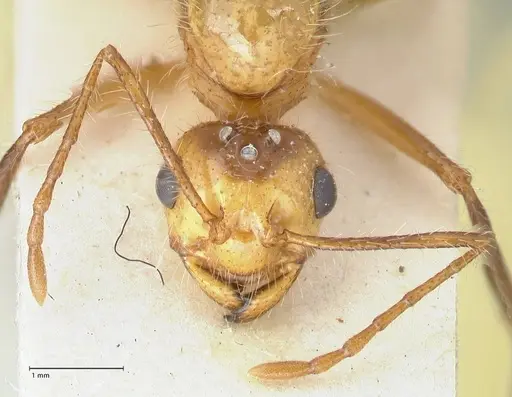
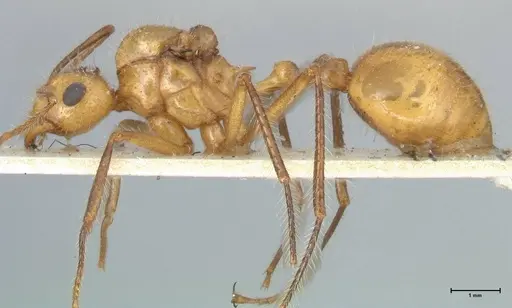
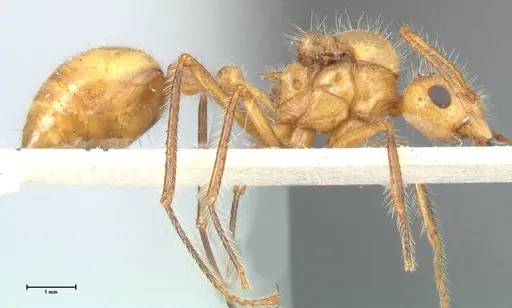
Myrmicaria arachnoides is a medium-sized tropical ant native to Southeast Asia, found across Borneo, Brunei, Java, Peninsular Malaysia, Singapore, and Burma . Workers have a distinctive dome-shaped promesonotum (the middle body section), bright yellow to almost white hairs, and a smooth, shiny body . Workers are approximately 5-6 mm (inferred from related species, no direct body length data available), while queens can reach 6-7 mm . This species is notable for its arboreal lifestyle – unlike most ants that nest in soil or rotting wood, it builds distinctive carton nests suspended from the underside of plant leaves, often on banana plants . The colonies are polydomous, meaning they maintain several satellite nests across different leaves of the same plant .
Quick Summary
- Difficulty: Medium
- Origin & Habitat: Native to Southeast Asia – Borneo, Brunei, Java, Peninsular Malaysia, Singapore, Indonesia, and Burma [1][2]. Found in lowland dipterocarp forests and cultivated areas, typically in the canopy [6][7].
- Colony Type: Polygynous (multiple queens) and polydomous (multiple nest sites). Colonies have multiple chambers across several leaves on one plant [5][3].
- Size & Growth:
- Queen: 6-7 mm [4]
- Worker: Approximately 5-6 mm (no direct measurement, inferred from related Myrmicaria species)
- Colony: Probably several hundred workers – estimated based on polydomous colony structure
- Growth: Moderate
- Development: 6-8 weeks (Estimated based on typical Myrmicinae development at tropical temperatures (24-28°C). Not directly studied for this species.)
- Antkeeping:
- Temperature: Keep at 24-28°C. This tropical species needs consistent warmth. Avoid temperatures below 22°C. A small heating cable on one side of the nest can create a safe temperature gradient.
- Humidity: High humidity is essential – they naturally live in rainforest environments. Keep the nest substrate consistently moist but not waterlogged. Misting every few days helps maintain humidity, especially in test tube setups. Their arboreal nests require good moisture retention [3][5].
- Diapause: No – this tropical species does not hibernate. Maintain warm conditions year-round.
- Nesting: This species requires arboreal-style housing – they build carton nests on leaves in the wild. A naturalistic setup with cork bark, dried leaves, or plant material works well. Y-tong (AAC) or plaster nests with high humidity are also suitable. Avoid soil-based formicariums. Provide enclosed spaces that mimic leaf-underside nests, and give vertical space for multiple chambers [3][5].
- Behavior: Workers are active both day and night (diurnal and nocturnal). They are dedicated trophobiont-tenders, meaning they farm honeydew from aphids and scale insects – you'll often see them clustered around sugar sources [8]. They form dense worker aggregations when feeding. Workers are not particularly aggressive but will defend their nest. Escape risk is moderate – they are active foragers but not tiny enough to squeeze through standard barriers. However, their arboreal nature means they explore vertically, so ensure your setup has secure lids [8].
- Common Issues: humidity collapse – dry conditions quickly stress these tropical ants and can lead to colony decline, wrong nest type – soil-based nests don't match their arboreal nature and cause stress, temperature drops – being tropical, they are sensitive to temperatures below 22°C, overfeeding mold – their love of sugary liquids can cause mold if food isn't cleaned regularly
Nest Preferences and Housing
Myrmicaria arachnoides builds carton nests on the underside of leaves in the wild, an unusual behavior among Myrmicinae ants [3]. In captivity, you need to think differently about housing. Naturalistic setups with cork bark, dried leaves, or similar plant materials work best – give them something they can build onto. Y-tong (AAC) nests or plaster nests with high humidity also work, especially if you add some plant fiber material for them to interact with. The key is providing enclosed spaces that mimic their leaf-underside nests rather than open soil chambers [3][5]. They maintain multiple chambers in their nests, so provide vertical space to let them build their colony structure.
Feeding and Diet
This species is a dedicated trophobiont-tender, meaning it specializes in collecting honeydew from aphids, scale insects, and other sap-sucking insects [8]. In captivity, offer sugar water, honey water, or diluted maple syrup as a constant food source – they will readily form dense aggregations around these. Workers have been observed licking honeydew in the wild [5]. For protein, they accept typical ant prey like small crickets, mealworms, and fruit flies. Their workers carry smaller loads than related species, so offer appropriately-sized prey items [8]. They are active day and night, so sugar sources should be available around the clock.
Temperature and Seasonal Care
As a tropical species from Southeast Asian rainforests, Myrmicaria arachnoides needs warm temperatures year-round. Keep the nest area at 24-28°C. They can tolerate slightly higher temperatures but are sensitive to cold – avoid temperatures below 22°C. A small heating cable on one side of the nest creates a gentle temperature gradient. Unlike temperate ants, they do not enter diapause or hibernation. Maintain consistent warmth throughout the year. Room temperature is often suitable in heated homes, but monitor during winter if your space cools down.
Colony Structure and Behavior
This species has an unusual social structure – it is both polygynous (multiple queens) and polydomous (multiple nest sites) [5]. A single colony spreads across several satellite nests built on different leaves of the same plant. Each nest has multiple chambers with an outer protective sheet that can be removed [5]. Queens are larger than workers (6-7 mm vs about 5-6 mm) and can coexist peacefully in the same colony [4][5]. Workers are not especially aggressive but will defend their nest if threatened. Their distinctive bright yellow-white hairs and smooth, shiny body make them easy to identify [3]. They are active both day and night, and form dense clusters when feeding on honeydew [8].
Growth and Development
The development timeline for this species has not been directly studied. Based on typical Myrmicinae development at tropical temperatures (24-28°C), expect eggs to become workers in about 6-8 weeks. Larvae are mostly smooth with few hairs on the dorsal surface [3]. Queens have well-defined mandibulary teeth (four prominent teeth) [3]. Thanks to multiple queens, colonies can grow moderately quickly once established, as several reproductives contribute eggs.
Frequently Asked Questions
Can I keep Myrmicaria arachnoides in a test tube?
Test tubes can work for founding colonies, but this species prefers arboreal housing. A test tube with a water reservoir is fine for a single queen or small colony, but consider adding cork bark or plant material as they establish. For established colonies, a naturalistic setup or Y-tong nest works better than a standard soil-based formicarium [3].
What do Myrmicaria arachnoides eat?
They are specialized trophobiont-tenders that love honeydew. Offer sugar water, honey water, or maple syrup constantly. For protein, they accept small insects like fruit flies, pinhead crickets, and small mealworms. They have smaller feeding loads than some related species, so offer appropriately-sized portions [8].
How long until first workers appear in Myrmicaria arachnoides?
Expect approximately 6-8 weeks from egg to first worker at optimal tropical temperatures (24-28°C). This is an estimate based on typical Myrmicinae development, as this species' development has not been directly studied.
Do Myrmicaria arachnoides need hibernation?
No. This is a tropical species from Southeast Asia and does not hibernate. Keep them warm year-round at 24-28°C. They are active throughout the year in their native habitat.
Are Myrmicaria arachnoides good for beginners?
This species is rated as medium difficulty. While not the hardest ant to keep, their arboreal nesting preferences and need for high humidity require more specialized setup knowledge than typical soil-nesting ants. They are rewarding for intermediate antkeepers willing to provide the right conditions.
How big do Myrmicaria arachnoides colonies get?
Colonies are moderately sized. The polygynous (multiple queen) and polydomous (multiple nest sites) structure supports several hundred workers. They spread across several satellite nests on different leaves in the wild [5].
Can I keep multiple Myrmicaria arachnoides queens together?
Yes – this species is naturally polygynous, meaning colonies naturally have multiple queens. Unlike many ants where multiple queens fight, M. arachnoides queens coexist in the same colony. You can introduce multiple foundress queens to start a colony together [5].
What is the best nest type for Myrmicaria arachnoides?
They require arboreal-style housing – naturalistic setups with cork bark, dried leaves, or plant material work best. Y-tong (AAC) nests or plaster nests with high humidity are also suitable. Avoid standard soil-based formicariums as they don't match this species' natural leaf-nesting behavior [3][5].
Why is my Myrmicaria arachnoides colony declining?
The most common causes are: low humidity (they need consistently moist conditions), temperatures below 22°C (they are cold-sensitive), or incorrect nest type (they need enclosed arboreal spaces, not open soil). Check these parameters first. Also ensure sugar sources are fresh and protein is being offered.
Report an Issue
The current care sheet is based fully on literature. See inconsistencies, or something that's incorrect? Please , it will be resolved after review from an admin. Contributing to the blogs tab also helps providing information, to make us be able to further improve the caresheets. Thank you for your support!
References

This caresheet is licensed under CC BY-SA 4.0 .
Community Blogs
CASENT0650832
View on AntWeb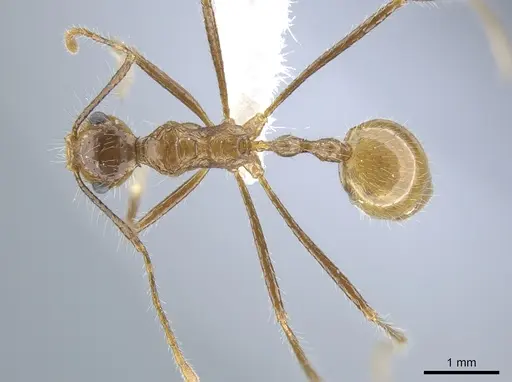
CASENT0900500
View on AntWeb
CASENT0901425
View on AntWeb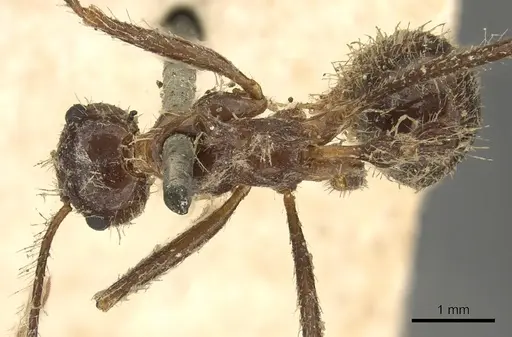
CASENT0904467
View on AntWeb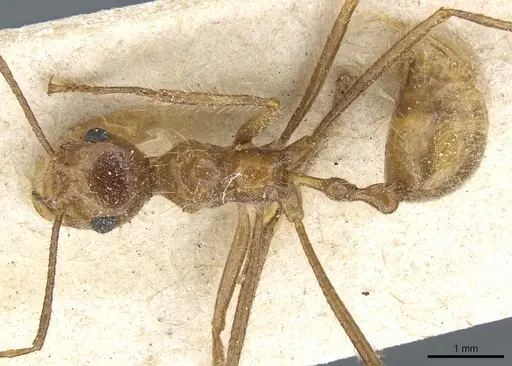
FOCOL1598
View on AntWeb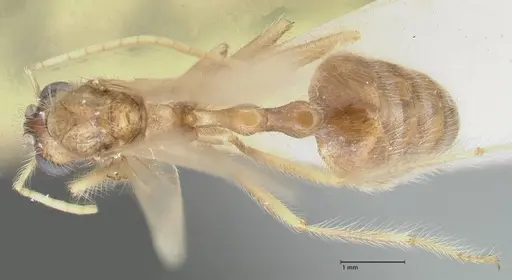
FOCOL1599
View on AntWeb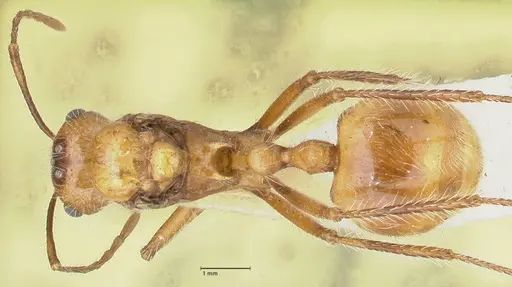
FOCOL1600
View on AntWeb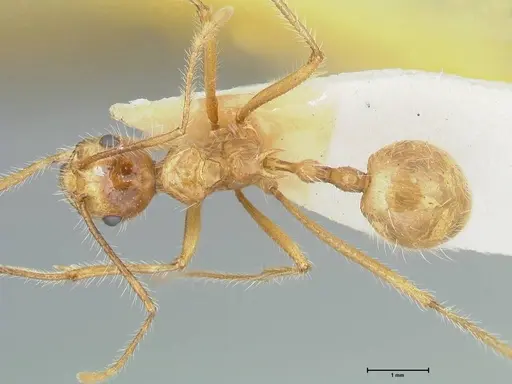
FOCOL1601
View on AntWeb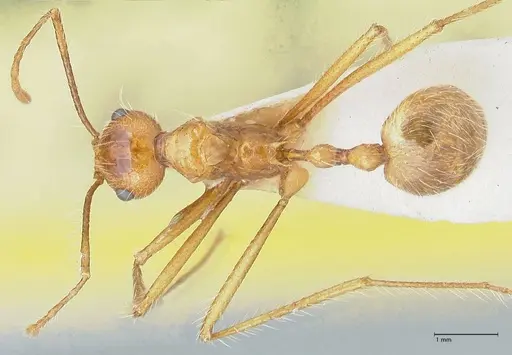
FOCOL1602
View on AntWeb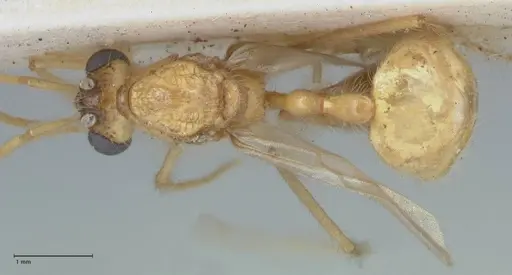
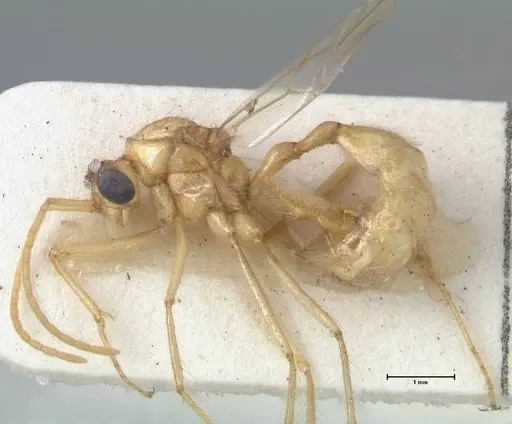
FOCOL1603
View on AntWeb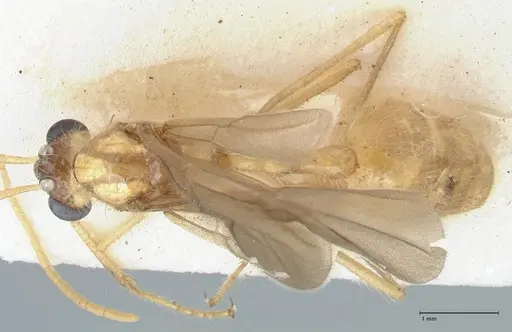
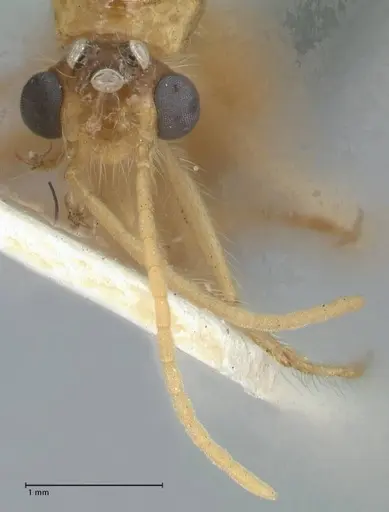
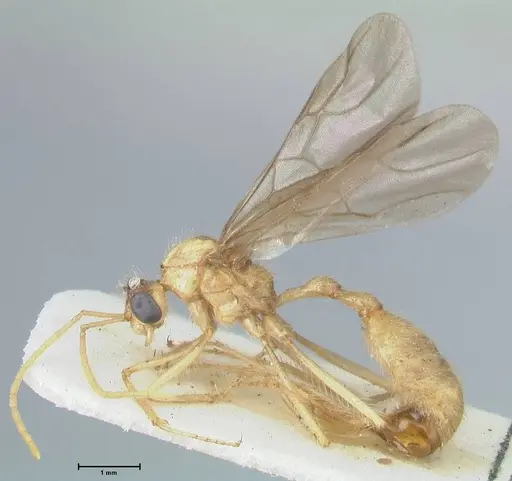
FOCOL1604
View on AntWeb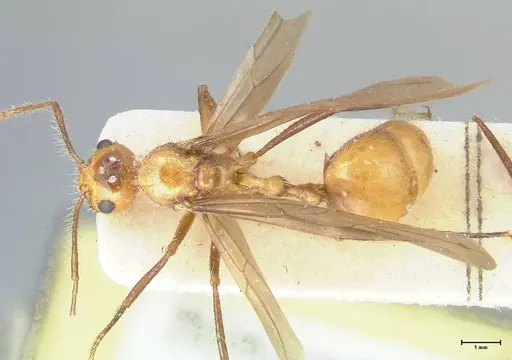
FOCOL1605
View on AntWeb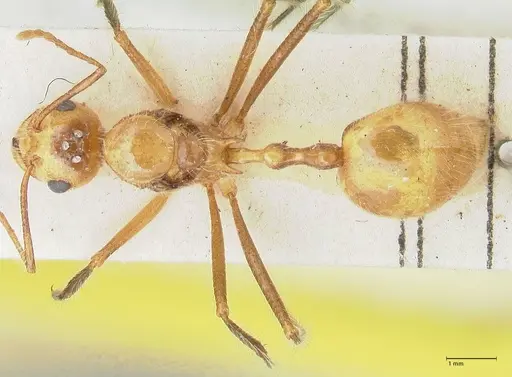
Literature
Loading distribution map...Loading products...