
Myrmica wheelerorum
- Sci. Name
- Myrmica wheelerorum
- Tribe
- Myrmicini
- Subfamily
- Myrmicinae
- Author
- Francoeur, 2007
- Distribution
- Found in 1 countries
Introduction
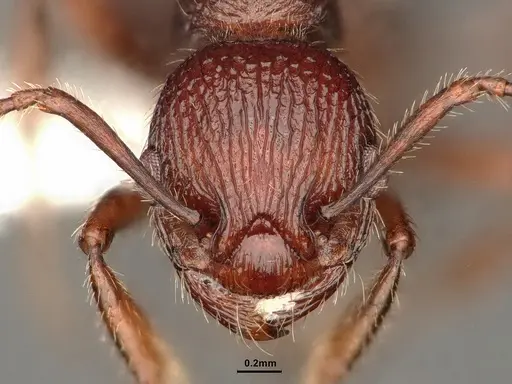
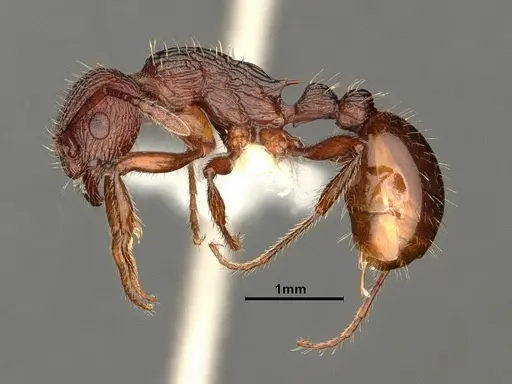
Myrmica wheelerorum is a small ant native to the western United States, known only from Nevada and Colorado at elevations around 1680m . What makes this ant immediately recognizable is its striking yellowish-red coloration - a rare trait in the typically dark Myrmica genus . Workers and queens are similar in size to other Myrmica species, though exact measurements for this species are not available. The species was formally described in 2007 by Francoeur, who determined that specimens collected by the Wheelers in 1971 and previously misidentified as Myrmica tahoensis actually represented a new species . This ant is closely related to Myrmica crassirugis but can be distinguished by its lighter color and more delicate sculpture .
Quick Summary
- Difficulty: Medium
- Origin & Habitat: Native to the western United States, found only in Nevada (Washoe County, at 4 miles NNE of Vya at 5600 feet elevation) and Colorado (Florissant) [1][2]. The Nevada habitat is in the upper Sonoran zone, a transition area between desert and mountain ecosystems at 1680m altitude [2][4]. This is a cooler, mountainous habitat with seasonal weather patterns and cold winters.
- Colony Type: Colony structure is unconfirmed. Based on typical Myrmica patterns, the species is likely monogyne (single queen), but this has not been documented for this specific species.
- Size & Growth:
- Queen: ~5-7mm, inferred from Myrmica genus patterns [1][2]
- Worker: ~4-6mm, inferred from Myrmica genus patterns [1][2]
- Colony: Unknown, no data available for this species
- Growth: Moderate, typical Myrmica development
- Development: 6-10 weeks (estimated from related Myrmica species) (Development follows typical Myrmica patterns. First workers (nanitics) typically emerge smaller than normal workers.)
- Antkeeping:
- Temperature: Keep at 18-22°C. This is a mountain species from high altitude, so they prefer cooler conditions than many ants. Avoid temperatures above 25°C.
- Humidity: Moderate humidity around 50-60%. Keep the nest substrate lightly moist but allow some drying between waterings. The arid Nevada climate suggests they tolerate drier conditions.
- Diapause: Yes, required. As a mountain species from 1680m elevation, they need a winter rest period of 3-4 months at temperatures around 5-10°C. This mimics their natural seasonal cycle.
- Nesting: Use standard Myrmica setups. Test tubes work well for founding colonies. For established colonies, Y-tong or plaster nests provide appropriate humidity control. They likely nest in soil in the wild.
- Behavior: Generally calm and non-aggressive for a Myrmica. Workers are active foragers that search for both sugar sources and small prey. They have a typical Myrmica sting, present but small and rarely painful to humans. Escape risk is moderate, they're not particularly small but can climb smooth surfaces.
- Common Issues: limited availability, this is a rarely kept species with few breeders, slow colony growth may frustrate beginners expecting fast development, hibernation is essential, colonies that don't cool down will fail to thrive, escape prevention needed, workers can climb smooth surfaces despite moderate size, wild-caught colonies may have parasites that are difficult to treat
Appearance and Identification
Myrmica wheelerorum is instantly recognizable by its unusual yellowish-red coloration, a striking feature that sets it apart from most other Myrmica species which are typically dark brown or reddish-brown [3]. Workers and queens are similar in size to other Myrmica species in the region. The head is typically large and rounded, with big oval eyes centered on the midline [4][1]. The propodeal spines are rather short and diverging, projecting at about 45 degrees to the horizontal [5]. The antennae have a characteristic right-angle bend with a spoon-like dorsal lamina surrounding the bend [5]. Queens possess three ocelli (simple eyes) on their head and are slightly larger than workers. This species is closely related to Myrmica crassirugis but can be distinguished by its lighter color, more delicate and reticulated sculpture, and more developed scape lamina . The male of this species remains unknown [4][6].
Natural History and Distribution
This ant is known only from two locations in the western United States: Nevada (type locality at 4 miles NNE of Vya, Washoe County at 5600 feet elevation) and Colorado (Florissant) [1]. The Nevada collection site sits at 1680m altitude in the upper Sonoran zone, a transition area between desert and mountain ecosystems [2][4]. This suggests the species prefers cooler, more temperate conditions than true desert ants. The upper Sonoran zone experiences cold winters and mild summers, with seasonal temperature swings that would require the ants to enter dormancy. No ecological data exists for the Colorado specimens, making it impossible to confirm whether they occupy similar habitats [7]. The species was named after George C. and Jeanette N. Wheeler, who collected the type specimens in 1971.
Housing and Nesting
Myrmica wheelerorum can be kept in standard Myrmica setups. For founding colonies, a simple test tube setup works well, fill a test tube one-third with water, plug with cotton, and place the queen in the humid chamber. Once workers establish (after 6-10 weeks), the colony can transition to a formicarium. Y-tong or plaster nests work well for this species. The chambers should be appropriately sized, not too large for small colonies but spacious enough as they grow. A small outworld allows for foraging and waste disposal. Because they're from a cooler climate, avoid placing the nest in direct heat. Room temperature (18-22°C) is typically ideal. Provide a moisture gradient by keeping one end of the nest slightly damp while allowing another area to dry somewhat.
Feeding and Diet
Like other Myrmica species, Myrmica wheelerorum is omnivorous. Offer sugar water or honey as a constant energy source, they'll readily accept these. For protein, provide small insects like fruit flies, pinhead crickets, or mealworms. In the wild, they likely forage for small arthropods and tend aphids for honeydew. Feed protein 2-3 times per week, adjusting based on colony size and consumption. Remove uneaten prey after 24-48 hours to prevent mold. A varied diet helps ensure healthy brood development. Unlike some specialized predators, they accept a wide range of foods, making them manageable in captivity.
Temperature and Seasonal Care
Being a mountain species from 1680m elevation, Myrmica wheelerorum prefers cooler temperatures than many ants. Keep the nest area at 18-22°C, this is cooler than most tropical species require. Avoid temperatures above 25°C, which can stress the colony. A heating cable is generally unnecessary unless your room stays below 18°C. Winter hibernation is essential. Reduce temperatures to 5-10°C for 3-4 months (typically November through February in the Northern Hemisphere). This mimics their natural seasonal cycle and is crucial for colony health. During hibernation, reduce food offerings and keep the nest slightly moist but not wet. Return to normal temperatures gradually in spring.
Colony Development
Myrmica wheelerorum likely follows typical Myrmica claustral founding, though this has not been documented for this species. The queen probably seals herself in a small chamber and raises her first brood alone, living off stored fat reserves. Expect the first workers (nanitics) to emerge in 6-10 weeks under optimal conditions. These initial workers are typically smaller than normal workers but will begin foraging to support further growth. Colony growth is moderate, don't expect the rapid expansion seen in some tropical species. A healthy established colony might reach several hundred workers over 2-3 years, though exact colony sizes are not documented for this species. The queen has high longevity, potentially living 10-15 years with proper care. Be patient with this species, slow, steady growth is normal.
Frequently Asked Questions
How long does it take for Myrmica wheelerorum to produce first workers?
Expect 6-10 weeks from egg to first worker at optimal temperature (around 20°C). This is typical for Myrmica species. The queen will likely seal herself in and raise the first brood alone using stored fat reserves.
Do Myrmica wheelerorum ants need hibernation?
Yes, hibernation is essential. As a mountain species from 1680m elevation in Nevada, they require a winter rest period of 3-4 months at 5-10°C. Skip hibernation and the colony will likely decline over time.
What temperature is best for Myrmica wheelerorum?
Keep them at 18-22°C. This is cooler than many ants require, they're adapted to mountain conditions. Avoid overheating and keep them below 25°C.
Are Myrmica wheelerorum good for beginners?
This species is rated as medium difficulty. While not the hardest ant to keep, it's not ideal for complete beginners. Limited availability and slower growth may frustrate new antkeepers. The hibernation requirement adds an extra care step.
What do Myrmica wheelerorum eat?
They accept standard ant foods: sugar water or honey for energy, and small insects like fruit flies, pinhead crickets, or mealworms for protein. Feed protein 2-3 times per week and keep sugar water available constantly.
How big do Myrmica wheelerorum colonies get?
Colony size is not well documented for this species. Based on related species in the crassirugis group, a mature colony might reach several hundred workers over 2-3 years.
Do Myrmica wheelerorum ants sting?
Yes, they have a stinger like all Myrmica species. However, the sting is very small and causes minimal discomfort to humans, most keepers won't notice it.
Can I keep multiple Myrmica wheelerorum queens together?
This species is likely monogyne (single queen) based on typical Myrmica patterns, though this has not been documented. Combining unrelated queens is not recommended as they would likely fight. Only one queen per colony is standard.
Where is Myrmica wheelerorum found?
This ant is native to the western United States, known only from Nevada (Washoe County at 1680m elevation) and Colorado (Florissant).
Why is Myrmica wheelerorum special?
Their striking yellowish-red color makes them unique among Myrmica ants, which are typically dark. They were only described as a species in 2007,making them a recent discovery. They're named after George C. and Jeanette N. Wheeler who collected the type specimens.
Report an Issue
The current care sheet is based fully on literature. See inconsistencies, or something that's incorrect? Please , it will be resolved after review from an admin. Contributing to the blogs tab also helps providing information, to make us be able to further improve the caresheets. Thank you for your support!
References

This caresheet is licensed under CC BY-SA 4.0 .
Community Blogs
CASENT0884309
View on AntWeb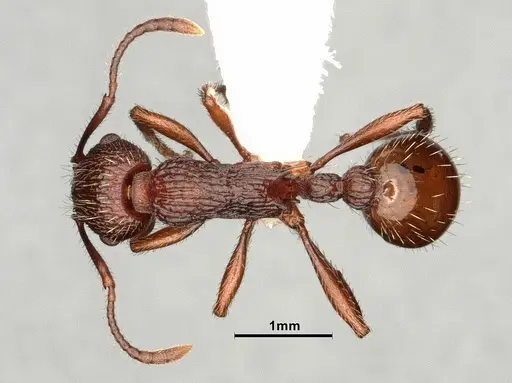
Literature
Loading distribution map...Loading products...