
Myrmica ravasinii
- Sci. Name
- Myrmica ravasinii
- Tribe
- Myrmicini
- Subfamily
- Myrmicinae
- Author
- Finzi, 1923
- Distribution
- Found in 2 countries
Introduction
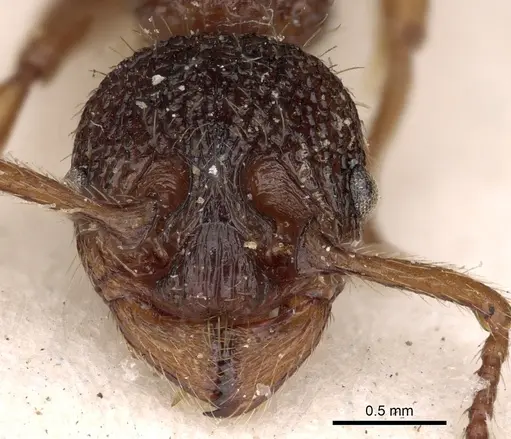
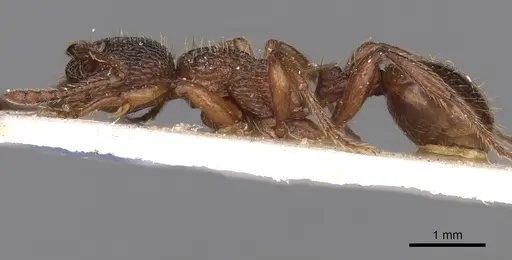
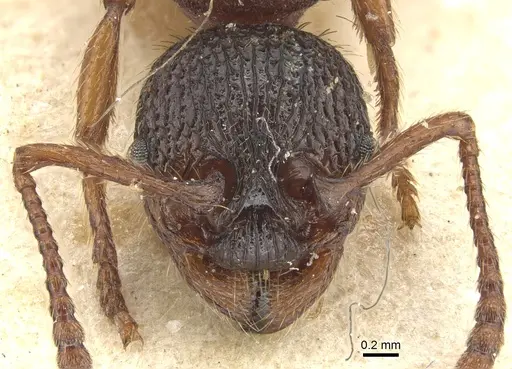
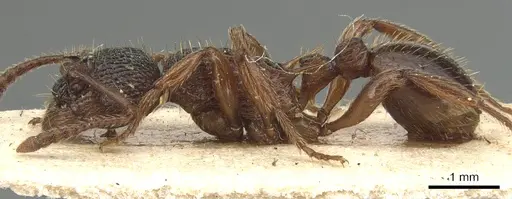
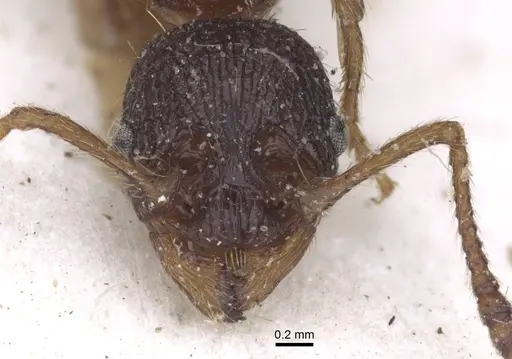
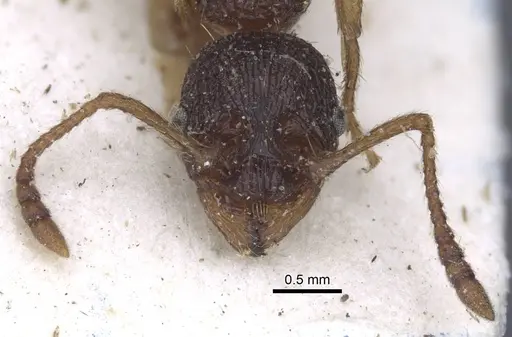
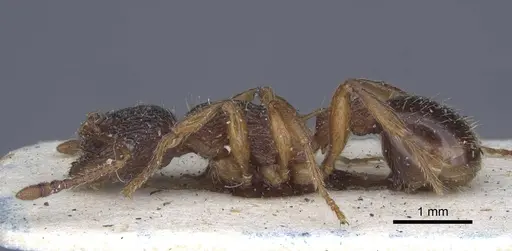
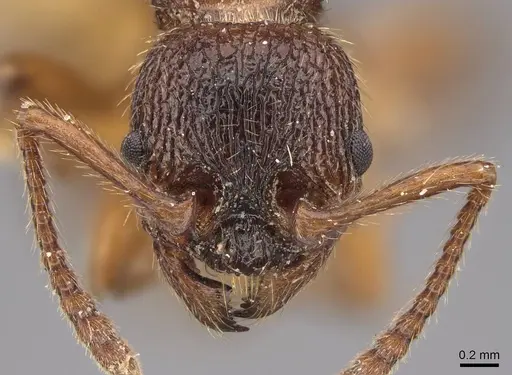
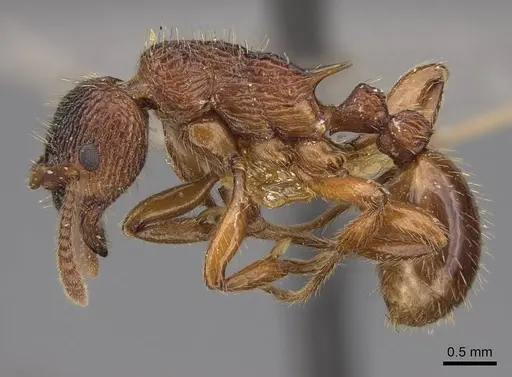
Myrmica ravasinii is a distinctive mountain ant belonging to the schencki species-group, found across the Balkans and Asia Minor. Workers are relatively large with an unusually narrow frons (the lowest recorded of any Myrmica species) and possess an extraordinarily enlarged lobe at the bend of their antennae - the largest of any known Myrmica. Males are equally distinctive, bearing long erect hairs on their antennae, tibiae, and tarsi that set them apart from related species. This is a semi-xerophilous species adapted to life at elevation, typically nesting in soil under stones in open pine, oak, and hornbeam forests between 800 and 2150 meters altitude .
Quick Summary
- Difficulty: Medium
- Origin & Habitat: Balkans and Asia Minor (Albania, Armenia, Georgia, Greece, Turkey, Romania, Serbia), mountain forests at 800-2150m elevation [1][3]
- Colony Type: Colony structure has not been specifically documented for this species
- Size & Growth:
- Queen: Size data unavailable, no specific measurements exist for this species
- Worker: Described as big size in research literature [1], exact measurements not provided
- Colony: Maximum colony size is not documented for this species
- Growth: Moderate, typical Myrmica development
- Development: Development time is unconfirmed for this species (Development is temperature-dependent as with most Myrmica species)
- Antkeeping:
- Temperature: Keep around 20-24°C. This is a mountain species adapted to cooler conditions than lowland ants, avoid overheating [1]
- Humidity: Moderate, semi-xerophilous species that prefers drier conditions than many Myrmica. Keep nest substrate slightly moist but allow some drying between waterings. Provide a moisture gradient so ants can choose their preferred zone [1]
- Diapause: Yes, as a mountain species from temperate regions, colonies will need a winter rest period. Provide 2-3 months at 5-10°C during winter [3]
- Nesting: Soil-nesting species that naturally builds nests in the ground, often under stones. In captivity, a Y-tong (AAC) nest or plaster formicarium with soil chamber works well. Provide a layer of moist soil or sand for tunneling [1]
- Behavior: Workers are moderately active foragers. Like most Myrmica, they may deliver a mild sting if provoked, though their sting is not medically significant for healthy humans. They are not aggressive but will defend their nest. Escape risk is moderate, use standard Myrmica escape prevention.
- Common Issues: overheating is a significant risk, this mountain species prefers cooler conditions than typical room temperature, humidity control is important, too wet conditions can be harmful for this semi-xerophilous species, winter diapause is essential for colony health, skipping hibernation may weaken or kill colonies, slow founding phase, Myrmica queens can take months to raise first workers, patience is required, wild-caught colonies may carry parasites that can cause problems in captivity
Natural History and Distribution
Myrmica ravasinii is a Balkan-Caucasian species with a distribution spanning from Albania through Greece, Turkey, and the Transcaucasia region to the North Caucasus [1][2]. This mountain-dwelling ant prefers elevations between 800 and 2150 meters, where summer temperatures remain cooler than in the surrounding lowlands [1]. Its range extends from approximately 37-44°N latitude and 20-44°E longitude [1].
The species inhabits fairly open forests dominated by oak, pine, hornbeam, and fir trees. It deliberately avoids both cooler and wetter beech forests as well as hotter and drier juniper (archa) forests [1]. In drier woodland areas, colonies are often found near the edges of small gullies where underground moisture persists [1]. The species has also been recorded on subalpine meadows [1]. Nests are constructed in soil, frequently positioned beneath stones that provide both protection and temperature regulation [1].
Sexual forms (reproductives) have been found in nests during late August, suggesting nuptial flights occur between August and September [1]. This timing allows new queens to establish colonies before winter arrives.
Nest Preferences and Housing
In the wild, Myrmica ravasinii builds nests in soil, often under stones that help regulate temperature and humidity [1]. This nesting behavior translates well to captivity, a Y-tong (AAC) nest or plaster formicarium with a soil chamber works excellently for this species [1].
The key to successful housing is providing a temperature gradient. As a mountain species adapted to cooler conditions, these ants do best when part of the nest is kept slightly cooler than typical room temperature. A heating cable on only one side of the nest allows workers to regulate their temperature by moving between zones [1].
For the nesting chamber, use a moderately compact soil or sand mixture that holds its structure well. The ants will excavate tunnels and chambers. Because this species is semi-xerophilous (preferring drier conditions), avoid over-compacting the substrate or keeping it constantly saturated, some drying between waterings is beneficial [1].
The outworld (foraging area) should be standard size with reliable escape prevention. While not as small as some Myrmica, they can still climb smooth surfaces effectively.
Feeding and Diet
Like other Myrmica species, Myrmica ravasinii is omnivorous with a preference for protein-rich foods. In captivity, offer a varied diet including small insects (fruit flies, small crickets, mealworms), and sugar sources such as diluted honey or sugar water.
Protein is essential for brood development. Feed small live or frozen insects appropriate to the colony size, roughly twice weekly for growing colonies. Remove uneaten prey after 24-48 hours to prevent mold.
Sugar water or honey water should be available constantly, especially for colonies with queens. Myrmica workers readily consume sweet liquids and will cluster around sugar sources. A small test tube with cotton wool soaked in honey water or sugar water works well.
Fresh water should always be available in the outworld.
Temperature and Seasonal Care
Myrmica ravasinii requires cooler conditions than many common ant species. Keep the nest environment between 20-24°C, with cooler zones available [1]. This mountain species is adapted to high-elevation conditions and can suffer from overheating, never place the nest in direct sunlight or near heat sources.
A critical part of keeping this species successfully is providing proper winter diapause. As a species from temperate mountain regions, colonies need 2-3 months of cold rest annually [3]. During winter (roughly November through February in the Northern Hemisphere), reduce temperatures to 5-10°C. This can be achieved by moving the colony to an unheated garage, basement, or refrigerator. Keep the colony slightly moist during hibernation but not wet.
Failure to provide proper diapause can weaken colonies significantly and may prevent reproduction. Queens that don't experience winter rest often fail to produce sexuals or have reduced lifespans [3].
Colony Founding
The founding behavior of Myrmica ravasinii has not been directly documented in scientific literature. The queen likely seals herself in a small underground chamber and raises her first brood using stored fat reserves without foraging, as is typical for Myrmica species.
During founding, the queen will remain sealed in her chamber for several weeks to months while she lays eggs and tends to the developing larvae. She will not leave to hunt or gather food, this is why claustral queens have substantial fat reserves. Once the first workers (nanitics) emerge, they will begin foraging for food and expanding the nest.
Expect the founding phase to last 2-4 months, sometimes longer. Disturb the queen as little as possible during this time. Provide a small water source nearby (through cotton in a test tube) but no food is needed until workers emerge.
Frequently Asked Questions
How long does it take for Myrmica ravasinii to raise first workers?
Development time is unconfirmed for this species. Based on typical Myrmica development, expect several weeks from egg to first worker at optimal temperature (around 20-24°C). The exact timeline depends on temperature and individual colony conditions.
Do Myrmica ravasinii ants sting?
Yes, like other Myrmica species, they can deliver a mild sting if provoked or handled roughly. The sting is not medically significant for healthy humans but may cause minor irritation.
What temperature do Myrmica ravasinii need?
Keep them at 20-24°C. This is a mountain species that prefers cooler conditions than typical room temperature. Avoid overheating and never place the nest in direct sunlight.
Do Myrmica ravasinii need hibernation?
Yes, they require a winter rest period of 2-3 months at 5-10°C each year. This is essential for colony health and future reproduction.
Can I keep multiple Myrmica ravasinii queens together?
This has not been documented for this specific species. Based on typical Myrmica behavior, it is not recommended to combine unrelated foundress queens as they typically fight. Single-queen colonies are the standard approach.
What do Myrmica ravasinii eat?
They are omnivorous, accepting small insects (fruit flies, small crickets, mealworms) for protein and sugar sources (honey water, sugar water). Feed protein roughly twice weekly and keep sugar water available constantly.
Are Myrmica ravasinii good for beginners?
They are rated as medium difficulty. Their specific temperature requirements (cooler than most species) and need for winter diapause make them better suited for keepers who already have some experience with Myrmica or temperate ants.
When do Myrmica ravasinii have nuptial flights?
Based on sexual forms found in nests during late August, nuptial flights likely occur between August and September.
How big do Myrmica ravasinii colonies get?
The maximum colony size is not documented for this species.
What humidity do Myrmica ravasinii need?
As a semi-xerophilous species, they prefer moderately dry conditions. Keep the nest substrate slightly moist but allow some drying between waterings. Provide a humidity gradient so ants can choose their preferred zone.
Report an Issue
The current care sheet is based fully on literature. See inconsistencies, or something that's incorrect? Please , it will be resolved after review from an admin. Contributing to the blogs tab also helps providing information, to make us be able to further improve the caresheets. Thank you for your support!
References

This caresheet is licensed under CC BY-SA 4.0 .
Community Blogs
CASENT0900282
View on AntWeb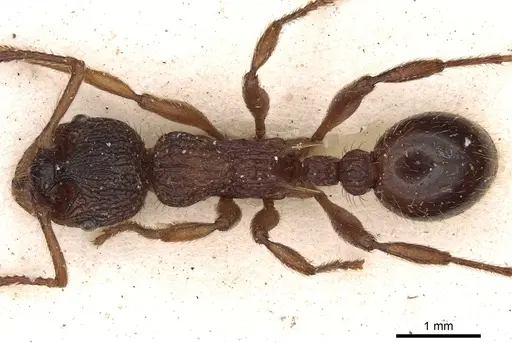
CASENT0904085
View on AntWeb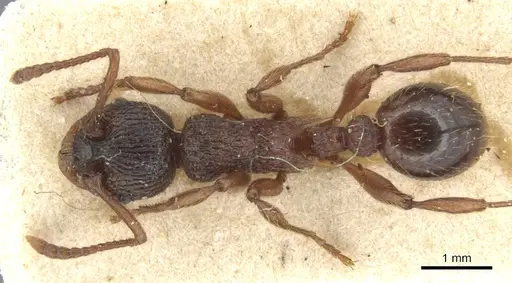
CASENT0916901
View on AntWeb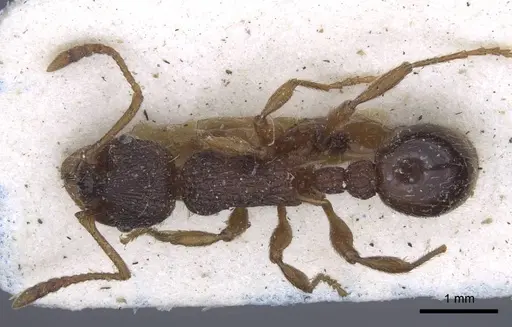
CASENT0922801
View on AntWeb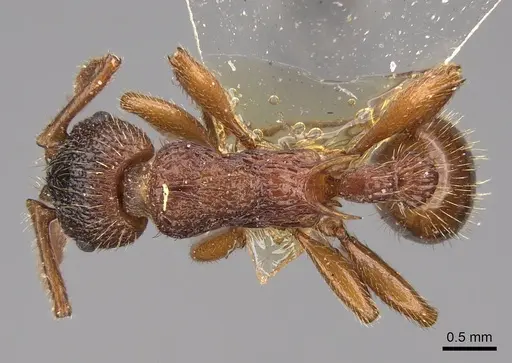
Literature
Loading distribution map...Loading products...