
Myrmica polyglypta
- Sci. Name
- Myrmica polyglypta
- Tribe
- Myrmicini
- Subfamily
- Myrmicinae
- Author
- Radchenko & Rigato, 2008
- Distribution
- Found in 0 countries
Introduction
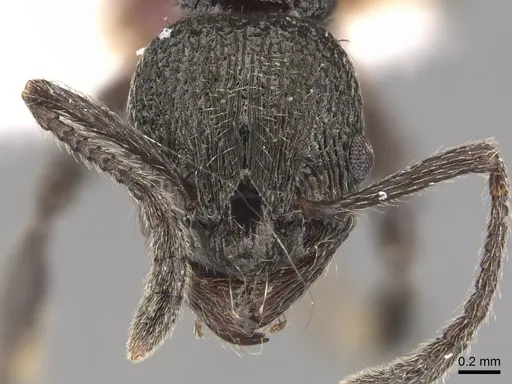
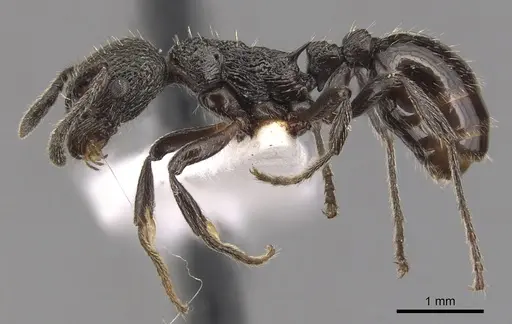
Myrmica polyglypta is a small, dark brown to blackish-brown ant belonging to the pachei species group. Workers measure approximately 4-5 mm in total length, making them modestly sized among Myrmica species. The head is subrectangular with almost straight sides, and the body features distinctive sculptural patterns - the name 'polyglypta' comes from Greek meaning 'many carved, ' referring to the variable sculpture on the alitrunk (middle body section). This species is known only from worker specimens collected in Yunnan Province, China, at extremely high altitudes between 4000-4700 meters in subalpine meadows. The queens and males have never been described, making captive breeding particularly challenging since founding colonies from the wild is extremely difficult.
Quick Summary
- Difficulty: Expert
- Origin & Habitat: Yunnan Province, China, subalpine meadows at 4000-4700 meters elevation [1][2]
- Colony Type: Unconfirmed, only workers known, queens and males have never been described
- Size & Growth:
- Queen: Unknown, queens have never been described
- Worker: ~4-5mm, inferred from Myrmica genus
- Colony: Unknown, only known from type series of workers
- Growth: Unknown, estimated based on genus patterns
- Development: Estimated 8-12 weeks based on typical Myrmica development at cool temperatures (No species-specific data exists. High-altitude origin suggests slower development than lowland species.)
- Antkeeping:
- Temperature: Keep cool, aim for 18-22°C. This is a high-altitude species from subalpine meadows, so avoid warm conditions. Room temperature is likely appropriate.
- Humidity: Moderate to high, they come from subalpine meadows which are damp but not saturated. Keep nest substrate moist but not waterlogged, with some drier areas available.
- Diapause: Yes, high-altitude origin strongly suggests they require a winter dormancy period. Provide 3-4 months at 5-10°C.
- Nesting: Naturalistic setups with good moisture retention work well. Y-tong (AAC) or plaster nests with damp substrate suit this species. Keep them cool.
- Behavior: Behavior is unstudied. Based on genus patterns, they are likely moderately aggressive when disturbed and may have a functional stinger. Escape risk is moderate, standard barriers should suffice for ants of this size.
- Common Issues: Only workers are known, finding a queen to start a colony is nearly impossible., Extremely high altitude requirements mean captive breeding is exceptionally difficult., Lack of any captive husbandry data means keepers are essentially pioneering care methods., Winter dormancy is essential and often overlooked by beginners., High-altitude species are sensitive to temperature, overheating can be fatal.
Discovery and Rarity
Myrmica polyglypta is one of the rarest ants in captivity, if it exists in captivity at all. The species was only described in 2008 from a small series of workers collected in the Habashan Mountains of Yunnan Province, China. The type series consists of just 14 workers collected in June 2002 at altitudes between 4000-4700 meters. What makes this species particularly challenging for antkeepers is that neither queens nor males have ever been found or described. This means there is no documented way to start a colony, you cannot catch a queen from the wild because none have been discovered, and no captive breeding has ever been attempted or documented. The species represents a frontier in antkeeping rather than an established captive species. [2][1]
High-Altitude Adaptation
This species occupies one of the highest elevational ranges of any Myrmica ant, living in subalpine meadows at 4000-4700 meters above sea level. Together with Myrmica kozlovi, Myrmica polyglypta appears to be among the most high-altitude tolerant Myrmica species in the world. This extreme altitude brings specific environmental challenges, cool temperatures, thin air, and strong seasonal variation. In captivity, this translates to a need for cool conditions (likely 18-22°C maximum) and a pronounced winter dormancy period. These ants are adapted to environments where temperatures rarely get warm, so overheating is a serious concern. The subalpine meadow habitat also suggests they prefer open areas with grass and low vegetation rather than forest shade. [1]
Identification and Morphology
Myrmica polyglypta belongs to the pachei species group, characterized by specific sculptural features. Workers have a subrectangular head that is longer than broad, with almost straight sides and a broadly rounded occipital margin. The most distinctive features are the transverse rugosity (wrinkled ridges) on the alitrunk dorsum combined with a coarsely reticulate pronotum and longitudinally rugose propodeal dorsum. The lateral margins of the head above the eyes are hairless, with only the genae (cheeks) and occipital margin having sparse, quite long suberect to subdecumbent hairs. The body color is dark brown to blackish-brown. Workers measure approximately 4-5 mm in total length, making them relatively small Myrmica workers. [2][1]
Temperature and Seasonal Care
Given their extreme high-altitude origin, temperature management is critical. Keep this species cool, aim for 18-22°C and avoid any warming above room temperature. A heating cable would likely be harmful rather than helpful. During winter, provide a dormancy period of 3-4 months at temperatures between 5-10°C, mimicking the harsh alpine winter they experience in Yunnan. This hibernation is probably essential for colony health, though no specific research exists for this species. The high-altitude environment means they are adapted to cool conditions year-round and would likely struggle in warm, dry apartment conditions that suit many tropical ant species. [1]
Housing Recommendations
Since this species has never been kept in captivity (as far as documented), any housing recommendations are speculative but based on genus patterns. Use a naturalistic setup with good moisture retention, a Y-tong (AAC) nest or plaster formicarium works well. Keep the nest substrate consistently moist but not waterlogged. Provide a water tube or cotton as a hydration source. Because they come from open subalpine meadows, they may prefer nests with some light exposure rather than completely dark chambers. Escape prevention should be standard for ants of this size, they are not particularly small, so standard barriers should suffice.
Frequently Asked Questions
Can I keep Myrmica polyglypta in captivity?
Practically speaking, no, this species is essentially unavailable to antkeepers. Only workers have ever been collected, and no queens or males have been described. Without a queen, you cannot start a colony, and no wild queens have ever been found to establish a founding colony. This remains a species known only from scientific collections.
Where can I get a Myrmica polyglypta queen?
You cannot, queens of this species have never been found or described in the scientific literature. The species was described from workers only in 2008,and subsequent searches have not located queens or males. This makes Myrmica polyglypta one of the most elusive Myrmica species and effectively impossible to keep.
What temperature does Myrmica polyglypta need?
Keep them cool, 18-22°C is likely the upper limit. This is a high-altitude species from subalpine meadows at 4000-4700m elevation in Yunnan, China. They are adapted to cool conditions and would likely suffer from overheating. Room temperature is probably ideal, and additional heating should be avoided.
Do Myrmica polyglypta need hibernation?
Yes, given their extreme high-altitude origin in subalpine meadows, a winter dormancy period is almost certainly required. Provide 3-4 months at 5-10°C during winter, mimicking the harsh alpine conditions they experience in their natural habitat.
How big do Myrmica polyglypta colonies get?
Unknown, no colony size data exists for this species. Only a small series of workers has ever been collected. Based on typical Myrmica patterns, colonies likely reach several hundred workers, but this is purely speculative.
What do Myrmica polyglypta eat?
Unconfirmed, no feeding observations exist. Based on genus patterns, they likely accept typical Myrmica foods: sugar sources (honey water, sugar water), protein (small insects, mealworms), and possibly seeds. However, without any captive specimens, this is entirely theoretical.
Are Myrmica polyglypta good for beginners?
No, this species is completely unsuitable for beginners and arguably for any antkeeper. No queens have ever been found, no captive colonies exist, and no husbandry information is available. This is a species for advanced researchers who might discover it in the wild, not a hobbyist species.
Does Myrmica polyglypta sting?
Likely yes, most Myrmica species have a functional stinger, though it may be too small to penetrate human skin noticeably. The genus is known for having stings that can cause mild irritation in some species, though Myrmica polyglypta specifically has not been studied.
What is the egg to worker timeline for Myrmica polyglypta?
Unknown, no development data exists for this species. Based on typical Myrmica development at cool temperatures, estimate 8-12 weeks from egg to first worker, though this is a rough guess based on genus patterns rather than species-specific data.
Can I keep multiple Myrmica polyglypta queens together?
Unknown, colony structure has never been studied. Most Myrmica species form single-queen colonies, but polygyny (multiple queens) has been documented in some species. Without any queen specimens to work with, this question cannot be answered.
Report an Issue
The current care sheet is based fully on literature. See inconsistencies, or something that's incorrect? Please , it will be resolved after review from an admin. Contributing to the blogs tab also helps providing information, to make us be able to further improve the caresheets. Thank you for your support!
References

This caresheet is licensed under CC BY-SA 4.0 .
Community Blogs
CASENT0904552
View on AntWeb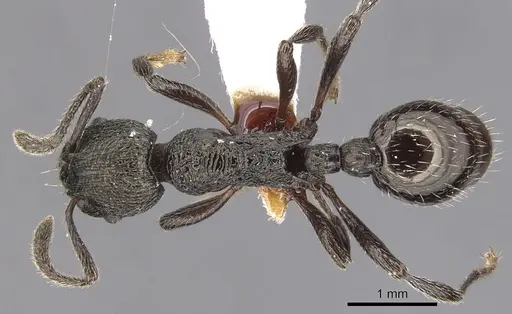
Literature
Loading distribution map...Loading products...