
Myrmica pleiorhytida
- Sci. Name
- Myrmica pleiorhytida
- Tribe
- Myrmicini
- Subfamily
- Myrmicinae
- Author
- Radchenko & Elmes, 2009
- Distribution
- Found in 1 countries
Introduction
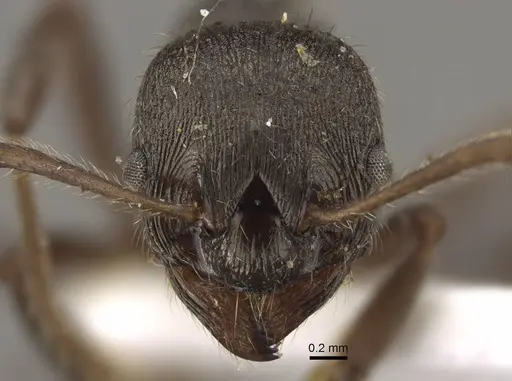
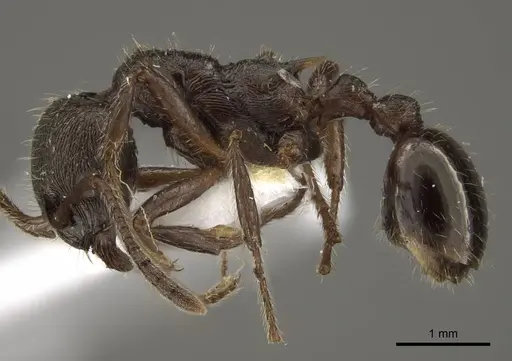
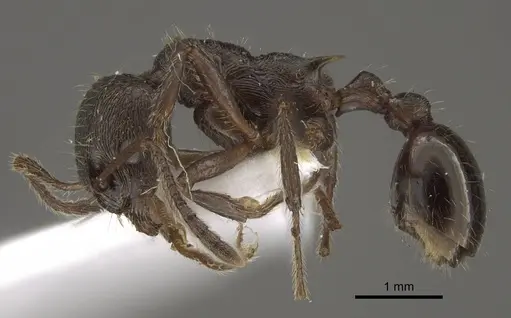
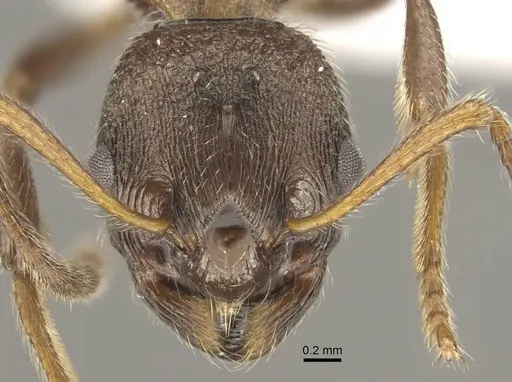
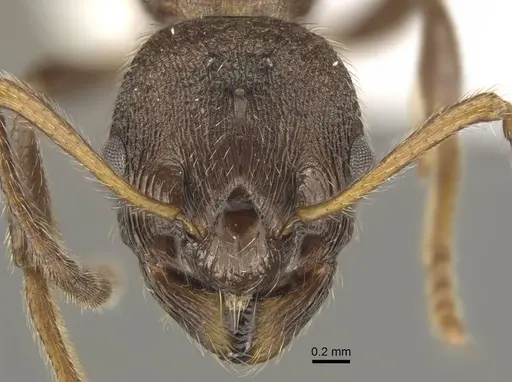
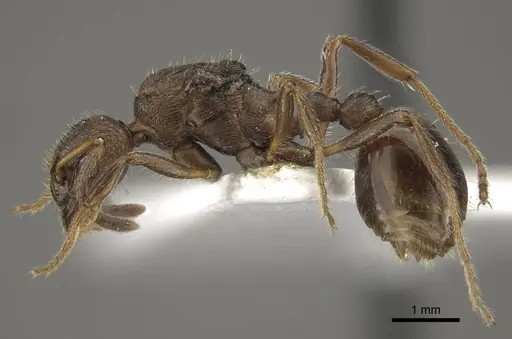
Myrmica pleiorhytida is a small, dark reddish-brown ant species belonging to the pachei species group. Workers are characterized by their unusually dense body sculpture - the head bears over 30 fine longitudinal rugae, while the mesonotal and propodeal dorsum have more than 35 fine transverse rugae, giving them a distinctly textured appearance. Workers have moderately long, straight propodeal spines directed backward at about 30 degrees, and abundant long suberect hairs on the head margins and alitrunk. The scape is relatively long, subequal to head width, with a gradual curve at the base . This species is known only from high mountain meadows in Yunnan Province, China, at elevations between 2400 and 3500 meters - making it one of the more specialized high-elevation Myrmica species. Males have never been described in scientific literature . The combination of its restricted distribution, extreme altitude range, and dense body sculpture makes it a species of scientific interest rather than a practical antkeeping target.
Quick Summary
- Difficulty: Expert
- Origin & Habitat: Yunnan Province, China, mountain meadows at altitudes between 2400 and 3500 meters elevation [1]. This is an extremely high-altitude species requiring cool, stable conditions.
- Colony Type: Unknown. Queens and males have not been described in scientific literature. Colony structure is unconfirmed.
- Size & Growth:
- Queen: Unknown, queens have not been described in scientific literature [1].
- Worker: Size data unavailable, no body measurements provided in research. Typical Myrmica workers range from 4-7mm, but this is not confirmed for this species.
- Colony: Unknown, no colony size data available.
- Growth: Unknown, no development data available.
- Development: Unconfirmed, no development data exists for this species. (No direct development studies exist. High-altitude origin suggests development may be slower than lowland species.)
- Antkeeping:
- Temperature: Temperature requirements are unconfirmed. Based on high-elevation habitat (2400-3500m), cool conditions are likely needed. Avoid overheating, room temperature may be too warm. Provide a temperature gradient and monitor colony behavior.
- Humidity: Moderate humidity typical of mountain meadow habitats. Keep nest substrate moist but not waterlogged. Good ventilation is essential.
- Diapause: Likely required, based on high-elevation origin and temperate climate of Yunnan highlands, winter dormancy is probably necessary. Provide several months of cold conditions during winter.
- Nesting: No specific nesting data exists. Based on mountain meadow habitat, likely nests in soil or under stones. Standard test tubes or nests with good moisture retention work well.
- Behavior: Workers are moderately active and typical of Myrmica genus behavior. They are not particularly aggressive but will sting if threatened. Escape risk is moderate, standard barrier methods are sufficient. No specific behavioral studies exist for this species.
- Common Issues: overheating is a primary risk, this species cannot tolerate warm conditions and may decline or die in heated setups, queen acquisition is extremely difficult, queens have never been described and wild colonies are inaccessible in remote high-altitude China, hibernation failure can weaken colonies, proper cold period is likely essential for this temperate species, limited information means experimental care, keepers must be prepared to adjust conditions based on colony response, escape prevention is still important despite moderate size, use standard barriers
Temperature Requirements
This is a critical factor for keeping this species. Originating from 2400-3500m elevation in Yunnan, these ants are likely adapted to cool mountain conditions. Unlike most ant species that prefer 20-28°C, this species may require cooler conditions. This presents a challenge for most antkeepers. Options include keeping the colony in a cool basement or garage, using a thermoelectric cooler, or placing the nest in a refrigerator with proper ventilation. Avoid heating cables or heat mats on this species. If you notice workers clustering away from any warm area of the setup, the temperature may be too high. A slight temperature gradient allows workers to self-regulate [1].
Winter Dormancy and Hibernation
Given their extreme high-altitude origin, this species likely requires a winter dormancy period. In their native habitat, temperatures drop significantly below freezing during winter months at 2400-3500m elevation. Provide a period of cold conditions during late autumn and winter. This is important for colony health. Reduce feeding during this period and ensure the colony has access to some moisture. The hibernation period should align with natural seasons, reduce temperatures starting around October-November and gradually warm the colony back up in March or April. Monitor the colony during this period, they will be largely inactive but should remain alive.
Nesting and Setup Recommendations
No specific natural nesting data exists for this species, but the mountain meadow habitat suggests they likely nest in soil or under stones in the wild. For captivity, standard test tube setups work well for founding colonies, while nests with good ventilation can be used for established colonies. The key requirements are adequate moisture without saturation, good ventilation to prevent mold, and most importantly, the ability to maintain cool temperatures. Avoid setups that trap heat. Provide a shallow water dish for drinking and occasional protein prey. Keep the colony in a location with stable, cool temperatures away from direct sunlight and heating elements.
Feeding and Nutrition
Like other Myrmica species, these ants are omnivorous and will accept both protein sources and sugar water. Offer small insects such as fruit flies, pinhead crickets, or mealworms as protein sources. Sugar water, honey, or diluted jam can be provided as an energy source. Feed every few days, removing uneaten prey after 24 hours to prevent mold. During hibernation, reduce or eliminate feeding. Since colony size is unknown and likely modest, avoid overfeeding. Fresh water should always be available.
Acquiring This Species
This is one of the most challenging aspects of keeping Myrmica pleiorhytida. Queens have never been scientifically described, meaning they have never been observed or documented in the wild. The species is known only from worker specimens collected in remote high-altitude mountain meadows of Yunnan Province, China. There are no documented colonies in the antkeeping hobby, and it is extremely unlikely that queens or colonies are available commercially. This species is recommended only for highly experienced antkeepers with specific interest in rare Asian Myrmica who might obtain founding queens through research connections or expeditions, and even then, proper permits for collection and export from China would be required. For most antkeepers, this species remains a documentation of scientific interest rather than a practical keeping target [1].
Frequently Asked Questions
Can I keep Myrmica pleiorhytida as a beginner antkeeper?
No. This species is not recommended for beginners. The primary challenges are: queens have never been described so acquisition is essentially impossible, they likely require very cool temperatures that most homes cannot provide, they need proper hibernation, and there is virtually no captive care information available. This is an expert-only species for those with specific interest in high-altitude Asian Myrmica [1].
What temperature does Myrmica pleiorhytida need?
Temperature requirements are unconfirmed. Based on their high-elevation habitat (2400-3500m), cool conditions are likely needed. Avoid overheating, typical room temperature may be too warm. If your room temperature runs above 22°C, you may need to find a way to cool the colony.
Do Myrmica pleiorhytida ants need hibernation?
Likely yes. Based on their high-altitude origin in the Yunnan mountains, a winter dormancy period is probably necessary for colony health.
How do I get a Myrmica pleiorhytida queen?
You almost certainly cannot. Queens of this species have never been described in scientific literature and have never been observed. The species is known only from worker specimens collected in remote high-altitude China. There are no documented sources for purchasing or obtaining this species. This is not a species available in the antkeeping hobby [1].
What do Myrmica pleiorhytida ants eat?
Based on typical Myrmica diet, they likely accept small insects (fruit flies, pinhead crickets, mealworms) as protein and sugar water, honey, or diluted jam as an energy source. Feed every few days and remove uneaten prey. Reduce feeding during hibernation.
How big do Myrmica pleiorhytida colonies get?
Unknown. No colony size data exists for this species.
Do Myrmica pleiorhytida ants sting?
Yes, like other Myrmica species, they can sting. Their sting is noticeable but not dangerous to healthy humans. They are not particularly aggressive but will defend the nest if threatened.
Can I keep multiple queens together?
Unknown. Queen colony structure has never been documented for this species. Most Myrmica are monogyne (single queen), but this is unconfirmed for M. pleiorhytida. Given the extreme rarity of this species and lack of any captive colonies, this question is entirely theoretical [1].
What is the best nest type for Myrmica pleiorhytida?
Standard test tubes work well for founding colonies. For established colonies, nests with good ventilation are suitable. The most important factor is temperature control, choose a setup that doesn't retain heat and can be placed in a cool location. Avoid heated formicariums entirely.
How long does it take for eggs to become workers?
Unconfirmed. No development data exists for this species. The high-altitude origin suggests development may be slower than lowland species.
Report an Issue
The current care sheet is based fully on literature. See inconsistencies, or something that's incorrect? Please , it will be resolved after review from an admin. Contributing to the blogs tab also helps providing information, to make us be able to further improve the caresheets. Thank you for your support!
References

This caresheet is licensed under CC BY-SA 4.0 .
Community Blogs
CASENT0917716
View on AntWeb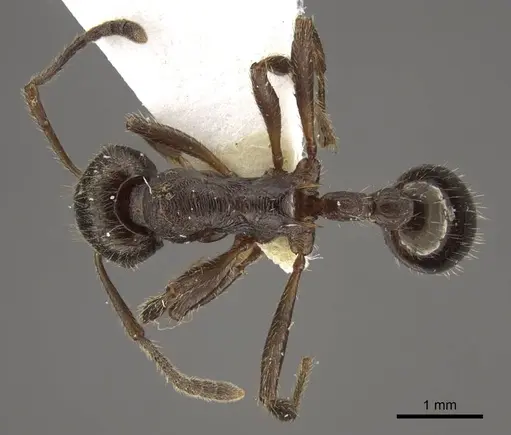
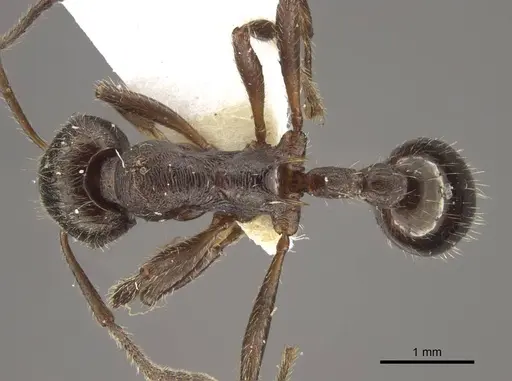
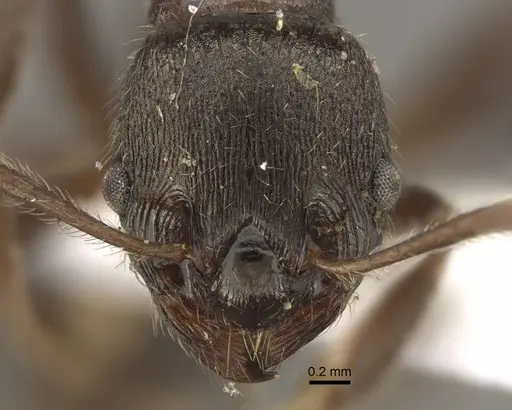
CASENT0917717
View on AntWeb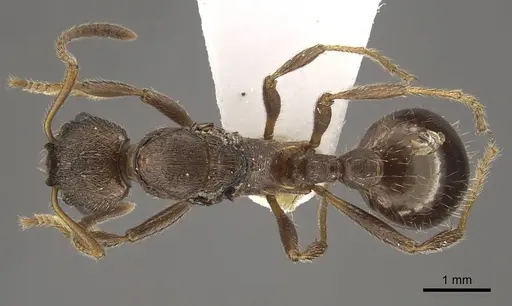
Literature
Loading distribution map...Loading products...