
Myrmica myrmicoxena
- Sci. Name
- Myrmica myrmicoxena
- Tribe
- Myrmicini
- Subfamily
- Myrmicinae
- Author
- Forel, 1895
- Distribution
- Found in 0 countries
Introduction
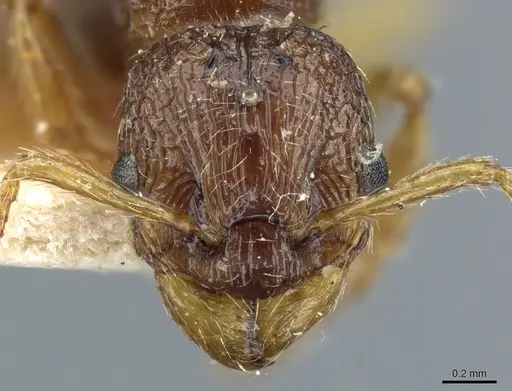
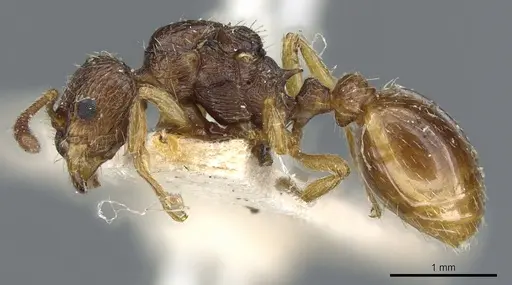
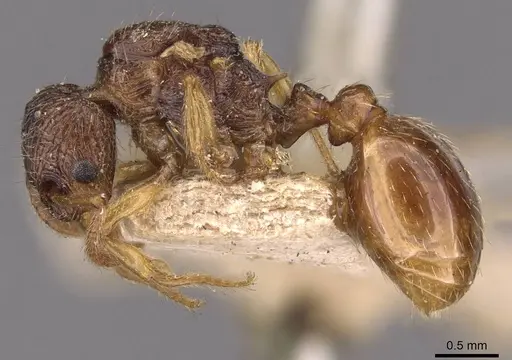
Myrmica myrmicoxena is an extremely rare social parasite ant found only in the Alps of Switzerland and northern Italy. This tiny species measures approximately 4.13-4.3mm in total length and gets its name from the Greek 'xenos' meaning 'guest' or 'stranger' - literally 'guest of Myrmica ants' . Unlike most ants, this species is workerless; the queens live permanently inside colonies of their host species, Myrmica lobulicornis, using the host's workers to raise their own brood . The queens are reddish-brown with distinctive morphology including short propodeal spines and a very high, short petiole and postpetiole . This is one of the rarest European ants, listed as Vulnerable on the IUCN Red List due to its highly specialized lifestyle and limited distribution at high altitudes .
Quick Summary
- Difficulty: Expert
- Origin & Habitat: Alpine regions of Switzerland and northern Italy, found at elevations between 1,700-2,213 meters in subalpine short-turfed grassland [1]. The type specimen was collected in 1869 from under a stone in a Myrmica lobulicornis nest at approximately 2,000m altitude [3].
- Colony Type: Permanent social parasite (inquiline). Workerless, lives exclusively within host colonies of Myrmica lobulicornis. The parasite queen does not produce her own workers and relies entirely on host workers for colony functions [2][3].
- Size & Growth:
- Queen: 4.13-4.3mm [3]
- Worker: Workerless species, no worker caste exists [3][2]
- Colony: Unknown, depends on host colony size. Parasitization rate appears low, possibly less than 10% of host nests [1]
- Growth: Unknown
- Development: Not applicable, this is a workerless social parasite (This species does not produce workers. The parasite queen relies entirely on host workers to raise her reproductive brood.)
- Antkeeping:
- Temperature: Unknown, likely similar to host species (Myrmica lobulicornis) which prefers cooler alpine conditions
- Humidity: Unknown, likely requires similar conditions to host species in subalpine grassland
- Diapause: Likely yes, host species Myrmica lobulicornis is a temperate Alpine species that would require hibernation
- Nesting: This species cannot be kept independently. It requires a host colony of Myrmica lobulicornis to survive. There are no established captive breeding protocols for this parasitic species.
- Behavior: Extremely specialized behavior. The parasite queen infiltrates host colonies and is attended by host workers. One observation documented host workers physically pinning the parasite queen to prevent movement, likely as a way to acquire the colony's scent [1]. The queen does not have her own workers and cannot survive independently. Escape risk is minimal as the species cannot establish self-sustaining colonies.
- Common Issues: this species cannot be kept in captivity without a living host colony, it is not suitable for typical antkeeping, workerless social parasites cannot establish independent colonies and will die without host workers, very rare in the wild and protected, ethical concerns about collecting, the precise host requirements and care needs are not documented for captive conditions, parasitization rate is naturally low, making wild collection difficult and potentially harmful to wild populations, this species is listed as vulnerable on the iucn red list, wild collection is ethically problematic
Why This Species Is Not Suitable for Typical Antkeeping
Myrmica myrmicoxena is one of the rarest and most specialized ants in Europe, and it is fundamentally unsuitable for typical antkeeping for one critical reason: it is a workerless social parasite. This means the queens cannot establish their own colonies. Instead, they must infiltrate and live permanently inside colonies of another ant species, specifically Myrmica lobulicornis, using the host workers to care for their brood [2][1]. Without a host colony, the parasite queen cannot survive. This makes captive breeding essentially impossible, as you would need to maintain both the parasite and a healthy host colony long-term. Additionally, the species is listed as Vulnerable on the IUCN Red List due to its extremely limited distribution and specialized lifestyle [1], making wild collection both ethically problematic and practically difficult.
Distribution and Habitat
Myrmica myrmicoxena is known only from the Alps in Switzerland and northern Italy. The original type specimen was collected in 1869 from Alp Anzeindaz in the Swiss Alps at approximately 2,000m altitude [3]. The species was then considered lost for over 140 years until being rediscovered in 2006-2009 at two additional localities: Laas in South Tyrol, Italy at 1,700m, and Eggishorn, Switzerland at 2,213m [1]. All records come from subalpine, short-turfed grassland habitats at high elevations between 1,700-2,213 meters [1]. The vertical distribution is extremely limited, and the parasitization rate in wild host colonies appears to be low, possibly less than 10% [1]. The species is listed as near threatened in the Swiss Red List and Vulnerable D2 on the IUCN Red List [1].
Host Species and Parasitic Relationship
The exclusive host species for Myrmica myrmicoxena is Myrmica lobulicornis, a species also found in Alpine grasslands [1]. This is an inquiline social parasite, a permanent resident that lives within the host colony rather than temporarily invading it. Unlike some parasitic ants that kill the host queen, inquiline parasites typically coexist alongside the host queen, with both laying eggs that are raised by the host workers [1]. The relationship is poorly understood, but one field observation documented host workers clustering around the parasite queen, about 20 workers were seen pinning her in place, preventing movement. This behavior likely helps the parasite queen acquire the colony's chemical signature so she can be accepted by the host workers [1]. The parasite does not produce its own worker caste and is entirely dependent on host workers for all colony functions.
Identification and Morphology
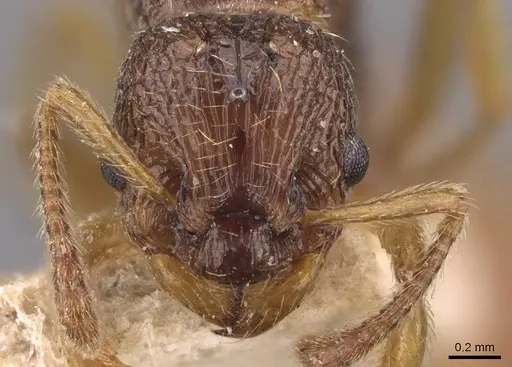
Myrmica myrmicoxena is morphologically distinct from other Myrmica species. Queens measure approximately 4.13-4.3mm in total length [3] with a reddish-brown body and lighter appendages. The most distinctive features include: very short propodeal spines, an extremely high and short petiole and postpetiole with a prominent ventral bulge, and unusually short antennal scapes that do not reach the occipital margin [1]. The species is placed in its own monotypic myrmicoxena species group, separate from other European Myrmica. It is morphologically similar to Myrmica arnoldii from South Siberia and Mongolia, though M. myrmicoxena is smaller and has a somewhat narrower frons [1]. Males are also known and have 13-jointed antennae with short scapes [3]. The species can be identified by the diagnostic character combination: scape relative to frontal lobe width shorter than any other Myrmica species and a very high, short petiole with a large subpetiolar process [1].
Frequently Asked Questions
Can I keep Myrmica myrmicoxena as a pet ant?
No. This species is not suitable for antkeeping. It is a workerless social parasite that cannot survive without a living host colony of Myrmica lobulicornis. Even if you obtained both species, maintaining a permanent parasitic relationship in captivity has not been documented and would be extremely challenging. Additionally, the species is protected as Vulnerable in the IUCN Red List.
Why does Myrmica myrmicoxena have no workers?
This is a workerless social parasite species. The queens have evolved to completely depend on host workers from Myrmica lobulicornis colonies. The parasite queen does not produce her own workers, instead, she lays eggs that are raised by the host workers. This is an obligate lifestyle, the species cannot survive independently.
What is the host species for Myrmica myrmicoxena?
The exclusive host species is Myrmica lobulicornis, a Myrmica ant also found in Alpine grasslands. The parasite queen lives permanently within host colonies, using host workers to raise her brood. This relationship has been confirmed through multiple field observations where M. myrmicoxena queens were found inside M. lobulicornis colonies [1].
Where does Myrmica myrmicoxena live?
This is an extremely rare Alpine species known only from Switzerland and northern Italy. It has been found at high elevations between 1,700-2,213 meters in subalpine short-turfed grassland habitats. The species was rediscovered after 140 years and is considered vulnerable due to its limited distribution and specialized lifestyle [1].
How big do Myrmica myrmicoxena colonies get?
This is unknown because the species is workerless. The parasite queen does not produce workers, so colony size would depend entirely on the host colony (Myrmica lobulicornis). The number of parasite reproductive individuals in a host colony appears to be very low, typically just a single queen, with occasional males and alate gynes [1].
Is Myrmica myrmicoxena endangered?
Yes. The species is listed as Vulnerable D2 on the IUCN Red List [1] and as near threatened in the Swiss Red List. This reflects its extremely limited distribution (known only from a few Alpine localities), specialized habitat requirements, and dependence on a specific host species. Collecting this species from the wild would be ethically problematic.
Can I catch a queen and start a colony?
No. Even if you found a queen (which would require locating a host colony), you cannot establish a colony. The queen needs host workers to survive. Additionally, the species is protected and rare. This is a species best appreciated in the wild or studied by professional researchers, not kept as a pet.
Report an Issue
The current care sheet is based fully on literature. See inconsistencies, or something that's incorrect? Please , it will be resolved after review from an admin. Contributing to the blogs tab also helps providing information, to make us be able to further improve the caresheets. Thank you for your support!
References

This caresheet is licensed under CC BY-SA 4.0 .
Community Blogs
CASENT0904075
View on AntWeb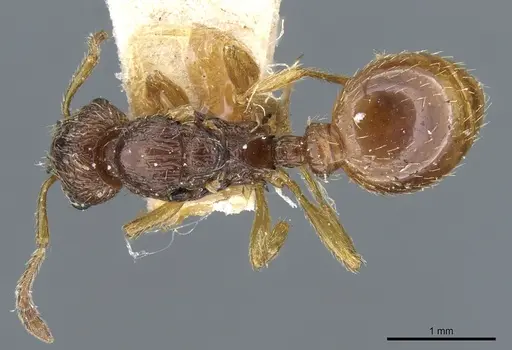
CASENT0907641
View on AntWeb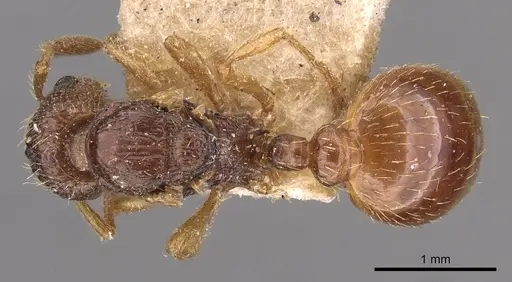
Literature
Loading distribution map...Loading products...