
Lobe-fronted Ant
Myrmica lobifrons
- Sci. Name
- Myrmica lobifrons
- Tribe
- Myrmicini
- Subfamily
- Myrmicinae
- Author
- Pergande, 1900
- Common Name
- Lobe-fronted Ant
- Distribution
- Found in 2 countries
Introduction
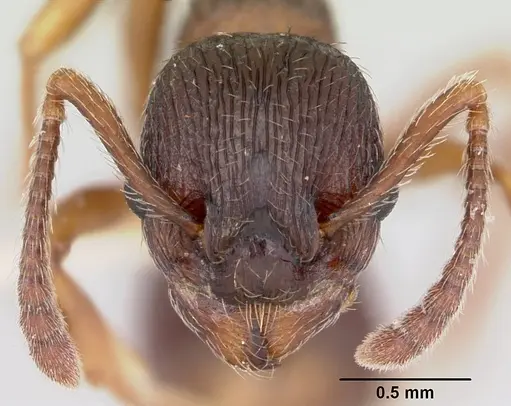
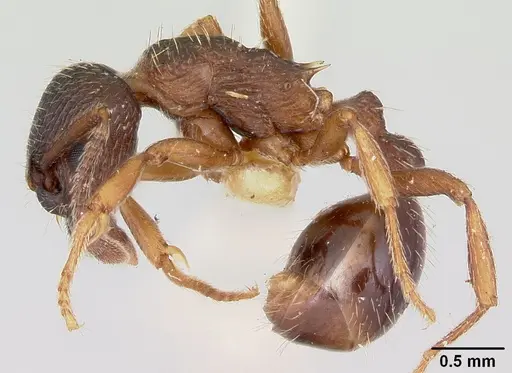
Myrmica lobifrons is a small to medium-sized ant native to northern North America. Workers are 3.9-6.2 mm and reddish-brown to dark brown . You can recognize them by the scape (first antenna segment) which has a tall, collar-like ridge, making the base look angled from the side . The propodeal spines are long and curve downward, and the front edge of the clypeus (the plate above the mouth) is deeply concave when viewed from the front . This ant is a true bog specialist. It is one of the most common ants in boreal peatlands across northern North America, and often the dominant ant in New England bogs . It lives in humid spots like Sphagnum moss hummocks and peat bogs, so it is an excellent choice for keepers interested in wetland ant ecology .
Quick Summary
- Difficulty: Medium
- Origin & Habitat: Native to northern North America, from Canada (British Columbia, Yukon, Alberta, Manitoba, Ontario, New Brunswick, Newfoundland and Labrador) south to the United States (New York to Florida, west to Michigan, Illinois, Missouri, and Texas) [1][7]. This bog specialist is found in boreal bogs, fens, peatland forests, and other very humid or temporarily flooded habitats [4][5][8].
- Colony Type: Likely monogyne (single queen) – inferred from typical Myrmica patterns. Males and reproductive females appear in nests from early July to late August, with flights from late June to early August [6].
- Size & Growth:
- Queen: size unknown – inferred from Myrmica genus (~6-7 mm). Worker data gives a rough size sense [1].
- Worker: 3.9-6.2 mm [1]
- Colony: Likely up to several hundred workers – inferred from typical Myrmica colony sizes.
- Growth: Moderate – inferred from typical Myrmica development.
- Development: Approximately 6-10 weeks – based on typical Myrmica brood development and seasonal patterns observed in the wild [6]. (Eggs appear only in summer (absent October–May, when larvae are the only brood form), showing a strong seasonal cycle [6].)
- Antkeeping:
- Temperature: Keep cool to moderate: 18-22°C. This is a boreal species adapted to cooler conditions. Avoid overheating above 25°C.
- Humidity: High humidity is non-negotiable. This bog specialist naturally nests in Sphagnum moss and peat. Keep the nest substrate consistently moist but not waterlogged, and provide a humidity gradient so ants can choose their preferred zone.
- Diapause: Yes – this temperate species needs winter hibernation. Eggs vanish from October to May, with only larvae present over winter [6]. Provide a cold period at 5-10°C for 3-4 months.
- Nesting: Prefers moist, organic-rich substrates. In captivity they do well in naturalistic setups with damp sphagnum moss, peat-based substrates, or plaster/Y-tong nests with moisture chambers. Avoid dry conditions.
- Behavior: Workers are standard Myrmica – active foragers that defend the nest if threatened but are not overly aggressive. They have a functional stinger, but at under 6 mm it rarely penetrates human skin and is not medically significant. Escape risk is moderate, use standard formicarium barriers. Foragers collect honeydew and small prey.
- Common Issues: high humidity is non-negotiable – colonies fail quickly in dry conditions, bog specialist means they need cool, not warm conditions – don't overheat, winter hibernation is required – colonies may fail without a proper cold period, slow growth compared to tropical species – beginners may lose patience, wild-caught colonies may struggle with captive conditions if not acclimated to the required humidity
Natural History and Habitat
Myrmica lobifrons is a boreal bog specialist found throughout northern North America. It ranges from southern Canada south to the northern United States, with records from New York to Florida in the east, and west to Michigan, Illinois, Missouri, and Texas [1][7]. It is one of the most common ants in boreal peatlands and often the dominant ant in New England bogs, found in 17 of 18 bogs in one study [3][4].
In the wild they nest in Sphagnum moss hummocks and the root zones of wetland plants. The Michigan study found them in the leatherleaf community of consolidated bogs, where hummocks of living sphagnum and fibrous peat create a moist but well-drained environment. They also occur in soil hummocks in some marshes [6]. In the boreal sand hills of Alberta they are found only within peatland forests [9]. Their habitat also includes litter on mineral soil under tree-dominated vegetation in some areas [10]. This species is so specialized that ecologists use it as an indicator of ecological integrity in North American bogs [11].
Myrmica lobifrons is also one of the most common prey of carnivorous plants like sundew (Drosera rotundifolia) [11], showing how tightly linked it is to wetlands.
Nest Preferences and Setup
In captivity, Myrmica lobifrons needs a setup that mimics its natural bog habitat – high humidity and cool temperatures. They do well in naturalistic setups with damp sphagnum moss or peat-based substrates, or in plaster/Y-tong nests with moisture chambers [6][12].
The key is keeping the nest substrate consistently moist but not waterlogged. These ants naturally live in Sphagnum hummocks that hold moisture yet drain well – standing water will kill them. Provide a moisture gradient so ants can choose their preferred humidity zone. Place a water reservoir or damp substrate on one side and let it dry out slightly toward the other side.
Avoid dry conditions entirely – this is the most common cause of colony failure. A test tube setup works if the cotton is kept damp and the tube is in a humid environment, but a formicarium with better humidity control is ideal. For Y-tong nests, add a water tube or moisture chamber and check substrate dampness regularly.
Feeding and Diet
Like other Myrmica, Myrmica lobifrons is a generalist forager. In the wild they likely collect honeydew from aphids and other small insects. In captivity, offer a varied diet: sugar sources (honey water, sugar water) and protein sources (small insects like fruit flies, pinhead crickets, mealworms). Give protein 2-3 times per week, keep sugar water always available, and remove uneaten prey after 24-48 hours to prevent mold. As a small species, prey items should be appropriately sized – tiny fruit flies and springtails are ideal. The bog habitat suggests a diet rich in small invertebrates found in peatlands. Some Myrmica also collect seeds, so occasional seed offerings may be accepted.
Temperature and Seasonal Care
Keep Myrmica lobifrons cool – aim for 18-22°C. This is a boreal species adapted to cooler conditions. Avoid temperatures above 25°C, which can be fatal. Room temperature (around 20°C) is often ideal.
The species has a strong seasonal breeding cycle. In the wild, eggs are present through summer but absent from October to May, when larvae are the only brood form [6]. So you must provide a winter hibernation period. Reduce temperatures to 5-10°C for 3-4 months during winter (roughly November–February in the Northern Hemisphere). During hibernation, keep the colony slightly moist but reduce feeding significantly – they will be mostly inactive. Do not feed during the hibernation period. Return them to normal temperatures gradually in spring.
Colony Development and Reproduction
Colonies produce males and reproductive females (alates) from early July to late August, with nuptial flights from late June to early August [6]. This timing is typical for temperate Myrmica.
Like most Myrmica, this species is likely monogyne (single queen). Founding is probably claustral – the queen seals herself in a chamber and raises the first workers on stored fat without foraging.
Growth is moderate. Expect 6-10 weeks from egg to first worker at optimal temperatures. The first workers (nanitics) will be smaller than mature workers. Colonies likely reach up to several hundred workers over several years. The strong seasonal cycle means egg production drops sharply in fall and winter.
Behavior and Temperament
Myrmica lobifrons workers are standard Myrmica – they defend the nest if threatened but are not overly aggressive. They have a functional stinger, but at under 6 mm it rarely penetrates human skin and is not medically significant.
Workers are active foragers that hunt on the soil surface. They use chemical trails to recruit nestmates to good food sources and likely tend aphids for honeydew.
Escape risk is moderate. While not tiny, they can still squeeze through small gaps. Use standard formicarium barriers and make sure all connections are secure. [1]
Frequently Asked Questions
Is Myrmica lobifrons a good species for beginners?
Myrmica lobifrons is moderate in difficulty. The specific high-humidity requirement and need for winter hibernation make it more challenging than common species like Lasius niger. If you are new to ant keeping, start with a more forgiving species first.
What temperature should I keep Myrmica lobifrons at?
Keep them cool – 18-22°C is ideal. This is a boreal species adapted to cooler conditions. Room temperature is often perfect. Avoid temperatures above 25°C.
Do Myrmica lobifrons need hibernation?
Yes, absolutely. This temperate species needs a winter rest period. Reduce temperatures to 5-10°C for 3-4 months during winter. In the wild, eggs vanish from October to May, with only larvae present over winter [6].
How long does it take for Myrmica lobifrons to produce first workers?
Expect about 6-10 weeks from egg to first worker at optimal temperatures – typical for Myrmica. The first workers (nanitics) will be smaller than mature workers.
What do Myrmica lobifrons eat?
They are generalist feeders. Offer sugar water or honey constantly, and protein (small insects like fruit flies, pinhead crickets, mealworms) 2-3 times per week. Remove uneaten prey after 24-48 hours.
Can I keep multiple Myrmica lobifrons queens together?
This is not recommended. Myrmica lobifrons is likely monogyne (single queen). Combining unrelated queens has not been studied for this species and would likely result in fighting.
How big do Myrmica lobifrons colonies get?
Colony size is likely moderate – up to several hundred workers over several years. As a bog specialist with specific habitat needs, they likely stay smaller than more generalist Myrmica species.
Why is my Myrmica lobifrons colony dying?
The most common cause is dry conditions. This is a bog specialist that needs high humidity. Check that the nest substrate is consistently moist. Other issues include overheating (keep below 25°C) and lack of winter hibernation.
What type of nest should I use for Myrmica lobifrons?
They do well in naturalistic setups with damp sphagnum moss or peat, or in plaster/Y-tong nests with moisture chambers. The key is keeping the substrate consistently moist. Avoid dry setups.
Do Myrmica lobifrons ants sting?
They have a stinger, but at under 6 mm they rarely penetrate human skin. The sting is not considered medically significant. They are not aggressive and will only sting if handled roughly.
Report an Issue
The current care sheet is based fully on literature. See inconsistencies, or something that's incorrect? Please , it will be resolved after review from an admin. Contributing to the blogs tab also helps providing information, to make us be able to further improve the caresheets. Thank you for your support!
References

This caresheet is licensed under CC BY-SA 4.0 .
Community Blogs
CASENT0105638
View on AntWeb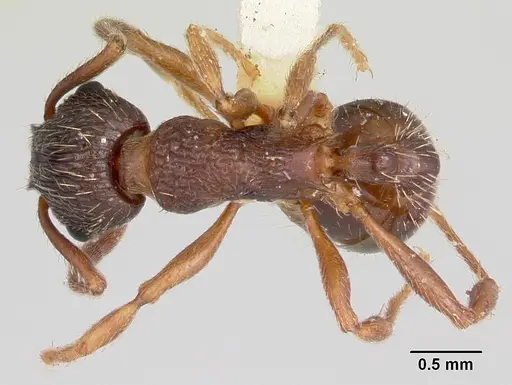
Literature
Loading distribution map...Loading products...