
Broken-horned Ant
Myrmica fracticornis
- Sci. Name
- Myrmica fracticornis
- Tribe
- Myrmicini
- Subfamily
- Myrmicinae
- Author
- Forel, 1901
- Common Name
- Broken-horned Ant
- Distribution
- Found in 2 countries
Introduction
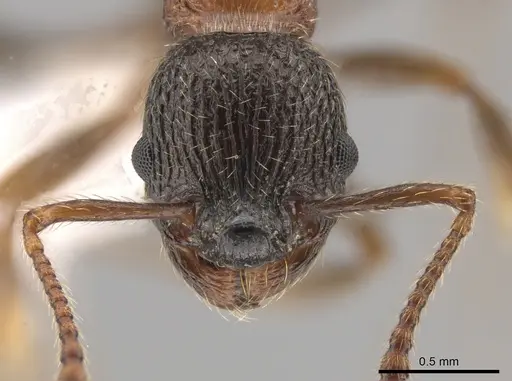
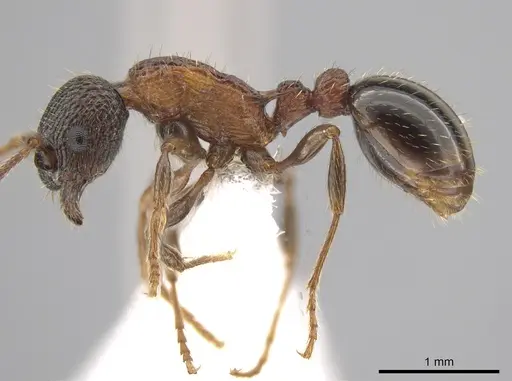
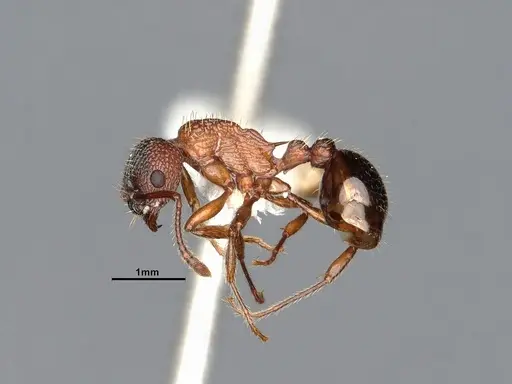
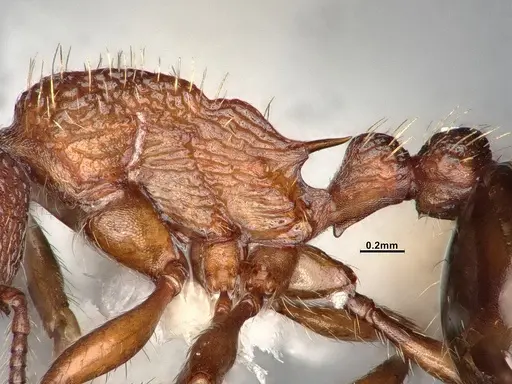
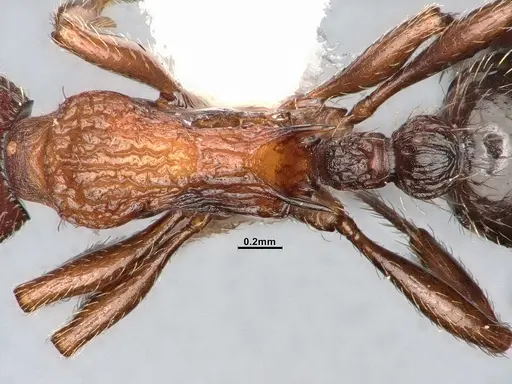
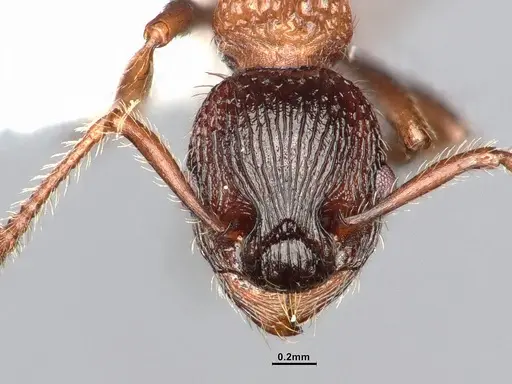
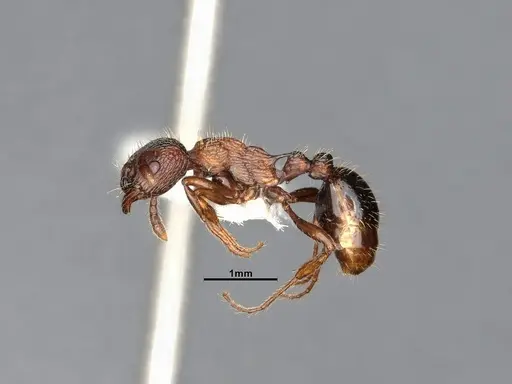
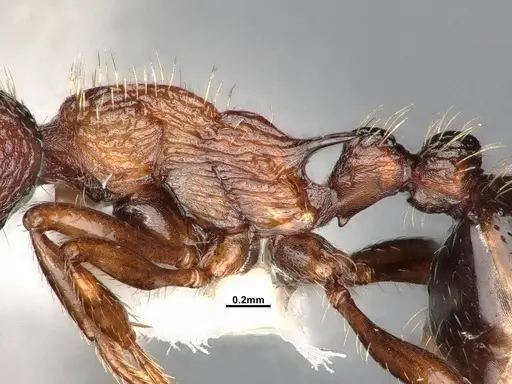
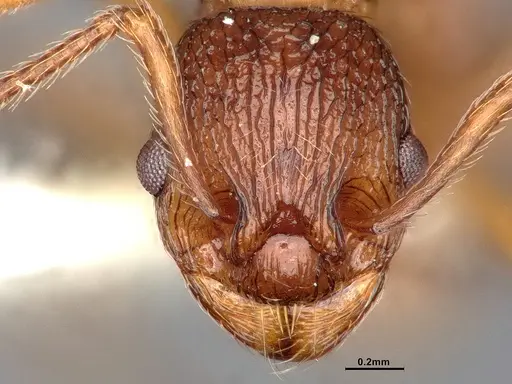
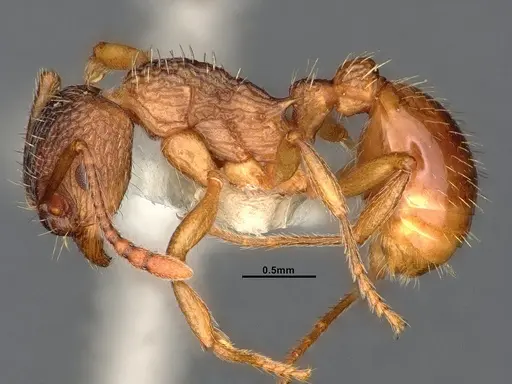
Myrmica fracticornis is a medium-sized ant native to northern North America, ranging from Newfoundland to Alaska and south across most of the United States . Workers measure 3.9-5.2 mm in total length, with dark yellowish-brown to brownish-black coloration and paler mandibles and legs . The species is identified by a weak to distinct carina on the bend of the antenna scape . It inhabits diverse environments, including woodlands, bogs, dry fields, and urban areas . This ant is ecologically flexible, tolerating drier conditions than many Myrmica species . Colonies can have one or multiple queens, making them facultatively polygyne . They also serve as hosts for the social parasite Leptothorax provancheri, highlighting their role in ant communities .
Quick Summary
- Difficulty: Easy
- Origin & Habitat: Native to northern North America, Newfoundland to Alaska, south to Tennessee, Michigan, Ohio, and western states [1][2]. Found in woodlands, bogs, dry fields, and urban green spaces [2][3][5]. Nests in soil under rocks, grass-covered mounds, or hummocks in marshy areas [2][9].
- Colony Type: Facultatively polygyne, colonies can have single or multiple queens (1-15 documented) [2]. Workers forage on ground and foliage, collecting honeydew from aphids [2][10].
- Size & Growth:
- Queen: Size data unavailable, inferred from Myrmica genus to be larger than workers
- Worker: 3.9-5.2 mm [2]
- Colony: Up to 627 workers [2]
- Growth: Moderate
- Development: 6-10 weeks at optimal temperatures, inferred from Myrmica genus patterns (Development time may vary based on temperature and conditions)
- Antkeeping:
- Temperature: Keep at room temperature, roughly 20-24°C, with a gradient to allow workers to choose preferred spots [2].
- Humidity: Provide a humidity gradient, mostly dry nest chamber with one small moist area, reflecting their tolerance for drier habitats [6][2].
- Diapause: Yes, reduce temperature to 5-10°C for 3-4 months during winter to mimic natural seasonal cycle [11][2].
- Nesting: Use test tubes, Y-tong, plaster, or soil nests. Provide a nest chamber with access to water for humidity control, based on natural nesting in soil and hummocks [2][9].
- Behavior: Workers are slow-moving and non-aggressive, foraging on ground and foliage for honeydew [2][10]. They are not strong escape artists but use standard precautions. The species is a habitat generalist, found in natural and disturbed areas [5][12].
- Common Issues: colonies may fail if kept too wet, provide a humidity gradient to avoid drowning, winter die-off is common if diapause is not provided, wild-caught colonies may have parasites that kill them in captivity, slow growth can frustrate beginners, colonies may take months to establish, multiple queens may fight if introduced improperly, start with single queen or allow natural structure
Housing and Nest Setup
Myrmica fracticornis adapts well to various nest types. Use test tubes for founding colonies, fill with water, plug with cotton, and cover with darkness. For established colonies, Y-tong, plaster, or soil nests work well. Provide a humid chamber with water access, but avoid constant saturation since they tolerate drier conditions [6][2]. A substrate chamber lets them create tunnels, and a small outworld completes the setup.
Feeding and Diet
In the wild, they feed on honeydew from aphids [2][10]. In captivity, offer constant sugar water or honey, and protein like fruit flies or small crickets 2-3 times per week. Remove uneaten prey after 24-48 hours to prevent mold. Workers forage slowly, so place food near trails.
Temperature and Seasonal Care
Keep colonies at 20-24°C for optimal activity. This species tolerates cooler temperatures due to its northern range [2]. In winter, provide diapause at 5-10°C for 3-4 months to mimic natural cycles [11]. Gradual temperature changes are important to avoid stress.
Colony Dynamics and Multi-Queen Behavior
Colonies can have one or multiple queens (1-15 documented) [2]. Multiple queens often coexist peacefully. If starting with multiple foundresses, provide space and avoid disturbance until workers emerge. Single-queen colonies are stable for beginners.
Behavior and Handling
Workers are docile and slow-moving, not aggressive [2]. They can sting but rarely penetrate human skin. Escape prevention is straightforward with standard barriers. They are habitat generalists, forgiving of minor care mistakes [5][12].
Frequently Asked Questions
How long does it take for Myrmica fracticornis to produce first workers?
Expect first workers in 6-10 weeks from egg laying, depending on temperature. Keep founding chamber at around 22°C for fastest development [2].
Can I keep multiple Myrmica fracticornis queens together?
Yes, this species is facultatively polygyne, and wild colonies have up to 15 queens [2]. If combining unrelated foundresses, provide ample space and avoid disturbance.
Do Myrmica fracticornis ants sting?
Yes, but their stinger is small and rarely penetrates human skin, causing minimal discomfort [2].
What temperature do Myrmica fracticornis need?
Keep them at 20-24°C with a gradient, as they tolerate cooler temperatures due to their northern distribution [2].
Do they need hibernation?
Yes, provide a winter diapause at 5-10°C for 3-4 months to maintain colony health [11][2].
Are Myrmica fracticornis good for beginners?
Yes, they are adaptable and docile, making them easier to keep than many tropical species [2].
What do Myrmica fracticornis eat?
They primarily eat honeydew, offer sugar water and protein like small insects [2][10].
How big do Myrmica fracticornis colonies get?
Wild colonies reach up to 627 workers, captive colonies can achieve similar sizes with proper care [2].
When do Myrmica fracticornis have nuptial flights?
Nuptial flights occur from July 22 to August 6 in the evening [2].
Why are my Myrmica fracticornis dying?
Common causes include sudden temperature changes, excessive moisture, lack of diapause, or parasites from wild-caught colonies. Check temperature and humidity first [2].
Report an Issue
The current care sheet is based fully on literature. See inconsistencies, or something that's incorrect? Please , it will be resolved after review from an admin. Contributing to the blogs tab also helps providing information, to make us be able to further improve the caresheets. Thank you for your support!
References

This caresheet is licensed under CC BY-SA 4.0 .
Community Blogs
CASENT0651716
View on AntWeb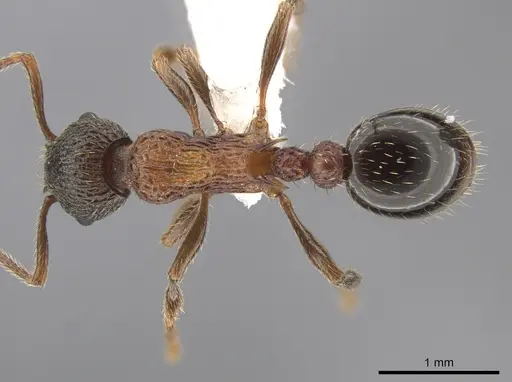
CASENT0904076
View on AntWeb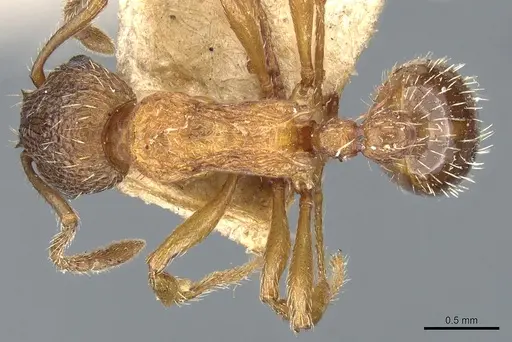
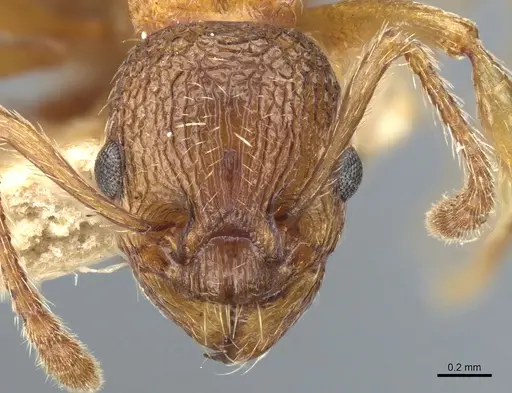
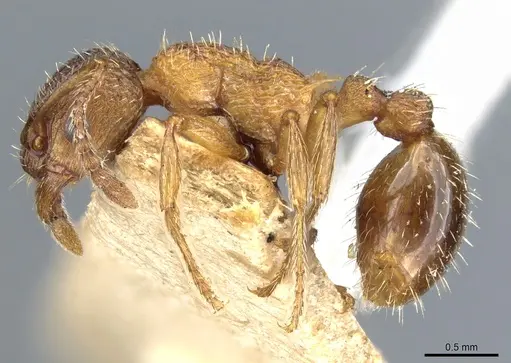
CASENT0922751
View on AntWeb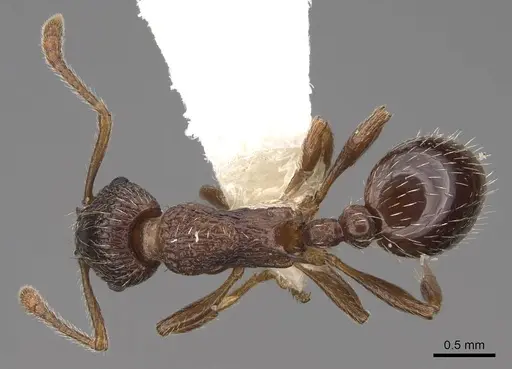
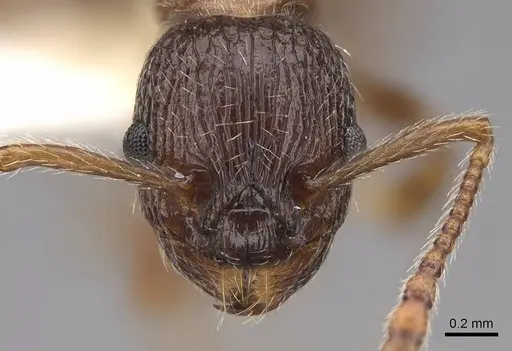
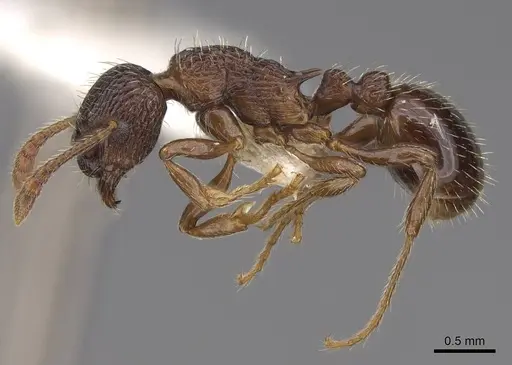
CASENT4031386
View on AntWeb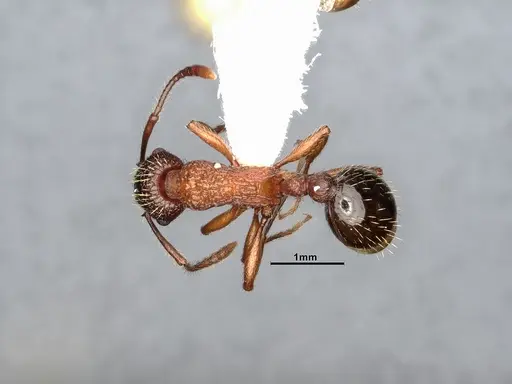
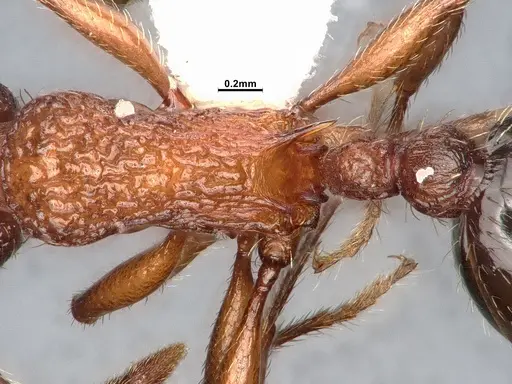
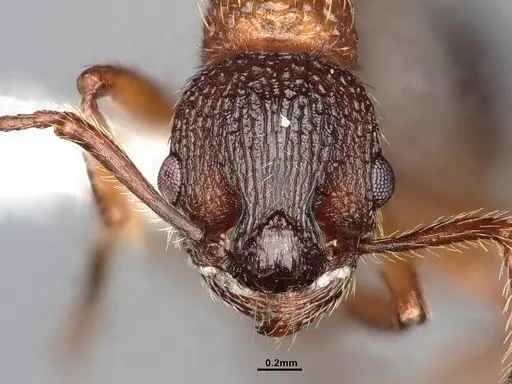
CASENT4031387
View on AntWeb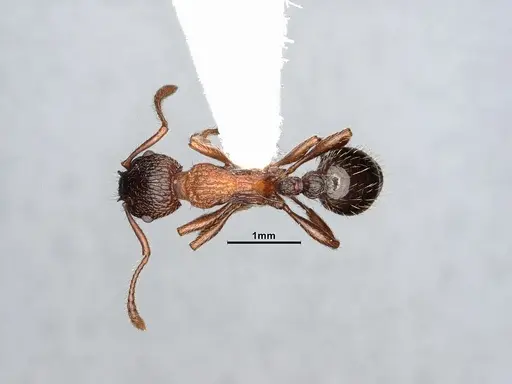
CASENT4031389
View on AntWeb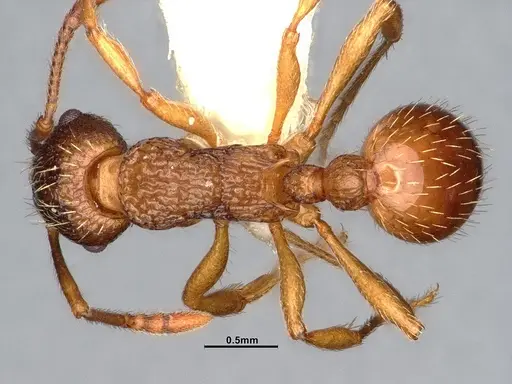
Literature
Loading distribution map...Loading products...