
Myrmica bactriana
- Sci. Name
- Myrmica bactriana
- Tribe
- Myrmicini
- Subfamily
- Myrmicinae
- Author
- Ruzsky, 1915
- Distribution
- Found in 1 countries
Introduction
Myrmica bactriana is a high-altitude ant from the Tibetan Plateau region, found in grasslands and subalpine meadows between 2800 and 3900 m in Tibet, Nepal, and Sichuan, China . Workers are small for the genus, with a reddish-brown body and lighter legs. The head is longer than wide, with a straight back edge, and the first antenna segment (scape) is shorter than head width. This species is very similar to Myrmica ruzskyana, differing mainly by having a slightly longer scape with more suberect hairs . Queens have never been scientifically described, which is the biggest challenge for anyone wanting to keep this species.
Quick Summary
- Difficulty: Expert
- Origin & Habitat: Tibetan Plateau region (Tibet/China, Nepal) at high altitudes 2800–3900 m in grasslands and subalpine meadows [1][2][3][4]
- Colony Type: Unknown – queens have not been described, so colony structure is unstudied
- Size & Growth:
- Queen: Unknown – queens have not been scientifically described [1]
- Worker: Estimated ~4–6 mm, inferred from the genus Myrmica [5]. No direct body size measurements exist.
- Colony: Unknown – no colony size data available
- Growth: Unknown
- Development: Unknown – estimate 8–12 weeks based on typical Myrmica genus patterns at optimal temperature, but purely speculative (No direct development data exists for this species. Estimates are based on related Myrmica species from similar high-altitude habitats.)
- Antkeeping:
- Temperature: Cool to cold – aim for 15–22 °C, reflecting high-altitude origin. Provide a temperature gradient for self-regulation. Avoid overheating [5].
- Humidity: Moderate to high – they naturally inhabit damp subalpine meadows. Keep nest substrate consistently moist but not waterlogged. Provide a water tube for drinking [5].
- Diapause: Yes – high-altitude species almost certainly require a winter dormancy period. Provide 3–4 months of cold conditions around 5–10 °C during winter. This is not confirmed by research but inferred from habitat [5].
- Nesting: Likely prefers soil or rotting wood nests based on field observations: nesting under stones, in rotten wood, and under rotten wood [4]. Use a naturalistic setup with soil substrate or a Y-tong/plaster nest with moisture retention. Avoid acrylic nests.
- Behavior: Workers forage on plants, ground surfaces, under stones, and in decaying wood [4]. Like other Myrmica, they are probably moderately aggressive when disturbed and can sting. Escape risk is moderate due to small worker size (4–6 mm). They are active during warmer months in their native habitat and would be most active in captivity from spring to fall.
- Common Issues: queen unavailability – queens have never been scientifically described, making obtaining a founding queen nearly impossible, no development data – without known queen caste or colony structure, captive propagation is extremely difficult, high-altitude requirements – cool temperatures and proper diapause are challenging to provide year-round, escape prevention – small worker size means standard barriers may need reinforcement, slow colony growth – even if established, growth will likely be slow due to high-altitude life history
Natural History and Distribution
Myrmica bactriana lives in the high mountains of the Tibetan Plateau. It has been found in Tibet (China), Nepal, and Sichuan at elevations from about 1770 m up to 3900 m [1][2][3][4]. The type locality is the upper Yangtse River at 3850 m near Darindo, Tibet [1]. In Nepal, specimens were collected in Solukhumbu district (Ringmo–Junbesi,2800 m, Yaral/Pangboche,3900 m, Tate,2900 m) and in Sindhupalchok district (Hoxe,1000–2000 m) [2][3]. They live in grasslands and subalpine meadows and almost certainly nest in soil [5]. Field work in Sichuan shows they also nest in rotten wood, under rotten wood, and under stones, workers forage on plants, on the ground, under rotten wood, and under stones [4]. On the Tibetan Plateau, this species occurs in the same areas as Myrmica tibetana and Myrmica gebaueri [1].
Identification and Distinction
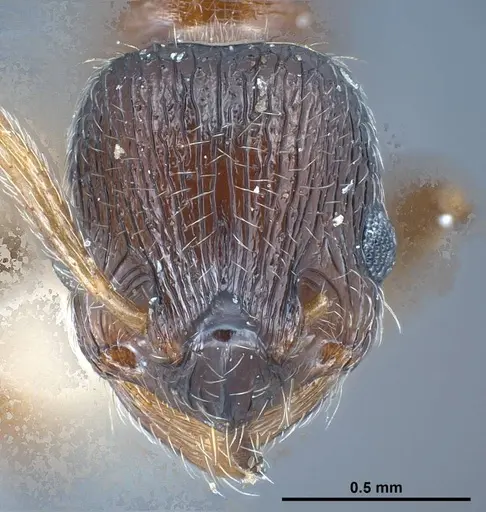
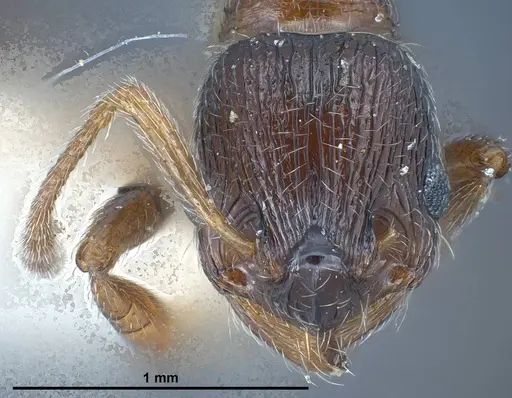
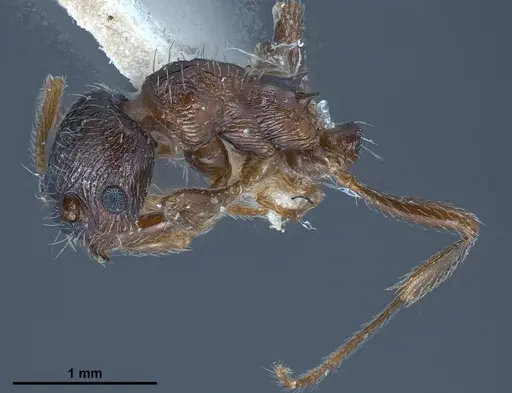
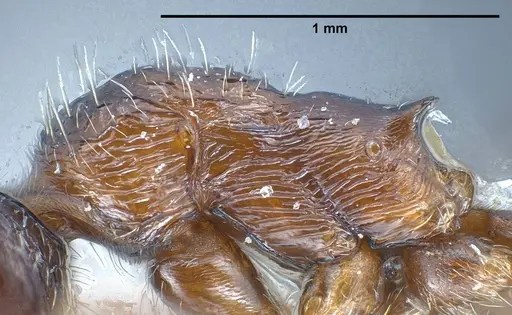
Myrmica bactriana belongs to the Myrmica smythiesiii group. It is very similar to Myrmica bactriana – the main difference is that M. bactriana has a slightly longer scape (antenna first segment) (SI2 ~0.93 vs. ~0.91) and more abundant suberect hairs [1]. Some researchers think these might be just different populations of the same species. Workers are reddish to reddish-brown with lighter legs. The head is longer than wide, with roughly parallel sides and a straight back margin. The propodeal spines are short, straight, and point backward at about 45°. The surface of the body is shiny, with fine, wavy ridges on the front of the head and on the thorax [1].
Housing and Nesting
Based on field observations, Myrmica bactriana probably nests in soil, rotten wood, or under stones [4]. In captivity, use a naturalistic setup with a soil substrate, or a Y-tong (AAC) nest or plaster nest that holds moisture well. Avoid acrylic nests. The chambers should be sized for workers about 4–6 mm long. Provide a water tube or a moist area to keep humidity up. Because this is a high-altitude species, keep the nest cool – room temperature or a bit lower is good. The outworld can include plants, stones, or other items for enrichment.
Temperature and Seasonal Care
As a high-altitude species from the Tibetan Plateau, Myrmica bactriana needs cool conditions. Keep the nest area at 15–22 °C, with a gradient so workers can choose their preferred spot. During the active season (spring to fall), keep temperatures in the upper part of this range. This species requires a winter dormancy period (diapause) of about 3–4 months at 5–10 °C to mimic the harsh Tibetan winter. This is not directly confirmed by research but is considered essential based on its high-altitude habitat [5]. Do not keep them warm all year without a proper dormant period.
Feeding and Diet
Like other Myrmica, M. bactriana probably eats honeydew, small insects, and other protein sources. In captivity, offer sugar water or honey for energy, plus small live or frozen insects (fruit flies, small mealworms, crickets) for protein. Feed protein 1–2 times a week and keep sugar water available all the time. Remove any uneaten prey after 24–48 hours to prevent mold. Because the specific diet of this species has not been studied, watch which foods your colony accepts. [5]
Challenges in Captive Care
The biggest challenge is that queens have never been scientifically described [1]. Without knowing what queens look like, you cannot identify or collect founding queens from the wild. This makes starting a colony from scratch nearly impossible. There is also no information on colony size, development time, or social structure. Their high-altitude origin means they need cool temperatures year-round and a proper winter dormancy. These specific needs make this species suitable only for very experienced ant keepers who can provide exactly the right conditions.
Frequently Asked Questions
Can I keep Myrmica bactriana in a test tube?
A test tube setup could work for a founding stage, but since queens have never been described, you are very unlikely to obtain a queen to start with. If you somehow get a queen, a test tube with water reservoir and cotton plug would be fine, kept cool and dark.
How long does it take for Myrmica bactriana to develop from egg to worker?
Unknown – no development data exists for this species. Based on typical Myrmica genus patterns, an estimate of 8–12 weeks at optimal temperature is possible, but this is purely speculative.
Are Myrmica bactriana ants good for beginners?
No. Queens have never been described, so you cannot start a colony. Even if you had workers, their specific cool-temperature and diapause requirements make them unsuitable for beginners. This is an expert-level species.
Do Myrmica bactriana ants sting?
Yes, like all Myrmica, they can sting. The sting is painful but not dangerous to healthy humans. Workers will sting defensively when disturbed.
What temperature do Myrmica bactriana ants need?
Keep them cool – aim for 15–22 °C with a temperature gradient. They come from high altitudes (2800–3900 m) on the Tibetan Plateau and are adapted to cold conditions. Avoid overheating.
Do Myrmica bactriana ants need hibernation?
Almost certainly yes, based on their high-altitude habitat. Provide a winter dormancy period of 3–4 months at 5–10 °C. This is not directly confirmed but is standard for alpine species.
Can I keep multiple queens together?
Unknown – colony structure has not been studied. Myrmica species are often monogyne (single queen), but this has not been confirmed for M. bactriana due to the lack of queen descriptions.
Where does Myrmica bactriana live in the wild?
This species is found in the Tibetan Plateau region at high altitudes (2800–3900 m) in grasslands and subalpine meadows. It has been recorded in Tibet (China), Nepal, and Sichuan Province. They nest in soil, rotting wood, or under stones.
Why are Myrmica bactriana ants so difficult to keep?
The main reason is that queens have never been scientifically described – nobody knows what they look like or how to find them. Also, there is no research on their captive care, colony size, or development. Their high-altitude origin adds specific cool-temperature and diapause needs that are hard to provide.
What do Myrmica bactriana ants eat?
Like other Myrmica, they likely eat honeydew, small insects, and other protein sources. In captivity, offer sugar water or honey for energy and small insects (fruit flies, mealworms) for protein. Feed protein 1–2 times a week with sugar water always available.
Report an Issue
The current care sheet is based fully on literature. See inconsistencies, or something that's incorrect? Please , it will be resolved after review from an admin. Contributing to the blogs tab also helps providing information, to make us be able to further improve the caresheets. Thank you for your support!
References

This caresheet is licensed under CC BY-SA 4.0 .
Community Blogs
ANTWEB1008449
View on AntWeb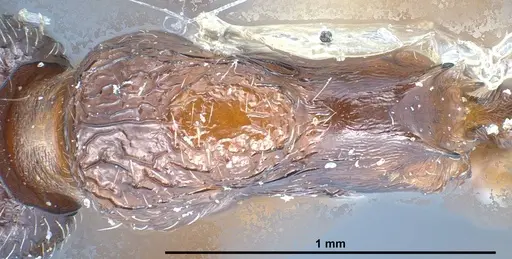
Literature
Loading distribution map...Loading products...