
Myrmelachista meganaranja
- Sci. Name
- Myrmelachista meganaranja
- Tribe
- Myrmelachistini
- Subfamily
- Formicinae
- Author
- Longino, 2006
- Distribution
- Found in 2 countries
Introduction
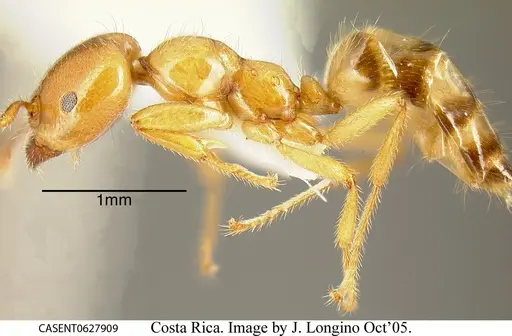
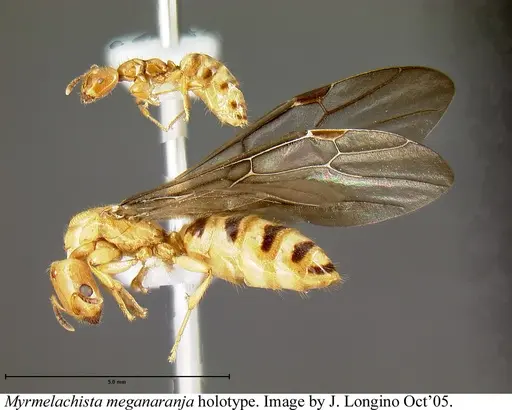
Myrmelachista meganaranja is a small arboreal ant species native to the southern highlands of Costa Rica. Workers are uniformly orange, while queens have an orange head and distinctive dark bands on the abdomen . The species name means 'big orange' in Spanish, referring to the orange coloration of the workers . This species occurs in mature wet forest at elevations around 1200m, nesting in live plant stems throughout the forest canopy . This is an opportunist ant species that nests in live stems, particularly in wet forest habitats. They maintain relationships with scale insects (Pseudococcidae) that live on the inner stem walls, likely feeding on honeydew these insects produce . Colonies tend to scatter throughout multiple stems of their host plant, making them a specialized arboreal species.
Quick Summary
- Difficulty: Medium
- Origin & Habitat: Southern highlands of Costa Rica, specifically at Wilson Botanical Gardens near San Vito and Las Alturas. They inhabit mature wet forest at approximately 1200m elevation, nesting in live plant stems throughout the forest canopy [1].
- Colony Type: Unconfirmed, queen number not specified in research.
- Size & Growth:
- Queen: size data unavailable
- Worker: size data unavailable
- Colony: Unknown maximum, based on observations, colonies can be scattered throughout large trees [1].
- Growth: Unknown
- Development: Estimated 6-8 weeks at tropical temperatures (Development time not directly documented for this species.)
- Antkeeping:
- Temperature: Keep warm, around 24-28°C].
- Humidity: Keep nest substrate consistently moist but not waterlogged].
- Diapause: No.
- Nesting: Arboreal nesting specialists. In captivity, they do well in test tube setups with plant stem mimics or in Y-tong nests with narrow chambers. Provide small twigs or stems for them to inhabit [1][2].
- Behavior: Generally calm and non-aggressive. As an opportunist species, they are not particularly defensive [2]. Workers are small but active, foraging throughout their arboreal territory. They maintain scale insects in their nests for honeydew [1]. Escape prevention is important due to their small worker size, use fine mesh barriers and tight-fitting lids.
- Common Issues: small worker size means escapes are likely without fine mesh barriers., humidity control is critical, too dry and colonies will fail in captivity., arboreal nature requires vertical space and stem-like nesting structures., tropical species will not tolerate cool temperatures or drafts., inadequate diet, ensure constant sugar sources and occasional protein.
Housing and Nest Setup
Myrmelachista meganaranja is an arboreal species that naturally nests inside live plant stems. In captivity, you need to replicate this stem-like environment. Test tubes work well for founding colonies, simply place the queen in a humid test tube and let her seal herself in. For established colonies, Y-tong nests with narrow chambers work better than standard formicariums designed for ground-nesting ants. The key is providing tight, stem-like spaces. These ants prefer chambers that are appropriately scaled to their tiny size, avoid large open spaces. You can also create a more naturalistic setup by providing small twigs or bamboo sections connected to a foraging area. The nest should be kept humid but with some ventilation to prevent mold. A water reservoir connected to the nest helps maintain consistent humidity [1][2].
Feeding and Diet
In the wild, these ants maintain relationships with scale insects (Pseudococcidae) that live on the inner walls of their host plant stems. The ants feed on the honeydew these scale insects produce, this is a sugary secretion that provides the ants with carbohydrates [1]. In captivity, you should replicate this by providing sugar water, honey, or sucrose solutions as a constant food source. They will also accept protein in the form of small insects like fruit flies, pinhead crickets, or mealworms. Since they are small ants, prey items should be appropriately sized, tiny insects are best. Feed protein 2-3 times per week and keep sugar water available constantly [1].
Temperature and Humidity
As a tropical species from Costa Rica's southern highlands, Myrmelachista meganaranja needs warm, humid conditions year-round. Keep the nest area at 24-28°C, this is warmer than typical room temperature for most homes, so you may need a small heating setup. A heating cable on one side of the nest creates a gentle temperature gradient that allows the ants to regulate their own conditions. Humidity is equally important. These ants come from wet forest environments, so aim for high humidity in the nest area. The substrate should feel consistently damp but never waterlogged. You can achieve this by connecting a water reservoir to the nest or by misting regularly and monitoring condensation levels. Avoid placing the nest near air conditioning vents or in drafty areas, sudden temperature drops can stress and kill colonies [1].
Colony Development and Growth
The queen will seal herself in a small chamber during founding. She uses stored fat reserves to survive until her first workers emerge. The first workers, called nanitics, are typically smaller than normal workers but they immediately begin caring for the brood and expanding the nest. Development time from egg to worker is estimated at 6-8 weeks at optimal tropical temperatures, though this has not been directly documented for this species. Growth rate is unknown. Once the colony reaches a small number of workers, growth may accelerate as more foragers are available to bring in food. Maximum colony size is unknown but colonies are observed scattered throughout large trees in the wild [1].
Behavior and Temperament
Myrmelachista meganaranja is an opportunist species with relatively calm temperament. They are not aggressive and do not have a painful sting, these ants are essentially harmless to keepers. Workers are small but active, moving through their territory in search of honeydew and small prey. A notable behavior is their relationship with scale insects. In the wild, they cultivate Pseudococcidae on the inner stem walls of their host plants. The scale insects feed on plant sap and produce honeydew, which the ants consume. This mutualistic relationship is essential for their survival in the wild and may explain why they are selective about their nesting sites [1]. In captivity, they are not escape artists in the traditional sense, they don't climb smooth surfaces aggressively, but their tiny size means they can squeeze through very small gaps. Use fine mesh on any ventilation holes and ensure all connections are tight [2].
Frequently Asked Questions
How long does it take for Myrmelachista meganaranja to produce first workers?
Estimated 6-8 weeks from egg to worker at optimal tropical temperatures (24-28°C). This is based on typical Formicinae development patterns since specific development time has not been documented for this species.
What do Myrmelachista meganaranja ants eat?
They need two main food sources: carbohydrates and protein. Provide sugar water, honey, or sucrose solution constantly, this mimics the honeydew they get from scale insects in the wild. For protein, offer small insects like fruit flies, pinhead crickets, or small mealworms 2-3 times per week. Prey should be appropriately sized for their tiny workers [1].
Can I keep Myrmelachista meganaranja in a test tube?
Yes, test tubes work well for founding colonies. Simply provide a humid test tube with a cotton water reservoir. The queen will seal herself in and raise her first brood there. Once the colony has a few workers, consider moving to a more elaborate setup with stem-like chambers, but test tubes are perfect for the founding stage [1].
Do Myrmelachista meganaranja ants need hibernation?
No, they do not require hibernation. As a tropical species from Costa Rica, they need warm conditions year-round. Keep temperatures consistently in the 24-28°C range. If your room temperature is below this, use a small heating cable or heat mat to maintain warmth.
What is the best nest type for Myrmelachista meganaranja?
They are arboreal stem-nesters, so they do best in nests that mimic plant stems. Y-tong nests with narrow, appropriately-sized chambers work well. The key is providing tight spaces scaled to their tiny worker size. You can also create a naturalistic setup with small twigs or bamboo sections. Avoid large, open spaces typical of ground-nesting ant formicariums [1][2].
How big do Myrmelachista meganaranja colonies get?
Maximum colony size is not well documented, but based on observations of wild colonies scattered throughout large trees, colonies can be large but specific size is unknown [1].
Why are my Myrmelachista meganaranja dying?
Common causes include: too low temperature (they need 24-28°C), too dry conditions (they need high humidity), poor escape prevention allowing tiny workers to escape, and inadequate food, especially lack of constant sugar sources. Also ensure they are not exposed to drafts or air conditioning. These are sensitive tropical ants that need stable, warm, humid conditions.
Do Myrmelachista meganaranja need scale insects?
In the wild, they cultivate Pseudococcidae (scale insects) for honeydew. While not strictly required in captivity, keeping a small scale insect colony can help simulate their natural diet. However, sugar water or honey is usually sufficient to meet their carbohydrate needs. If you want to try a more naturalistic setup, you could attempt to introduce scale insects, but this is advanced and usually unnecessary [1].
Are Myrmelachista meganaranja good for beginners?
This species is rated as medium difficulty. While not the hardest ant to keep, they do require specific conditions, warm temperatures, high humidity, and arboreal-style housing, that may challenge complete beginners. If you are new to antkeeping, you might want to start with a more forgiving species. However, if you can provide the warm, humid conditions they need, they are a rewarding species to observe.
Report an Issue
The current care sheet is based fully on literature. See inconsistencies, or something that's incorrect? Please , it will be resolved after review from an admin. Contributing to the blogs tab also helps providing information, to make us be able to further improve the caresheets. Thank you for your support!
References

This caresheet is licensed under CC BY-SA 4.0 .
Community Blogs
CASENT0280548
View on AntWeb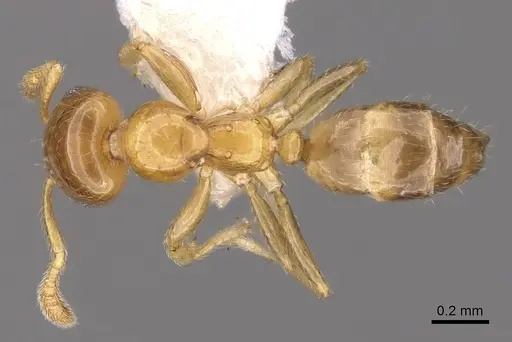
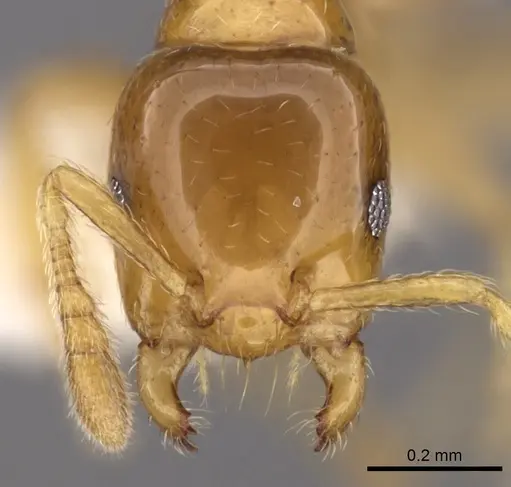
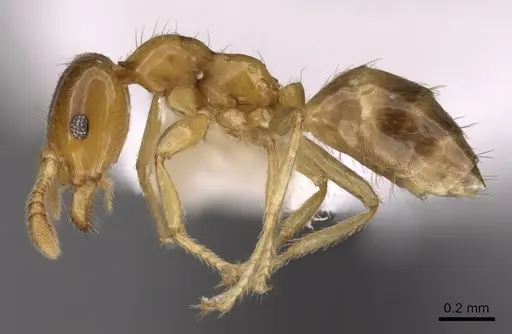
CASENT0627909
View on AntWeb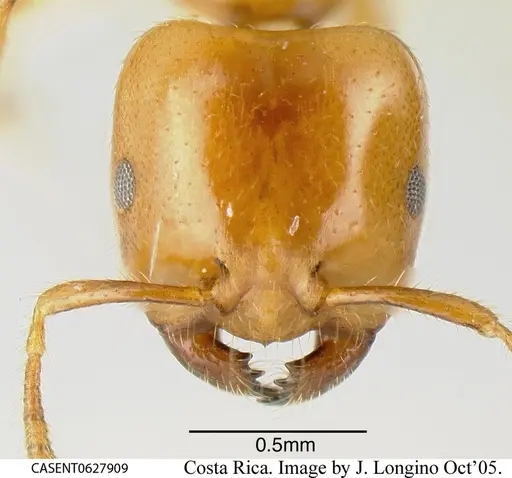
INBIOCRI001282682
View on AntWeb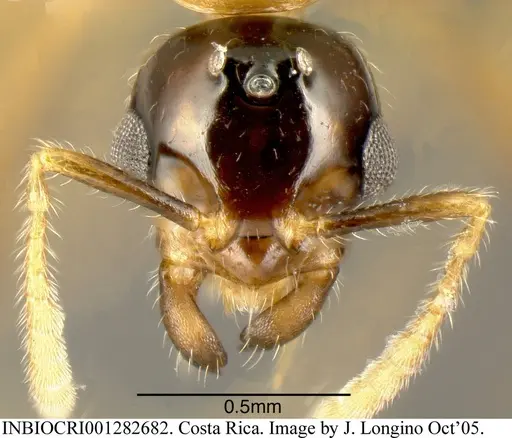
JTLC000006225
View on AntWeb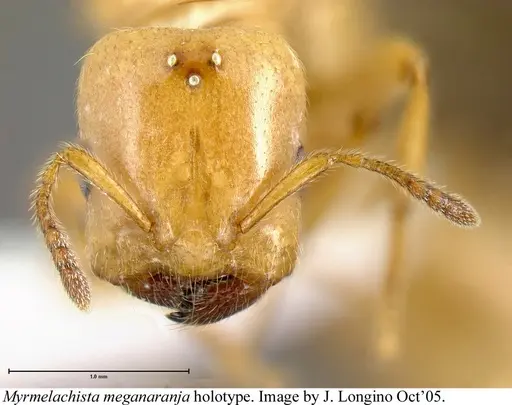
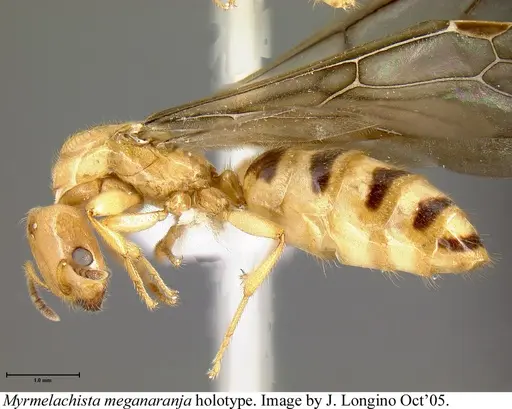
Literature
Loading distribution map...Loading products...