
Myrmelachista haberi
- Sci. Name
- Myrmelachista haberi
- Tribe
- Myrmelachistini
- Subfamily
- Formicinae
- Author
- Longino, 2006
- Distribution
- Found in 1 countries
Introduction
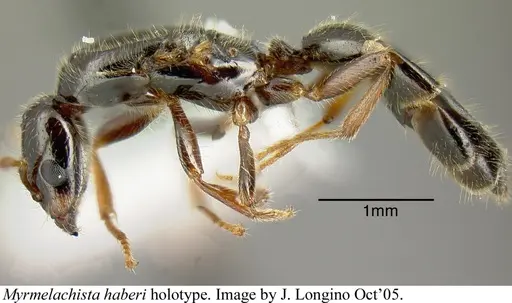
Myrmelachista haberi is a tiny arboreal ant endemic to the cloud forests of Costa Rica. Workers are yellow to light orange , while queens have a solid black head . This species is an obligate inhabitant of understory Lauraceae trees, particularly Ocotea species , living inside stems and branches. Colonies are monogynous and occupy the entire host plant . The most interesting aspect is their mutualism with hemipteran partners, which they farm in specialized xylem pockets within the plant .
Quick Summary
- Difficulty: Expert
- Origin & Habitat: Costa Rica, Cordillera de Tilarán and Cordillera Volcánica Central at 1000-1500m elevation in cloud forest understory [2]
- Colony Type: Monogynous (single queen) colonies. Founding queens are found alone in separate chambers within shoot tips of host plants [2].
- Size & Growth:
- Queen: size data unavailable
- Worker: size data unavailable
- Colony: Unknown maximum size [2]
- Growth: Unknown
- Development: Unknown, no direct data available (Development time has not been documented for this species)
- Antkeeping:
- Temperature: Keep cool, around 20-24°C, based on their montane cloud forest origin at 1000-1500m elevation [2]. Avoid overheating.
- Humidity: Keep nest substrate consistently moist but not waterlogged, as they live in humid cloud forest understory [2][1].
- Diapause: Unknown, being a tropical species, true hibernation is unconfirmed [2]
- Nesting: Obligate plant-dwelling ants that require hollow stems or branches of Lauraceae plants. Use naturalistic setups or custom arboreal nests [2][1].
- Behavior: Workers are docile and non-aggressive, patrolling host plant surfaces and tending hemipteran partners for honeydew [1]. Escape risk is high due to tiny size, use fine mesh barriers [2].
- Common Issues: specialized habitat requirements make this species difficult to keep, they need living plant material or custom stem-style nests, tiny size means excellent escape prevention is essential, use fine mesh barriers, high humidity needs must be balanced with ventilation to prevent mold, host plant availability is a major challenge, they are obligate Lauraceae inhabitants, this is not a beginner species, requires advanced antkeeping experience with arboreal setups
Natural History and Distribution
Myrmelachista haberi is endemic to Costa Rica, found only in two isolated mountain ranges, the Cordillera de Tilarán near Santa Elena de Monteverde at 1000-1500m elevation, and the Cordillera Volcánica Central in Braulio Carrillo National Park at around 1100m elevation [2]. This is a cloud forest environment with high humidity and relatively cool temperatures. The species is an obligate inhabitant of understory Lauraceae trees, including Ocotea, Mespilodaphne, and Guarea species [1]. These host plants are small treelets, rarely exceeding 4 meters in height, with dwarfism being a characteristic trait [1]. Colonies occupy the entire host plant, with workers patrolling new growth surfaces and tending hemipteran partners in specialized xylem pockets [1]. The one colony fully dissected was monogynous, containing a single queen in her own chamber within the plant stem [2].
Housing and Nesting Requirements
This is the most challenging aspect of keeping Myrmelachista haberi. They are obligate plant-dwelling ants that require access to hollow stems or branches of Lauraceae plants [2][1]. In captivity, you would need either a naturalistic setup with actual host plant material or a custom-designed arboreal formicarium with narrow chambers simulating plant stems. Standard test tubes and basic acrylic nests are not suitable. The nest must allow the colony to occupy the entire structure, as they do in the wild. Humidity must be high but with adequate ventilation to prevent mold growth [1]. The setup should include space for the colony to tend their hemipteran partners (coccids and pseudococcids), which they farm for honeydew [1].
Temperature and Climate Needs
Being from cool montane cloud forests at 1000-1500m elevation, Myrmelachista haberi prefers temperatures in the range of 18-24°C [2]. This is cooler than most tropical ants and reflects their high-altitude origin. Avoid keeping them warm, they come from areas with relatively mild temperatures year-round. Room temperature (around 20-22°C) is likely ideal. If additional heating is needed, use it very gently and always provide a temperature gradient so ants can move to cooler areas if needed.
Feeding and Diet
In the wild, Myrmelachista haberi workers patrol their host plant surfaces and tend hemipteran partners (coccids and pseudococcids) that live in specialized xylem pockets within the plant [1]. These hemipterans produce honeydew, which is a primary food source. The ants protect and farm these insects in exchange for the sugary honeydew. In captivity, you would need to replicate this mutualism or provide alternative sugar sources. Offer sugar water or honey water in small containers, though acceptance is uncertain. They will likely accept small protein sources like fruit flies or tiny insects.
Colony Structure and Development
Myrmelachista haberi forms monogynous colonies with a single queen [2]. Founding queens have been found alone in separate chambers within shoot tips from stump sprouts, they establish their colony in isolated sections of the host plant [2]. The colony grows by producing workers that then expand throughout the plant. Workers show high morphological uniformity, meaning they all look very similar [1]. The maximum colony size is unknown. An alate queen was captured in a Malaise trap, indicating nuptial flights occur but the exact timing is unknown [2]. Development time from egg to worker has not been documented.
Behavior and Temperament
This is a docile, non-aggressive species. Workers are tiny and likely cannot sting effectively, their main defense is probably retreat into the plant [2]. They are arboreal, spending their time on and inside their host plant rather than on the ground. Workers patrol new growth surfaces, likely searching for honeydew from their farmed hemipterans and tending their colony [1]. The biggest concern for captivity is their tiny size, workers are only about 2mm total length, making them excellent escape artists. Any gaps in the enclosure will be exploited. Use fine mesh barriers and ensure all connections are sealed.
Frequently Asked Questions
Can I keep Myrmelachista haberi in a test tube?
No, test tubes are not suitable. This is an obligate plant-dwelling ant that requires access to hollow plant stems. You would need a naturalistic setup with Lauraceae plant material or a custom arboreal-style nest [2][1].
What do Myrmelachista haberi ants eat?
They primarily farm hemipteran partners (coccids and pseudococcids) for honeydew in the wild [1]. In captivity, offer sugar water or honey water and small protein sources like fruit flies.
How long does it take for Myrmelachista haberi to produce first workers?
Exact development time is unknown, no direct data available for this species [2].
Are Myrmelachista haberi ants good for beginners?
No, this is an expert-level species. They have extremely specialized habitat requirements as obligate plant-dwelling ants, require high humidity, and need a complex setup that most beginners cannot provide [2][1].
What temperature do Myrmelachista haberi ants need?
Keep them cool compared to most tropical ants, around 18-24°C. They come from cool montane cloud forests at 1000-1500m elevation in Costa Rica [2]. Room temperature is ideal.
How big do Myrmelachista haberi colonies get?
Maximum colony size is unknown, no data available [2].
Can I keep multiple Myrmelachista haberi queens together?
No. This species is monogynous, colonies have a single queen [2]. Multiple unrelated queens would likely fight.
Do Myrmelachista haberi ants need hibernation?
Unknown. As a tropical species, true hibernation is unconfirmed [2]. Do not attempt cold treatment without more information.
Why are my Myrmelachista haberi ants dying?
Most likely causes: wrong humidity (too dry), wrong temperature (too hot), inadequate nesting space (they need plant stems, not test tubes), or escape through tiny gaps. This species has very specific requirements [2][1].
Report an Issue
The current care sheet is based fully on literature. See inconsistencies, or something that's incorrect? Please , it will be resolved after review from an admin. Contributing to the blogs tab also helps providing information, to make us be able to further improve the caresheets. Thank you for your support!
References

This caresheet is licensed under CC BY-SA 4.0 .
Community Blogs
CASENT0637228
View on AntWeb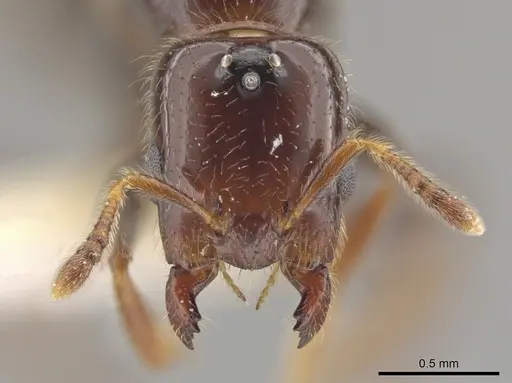
CASENT0637230
View on AntWeb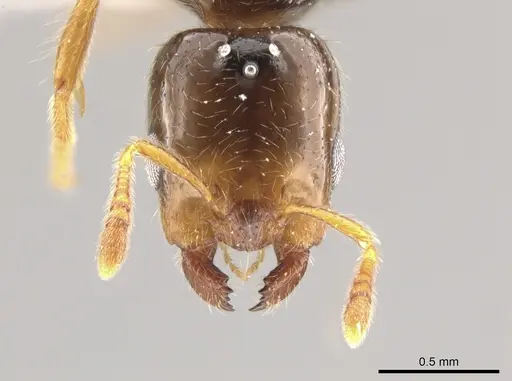
CASENT0637232
View on AntWeb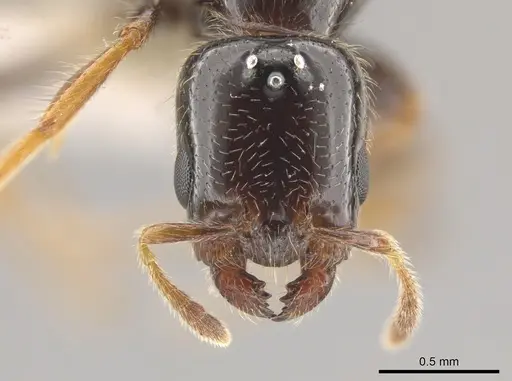
INBIOCRI002281804
View on AntWeb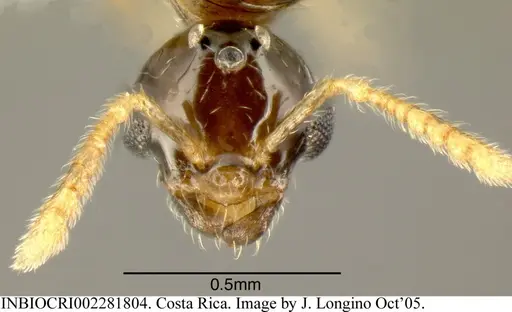
INBIOCRI002281806
View on AntWeb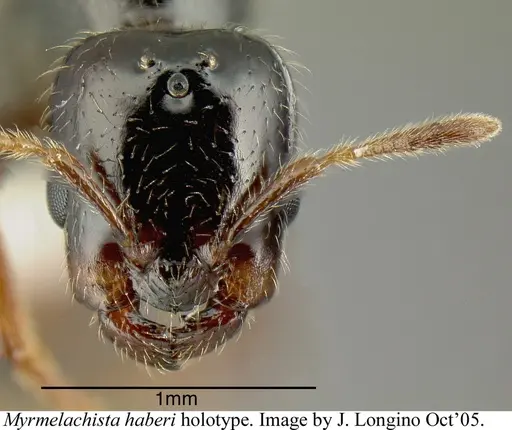
Literature
Loading distribution map...Loading products...