
Myrmelachista guyanensis
- Sci. Name
- Myrmelachista guyanensis
- Tribe
- Myrmelachistini
- Subfamily
- Formicinae
- Author
- Wheeler, 1934
- Distribution
- Found in 3 countries
Introduction
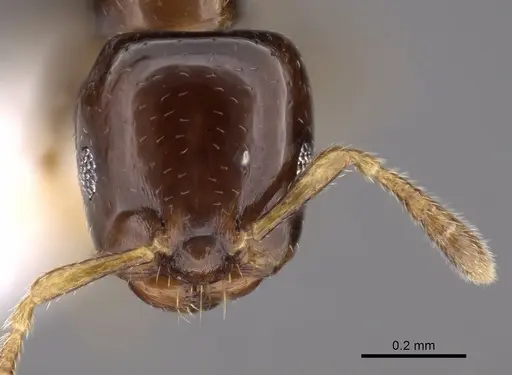
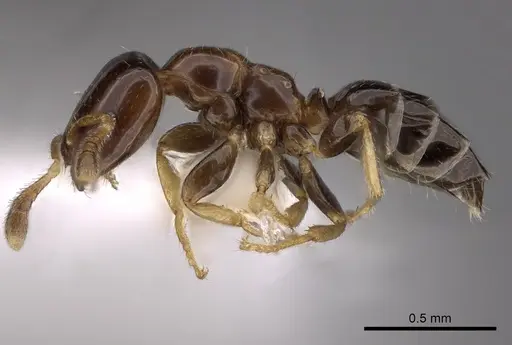
Myrmelachista guyanensis is a tiny arboreal ant species native to the northern South American tropics, found across Guyana, French Guiana, Suriname, Brazil, and Bolivia . Workers measure just 1.3-2 mm, while queens reach 3-3.3 mm . They have nine antennal segments, a subrectangular head, and short curved antennae . Their coloration is brown with yellowish-brown markings . In the wild, these ants nest inside thin dead twigs and small branches, building networks of tunnels in wood . This arboreal nesting habit is key to their captive care, requiring narrow, twig-like chambers in captivity.
Quick Summary
- Difficulty: Medium
- Origin & Habitat: Northern South America including Guyana, French Guiana, Suriname, Brazil, and Bolivia. They inhabit tropical rainforest and humid forest habitats, nesting exclusively in dead twigs and small branches [1][2].
- Colony Type: Colony structure is unconfirmed in scientific literature.
- Size & Growth:
- Antkeeping:
- Temperature: Keep nest area at 24-28°C, mimicking tropical forest conditions. Based on habitat inference [1].
- Humidity: Keep nest substrate consistently moist but not waterlogged, based on forest habitat [1].
- Diapause: No, tropical species does not require hibernation.
- Nesting: Arboreal specialists, nest in thin dead twigs and small branches [2]. In captivity, use Y-tong nests with narrow chambers or naturalistic setups with dried twigs.
- Behavior: Workers are small (1.3-2 mm [1]), non-aggressive, and active foragers. Escape risk is high due to tiny size [1].
- Common Issues: escape prevention is critical due to their very small worker size, use fine mesh barriers and ensure all seams are sealed tightly [1], colonies may struggle in overly dry conditions, their arboreal forest habitat requires more humidity than typical ground-nesting ants [1], wild-caught colonies may carry parasites that can devastate small captive colonies, quarantine and monitor new colonies carefully, slow growth can frustrate keepers, these are tiny ants with naturally small colony sizes, nesting setup is crucial, they need tight, twig-like chambers and may not thrive in large open formicarium spaces [2]
Nest Preferences and Housing
Myrmelachista guyanensis is an arboreal species that naturally nests inside thin dead twigs and small branches. In the wild, Wheeler collected type specimens from 'tenuous, anastomosing galleries in dead twigs and branches' [2]. This means they build networks of tunnels inside wood. Your setup must provide narrow, twig-like nesting spaces. Y-tong nests with small chambers work well when scaled to their tiny size. You can also create a naturalistic setup using dried twigs or bamboo sections. Avoid large, open chambers that would be unnatural for this species [1].
Feeding and Diet
Like other Myrmelachista species, these ants are likely generalist foragers with a diet based on honeydew from aphids and scale insects, plus small insects they capture. In captivity, offer sugar water or honey water as a constant energy source. For protein, provide small live prey such as fruit flies, pinhead crickets, or small mealworms. Because workers are only 1.3-2 mm, prey items must be appropriately sized [1].
Temperature and Humidity
As a tropical species from northern South America, Myrmelachista guyanensis requires warm, humid conditions. Keep the nest area at 24-28°C. This can typically be achieved with room temperature in most homes, but you may need a small heating cable if your space runs cooler. Humidity should be moderate to high, keep the nest substrate slightly damp but never waterlogged. Good ventilation is essential to prevent mold [1].
Colony Founding and Growth
The colony founding behavior of Myrmelachista guyanensis has not been directly documented. Founding behavior is unconfirmed. A newly mated queen should be given a small test tube setup with a water reservoir and kept in a warm, humid, dark location. Expect the first workers to emerge based on typical Formicinae development, but no specific timeline is known.
Behavior and Temperament
Myrmelachista guyanensis workers are tiny, measuring just 1.3-2 mm [1], and are generally calm and non-aggressive. They do not possess a painful sting and pose no danger to humans. Workers are active foragers that will readily explore their outworld. Their small size makes them excellent escape artists, even tiny gaps can allow them to escape. Excellent escape prevention is essential [1].
Seasonal Care
As a tropical species, Myrmelachista guyanensis does not require a diapause or hibernation period. Maintain consistent warm temperatures and humidity year-round. Seasonal changes in the wild are minimal, so avoid cooling or drying the colony in winter.
Frequently Asked Questions
Can I keep Myrmelachista guyanensis in a test tube?
Yes, test tubes work well for founding colonies. Use a small test tube with a cotton ball providing a water reservoir. Because they naturally nest in narrow twigs, the small diameter of a test tube mimics their preferred environment [1].
How long does it take for the first workers to emerge?
No direct data exists. Estimates suggest 6-10 weeks from egg to first worker at tropical temperatures, based on related Formicinae species.
What do Myrmelachista guyanensis eat?
They are generalist foragers. Offer sugar water or honey water as a constant energy source. For protein, provide small live prey like fruit flies or tiny crickets, appropriately sized for their 1.3-2 mm workers [1].
Are Myrmelachista guyanensis good for beginners?
They are rated Medium difficulty. The main challenges are escape prevention due to their tiny size and providing the proper narrow, twig-like nesting environment.
What is the best nest type for this species?
Y-tong nests with small chambers or naturalistic setups using dried twigs work best. The key is providing tight, narrow chambers that mimic their natural twig-nesting behavior [2].
Do they need hibernation?
No, they are a tropical species and do not require hibernation. Keep them warm year-round.
How big do colonies get?
Colony size is not documented. Based on their tiny worker size, colonies are likely small, but no estimates are available.
Why are my ants escaping?
Their tiny 1.3-2 mm size makes them excellent escape artists. Check all seams and use fine mesh on ventilation holes [1].
When should I move them to a formicarium?
Move from a test tube when the colony is crowded, but no specific worker count is known. Ensure the formicarium provides narrow chambers.
Can I keep multiple queens together?
This has not been documented. Single-queen colonies are likely, but combining queens is not recommended without evidence.
What temperature should I keep them at?
Keep the nest area at 24-28°C. This tropical species needs warmth year-round [1].
Report an Issue
The current care sheet is based fully on literature. See inconsistencies, or something that's incorrect? Please , it will be resolved after review from an admin. Contributing to the blogs tab also helps providing information, to make us be able to further improve the caresheets. Thank you for your support!
References

This caresheet is licensed under CC BY-SA 4.0 .
Community Blogs
CASENT0280547
View on AntWeb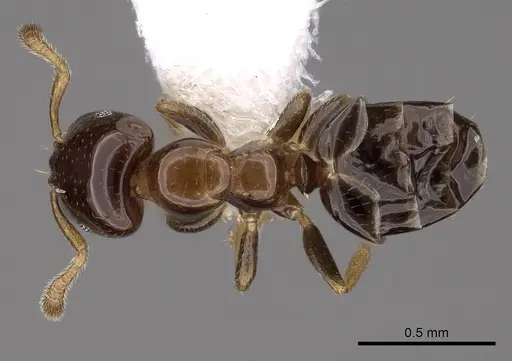
Literature
Loading distribution map...Loading products...