
Myrmelachista gagatina
- Sci. Name
- Myrmelachista gagatina
- Tribe
- Myrmelachistini
- Subfamily
- Formicinae
- Author
- Emery, 1894
- Distribution
- Found in 1 countries
Introduction
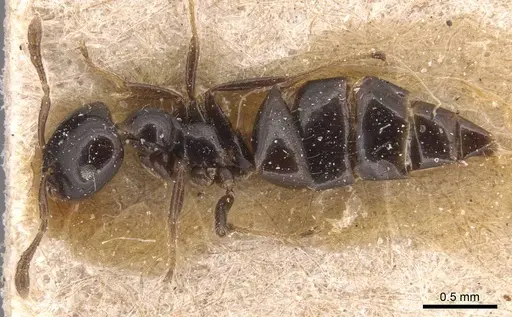
Myrmelachista gagatina is a small, dark ant species native to the Neotropical region, specifically found in southern Brazil and northern Argentina. Workers are tiny - size data is unavailable but the genus Myrmelachista is known for minute ants. The species name 'gagatina' comes from Latin meaning 'like a magpie' referring to their black coloration. This species belongs to the Formicinae subfamily and Myrmelachistini tribe. M. gagatina is classified as a cryptic species - it nests in hidden microhabitats and is rarely observed foraging in the open . In Brazil, they've been found in Atlantic Forest fragments, collected from vegetation using Malaise traps - suggesting they may be more arboreal than ground-nesting . This makes them a challenging species for experienced antkeepers who enjoy observing subtle behaviors.
Quick Summary
- Difficulty: Expert
- Origin & Habitat: Native to the Neotropical region, specifically southern Brazil (Paraná, Santa Catarina) and northern Argentina (Misiones). Found in Atlantic Forest remnants and submontane semidecidual seasonal forest at moderate elevations [3][2][1].
- Colony Type: Colony structure is unconfirmed. Based on typical Myrmelachista patterns, likely single-queen colonies.
- Size & Growth:
- Queen: Size data unavailable, queen caste has not been described in scientific literature
- Worker: ~2-3mm, inferred from Myrmelachista genus patterns (minute ants)
- Colony: Unknown, likely small colonies based on cryptic lifestyle
- Growth: Unknown, likely slow to moderate
- Development: Unconfirmed (Direct development data unavailable for this species)
- Antkeeping:
- Temperature: Keep at 24-28°C, mimicking warm subtropical forest conditions. A gentle thermal gradient allows ants to regulate their temperature.
- Humidity: Moderate to high, they come from Atlantic Forest regions with humid conditions. Keep nest substrate lightly moist but allow some drying areas. Mist occasionally but avoid waterlogging.
- Diapause: Likely minimal or none, being a tropical/subtropical species from southern Brazil/Argentina, they probably do not require true hibernation. May show reduced activity during cooler winter months.
- Nesting: Based on their cryptic, vegetation-dwelling nature, they likely prefer small cavities. A small Y-tong (AAC) nest with narrow chambers or a small naturalistic setup with pieces of vegetation or wood works well. Avoid large open spaces.
- Behavior: Extremely cryptic and shy. Workers are small and likely avoid open areas. They probably nest in small cavities within vegetation, dead leaves, or bark crevices rather than obvious ground nests. Escape risk is moderate, their small size means they can slip through small gaps, but their cryptic nature means they're not strong climbers. Handle with care as they may be easily crushed. Aggression level is low, they're not territorial or aggressive toward keepers.
- Common Issues: very limited scientific data makes care recommendations uncertain, much is inferred from genus patterns, cryptic lifestyle means colonies may appear to do nothing for extended periods, this is normal, small size makes them vulnerable to drowning in water sources, ensure any water setup is designed for tiny ants, wild-caught colonies may be stressed from collection methods and difficult to establish, their hidden nesting habits make it hard to observe colony development
Natural History and Distribution
Myrmelachista gagatina is found exclusively in the Neotropical region, specifically southern Brazil and northern Argentina. In Brazil, they've been recorded across multiple municipalities in Santa Catarina and Paraná states, including Abelardo Luz, Campo Erê, Chapecó, Concórdia, and Xanxerê [3]. In Argentina, they're found in Misiones province [1]. Their preferred habitat is Atlantic Forest, specifically submontane semidecidual seasonal forest at moderate elevations. Research in Paraná found them in an isolated forest fragment in an advanced stage of recovery, collected both via Malaise trap and hand-collection from vegetation [2]. This vegetation-collection method is significant, it suggests these ants may spend considerable time in trees or shrubs rather than just on the ground. The species was originally described by Emery in 1894 from Brazil, with a second species (M. ina) described from Argentina in 1969 later recognized as the same species [4].
Identification and Appearance
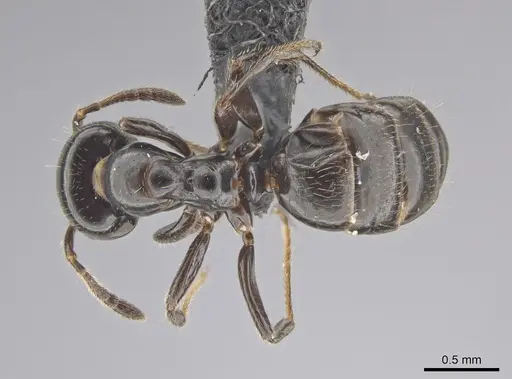
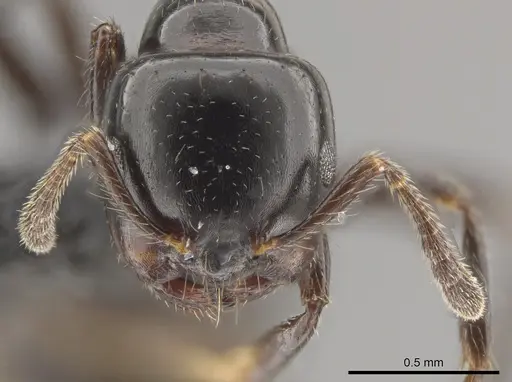
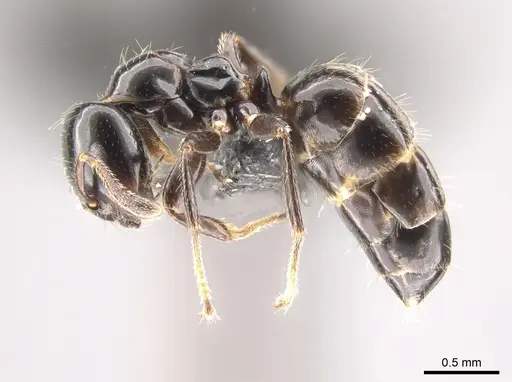
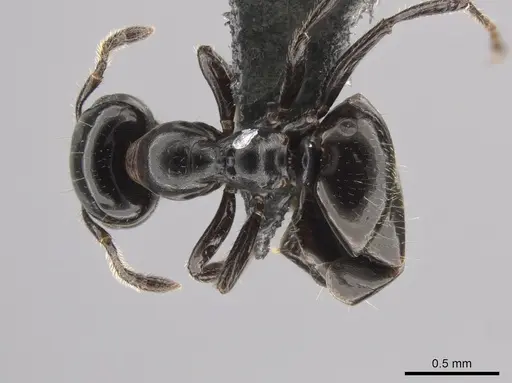
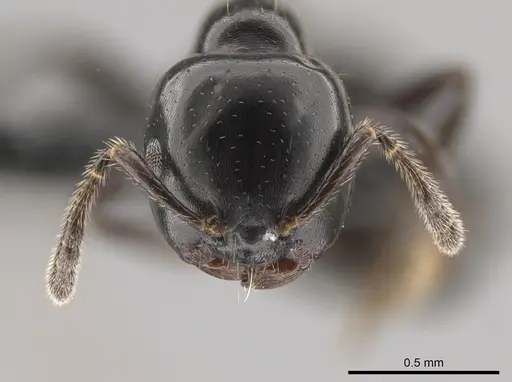
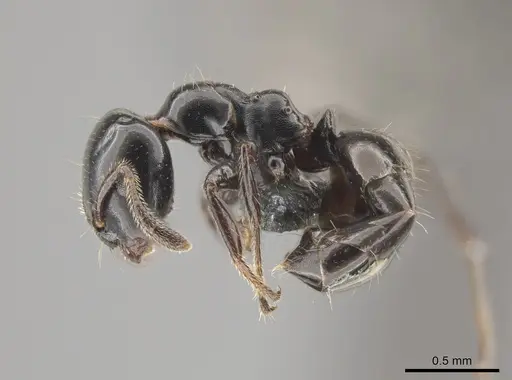
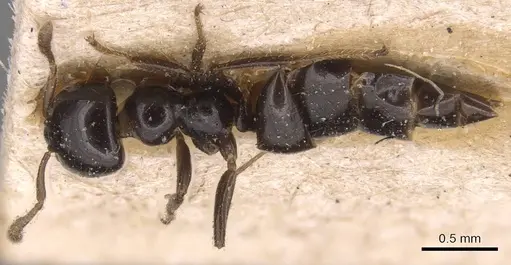
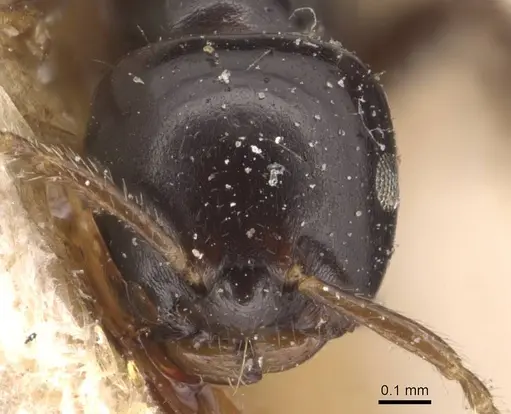
Myrmelachista gagatina is a small ant species. The species name 'gagatina' comes from Latin and means 'like a magpie', referring to their predominantly black coloration. As a member of the Formicinae subfamily, they have a single waist segment (petiole) and possess acidic venom (formic acid) as a defense mechanism, though they're too small to effectively sting humans. The genus Myrmelachista is characterized by their minute size and often cryptic habits. Queens have not been described in scientific literature, which is unusual and suggests this species is rarely collected during nuptial flights or that queens are also very small and cryptic. Males are similarly unknown. The worker caste is the primary described form [4].
Nest Preferences and Housing
Based on their cryptic classification and vegetation-collection records, Myrmelachista gagatina likely nests in small cavities within vegetation, dead leaves, or bark crevices rather than constructing obvious underground nests. This makes them somewhat unique among ant species commonly kept in captivity. For antkeeping, a small setup is essential, these are tiny ants that would be overwhelmed by large spaces. A small Y-tong (AAC) nest with narrow chambers scaled to their size works well, or a naturalistic setup incorporating small pieces of wood, bark, or vegetation. The nest should have small entrance holes and narrow tunnels. Avoid large, open formicaria designed for bigger ants. Provide a small outworld for foraging. Because they're cryptic and may be semi-arboreal, including vertical structures or twigs in the setup may encourage natural behavior. [2][1]
Feeding and Diet
The specific diet of Myrmelachista gagatina has not been studied. As a small Formicinae species, they likely forage for honeydew and small insects. In captivity, offer sugar water or honey diluted with water as a constant energy source. For protein, provide small live prey appropriate to their size, fruit flies, pinhead crickets, or tiny mealworms. Given their small size, prey items should be very small. They may also accept commercial ant jelly or protein paste. Feed sparingly, small colonies don't need much food, and excess food can mold and cause problems. Remove uneaten prey after 24-48 hours.
Temperature and Humidity Requirements
Being from southern Brazil and Argentina (subtropical regions), Myrmelachista gagatina prefers warm conditions, aim for 24-28°C. This mimics their native Atlantic Forest habitat. A slight temperature gradient allows the colony to self-regulate. For humidity, moderate to high levels are appropriate, their native forest habitat experiences significant moisture. Keep the nest substrate lightly moist but not waterlogged. Allow some areas to dry between misting to prevent mold. Room humidity of 60-80% is suitable. Unlike temperate species, they likely don't require a true diapause or hibernation period, though they may reduce activity during cooler winter months if your room temperature drops. [2]
Behavior and Temperament
Myrmelachista gagatina is classified as a cryptic functional group species, this means they're secretive, hide in small cavities, and are not commonly observed foraging in the open [1]. Workers are small and likely avoid bright light and open spaces. They're probably not aggressive and will flee rather than attack when disturbed. Their small size means they're not a stinging threat to keepers. The genus name Myrmelachista roughly translates to 'ant-like' or 'small ant', reflecting their minute size. Colonies are likely small, possibly reaching only dozens to a few hundred workers at maturity. This cryptic lifestyle means you may not see dramatic activity, the ants will spend much of their time hidden in nest chambers, which is normal behavior for this species.
Frequently Asked Questions
How long does it take for Myrmelachista gagatina to produce first workers?
The exact development timeline is unconfirmed for this species. Based on typical Formicinae development at 24-28°C, expect first workers in approximately 6-10 weeks after the queen lays eggs. However, this is an estimate, actual times may vary.
Can I keep Myrmelachista gagatina in a test tube setup?
Yes, a test tube setup can work for founding colonies, but use a very small diameter tube since these are tiny ants. You'll need to transition them to a more permanent small-scale nest as the colony grows. The key is providing appropriately scaled chambers, too-large spaces will stress them.
Are Myrmelachista gagatina ants aggressive?
No, they're considered cryptic and non-aggressive. They're too small to effectively sting and will likely flee from disturbance rather than engage. This makes them safe to handle but also means they're easily stressed or crushed.
What do Myrmelachista gagatina ants eat?
Based on typical Formicinae diet, they likely feed on honeydew and small insects. In captivity, offer sugar water or honey as a constant energy source, plus small live prey like fruit flies or tiny crickets for protein. Feed small amounts appropriate to colony size.
Do Myrmelachista gagatina ants need hibernation?
Probably not. Being from subtropical southern Brazil and Argentina, they likely don't require a true hibernation diapause. They may show reduced activity during cooler months if room temperature drops, but this is not a required cold period.
How big do Myrmelachista gagatina colonies get?
Colony size is unconfirmed but likely small based on their cryptic lifestyle. Most Myrmelachista species form small colonies, probably dozens to a few hundred workers at maturity, not the thousands seen in some ant species.
Are Myrmelachista gagatina good for beginners?
No, this species is rated Expert difficulty. There's very limited scientific data on their care, they're extremely cryptic which can be confusing for new keepers, and their small size makes them vulnerable to common mistakes like drowning or crushing. They're best suited for experienced antkeepers.
Where is Myrmelachista gagatina found in the wild?
They're native to the Neotropical region, specifically southern Brazil (Paraná, Santa Catarina states) and northern Argentina (Misiones province). Their habitat is Atlantic Forest, particularly submontane semidecidual seasonal forest at moderate elevations.
Why does my Myrmelachista gagatina colony seem inactive?
This is normal behavior for this species. They're classified as cryptic, they prefer to stay hidden in small cavities rather than forage openly. This doesn't mean they're unhealthy, it's just their natural behavior. Low activity can be normal for cryptic species.
Report an Issue
The current care sheet is based fully on literature. See inconsistencies, or something that's incorrect? Please , it will be resolved after review from an admin. Contributing to the blogs tab also helps providing information, to make us be able to further improve the caresheets. Thank you for your support!
References

This caresheet is licensed under CC BY-SA 4.0 .
Community Blogs
Literature
Loading distribution map...Loading products...