
Myrmecorhynchus nitidus
- Sci. Name
- Myrmecorhynchus nitidus
- Tribe
- Melophorini
- Subfamily
- Formicinae
- Author
- Clark, 1934
- Distribution
- Found in 1 countries
Introduction
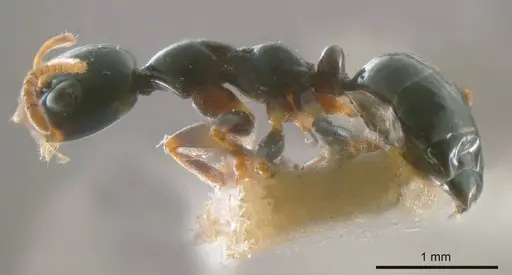
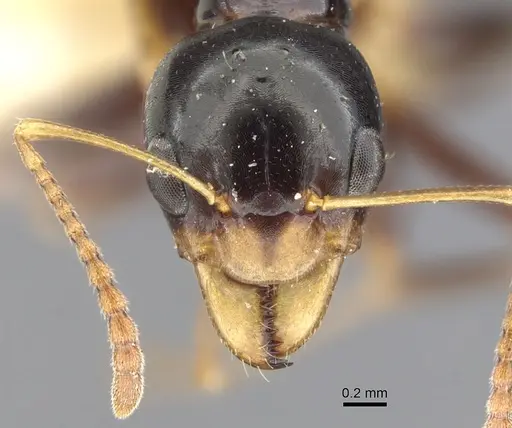
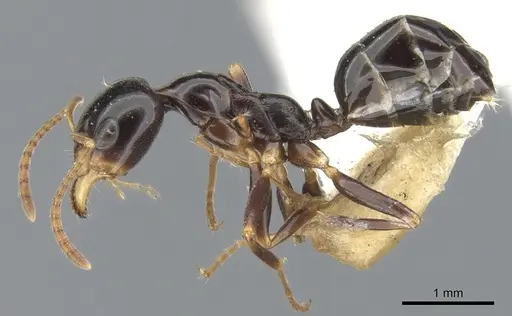
Myrmecorhynchus nitidus is a small, glossy black ant native to southeastern Australia, found only around Melbourne and Canberra. Workers measure 4.5-5.5mm and are strongly polymorphic, with distinct major and minor castes. They have a striking appearance: black body with yellow mandibles and at least one-third of the clypeus colored yellow, plus reddish-yellow antennae and leg segments. The propodeum is relatively low and flat compared to similar species. This is the least common species in the Myrmecorhynchus genus, known from only a handful of specimens. They are arboreal nesters, with the type collection made in a tree branch 70 feet above ground. These ants forage on vegetation and tree trunks, moving slowly and easily overlooked. Essentially nothing is known about their captive care requirements, making them a challenging species for experienced antkeepers who want to contribute to our understanding of this rare Australian ant .
Quick Summary
- Difficulty: Expert
- Origin & Habitat: Southeastern Australia, specifically the vicinities of Melbourne (Victoria) and Canberra (Australian Capital Territory). Found in forested areas where they nest arboreally in branches, twigs and vines on shrubs or trees, or occasionally in soil. Foraging occurs primarily on vegetation and tree trunks [1][2].
- Colony Type: Unknown, colony structure has not been documented in scientific literature.
- Size & Growth:
- Queen: 7.5mm [3]
- Worker: Major workers 5.5mm, minor workers 4.5mm [3]
- Colony: Unknown, no colony size data exists for this species.
- Growth: Unknown, no development data exists for this species.
- Development: Unknown, no direct measurements exist. (No specific development data exists for this species.)
- Antkeeping:
- Temperature: Unknown for this species. Based on their geographic range (temperate Melbourne and Canberra), they likely tolerate temperatures from 15-28°C. Start around 20-24°C and observe colony behavior.
- Humidity: Unknown for this species. As arboreal nesters from southeastern Australia, they likely prefer moderate humidity. Keep the nest substrate slightly moist but not waterlogged, with some drier areas available.
- Diapause: Likely yes, based on their temperate Australian distribution (Melbourne/Canberra), they probably require a winter rest period. Provide 2-3 months at 10-15°C during austral winter (roughly June-August in the Southern Hemisphere).
- Nesting: Arboreal nesting species. In captivity, they do well in naturalistic setups with vertical structures (branches, cork, or artificial vines) or in Y-tong/plaster nests with added vertical elements. They prefer nesting in elevated locations rather than ground-level setups.
- Behavior: These are small, slow-moving ants that forage on vegetation and tree trunks. They are not aggressive and rely on camouflage and staying still rather than fighting. Their arboreal lifestyle means they are accomplished climbers. Escape prevention is important due to their small size, use fine mesh barriers. The sting risk is low, Formicinae ants typically spray formic acid rather than sting, and their small size makes any defense mechanism barely noticeable to humans.
- Common Issues: no captive husbandry data exists, keeping this species is essentially experimental, wild-caught colonies may have parasites or diseases that kill them in captivity, slow growth and lack of baseline care data leads to high colony failure rate, arboreal nature requires specialized setups that differ from typical ground-nesting ant setups, their rare status means there are no established captive breeding lines, all colonies come from wild-caught queens
Natural History and Distribution
Myrmecorhynchus nitidus is the rarest species in its genus, known from only a handful of specimens collected in the areas around Melbourne (Victoria) and Canberra (Australian Capital Territory). The type specimen was collected in 1934 from a tree branch approximately 70 feet (21 meters) above ground, demonstrating this species strongly arboreal nature. Other specimens have also been collected from trees, though at lower heights. The genus Myrmecorhynchus is restricted to eastern and southern Australia, with M. nitidus being the most localized and least commonly encountered species. These ants are small and inconspicuous, with slow movements that make them easy to overlook. They are most often encountered while foraging on vegetation or tree trunks. The species appears to be known from throughout its potential range, suggesting limited distribution rather than gaps in sampling [1][2][3].
Identification and Distinguishing Features
Workers of Myrmecorhynchus nitidus can be identified by several key features: the mesosomal dorsum has at most a few scattered erect hairs, and the legs have appressed pubescence but lack erect hairs entirely. The color pattern is distinctive: extensive yellow on the clypeus covering at least one-third of its surface, and the mandibles are completely yellow except for dark teeth. The body is black with reddish-yellow antennae, trochanters, tibiae, and tarsi. The propodeum is relatively low and flat compared to the similar species Myrmecorhynchus carteri, and the metapleural groove is very shallow. The worker caste is strongly polymorphic, with distinct major workers (5.5mm) and minor workers (4.5mm). Queens are larger at 7.5mm. This species can be distinguished from Myrmecorhynchus carteri by both color pattern (which shows no intermediate forms) and the shape of the metanotal groove and propodeum [1][3].
Housing and Nest Setup
As an arboreal species, Myrmecorhynchus nitidus requires housing that differs from typical ground-nesting ant setups. They do best in naturalistic terrariums that include vertical structures such as branches, cork bark, or artificial vines. A Y-tong nest with narrow chambers can work, but add vertical elements or attach a foraging area with climbing structures. The nest chamber should be positioned elevated within the enclosure, not at ground level. These ants are accomplished climbers and will traverse vertical surfaces readily. Use fine mesh for any ventilation openings, their small size (4.5-5.5mm workers) means they can escape through gaps that would not concern larger ant species. Provide a water source (test tube with cotton) and maintain slight moisture in the nest area [1][2].
Feeding and Diet
No specific dietary studies exist for Myrmecorhynchus nitidus. Based on the genus being foragers on vegetation and tree trunks, they likely feed on honeydew from aphids and scale insects, plus small insects they encounter while foraging. In captivity, offer a mix of sugar sources (sugar water, honey, or diluted honey) and protein sources (small insects like fruit flies, pinhead crickets, or mealworms). Feed sugar sources continuously and protein 1-2 times per week. Remove uneaten food promptly to prevent mold. As arboreal foragers, they may prefer food placed on branches or elevated positions rather than on the ground. Start with small prey items and observe what they accept [1][2].
Temperature and Seasonal Care
No specific temperature data exists for Myrmecorhynchus nitidus. Their geographic range around Melbourne and Canberra falls in the temperate climate zone of southeastern Australia, with cool to mild temperatures year-round. Based on this, they likely tolerate a range of 15-28°C and prefer temperatures in the low-to-mid 20s°C. Provide a gentle temperature gradient so ants can self-regulate. During the austral winter (roughly June-August in the Southern Hemisphere), temperatures in their natural range drop significantly. They likely require a winter rest period, reduce temperatures to 10-15°C for 2-3 months. This species has not been kept in captivity extensively, so monitor colony behavior closely and adjust conditions based on their response [1][2].
Challenges and Experimental Keeping
Myrmecorhynchus nitidus is one of the least-studied ant species in captivity, with essentially no documented husbandry information. This makes them a true challenge even for experienced antkeepers. There are no established captive breeding lines, any colony would need to come from a wild-caught queen, which carries risks of parasites, disease, or damage during collection. Colonies may fail without clear reason due to our lack of understanding of their needs. If you attempt to keep this species, document everything: temperatures, humidity, feeding schedules, and colony behavior. Your observations could contribute significantly to our knowledge of this rare Australian ant. Consider this species a research project rather than a straightforward pet-keeping endeavor [1].
Frequently Asked Questions
How do I house Myrmecorhynchus nitidus ants?
They are arboreal ants that nest in tree branches in the wild. Use a naturalistic setup with vertical structures like branches, cork bark, or artificial vines. Position the nest chamber elevated, not at ground level. A Y-tong or plaster nest with added vertical elements also works well.
What do Myrmecorhynchus nitidus eat?
No specific diet studies exist. Based on their foraging behavior on vegetation and tree trunks, they likely eat honeydew and small insects. Offer sugar water or honey continuously and small insects (fruit flies, pinhead crickets) 1-2 times weekly. Place food on elevated surfaces rather than the ground.
What temperature do Myrmecorhynchus nitidus ants need?
Unknown specifically, but their temperate Australian range suggests they tolerate 15-28°C. Start around 20-24°C with a gentle gradient. They likely need a winter rest period at 10-15°C for 2-3 months during the cooler season.
Are Myrmecorhynchus nitidus good for beginners?
No. This is an expert-level species because essentially nothing is known about their captive care requirements. There are no established husbandry guidelines, and wild-caught colonies have high failure rates. Only experienced antkeepers should attempt this species.
How big do Myrmecorhynchus nitidus colonies get?
Unknown, no colony size data exists for this species. Based on related Myrmecorhynchus species, they likely form small colonies. The queen is 7.5mm, workers are 4.5-5.5mm.
Where is Myrmecorhynchus nitidus found in the wild?
Only in southeastern Australia, specifically around Melbourne (Victoria) and Canberra (Australian Capital Territory). This is the rarest species in the Myrmecorhynchus genus, known from only a handful of specimens.
Can I keep multiple Myrmecorhynchus nitidus queens together?
Unknown, colony structure (single queen vs multiple queens) has not been documented for this species. Do not attempt combining unrelated queens as no data exists on their social structure.
How long does it take for Myrmecorhynchus nitidus to develop from egg to worker?
Unknown, no development data exists for this species.
Do Myrmecorhynchus nitidus need hibernation?
Likely yes, based on their temperate distribution around Melbourne and Canberra, they probably require a winter rest period. Provide 2-3 months at 10-15°C during the austral winter.
Report an Issue
The current care sheet is based fully on literature. See inconsistencies, or something that's incorrect? Please , it will be resolved after review from an admin. Contributing to the blogs tab also helps providing information, to make us be able to further improve the caresheets. Thank you for your support!
References

This caresheet is licensed under CC BY-SA 4.0 .
Community Blogs
ANTWEB1008213
View on AntWeb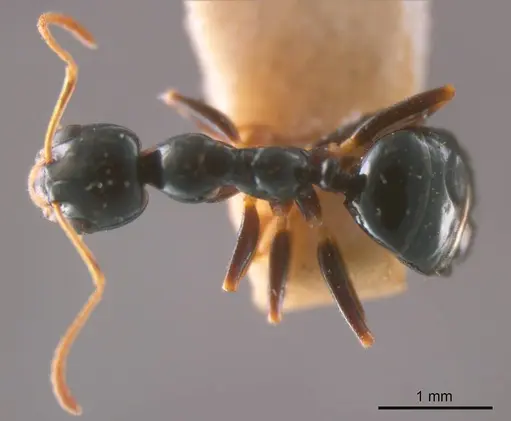
CASENT0903254
View on AntWeb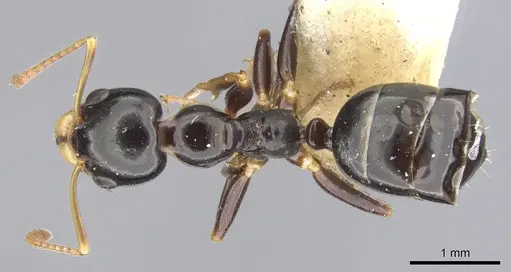
Literature
Loading distribution map...Loading products...