
Myrmecocystus christineae
- Sci. Name
- Myrmecocystus christineae
- Tribe
- Lasiini
- Subfamily
- Formicinae
- Author
- Snelling, 1982
- Distribution
- Found in 1 countries
Introduction
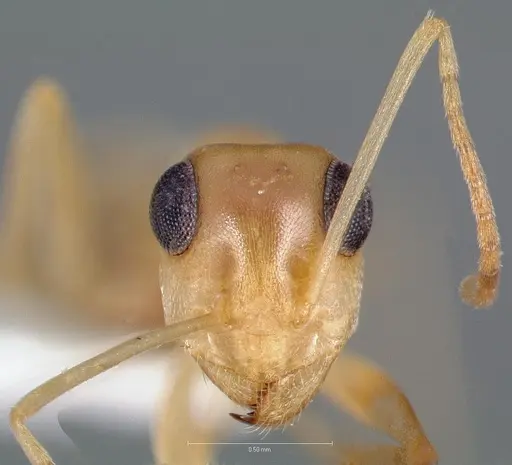
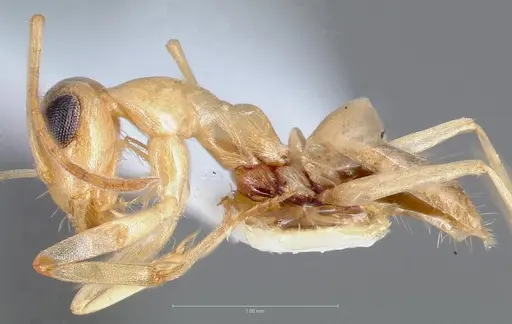
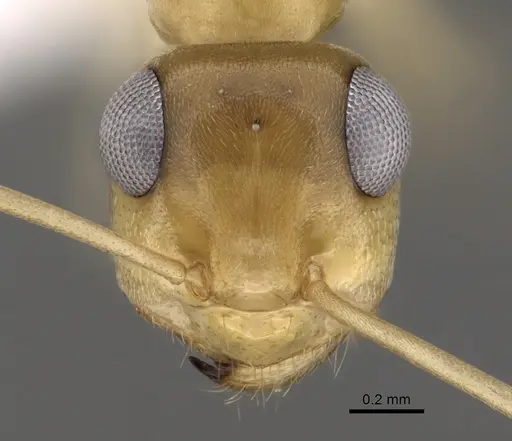
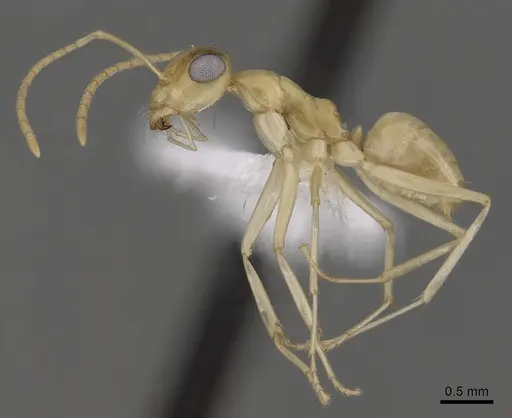
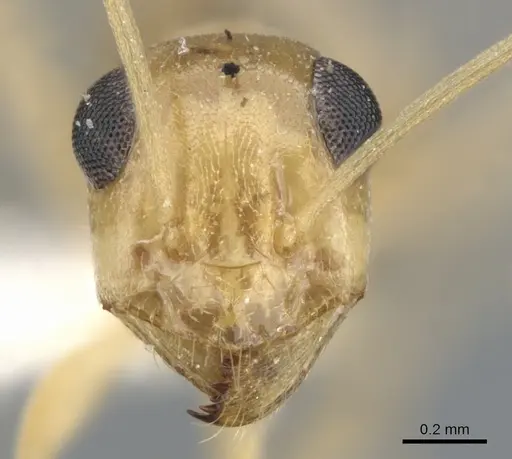
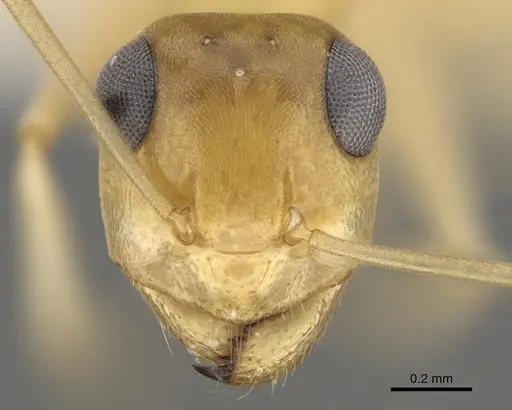
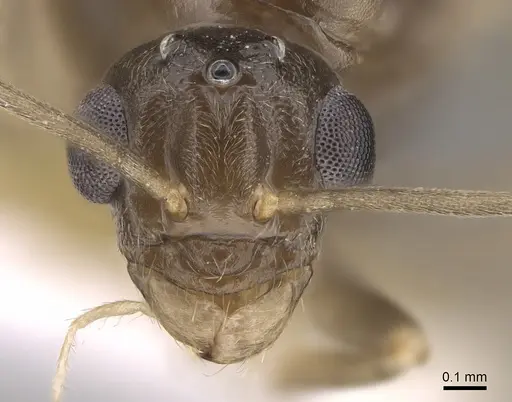
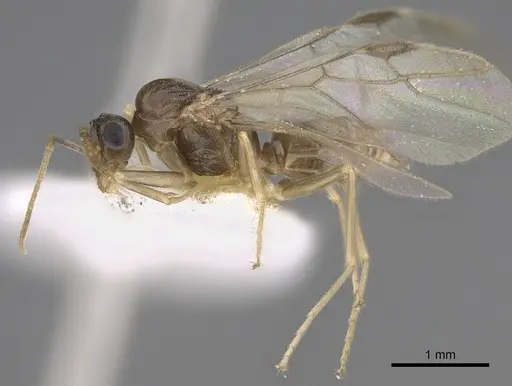
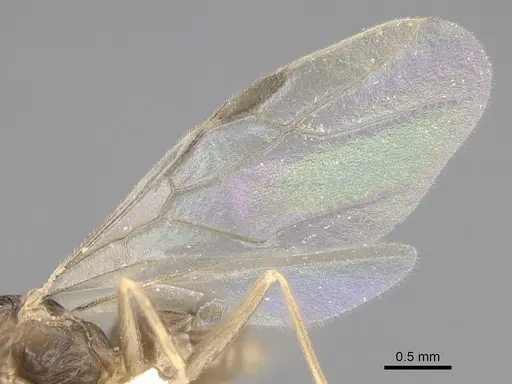
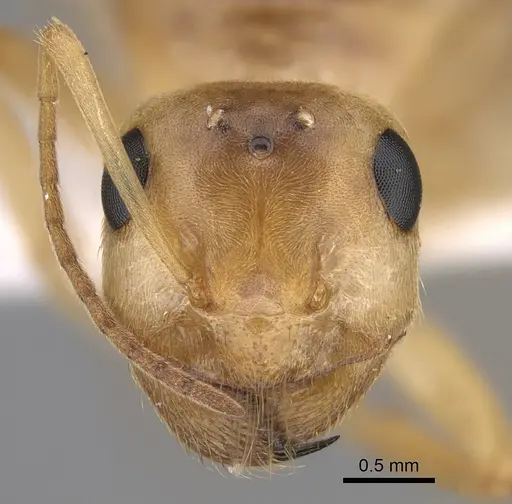
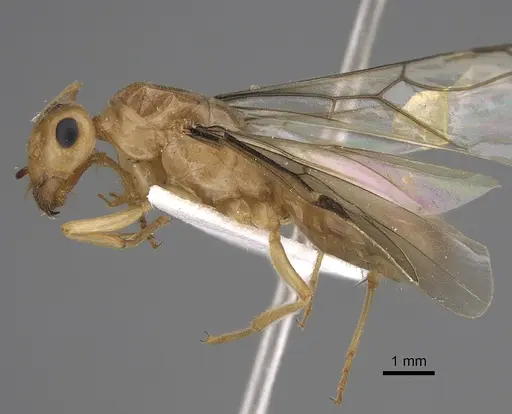
Myrmecocystus christineae is a small, pale honey ant species native to the Mojave Desert of California. Workers have a light brownish-yellow coloration with very reduced body hair, while queens are larger and yellow overall . This species is distinguished by its almost hairless appearance compared to other honey ants and large eyes positioned near the occipital corner. It was described in 1982 by R.R. Snelling and named after Christine D. George, who assisted in collecting specimens. The species appears to bridge characteristics between the mexicanus and pyramicus species groups within Myrmecocystus . What makes M. christineae particularly interesting is its nocturnal lifestyle - it is one of the pale, nocturnal honey ants with significantly larger eyes and eye facets than its dark, diurnal relatives like Myrmecocystus yuma . This adaptation allows it to forage efficiently in cool desert nights while avoiding daytime heat. The species is known from only a handful of locations in the Ivanpah and Granite Mountains of California, making it a rare and somewhat mysterious ant in the hobby .
Quick Summary
- Difficulty: Medium
- Origin & Habitat: Mojave Desert, California, specifically found in the Ivanpah and Granite Mountains at elevations between 3300-4200 feet. They inhabit creosote/Acacia sandy scrub, desert washes, and Joshua Tree Woodland [3]. This is a hot climate specialist adapted to arid desert conditions.
- Colony Type: Unconfirmed colony structure. No data on queen number or ergatoid replacement reproductives exists for this species.
- Size & Growth:
- Queen: size data unavailable, inferred from Myrmecocystus genus (~9-10mm total length)
- Worker: size data unavailable, inferred from Myrmecocystus genus (~3-5mm total length)
- Colony: Unknown, no colony size data exists for this species
- Growth: Unknown, no development data exists for this species
- Development: Unconfirmed, no development data exists for this species (No direct development studies exist for this species.)
- Antkeeping:
- Temperature: Keep warm, around 26-30°C. This is a hot desert species that thrives in elevated temperatures [3]. Provide a temperature gradient so ants can self-regulate.
- Humidity: Low to moderate. Desert species, keep nest substrate dry to slightly moist but never wet. Provide a water tube but avoid excessive moisture. Think arid conditions, not tropical humidity.
- Diapause: Likely required. Based on their activity period of April-October in the wild, they likely enter dormancy during colder months [3].
- Nesting: Natural nesting occurs in exposed sandy washes where they build cone-shaped nests [3]. In captivity, a dry, sandy substrate in a formicarium or test tube setup works well. They prefer tight, dark chambers. Avoid humid, wet conditions.
- Behavior: Nocturnal foragers with large eyes adapted for low-light conditions [2]. Workers emerge at night to forage, likely tending aphids and collecting honeydew like other honey ants. Workers are relatively fast-moving and may be skittish. Escape risk is moderate, workers are small but not among the tiniest ants. Use standard barrier methods. Temperament is not documented but honey ants are typically not aggressive toward humans.
- Common Issues: no colony data means keepers have no reference for expected growth rates or longevity, desert species is sensitive to overwatering, keep conditions dry, no documented diet acceptance, may be picky about foods, hibernation requirements are inferred, not confirmed, observe colony activity, very limited availability in the antkeeping hobby, few sources exist
Natural History and Distribution
Myrmecocystus christineae is known only from the Mojave Desert region of southern California, specifically the Ivanpah and Granite Mountains. The type specimens were collected at Morningstar Mine Road,9.5 miles north-northeast of Cima in San Bernardino County, California, at elevations between 4200-4260 feet [1]. Additional records come from Willow Spring Basin and Kelbaker Road areas within the Mojave National Preserve [3].
This species inhabits classic desert scrub habitats including creosote/Acacia sandy scrub, desert washes, and Joshua Tree Woodland. They are active from April through October in the wild, which corresponds to the warm season in the Mojave Desert [3]. Their nests are distinctive cone-shaped mounds built in exposed sandy washes, this is unusual compared to many ant species that prefer hidden or covered nesting sites.
The 2022 study on eye structure and coloration confirmed that M. christineae is a pale, nocturnal species with significantly larger eyes and eye facets than dark, diurnal congeners like M. yuma. Their eye facet area is approximately 2.0-2.1 times larger, an adaptation that allows efficient foraging in low-light conditions [2]. This makes them one of the more visually distinctive honey ants in terms of optical anatomy.
Housing and Nesting
In the wild, M. christineae builds cone-shaped nests in exposed sandy washes [3]. This suggests they prefer dry, well-drained substrates with good drainage. For captive care, a formicarium with a sandy substrate works well, or you can use a test tube setup with a small chamber.
Because they are a desert species, avoid overly humid conditions. The nest area should be dry to slightly moist, think desert floor, not rainforest. Provide a water tube for drinking access but do not saturate the substrate. A small amount of moisture at one end of the nest allows the ants to self-regulate humidity.
These ants are small but not tiny enough to require ultra-fine mesh. Standard ant escape prevention methods should work adequately. However, always use caution with small species, they can squeeze through surprisingly small gaps.
The species has not been documented in formicariums, so start with a simple setup (test tube or small formicarium) and observe your colony's preferences. If they avoid certain areas, adjust conditions accordingly.
Temperature and Heating
Myrmecocystus christineae is a hot climate specialist [3]. In the wild, they experience extreme desert temperatures during summer months. For captive care, maintain temperatures in the range of 26-30°C.
A heating cable or heat mat on one side of the nest creates a temperature gradient, allowing ants to move between warmer and cooler areas as needed. Place the heating element on top of the nest (not underneath) to avoid drying out the substrate too quickly.
During winter (roughly November-March based on wild activity patterns), reduce temperatures to around 15-18°C to simulate their natural dormancy period. This cool period may be important for colony health, though direct documentation for this species does not exist.
Do not keep them at room temperature alone if your home is cool, they need warmth to thrive and develop brood.
Feeding and Diet
The diet of M. christineae is undescribed in the scientific literature [3]. However, as a member of the honey ant genus Myrmecocystus, they likely share dietary habits with related species. Most honey ants are omnivorous, feeding on honeydew from aphids and scale insects, nectar from flowers, and small insects for protein.
For captive care, offer a varied diet including:
- Sugar water or honey water (small amounts)
- Small insects like fruit flies, pinhead crickets, or mealworms
- Occasional nectar sources if available
Start with small amounts and observe what your colony accepts. Because nothing is known about their specific dietary preferences, you may need to experiment. Remove uneaten food after 24-48 hours to prevent mold.
Feed protein sources 2-3 times per week and provide constant access to sugar water or honey. Adjust based on colony size and appetite.
Frequently Asked Questions
How long does it take for Myrmecocystus christineae to develop from egg to worker?
The development timeline is unconfirmed for this species. No specific studies exist on M. christineae development.
Is Myrmecocystus christineae a good species for beginners?
This species is rated as Medium difficulty. While not the most challenging ant, there is very little documented care information available, which makes it harder to troubleshoot problems. If you are experienced with desert species and comfortable with uncertainty, it can be a rewarding species to keep.
What temperature should I keep Myrmecocystus christineae at?
Keep them warm at 26-30°C. This is a hot desert species that thrives in elevated temperatures. Provide a temperature gradient so they can self-regulate. During winter, reduce to around 15-18°C for dormancy.
Can I keep multiple queens together?
Colony structure is unconfirmed for this species. Combining unrelated queens has not been documented and is not recommended. If you obtain a queen, house her alone for founding.
How big do Myrmecocystus christineae colonies get?
Maximum colony size is unknown, no wild colony data exists for this species. Related honey ant species typically reach several hundred to a few thousand workers. Expect moderate colony growth over several years.
Do they need hibernation?
Based on their activity period of April-October in the wild, they likely require a cool period during winter months. Reduce temperatures to around 15-18°C for 2-3 months during winter. This is inferred from typical desert ant behavior, not specifically documented for this species.
What do Myrmecocystus christineae eat?
Diet is undescribed, but they likely accept honeydew/sugar sources and small insects like other honey ants. Offer sugar water or honey water constantly, and protein (small insects) 2-3 times weekly. Start with small amounts and adjust based on acceptance.
Are Myrmecocystus christineae escape artists?
Workers are small but not among the tiniest ants. Standard escape prevention methods should work adequately. Use barrier tape or fluon on edges of formicariums. Check for small gaps regularly.
Where is Myrmecocystus christineae found?
This species is endemic to the Mojave Desert in California, specifically the Ivanpah and Granite Mountains. They inhabit creosote/Acacia sandy scrub, desert washes, and Joshua Tree Woodland at elevations between 3300-4200 feet.
Report an Issue
The current care sheet is based fully on literature. See inconsistencies, or something that's incorrect? Please , it will be resolved after review from an admin. Contributing to the blogs tab also helps providing information, to make us be able to further improve the caresheets. Thank you for your support!
References

This caresheet is licensed under CC BY-SA 4.0 .
Community Blogs
CASENT0005887
View on AntWeb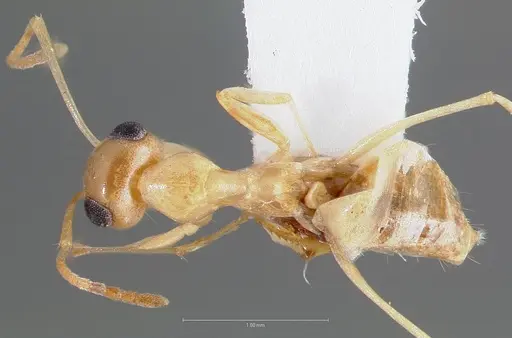
CASENT0280530
View on AntWeb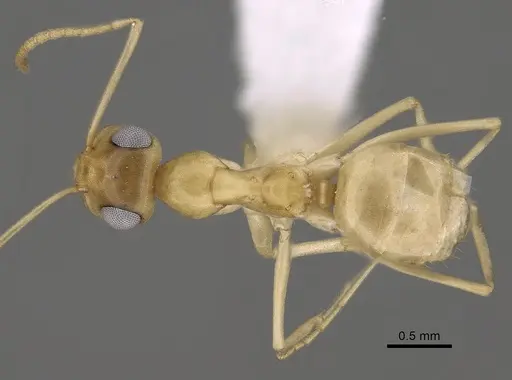
CASENT0903199
View on AntWeb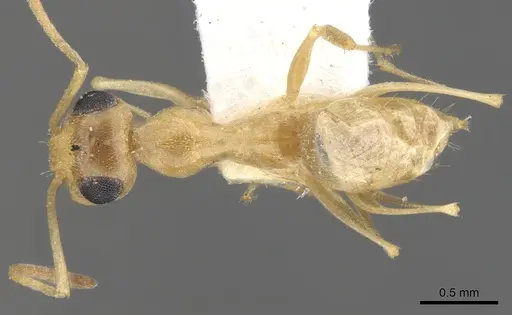
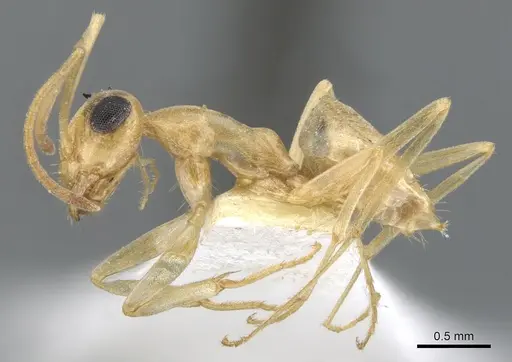
CASENT0923358
View on AntWeb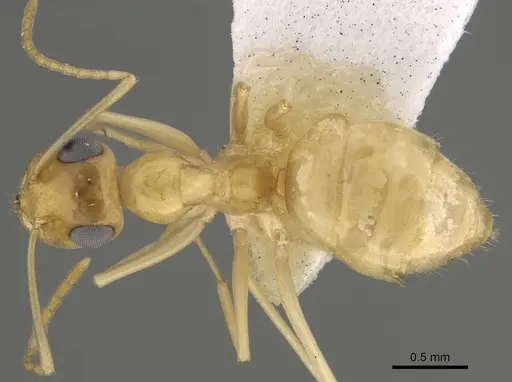
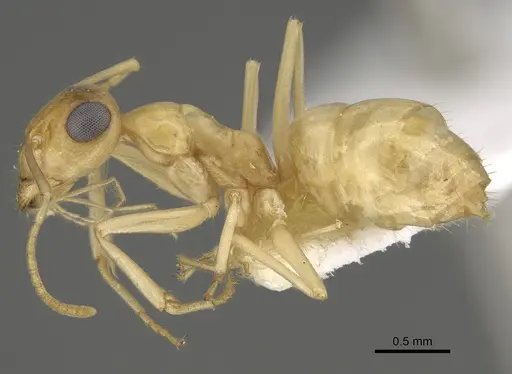
CASENT0923363
View on AntWeb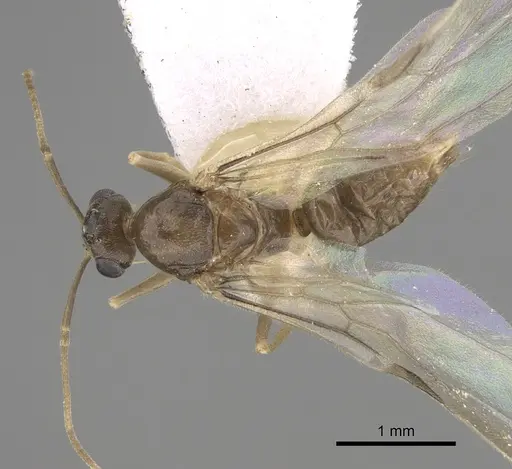
CASENT0923364
View on AntWeb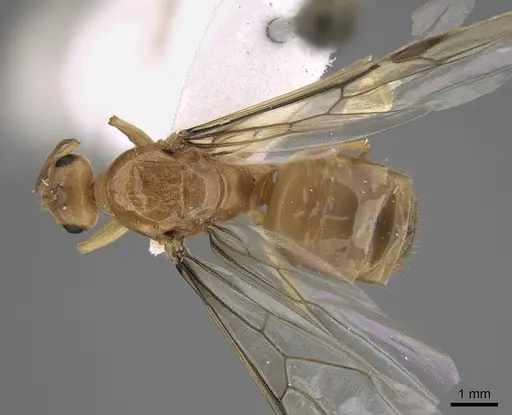
Literature
Loading distribution map...Loading products...