
Myrmecina sauteri
- Sci. Name
- Myrmecina sauteri
- Tribe
- Crematogastrini
- Subfamily
- Myrmicinae
- Author
- Forel, 1912
- Distribution
- Found in 2 countries
Introduction
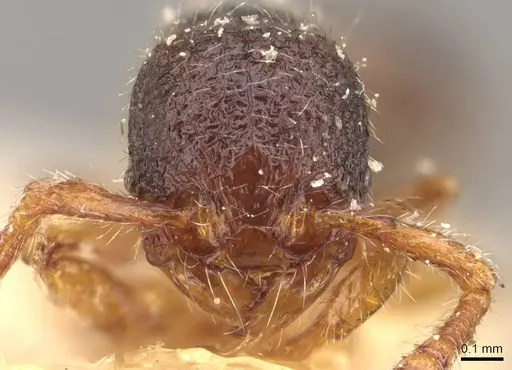
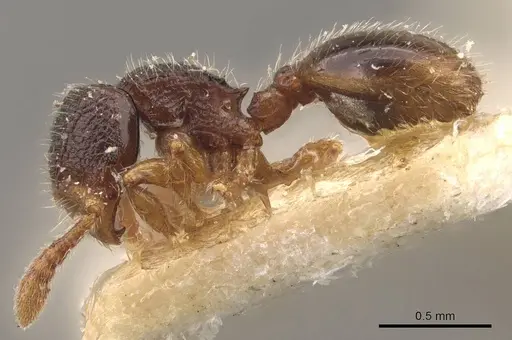
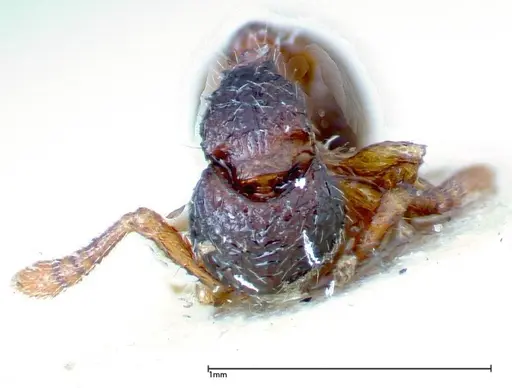
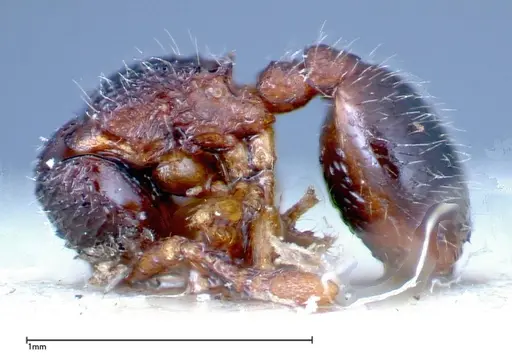
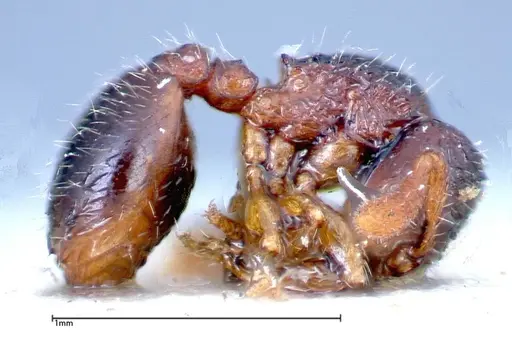
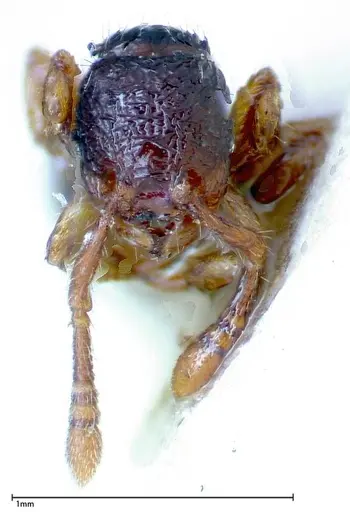
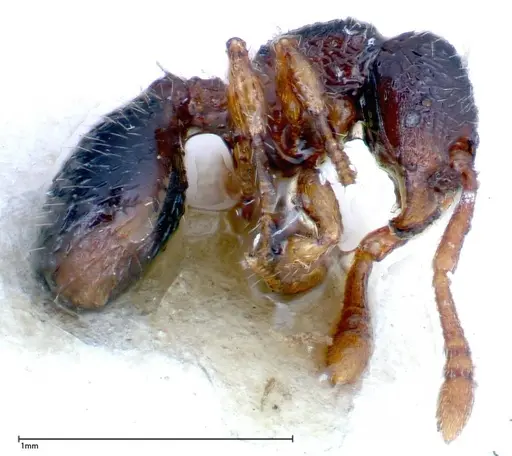
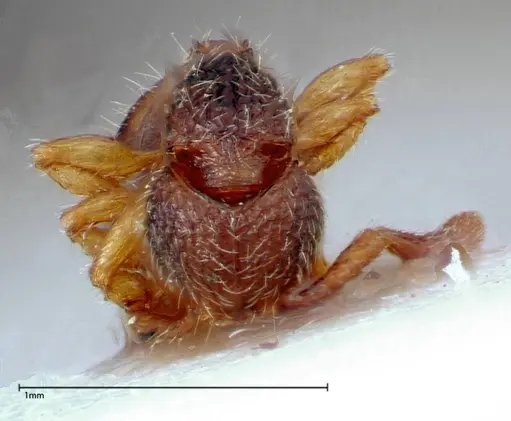
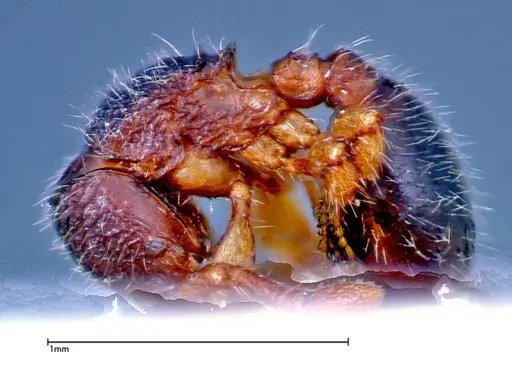
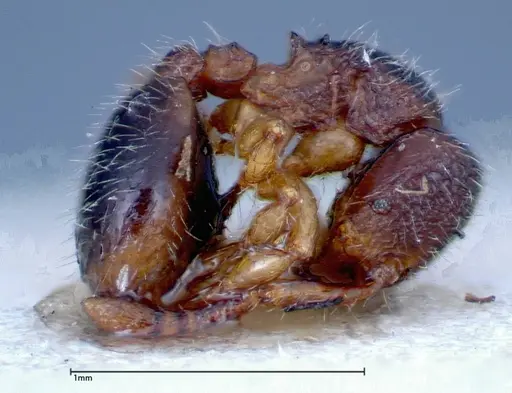
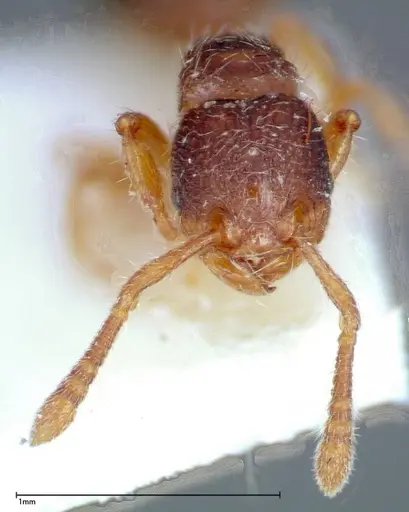
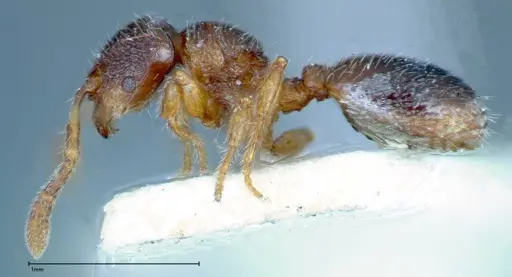
Myrmecina sauteri is a tiny ant species native to Taiwan and southern China. Workers measure about 2mm, making them among the smaller ants you'll encounter. They have a distinctive appearance with a dark brown to black body and yellowish-orange legs, plus short triangular spines on their rear. The queen is slightly larger at around 2.6mm. These ants are identified by a sharp ridge running along each side of their head and a rounded, barrel-shaped petiole without a distinct node . This species lives in leaf litter, soil, rotting wood, and under stones or moss on the forest floor. Colonies are very small, typically containing only 30-50 workers . Their biology in the wild remains poorly studied, but they are a peaceful, non-aggressive species that tends to stay hidden in their microhabitat.
Quick Summary
- Difficulty: Easy
- Origin & Habitat: Taiwan and southern China (Guangxi). Found in leaf litter, soil, rotting wood, under moss, and under stones in forest environments [1][3].
- Colony Type: Colony structure is not extensively studied. Based on typical Myrmecina patterns, likely single-queen colonies with small worker counts [3].
- Size & Growth:
- Queen: 2.6mm [2]
- Worker: 2-2.2mm [2]
- Colony: 30-50 workers on average [3]
- Growth: Moderate, small species with naturally small colony sizes
- Development: Unknown, no specific development data available for this species. (Small colony size suggests relatively quick initial development but limited overall growth potential.)
- Antkeeping:
- Temperature: Keep at 20-26°C. As a subtropical species from Taiwan and southern China, they prefer warm conditions. A room-temperature setup around 22-24°C works well, with a slight gradient if possible.
- Humidity: Moderate to high. These forest-floor ants prefer damp substrate. Keep the nesting area moist but not waterlogged, with some drier areas available for the ants to regulate their own humidity.
- Diapause: Likely mild winter slowdown. Given their subtropical origin, they may not require true hibernation but can benefit from a cool period (15-18°C) during winter months.
- Nesting: Small test tubes or Y-tong (AAC) nests work well. Because of their tiny size and preference for leaf litter environments, they do well in setups that retain moisture. A small plaster or soil nest with tight chambers scaled to their minute size is ideal.
- Behavior: Very peaceful, non-aggressive ants. They are not known to sting and pose no danger to keepers. Due to their extremely small size, escape prevention is critical, they can squeeze through tiny gaps. They are shy and tend to stay hidden within their nest rather than foraging openly. Workers are slow-moving and may be outcompeted by larger ant species if housed in shared spaces.
- Common Issues: escape prevention is critical due to their tiny 2mm size, use fine mesh and tight-fitting lids, small colony size means slower population growth than larger species, they are shy and may not thrive in overly bright or open setups, wild-caught colonies may contain parasites that can devastate small colonies, overfeeding can lead to mold issues in small, enclosed nests
Housing and Nest Setup
Myrmecina sauteri is a tiny ant that needs appropriately scaled housing. A small test tube setup works well for founding colonies, use a test tube with a small water reservoir and cotton plug, making sure the chamber is not too large for the colony to feel secure. For established colonies, a small Y-tong (AAC) or plaster nest with tight chambers works best. The nest should have chambers sized to the ants, roughly 2-3mm passages are appropriate for these 2mm workers. Because they naturally live in leaf litter and under stones, they prefer dark, humid environments. Cover the nest with an outworld that allows easy feeding access but prevents escape. Use fine mesh on any ventilation holes, these ants are incredibly small and can escape through gaps that would hold back larger species. [3]
Feeding and Diet
As a small Myrmecina species, these ants are likely generalist omnivores like others in the genus. Offer small protein sources such as tiny insects (fruit flies, small mealworms, pinhead crickets), and provide a sugar source like diluted honey or sugar water. Because of their small size, prey items should be appropriately sized, a fruit fly is a substantial meal for these tiny workers. Feed small amounts every 2-3 days and remove any uneaten prey to prevent mold. They may be shy eaters, so observe to see if they readily accept offered foods. A constant sugar source is recommended, replaced every few days.
Temperature and Humidity
Keep your colony at 20-26°C, with 22-24°C being ideal. These subtropical ants from Taiwan and southern China prefer warm, stable conditions. Room temperature is often suitable, but you can use a heating cable on one side of the nest to create a gentle gradient if needed. Place the heating on top of the nest, not underneath, to avoid drying out the substrate. Humidity should be moderate to high, these forest-floor ants prefer damp conditions. The nesting substrate should feel consistently moist but never waterlogged. A small water tube or reservoir in the outworld helps maintain humidity. Avoid both stagnant air (causes mold) and excessive airflow (causes drying). [1]
Colony Care and Maintenance
This species forms very small colonies, typically only 30-50 workers [3]. Do not expect rapid population explosion, their small colony size is natural, not a sign of poor care. They are slow-growing and peaceful, so avoid housing them near larger, more aggressive ant species. Because of their tiny size, handle them gently and ensure all connections between nest and outworld are secure. Watch for escape attempts, even the smallest gaps can be exploited. These ants are shy and may spend most of their time within the nest. They are not known to be aggressive or to sting, making them safe to handle. Regular but minimal disturbance is best, check on them without shaking or moving the nest frequently.
Seasonal Care
As a subtropical species from Taiwan, Myrmecina sauteri does not require true hibernation. However, a mild winter cool-down can benefit the colony. During winter months (roughly November to February in the Northern Hemisphere), you can reduce temperatures to 15-18°C. This simulates natural seasonal changes and may help trigger more active breeding when temperatures warm again. Do not cool them dramatically, a mild slowdown is sufficient. Reduce feeding frequency during this period and ensure the nest remains slightly moist. Return to normal temperatures (22-26°C) in spring.
Frequently Asked Questions
How long does it take for Myrmecina sauteri to produce first workers?
The exact egg-to-worker timeline is not documented for this species. Based on similar small Myrmicinae ants, expect roughly 6-8 weeks from egg to first worker at warm temperatures (around 24°C). Small species tend to develop faster than large ones, but their tiny colony size means fewer workers initially.
Can I keep multiple Myrmecina sauteri queens together?
This is not recommended. While colony structure is not extensively studied, Myrmecina species typically form single-queen colonies. Combining unrelated queens risks fighting and colony loss. If you obtain a wild colony, it likely has one queen.
Do Myrmecina sauteri ants sting?
No, these ants are not known to sting and pose no danger to keepers. They are completely harmless and very peaceful. Their small size also means any sting would be barely perceptible even if they could sting.
What is the best nest type for Myrmecina sauteri?
A small Y-tong (AAC) or plaster nest with tight chambers scaled to their tiny 2mm size works best. Test tubes are also suitable for founding colonies. The key is small chambers, these tiny ants feel insecure in large, open spaces. The nest should retain moisture well since they prefer damp forest-floor conditions.
Why is my Myrmecina sauteri colony growing so slowly?
This is normal, Myrmecina sauteri naturally forms very small colonies of only 30-50 workers [3]. They are not fast-growing ants and will never reach the population sizes of species like Camponotus or Formica. Patience is key. Ensure they have proper warmth (22-26°C), adequate humidity, and appropriate food. If the colony is shrinking, check for escapees, mold, or parasites.
Are Myrmecina sauteri good for beginners?
Yes, they are a good beginner species due to their peaceful nature, lack of sting, and simple care requirements. However, their tiny size makes escape prevention critical, which requires attention to detail. Their small colony size also means less activity to observe than larger species. They are best suited for keepers who appreciate subtle, quiet ants rather than flashy, active ones.
Do Myrmecina sauteri need hibernation?
No true hibernation is required due to their subtropical origin. However, a mild cool period (15-18°C) during winter months can be beneficial. This mimics natural seasonal patterns and may encourage more active breeding in spring. Do not cool them below 15°C or expose them to freezing temperatures.
How often should I feed Myrmecina sauteri?
Feed small amounts of protein (tiny insects) every 2-3 days. Provide a constant sugar source (honey or sugar water) that you replace every few days. Remove uneaten prey promptly to prevent mold. Because of their small size and colony size, overfeeding is a common mistake, less is more with these tiny ants.
Why are my Myrmecina sauteri escaping?
Their tiny 2mm size means they can escape through the smallest gaps. Check all connections, use fine mesh on any ventilation, and ensure lids fit tightly. Even a gap the width of a hair is enough for them to squeeze through. Review your entire setup for any potential escape routes.
Report an Issue
The current care sheet is based fully on literature. See inconsistencies, or something that's incorrect? Please , it will be resolved after review from an admin. Contributing to the blogs tab also helps providing information, to make us be able to further improve the caresheets. Thank you for your support!
References

This caresheet is licensed under CC BY-SA 4.0 .
Community Blogs
CASENT0908954
View on AntWeb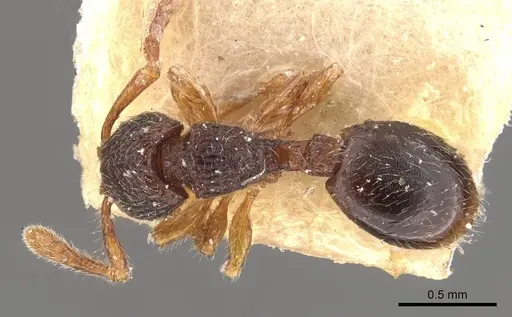
FOCOL0305
View on AntWeb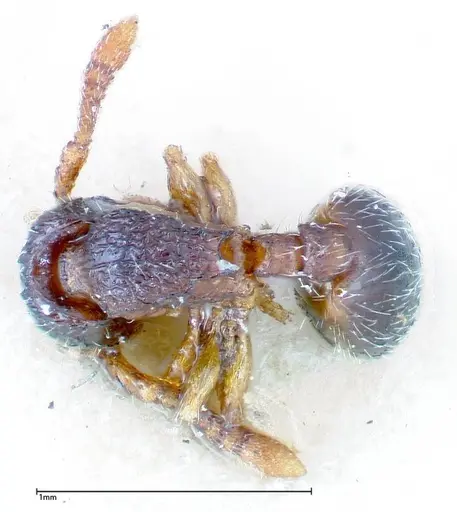
FOCOL0306
View on AntWeb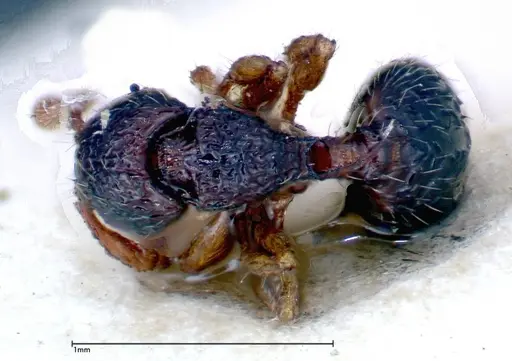
FOCOL0307
View on AntWeb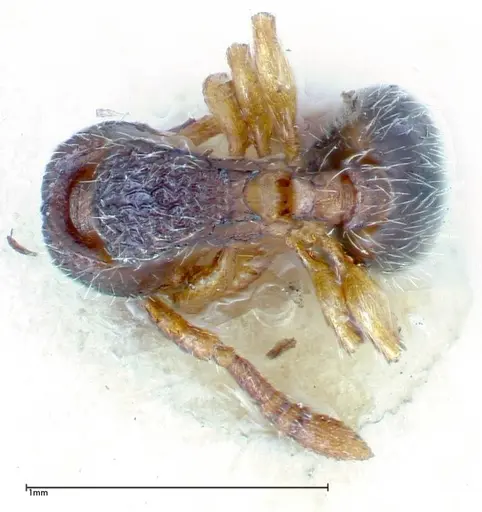
FOCOL0308
View on AntWeb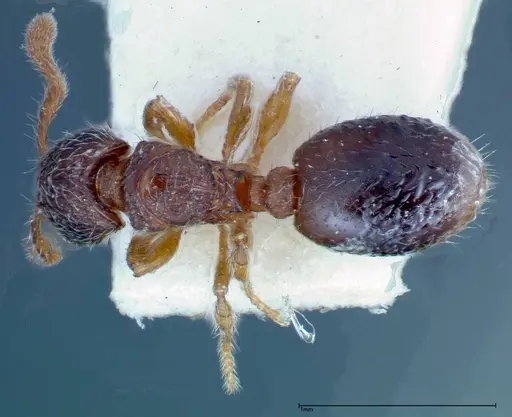
Literature
Loading distribution map...Loading products...